

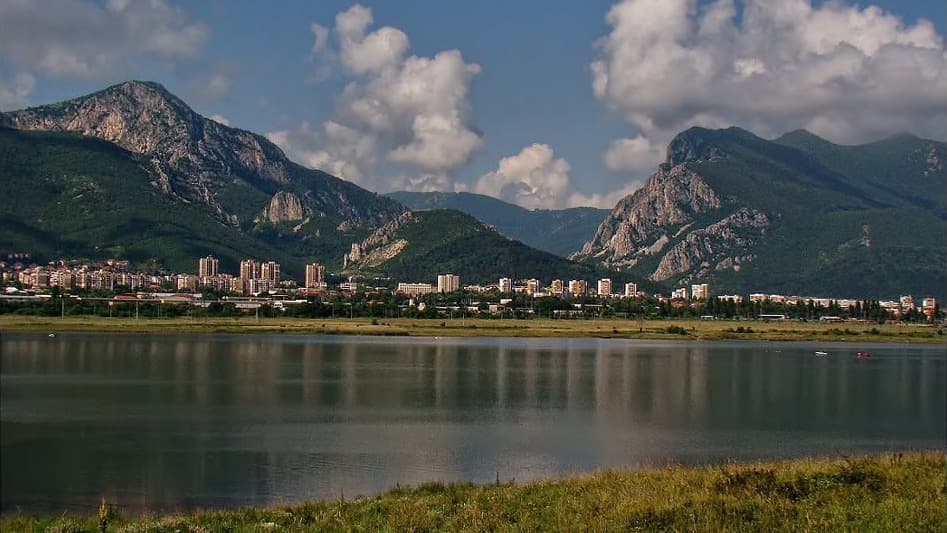
Vratsa & Ledenika Cave: Bulgaria's Overlooked North-West
In this guide▾
The north-west is the least-visited corner of Bulgaria, and Vratsa is the clearest illustration of why that is a mistake. Ninety minutes from Sofia sits a town with a 400-metre rock wall at the end of its main street, a show cave in the mountains above it, and a regional museum holding the largest Thracian silver treasure ever found.

Almost nobody goes. That is the entire pitch.
📍 Getting There
| From | Distance | Driving time |
|---|---|---|
| Sofia | ~110 km | ~1 h 30 min |
| Montana | ~30 km | ~30 min |
| Belogradchik | ~100 km | ~1 h 30 min |
| Pleven | ~120 km | ~1 h 40 min |
Trains and buses run regularly from Sofia, and the town centre itself is compact and walkable — but Ledenika, Okolchitsa, and the nature park all require a car. See our transport guide and car rental guide.
🪨 Vratsata: The Gate
Most towns have suburbs at their edges. Vratsa has a gorge.
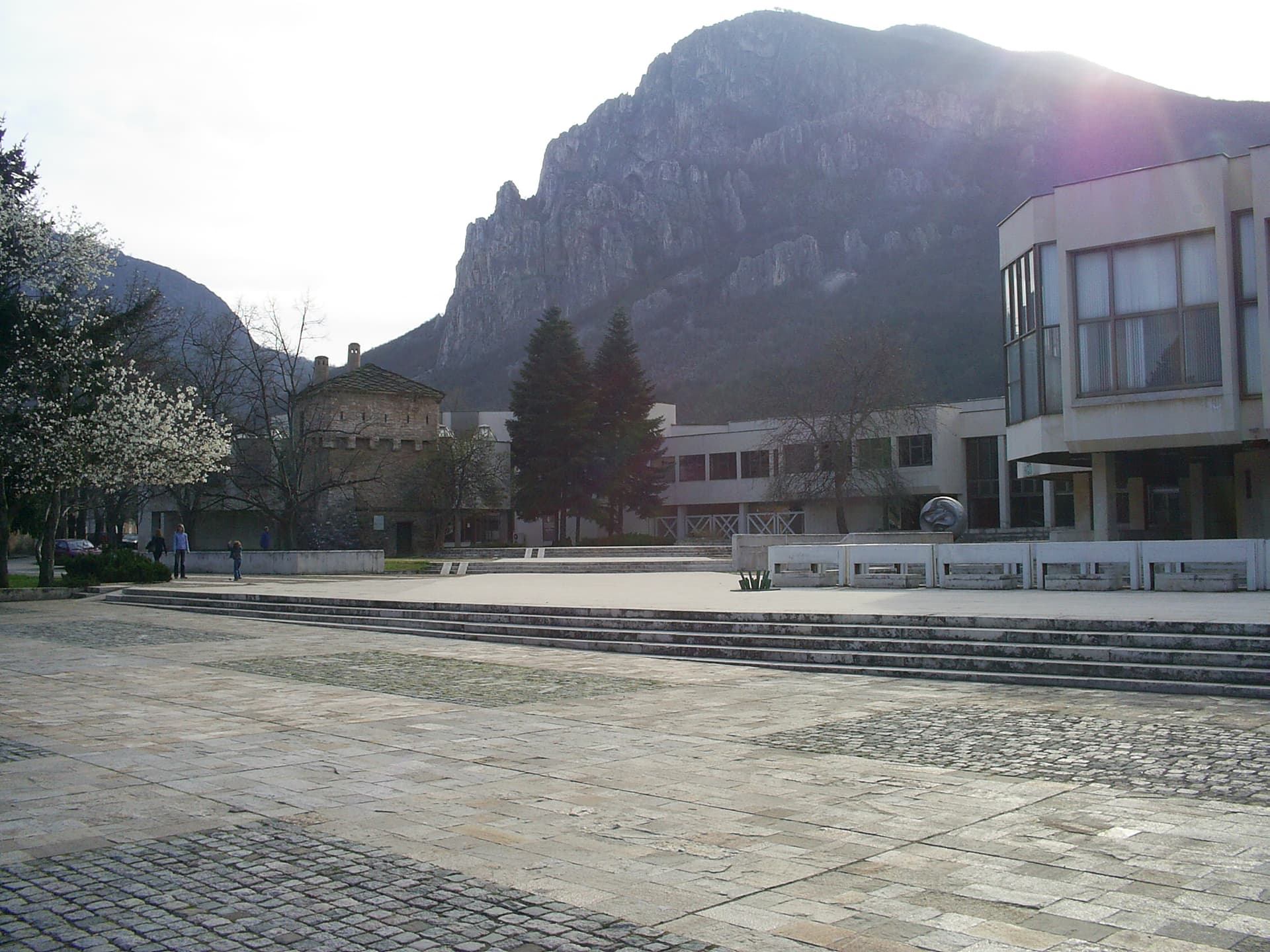
Vratsata — the name simply means "the Gate" — is where the Leva river cuts out of the Balkan range, and the town is built right up against its mouth. Walk or drive west from the centre and the ground rises into vertical limestone on both sides within a few minutes.
The main wall is commonly cited as the highest vertical rock face in the Balkans, at around 400 metres. It is the centre of Bulgarian rock climbing, and even if you have no intention of touching it, standing underneath it is worth the trip. There are few places anywhere where a town of 50,000 people ends this abruptly.
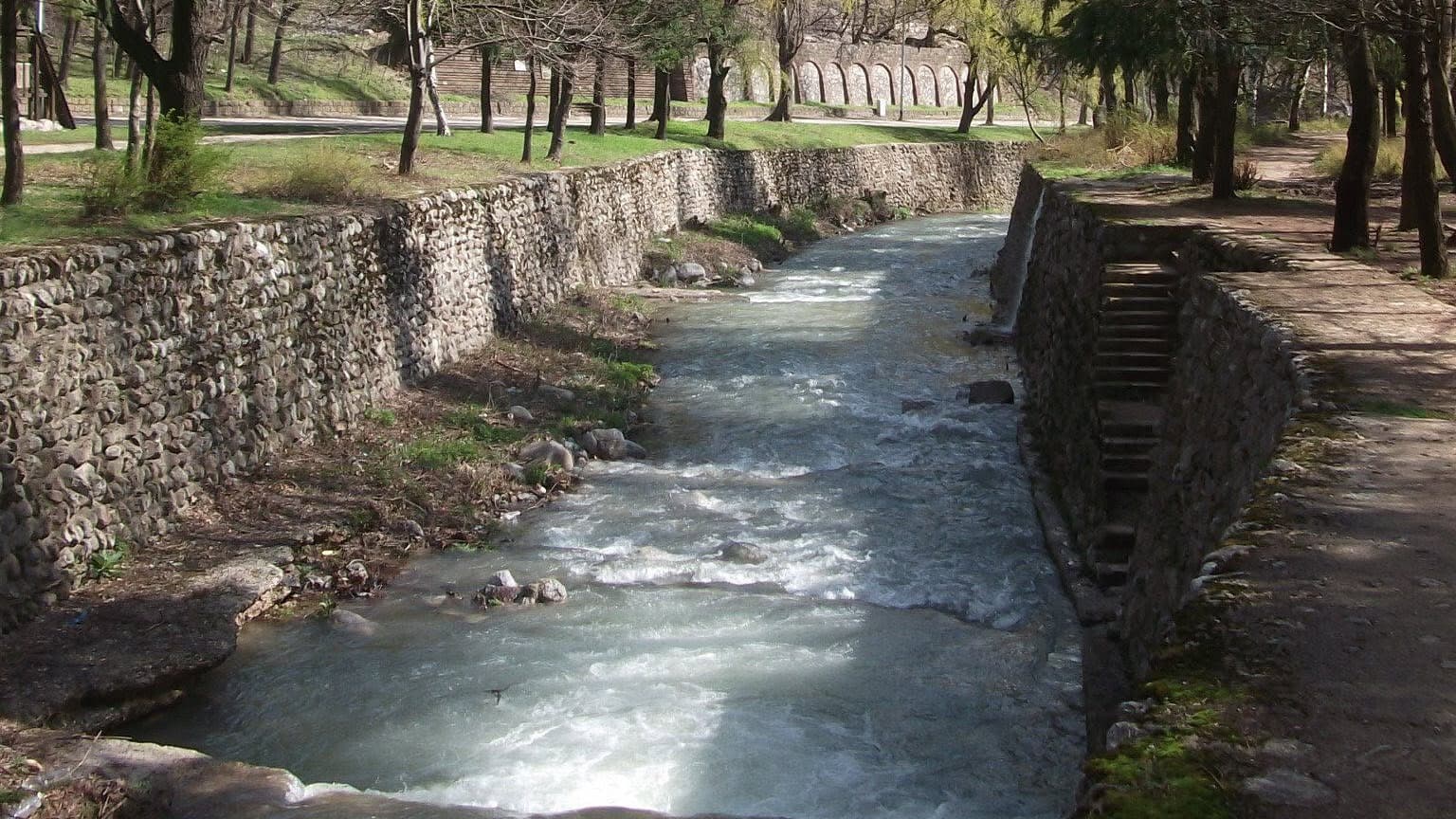
Beyond the gorge, the road passes Zgorigrad, the village at the far end of the defile, and continues up into the Vrachanski Balkan Nature Park, which is where Ledenika and the walking trails begin.
🧊 Ledenika Cave
About 16 km from town, at roughly 830 metres in the Vrachanski Balkan, Ledenika is the region's headline attraction.
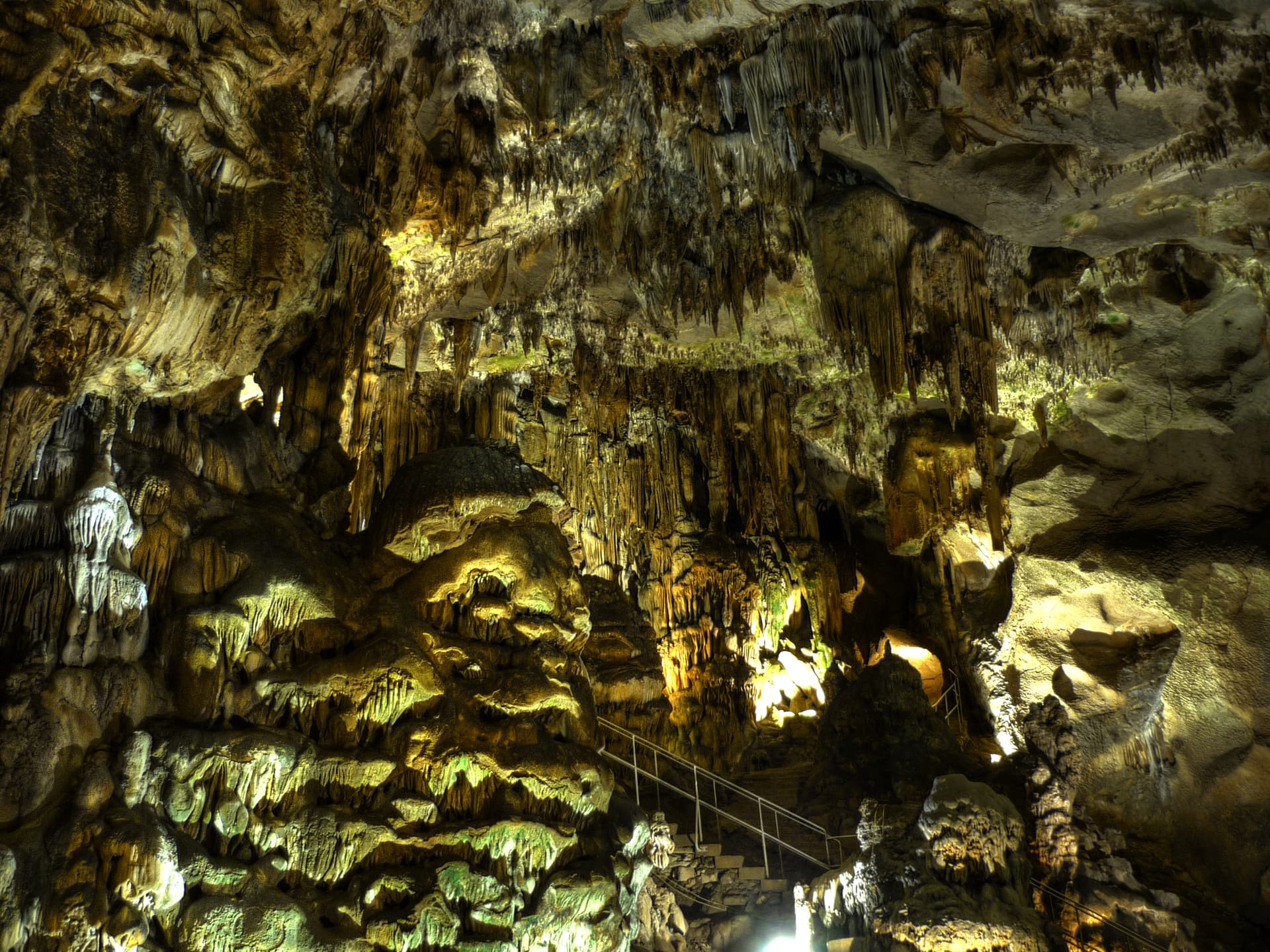
The name means "icy" — and it is earned. In winter and early spring, ice formations build up near the entrance, and the cave stays genuinely cold year-round. Bring a warm layer regardless of the season; arriving in shorts in August is a mistake people make repeatedly.
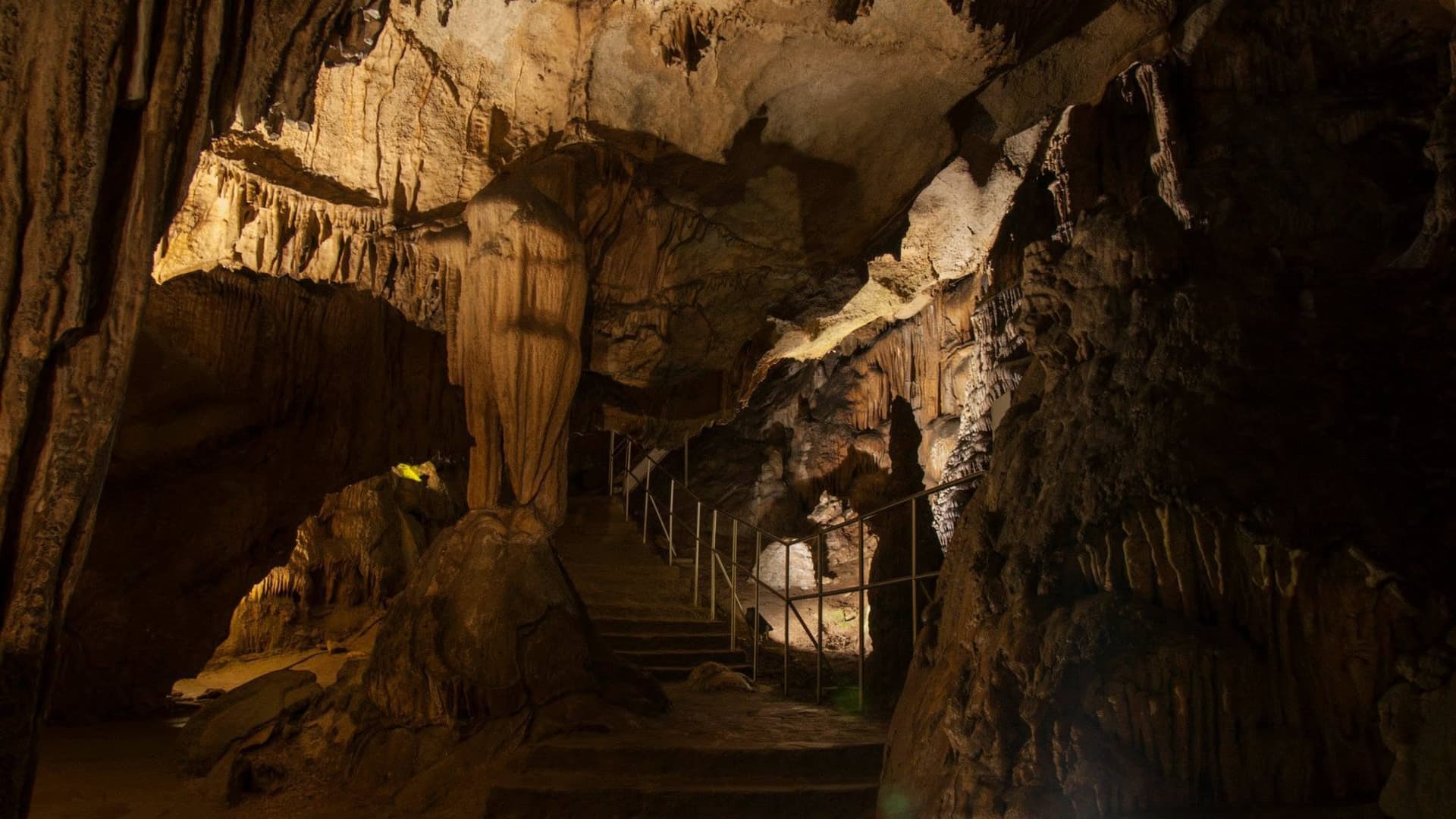
The visitor route runs roughly 300 metres through around ten chambers, featuring stalactites, stalagmites, and flowstone alongside named rock formations. The largest chamber — the Concert Hall — has acoustics good enough that it has been used for performances, which is not something most show caves can claim.
Visiting: entry is €5.11 for adults and €4.09 for pupils, students and pensioners; a visit with a guided talk in a foreign language costs €8.18. Next to the cave, a 5D cinema (15 minutes, €3.07), an adventure park with a climbing wall, rope course and zip line (€2.56, children €1.53) and a guided eco-trail walk (€2.56) round out a family day. The cave lists its prices in leva; the euro figures are converted at the fixed rate of 1.95583 (checked September 2026). A good asphalt road leads up to a large asphalt car park by the entrance.
💡 Practical: The access road climbs into the mountains and can be affected by snow in winter. Opening hours are seasonal, so confirm before driving up. Wear shoes with grip — the cave floor is wet and slick.
Ledenika sits alongside Prohodna, Devetashka, Bacho Kiro, and the Devil's Throat among the caves worth planning a trip around.
🏛️ The Rogozen Treasure
The Vratsa Regional History Museum is the reason to give the town centre proper time, and the reason is one object — or rather 165 of them.
In the mid-1980s, a villager in Rogozen, in Vratsa Province, was digging in his yard and found silver. What emerged was the largest Thracian treasure ever discovered: 165 silver vessels — jugs, phials, and cups — decorated with mythological scenes and inscriptions.
The museum also holds finds from the Mogilanska Mogila burial mound in Vratsa itself, including a gold laurel wreath and a chariot burial. For a regional museum in a town most travellers skip, the collection is genuinely world-class.
Visiting: the main building is open Monday to Friday 09:00–17:30, and 09:00–12:00 and 13:00–17:30 at weekends and on holidays (12:00–13:00 by booking only). Entry is €4 for adults and €2 for pupils and students; a family ticket (one or two parents with up to three children aged 7–18) is also €4, and children under 7 go in free (checked September 2026).
If Thracian history interests you, the Valley of the Thracian Kings is the other essential stop in the country.
🕊️ Botev and Okolchitsa
In May 1876, during the April Uprising, Hristo Botev — poet, journalist, and revolutionary, and one of the most revered figures in Bulgarian history — seized a Danube steamer, crossed at Kozloduy with his detachment, and fought his way south into the Vratsa mountains.
He was killed there on 2 June 1876.
A memorial cross stands on Okolchitsa peak, and every year on 2 June a national pilgrimage climbs to it. If you are anywhere near Vratsa on that date, the town is the place to be; the rest of the year it is a quiet and rather moving drive up into the hills.

🌿 Beyond the Town: Vrachanski Balkan
The nature park above Vratsa holds the region's best walking, and two karst features stand out — though only one of them is actually in the park:
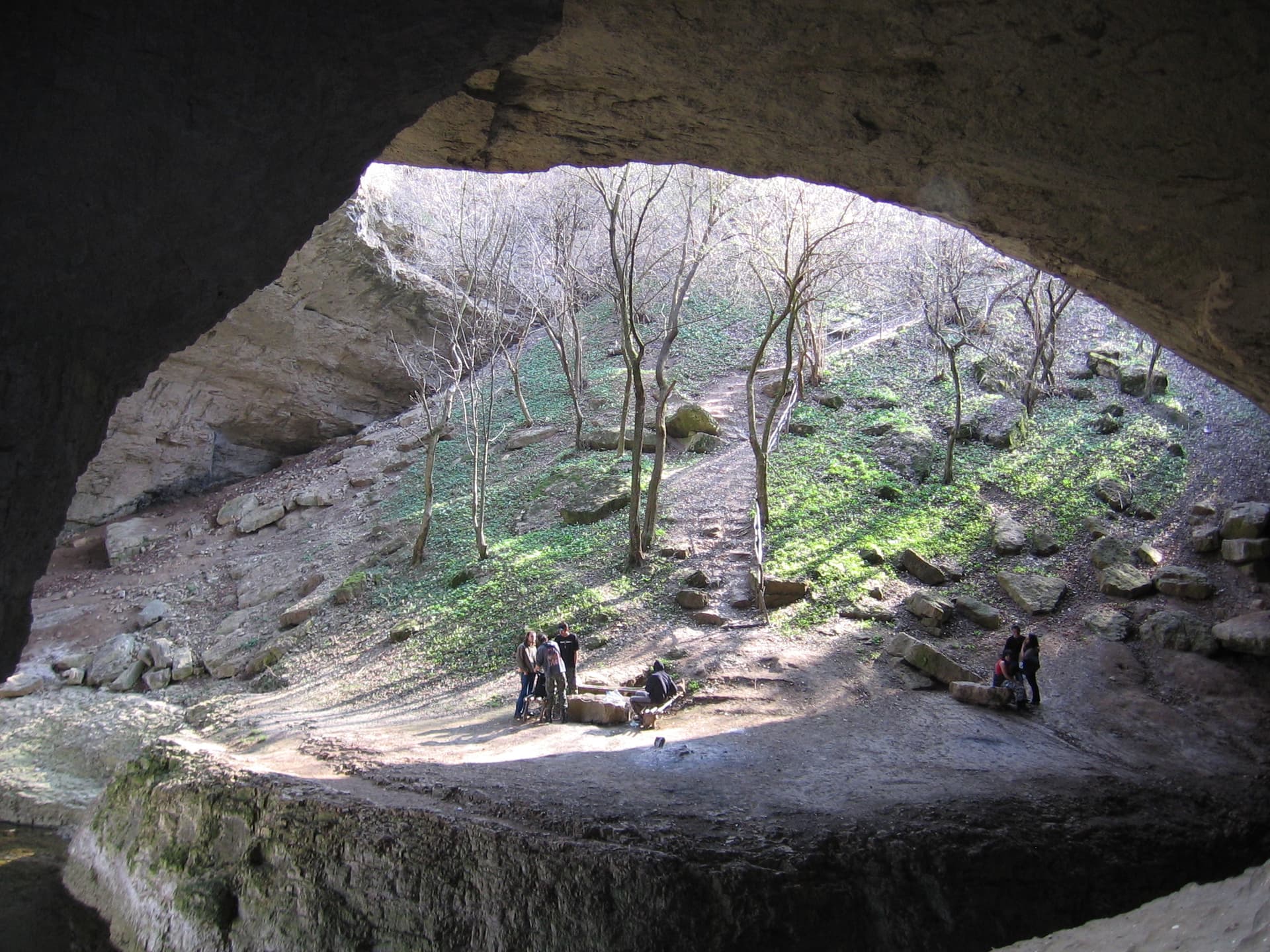
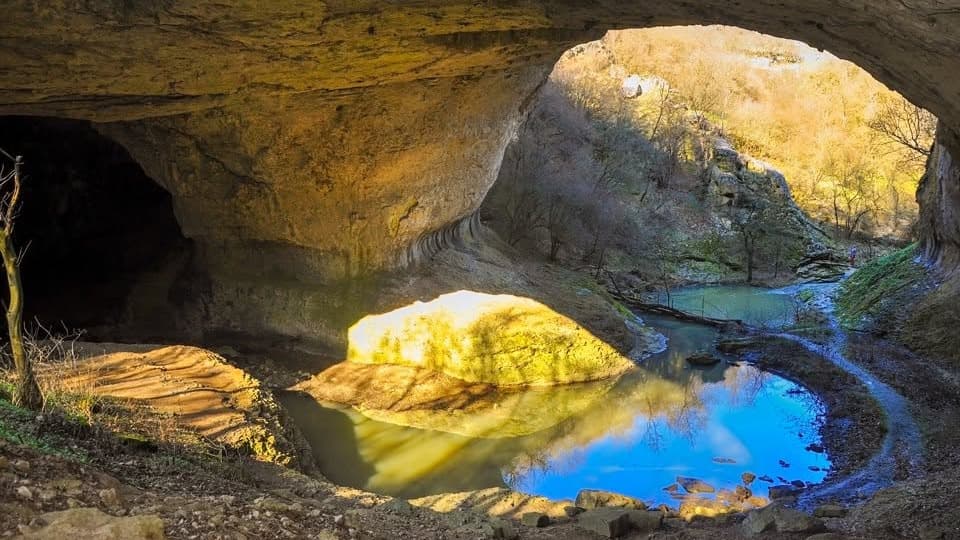
- God's Bridge (Bozhiya Most) — a large natural rock arch formed by a collapsed cave, one of the most photogenic karst features in Bulgaria. It lies out on the plain north of Vratsa, between Chiren and Lilyache, rather than up in the park, so treat it as a separate drive.
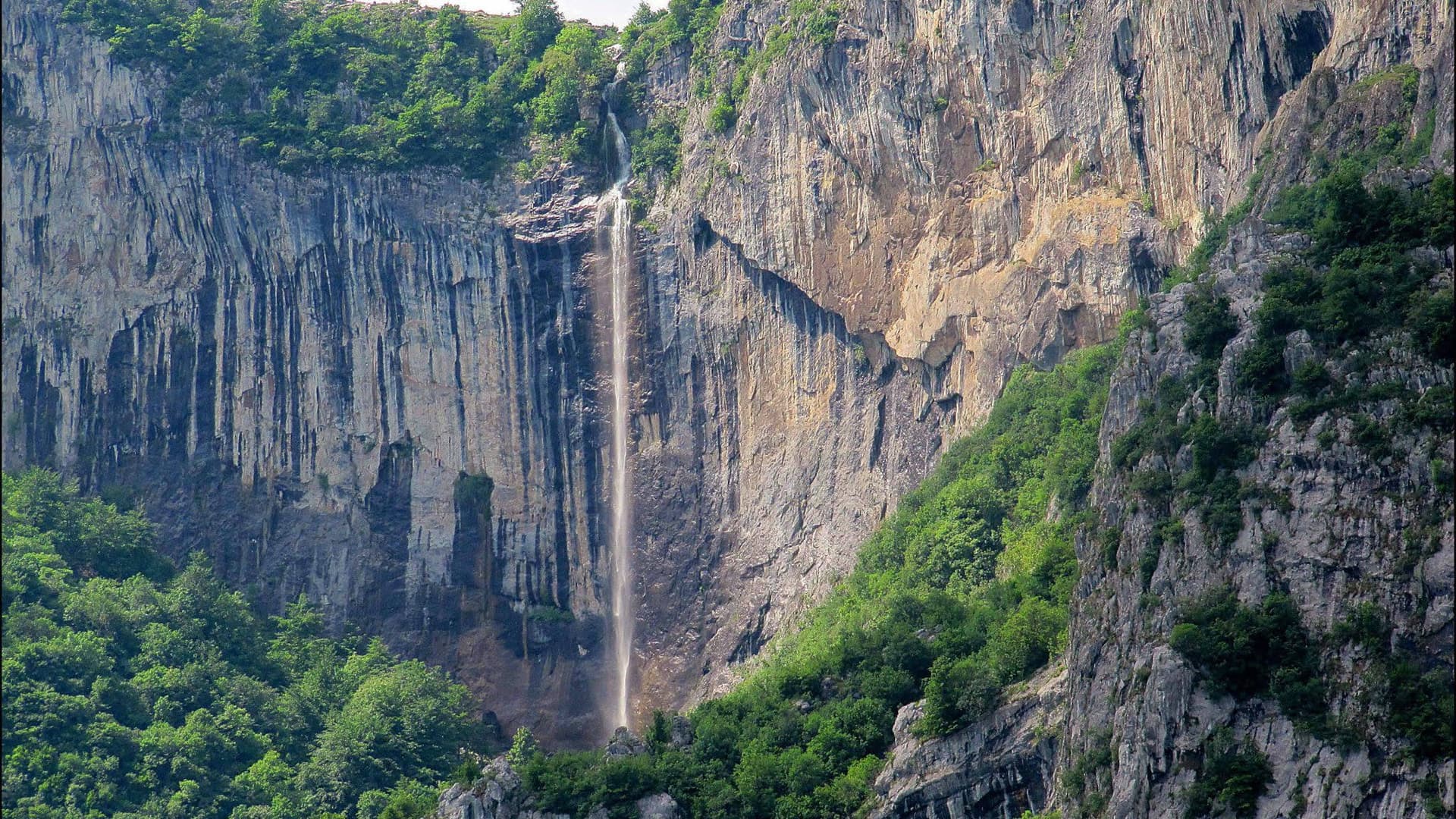
- The Skaklya waterfall — at 141 m the highest waterfall in Bulgaria, reached on foot from the upper edge of Vratsa, 1.5 km south of town behind Kaleto hill. It is strictly seasonal: it runs hard on the spring snowmelt and usually dries up completely by August. Time it for May or June.
Both are worth a dedicated half-day and turn Vratsa from a day trip into a weekend getaway.
🗓️ When to Go & What Else Is Near
Spring is the pick if you want the Skaklya waterfall running and the ice still present in Ledenika. Autumn gives the best walking weather and the golden beech colours of the Balkan range — see our autumn guide. Summer is hot on the plain but pleasant up in the park.
The north-west rewards a loop rather than a single stop:
- Belogradchik (~100 km): the rock formations and the fortress, the region's most famous sight.
- The Iskar Gorge (~50 km): the river canyon between here and Sofia, with the Lakatnik rocks and Cherepish Monastery.
- Chiprovtsi (~80 km): carpet weaving, a monastery, and waterfalls.
- Krushuna Falls and Devetashka cave further east.
For how Vratsa fits into a wider trip, see our day trips from Sofia. The whole region is strung together in our north-west road trip itinerary.
A 400-metre wall at the end of the street, an ice cave in the hills, and 165 pieces of Thracian silver in the local museum. Vratsa is the best argument for going north-west — plan it with Mestala.com.
This guide covers 14 places
Want more Mestala in your Google results?
Add mestala.com as a preferred source and our guides will show up more often when you search. Requires a Google account.
Frequently Asked Questions
Where is Vratsa and how do you get there?▾
Vratsa sits at the foot of the Balkan Mountains in north-western Bulgaria, about 110 km north of Sofia — roughly an hour and a half by car. Direct trains and buses run regularly from Sofia, and the town is located on the main northern highway toward Montana and Vidin. It is one of the easiest day trips from the capital that almost no international visitor makes.
What is the Vratsata gorge?▾
Vratsata — meaning 'the Gate' — is a dramatic limestone gorge opening directly at the western edge of town, where the road squeezes between sheer vertical walls. Its central face is widely recognised as the highest vertical rock wall in the Balkans (around 400 metres) and serves as Bulgaria's premier rock-climbing hub. You can easily walk or drive directly into it from the town centre.
What is Ledenika cave and how cold is it inside?▾
Ledenika is a developed show cave located about 16 km from Vratsa, high in the Vrachanski Balkan Nature Park at roughly 830 metres altitude. Its name means 'icy' — in winter and early spring, spectacular ice formations build near the entrance. It stays cold year-round (around 7–15°C depending on the chamber), so bring a warm layer in any season. The guided route runs about 300 metres through ten beautiful chambers.
What is the Rogozen Treasure?▾
It is the largest Thracian silver treasure ever discovered — 165 silver vessels (jugs, phials, and cups) unearthed by a local villager digging in his garden in Rogozen, Vratsa Province, in 1985–1986. It is prominently displayed at the Vratsa Regional History Museum alongside rich finds from the Mogilanska Mogila mound, including an intricate gold laurel wreath. For a regional museum, the collection is world-class.
What is the connection between Vratsa and Hristo Botev?▾
The legendary poet and revolutionary Hristo Botev died in the mountains above Vratsa in June 1876 after crossing the Danube from Romania with his detachment and landing at Kozloduy during the April Uprising. A grand memorial cross stands on Okolchitsa Peak, and every year on 2 June a national pilgrimage climbs to honour his sacrifice. Vratsa is deeply tied to the memory of one of Bulgaria's greatest historic figures.
How long do you need in Vratsa?▾
A full day covers the regional museum, the Vratsata gorge, and Ledenika cave at a comfortable pace. Spending two days allows you to add scenic walks in the Vrachanski Balkan Nature Park — including God's Bridge and the Skaklya waterfall — which is where the trip truly yields its greatest rewards.
You might be interested in
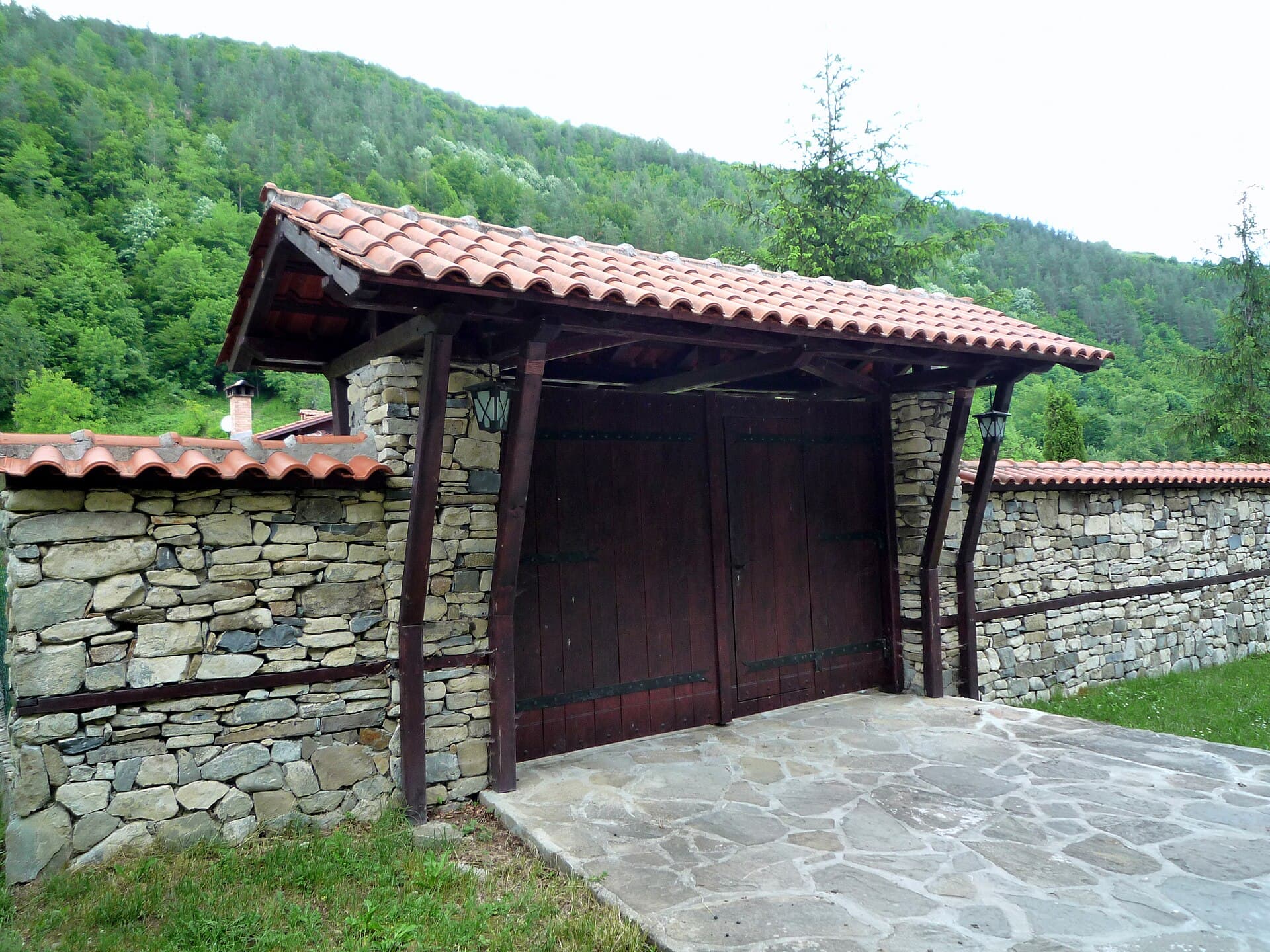
Teteven & Ribaritsa: The Quiet Side of the Balkan Range
A guide to Teteven and Ribaritsa in the Vit valley: the clifftop Glozhene Monastery, the green cheese of Cherni Vit, access to the Central Balkan reserves, and why this valley stays empty.
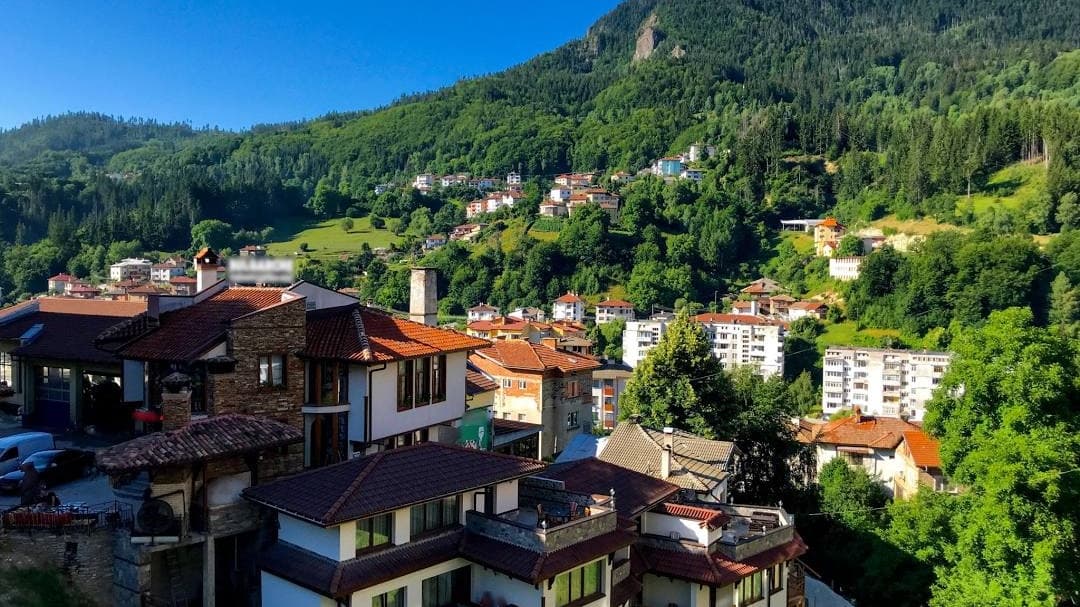
Smolyan: Gateway to the Rhodopes — Bulgaria's Highest Regional Capital
A travel guide to Smolyan, Bulgaria's highest regional capital: the Smolyan Lakes, the planetarium, the Canyon of Waterfalls, day trips to Pamporovo, Shiroka Laka and the Trigrad caves.
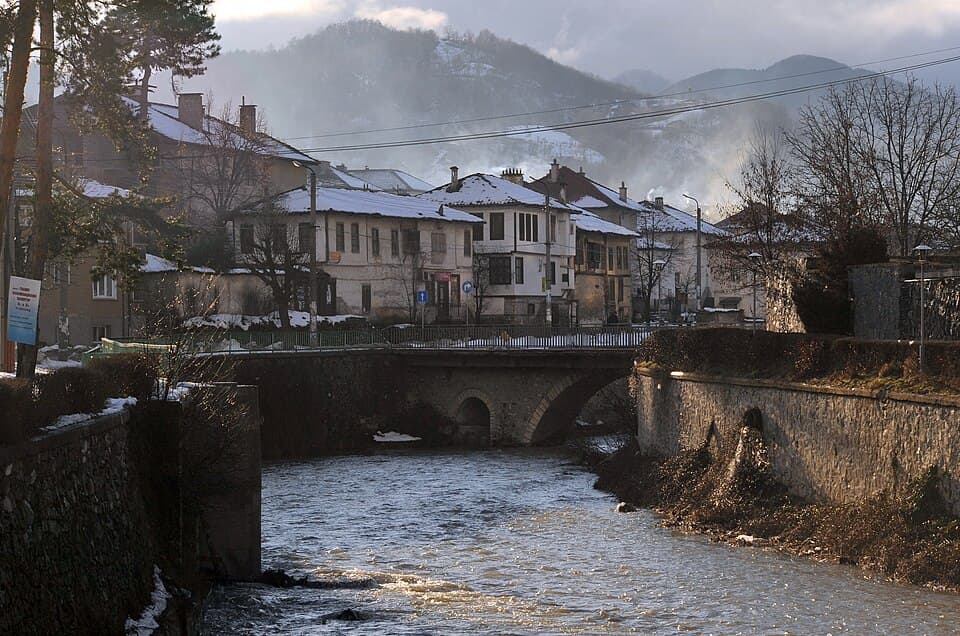
Devin and Zlatograd Weekend: Rhodope Spa Towns, Struilitsa and Old Zlatograd
A Rhodope spa weekend: Devin's mineral water and the Struilitsa eco-trail, Zlatograd's ethnographic complex and Revival quarter, with Trigrad and Yagodina nearby.
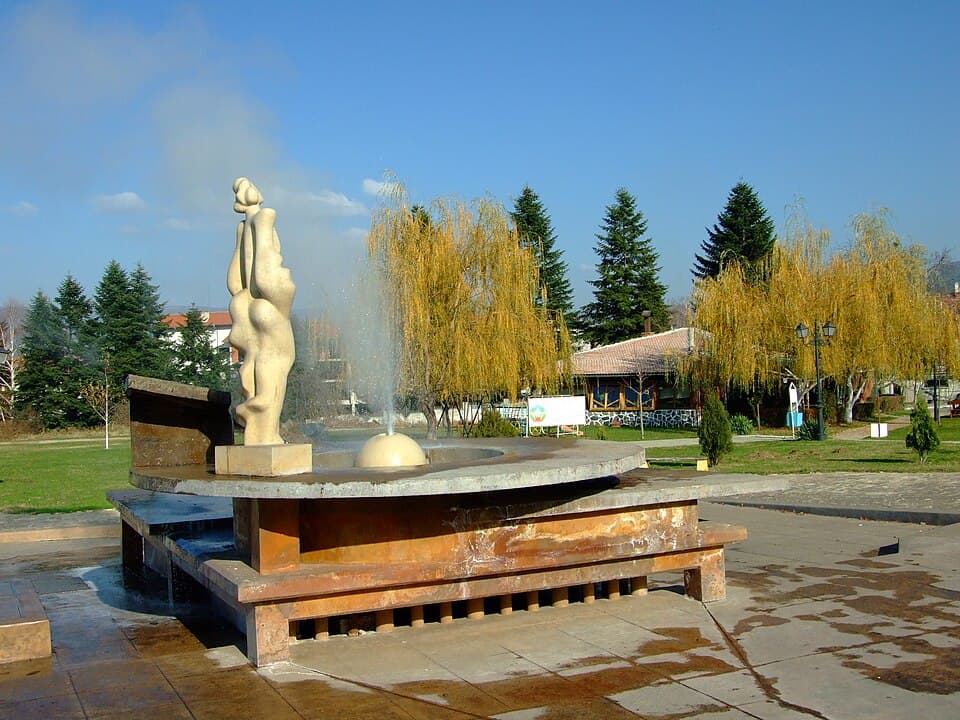
Sapareva Banya and Panichishte Weekend: the Geyser, Hot Pools and Rila
A weekend in Sapareva Banya and Panichishte: the geyser with 103 °C water, mineral pools in winter, Panichishte as the snowy side, and the way up to the Seven Rila Lakes.