

Devetashka Cave & the Lovech Karst: Bulgaria's Cave Country
In this guide▾
North-central Bulgaria doesn't shout for attention — but hidden in the limestone plateau around Lovech is some of the country's most spectacular scenery, carved entirely by water. Over millions of years the rivers here have hollowed out caverns, hung terraces of turquoise pools and punched skylights through solid rock, leaving a cluster of natural wonders within a short drive of one another. Three of them — a colossal cave, a turquoise waterfall staircase and a cave roof pierced like a pair of eyes — make one of the best day trips in the country.
This guide covers the Lovech karst trio: Devetashka Cave, the Krushuna Falls and Prohodna Cave, and how to string them together.

📍 Orientation: Cave Country Around Lovech
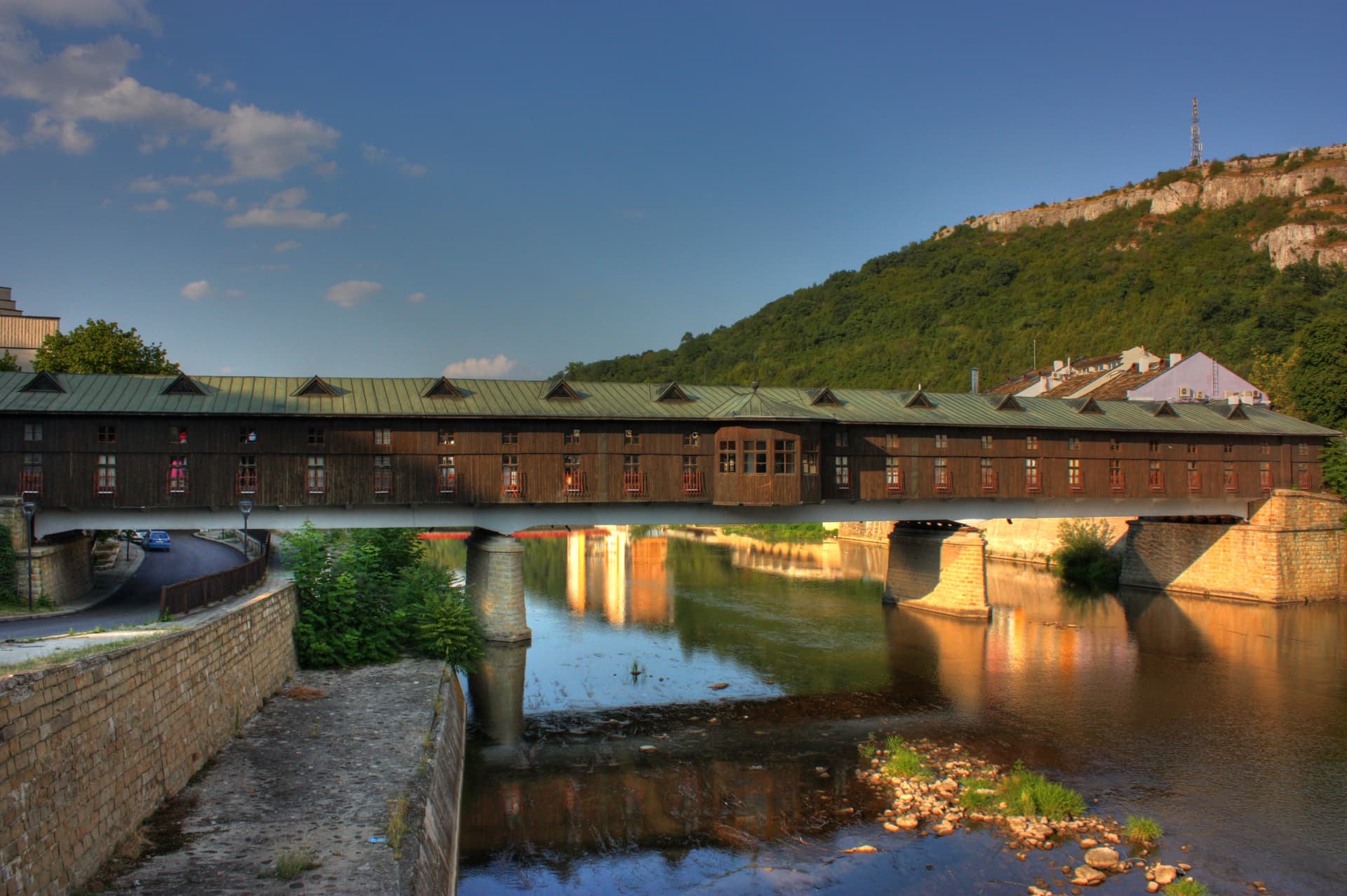
The old town of Lovech — with its covered bridge and Balkan-revival houses — is the natural gateway. From here the karst spreads north and west: Devetashka Cave lies 16 km north above the Osam River, the Krushuna Falls about 20 minutes further east, and Prohodna Cave to the west near Karlukovo. The whole trio fits into a single long loop.
| From | Distance | Driving time |
|---|---|---|
| Sofia → Devetashka Cave | ~170 km | ~2 h 15 min |
| Lovech → Devetashka Cave | ~16 km | ~20 min |
| Devetashka Cave → Krushuna | ~16 km | ~20 min |
| Lovech → Prohodna Cave | ~70 km | ~1 h 15 min |
By car: from Sofia, take the Hemus motorway east and turn north for Lovech. The roads to all three sites are asphalt. A car is effectively required — buses reach Lovech, but not the caves or the falls. See our driving guide.
🕳️ Devetashka Cave
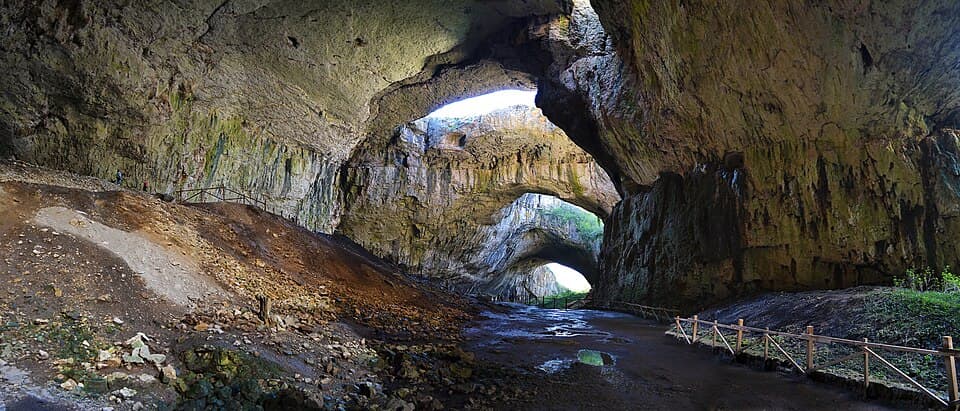
The showpiece is Devetashka Cave, one of the largest caves in Bulgaria and a genuinely awe-inspiring space: 2,442 metres of galleries covering some 20,400 m², and a main hall up to 60 metres high. Its enormous entrance opens into a cavern so big that huge holes in the roof flood the interior with shafts of daylight. People lived here as long as 70,000 years ago, with the richest finds from the Neolithic and Copper Age; the cave was first described in 1877. Today it shelters nine species of bats, along with 34 mammal species, 82 birds recorded in the area and 12 protected amphibians.
For most of the twentieth century you could not have come at all. The cave was a classified military site, used to store petroleum until the early 1990s — the concrete and the levelled floor you walk on are army work, not nature's.
Devetashka's drama has made it a film star — most famously as a location for The Expendables 2 — but nothing on screen matches standing under those pillars of light in person.
- Opening hours: daily, 08:00–20:00 from May to September and 09:00–16:00 from October to April.
- Tickets: €1.53 for adults, €1.02 for pupils, students, pensioners and residents of Lovech municipality, and €3.07 for a family ticket covering children aged 7–18. Groups of more than 15 pay €1.02 each, or €0.51 for student and pensioner groups (checked September 2026).
- Bat closures: the lit main hall is open all year, during daylight. Deeper in, an order of the Minister of Environment and Water closes the Water Gallery from 1 November to 1 April — beyond the first concrete wall — and the Dry Gallery from 25 May to 31 July, past the embankment with the arch, to protect hibernating and breeding bats.
- How long you need: about an hour. Come around midday, when the sun shines straight through the roof openings.
- Underfoot: the cave floor is uneven and can be wet, so wear shoes with grip. The site is only partly accessible for visitors with limited mobility.

💧 Krushuna Falls
About 20 minutes' drive east of Devetashka, near the village of Krushuna, the Krushuna Falls are the largest travertine cascade in Bulgaria — a staircase of turquoise pools spilling down a forested hillside, with a main fall of about 20 metres. A short eco-trail with wooden bridges and steps climbs alongside the cascades to the Maarata spring, past mossy terraces and blue-green water coloured by its mineral-rich flow. Allow 1.5–2 hours. There is a car park at the start (about €2 for the day) and entry costs about €3 for adults and €2 for children (checked September 2026).
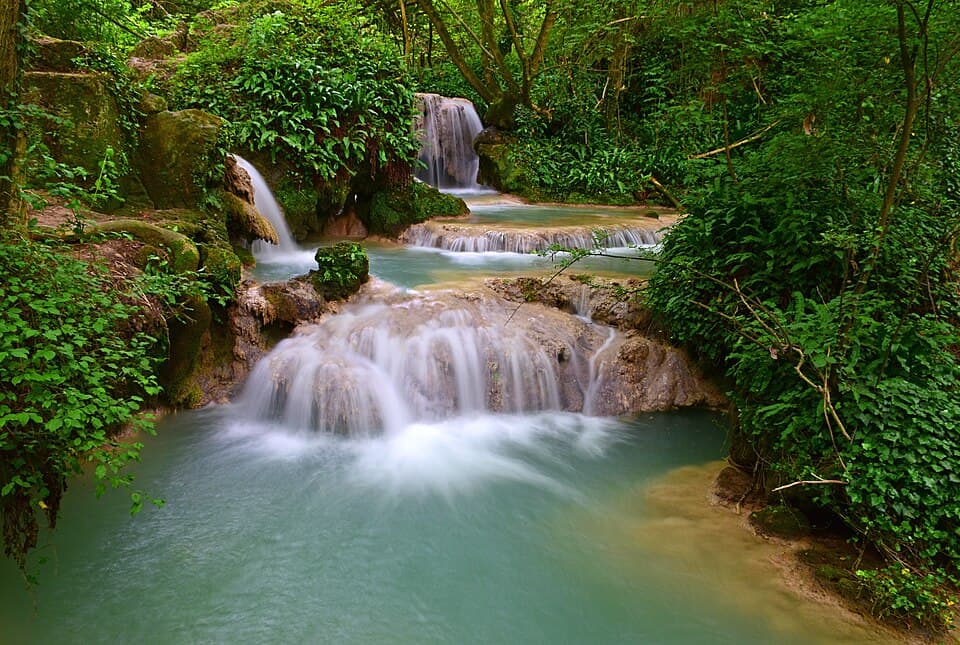

It's an easy, beautiful walk and pairs perfectly with Devetashka just up the road — for the wider context of the country's headline natural sites, see our Bulgaria natural wonders guide. We've also got a dedicated Krushuna Falls guide with the trail details.

👁️ Prohodna Cave — the "God's Eyes"
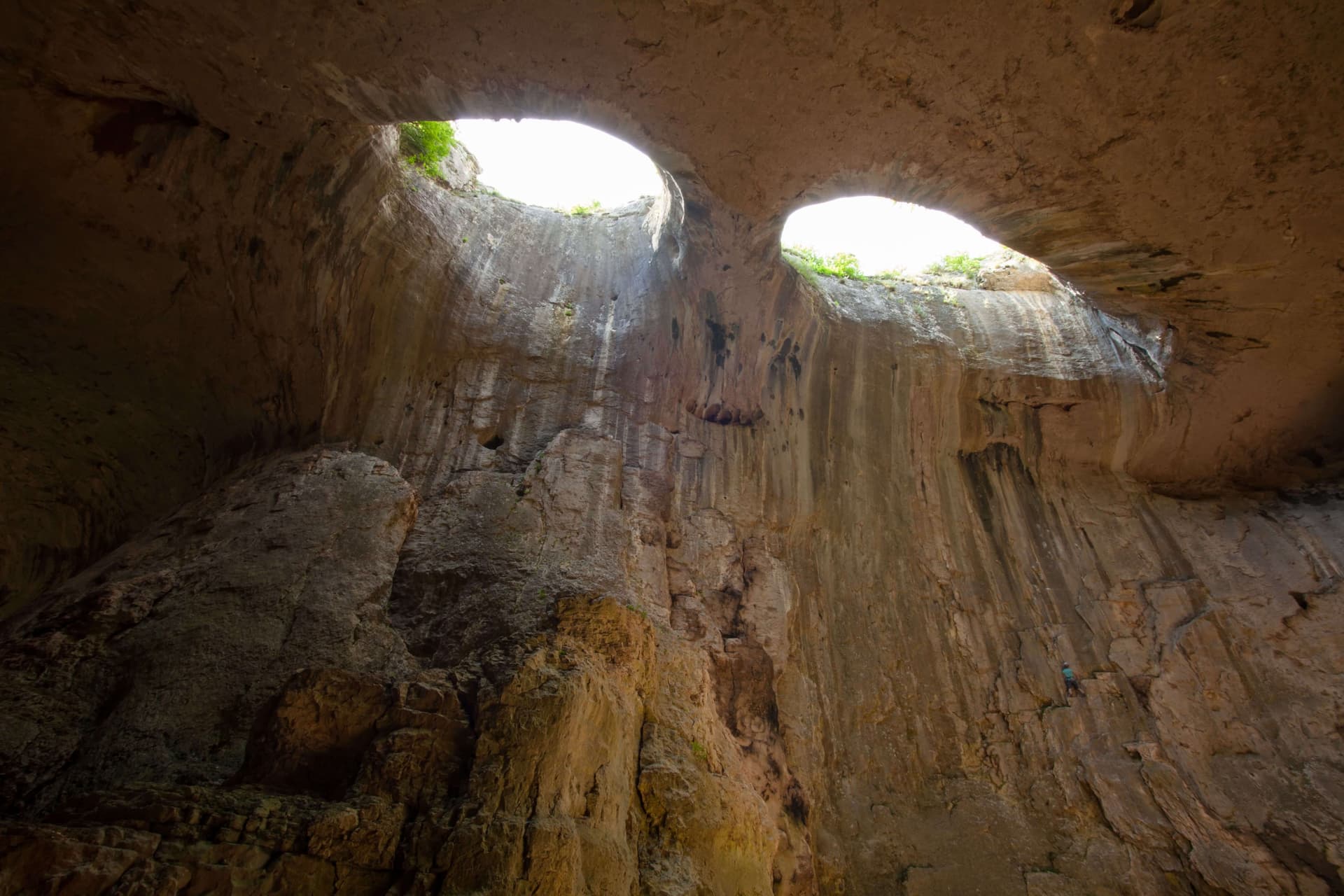
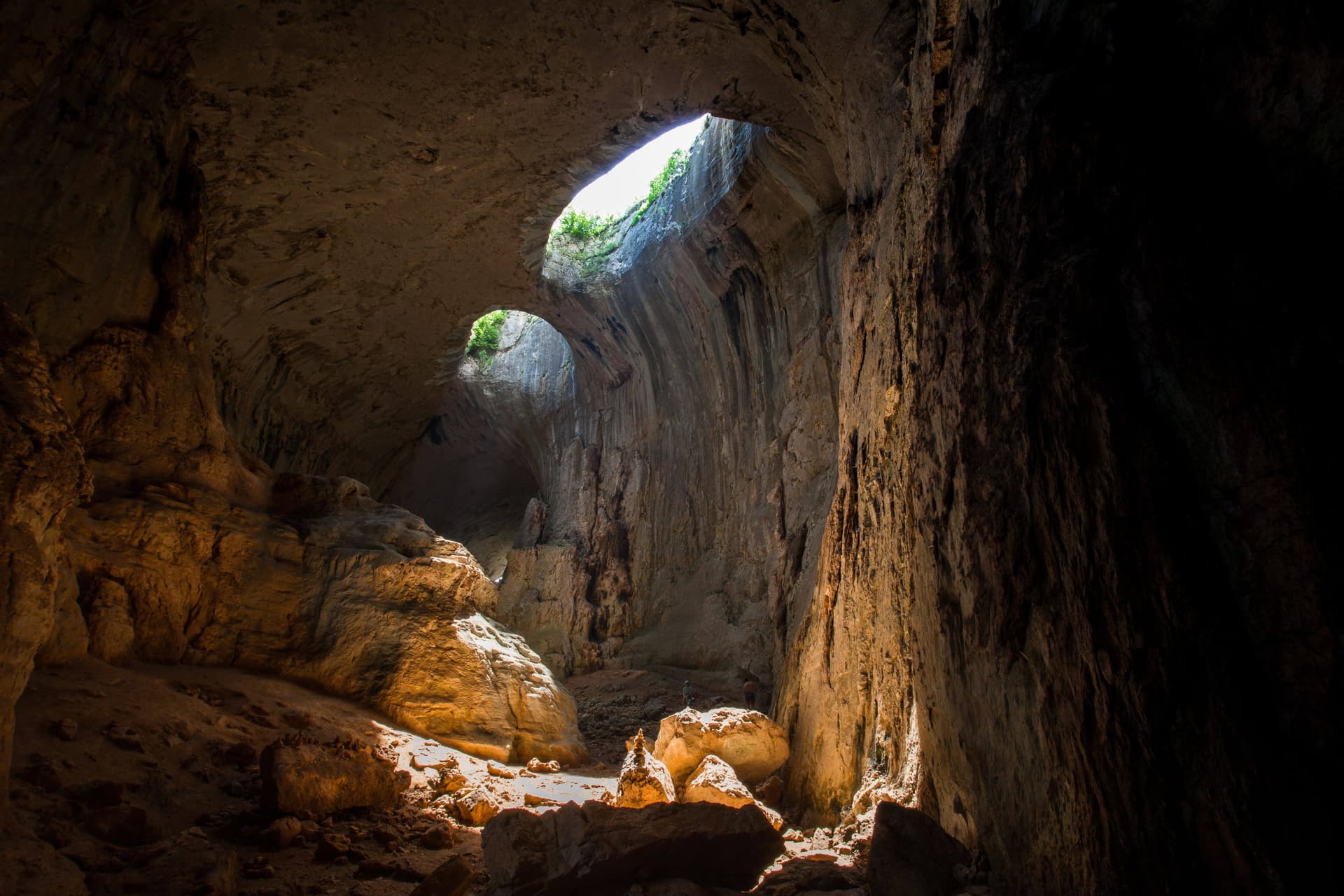
To the west, near Karlukovo, Prohodna Cave is a through-cave famous for two eye-shaped holes in its ceiling — the "Eyes of God" (Oknata) — that stare up at the sky and, depending on the light and weather, seem to weep. It's a short walk up from the road, free to enter, with free parking on the meadows below, and a magnet for photographers and rock climbers alike. Allow about an hour. Our Prohodna Cave guide has the full story.
🗺️ Doing It as a Day Loop
From Lovech (or as a long day from Sofia), the natural circuit is:
- Krushuna Falls in the morning (1.5–2 hours), before the crowds, then
- Devetashka Cave around midday (about an hour), when the light falls through the roof, then
- a stop in Lovech for the old town and covered bridge, and
- Prohodna Cave (about an hour) to the west near Karlukovo, on the way back toward Sofia.
- Wear proper shoes — the Krushuna trail and cave floors can be wet and slippery.
🗓️ When to Go
- Late spring and autumn are best: full waterfalls, green forest and mild weather.
- Summer is hot on the plateau but cool inside the caves. Krushuna gets busy on summer weekends — go early or on a weekday.
- Winter is quiet, and Devetashka's main hall stays open, though the Water Gallery is closed.
- Bat closures in Devetashka affect only the deeper galleries, so the main hall and its light shafts are there in every season.
👨👩👧👦 Is It Suitable for Children?
Yes — it's one of the best family day trips in north Bulgaria. All three sites are short walks, and children love the scale of the caves and the colour of the pools.
- Devetashka: easy, but the floor is uneven. A family ticket is €3.07.
- Krushuna: the wooden bridges and steps are easy for walking children, but the rocks by the water are slippery — hold small hands. Not suitable for pushchairs.
- Prohodna: a short but steep walk up from the road; the boulders inside need care.
- Bring a warm layer for the caves and a change of shoes for the falls.
🏨 Where to Stay
- Lovech: the practical base, with hotels and guesthouses in and around the old Varosha quarter, restaurants, and the shortest drives to Devetashka and Krushuna.
- Krushuna village: guesthouses right by the falls — quiet and green, and the easiest way to have the trail to yourself in the morning.
- As a day trip from Sofia: possible, but long. You'll spend more than four hours in the car.
🧭 What Is Nearby
- Lovech (~20 min from Devetashka) — the covered bridge, the Varosha old quarter and the Stratesh hill.
- Kakrina Inn (~20 min from Lovech) — the inn where the revolutionary Vasil Levski was captured in 1872, now a museum.
- Glozhene Monastery (~45 min from Lovech) — a monastery perched on a cliff edge above the Vit valley. It anchors our Teteven and Ribaritsa guide.
A flat plateau hiding cathedrals of stone, staircases of turquoise water and windows to the sky — the Lovech karst is one of Bulgaria's great surprises. Follow the water underground, and keep exploring with Mestala.com.
This guide covers 6 places
Want more Mestala in your Google results?
Add mestala.com as a preferred source and our guides will show up more often when you search. Requires a Google account.
Frequently Asked Questions
Where is Devetashka Cave and how do you get there?▾
Devetashka Cave is 16 km north of Lovech in north-central Bulgaria, near the village of Devetaki on the Osam River — about 170 km and 2 hours 15 minutes by car from Sofia. A car is the easiest way to reach it and to combine it with the Krushuna Falls and Prohodna Cave.
Why is Devetashka Cave famous?▾
Devetashka is one of the largest caves in Bulgaria — about 2.4 km of galleries and a main hall up to 60 m high, with huge openings in its roof that send shafts of light down to the floor. People lived here as long as 70,000 years ago, it shelters nine species of bats, and it gained international fame as a filming location for The Expendables 2.
Is Devetashka Cave open, and how much does it cost?▾
Yes. The lit main hall is open all year, daily from 08:00 to 20:00 in summer and 09:00 to 16:00 in winter. To protect the bats, the Water Gallery is closed from 1 November to 1 April and the Dry Gallery from 25 May to 31 July. Tickets cost €1.53 for adults, €1.02 for students, pensioners and residents of Lovech municipality, and €3.07 for a family with children aged 7–18 (checked September 2026).
Can you visit Devetashka, Krushuna and Prohodna in one day?▾
Yes. Krushuna Falls are about 20 minutes' drive (16 km) from Devetashka Cave, and Prohodna lies about an hour and a quarter to the west near the village of Karlukovo, on the way back toward Sofia. With about an hour at each cave and two at Krushuna, it's a full but very rewarding day.
What are the Krushuna Falls?▾
The Krushuna Falls are a cascade of turquoise travertine pools and waterfalls near the village of Krushuna, about 35 km from Lovech — the largest travertine cascade in Bulgaria, with a main fall of about 20 metres. A short eco-trail with wooden bridges climbs alongside the terraces to the Maarata spring. Entry is about €3 for adults and €2 for children, with parking about €2 for the day.
When is the best time to visit?▾
Late spring and autumn are ideal across the karst: green landscapes, full waterfalls and comfortable temperatures. In Devetashka, the deeper galleries close for the bats (the Dry Gallery from 25 May to 31 July, the Water Gallery from 1 November to 1 April), but the main hall with its light shafts stays open all year. Visit around midday for the best light.
You might be interested in
The Caves of Bulgaria: Which Ones Are Worth It
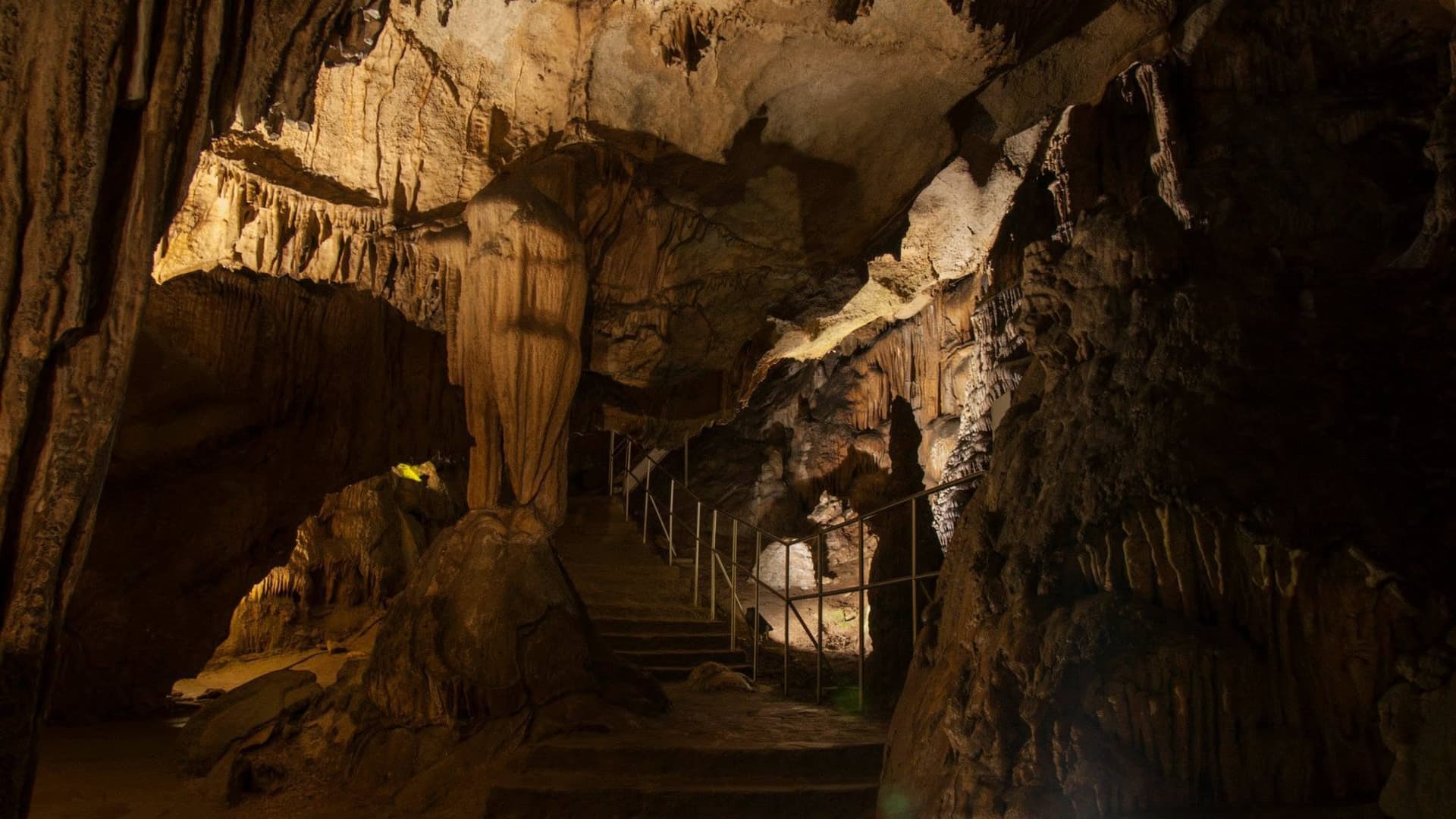
A guide to Bulgaria's show caves — Prohodna, Devetashka, the Devil's Throat, Ledenika, Bacho Kiro, Magura, Yagodina, Saeva Dupka and Snezhanka — with what each one is actually for and how to pair them.
Dryanovo Monastery & Bacho Kiro Cave
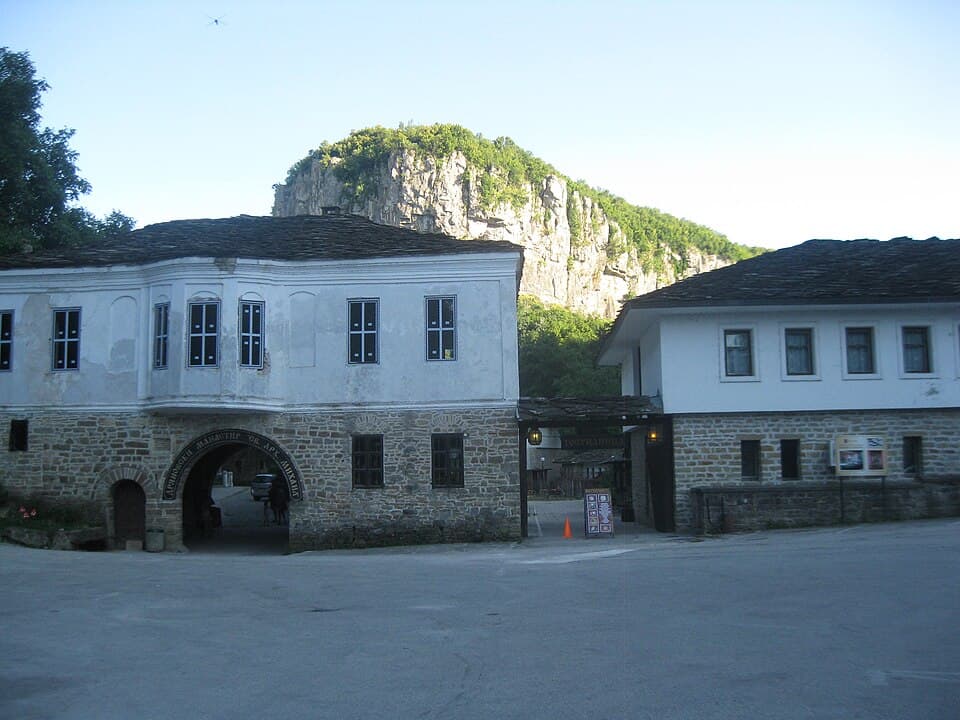
A guide to the Dryanovo Monastery and the Bacho Kiro cave in the Andaka gorge: the nine-day siege of 1876, the cave's two lit routes, the 45,000-year-old human remains found inside, and how to walk the gorge trails.
Prohodna Cave: Bulgaria's "God's Eyes"
How to visit Prohodna Cave near Karlukovo — the Eyes of God rock formation, Bulgaria's longest cave tunnel: getting there from Sofia, best light for photos, bungee jumps and pairing it with Devetashka Cave and Krushuna Falls.
Devin and Zlatograd Weekend: Rhodope Spa Towns, Struilitsa and Old Zlatograd
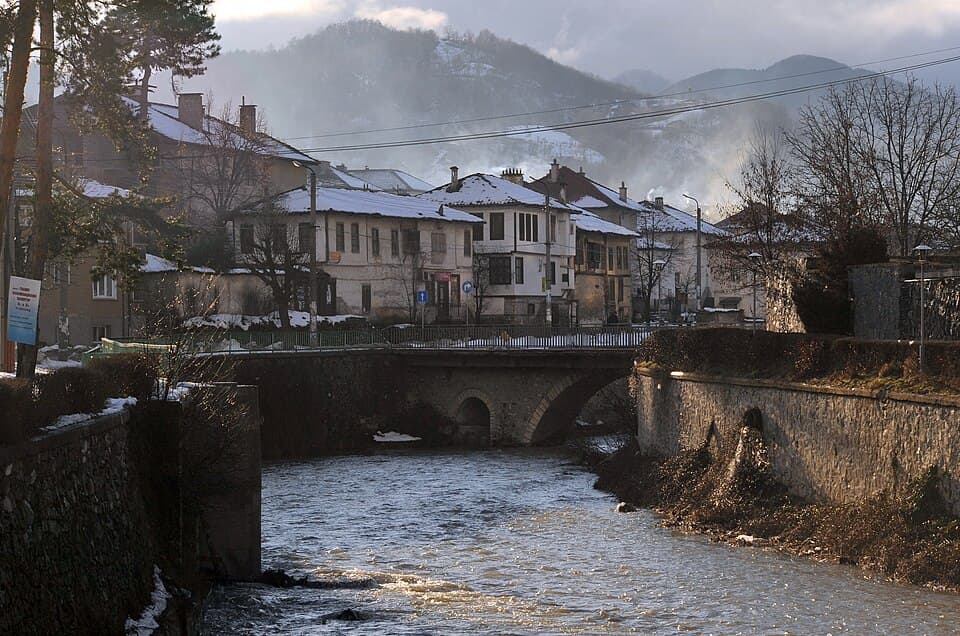
A Rhodope spa weekend: Devin's mineral water and the Struilitsa eco-trail, Zlatograd's ethnographic complex and Revival quarter, with Trigrad and Yagodina nearby.