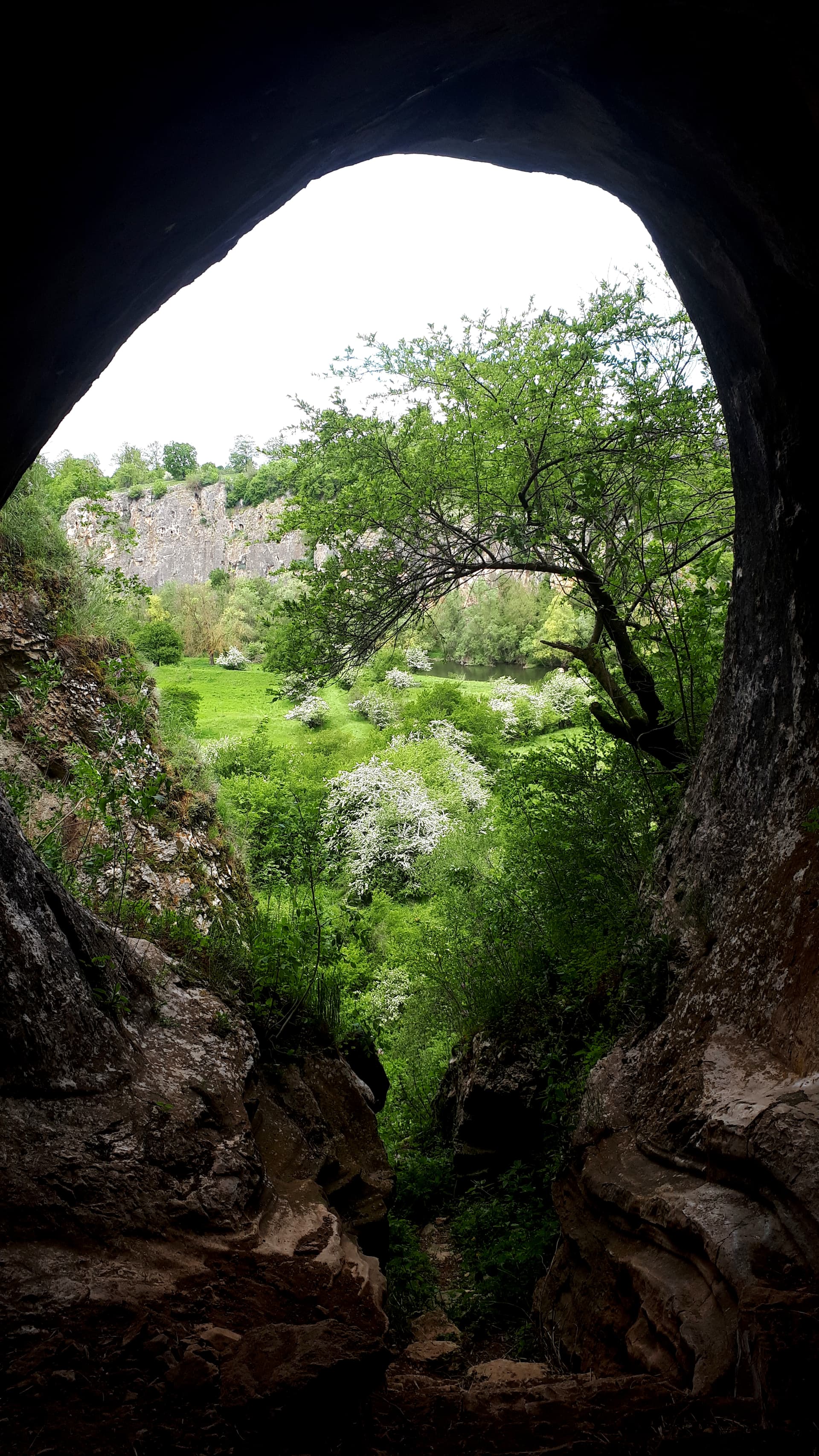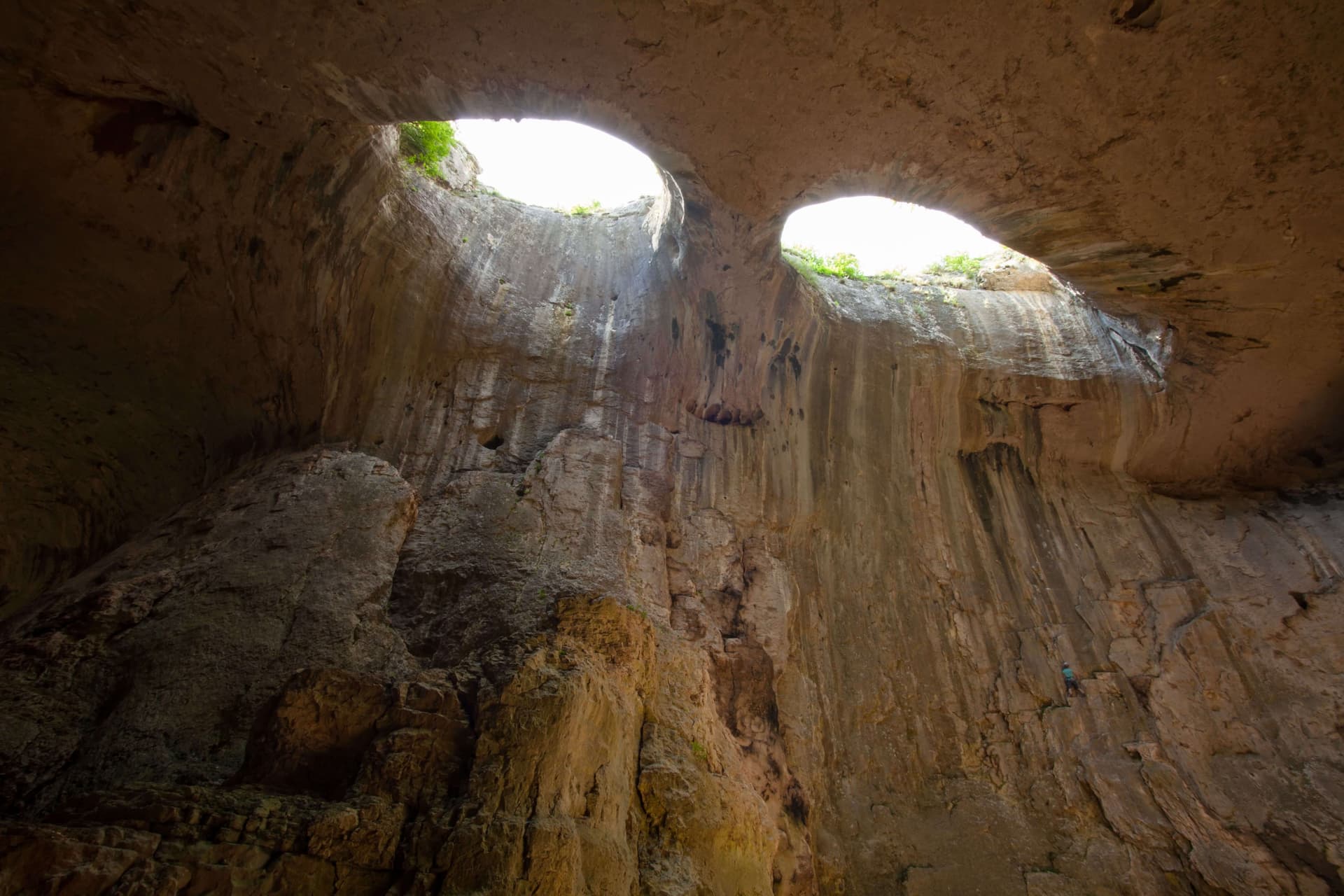
The Prohodna Cave stands as one of the most famous, impressive, and geologically unique rock phenomena not only within the borders of the Republic of Bulgaria but across the entire European continent. The destination positions in immediate proximity to the rural gorge of the village of Karlukovo, Lovetch Province, nesting within the boundaries of the extensive Pre-Balkan physical-geographical region. Due to its outstanding ecological, aesthetic, and scientific value, the cave was officially declared a protected territory in 1962 under the legal status of a natural landmark. Prohodna operates as the longest continuous cave tunnel across Bulgaria, displaying an impressive length spanning 365 meters, while the vertical clearance of its majestic limestone vaults reaches a record-breaking height of 56 meters. In structural terms, the cave functions as a monumental subterranean corridor and an open-ended massive rock bridge, whose primary horizontal axis is strictly oriented from east to west. Geomorphological Processes, Lithology, and Palaeontological Records This outstanding natural monument originated during the terminal phase of the Cretaceous Period of Earth's geological history, approximately 66 to 68 million years ago. In remote geological epochs, the high-volume currents of the Iskar River completely filled the interior of the cave channel, sculpting its shape via continuous fluvial erosion. Today, the contemporary water baseline of the Iskar River has dropped significantly beneath the base level of the cave floor. Due to prolonged active karstification processes characteristic of this region, ancient seismic activity, denudation, and subterranean river actions, the cave karst corridor was disrupted in the past, isolating and separating this specific segment entirely. The lithological matrix of Prohodna incorporates the following specifications: - Rock Composition: The cave is engineered predominantly from light-beige to pure white, robust, dense, and massive organogenic limestones. - Stratum Thickness: The thickness parameters of the solid rock layers forming the ceilings and walls vary within wide intervals measuring from 10 to 50 meters. - Palaeontological Fossils: Perfected within the limestone matrix are dozens of precious fossils and well-preserved ancient remnants of shelly detritus, bryozoans, marine bivalves, brachiopods, gastropods, ancient sea urchins, and ammonites. These fossilized records are more pronounced and accessible for observation across the western sector of the geological phenomenon. The Oknata Phenomenon and the Spring Equinox The defining element of Prohodna is the formation of the Oknata phenomenon, widely designated across regional folklore as the Chimneys, and popularized within modern travel management as the Eyes of God. These structures were sculpted into the ceiling of the middle chamber due to active denudation forces and continuous vertical erosion driven by the extended percolation of meteoric and subsurface waters. The phenomenon comprises two colossal, completely natural, and nearly identical rock openings displaying a regular almond-shaped symmetry that strikingly mirrors human eyes. Observed either from the cave floor baseline or from the elevated plateau cliffs, Oknata resemble eyes peering down intensely at visitors. The majestic visual impression triggered by the vertical light shafts breaking through them is monitored deep inside the cave interior, which remains naturally illuminated. Because the altitudinal displacement between the two main gateways of the tunnel is significant, outdoor daylight accesses the chambers vertically through Oknata, forging a highly mystical atmosphere. Archaeological evaluations confirm that in deep antiquity, the cave operated as a critically vital occult and religious complex for native Thracian tribes, where priests executed extensive rituals and offerings. Annually on March 21, the date marking the astronomical spring equinox, a traditional ritual dedicated to fertility and new beginnings was performed. On this specific day, a concentrated solar ray pierces through Oknata, illuminating a specialized rock altar under a unique mathematical alignment. Decades later, during the heavy aerial bombardments striking the nation throughout World War II, Prohodna served as a natural bomb shelter, where hundreds of local residents found secure sanctuary. Cinematographic Legacy, Sports, and Global Acclaim Today, the Prohodna Cave has transformed into a true icon of Bulgarian wilderness, with its gaze frequently featured inside international and domestic travel films, commercial promotions, and presentation assets. During the major scientific Iskar Gorge 2008 geological expedition, the cave was officially classified and recorded as a geotope of national significance under the strict criteria driving the Registry and Cadastre of Geological Phenomena in Bulgaria. Due to its monumental scale and premium acoustic parameters, the cave has hosted the production of dozens of prominent Bulgarian and foreign feature films, television series, and musical videos. Standing out among the most celebrated titles in cinema are the historical masterpieces Time of Violence and Boris I, the large-scale French historical production Vercingetorix: The Legend of the Druid King, the American dramatic feature The Way Back, the Soviet-Bulgarian series In Search of Captain Grant, alongside the Bulgarian television production Shmenti Kapeli: The Legend. Operating inside the perimeter of Prohodna for film productions were globally recognized actors including Ed Harris, Colin Farrell, Christopher Lambert, Stefan Danailov, Maya Bezhanska, and an array of other creators. For extreme sports enthusiasts, Prohodna offers prime technical infrastructure, ranking as one of the few natural caves worldwide where extreme cave bungee jumping is regularly practiced from the archway of the Great Gate.

Lovech
0.3 km away
Lovech
0.4 km away
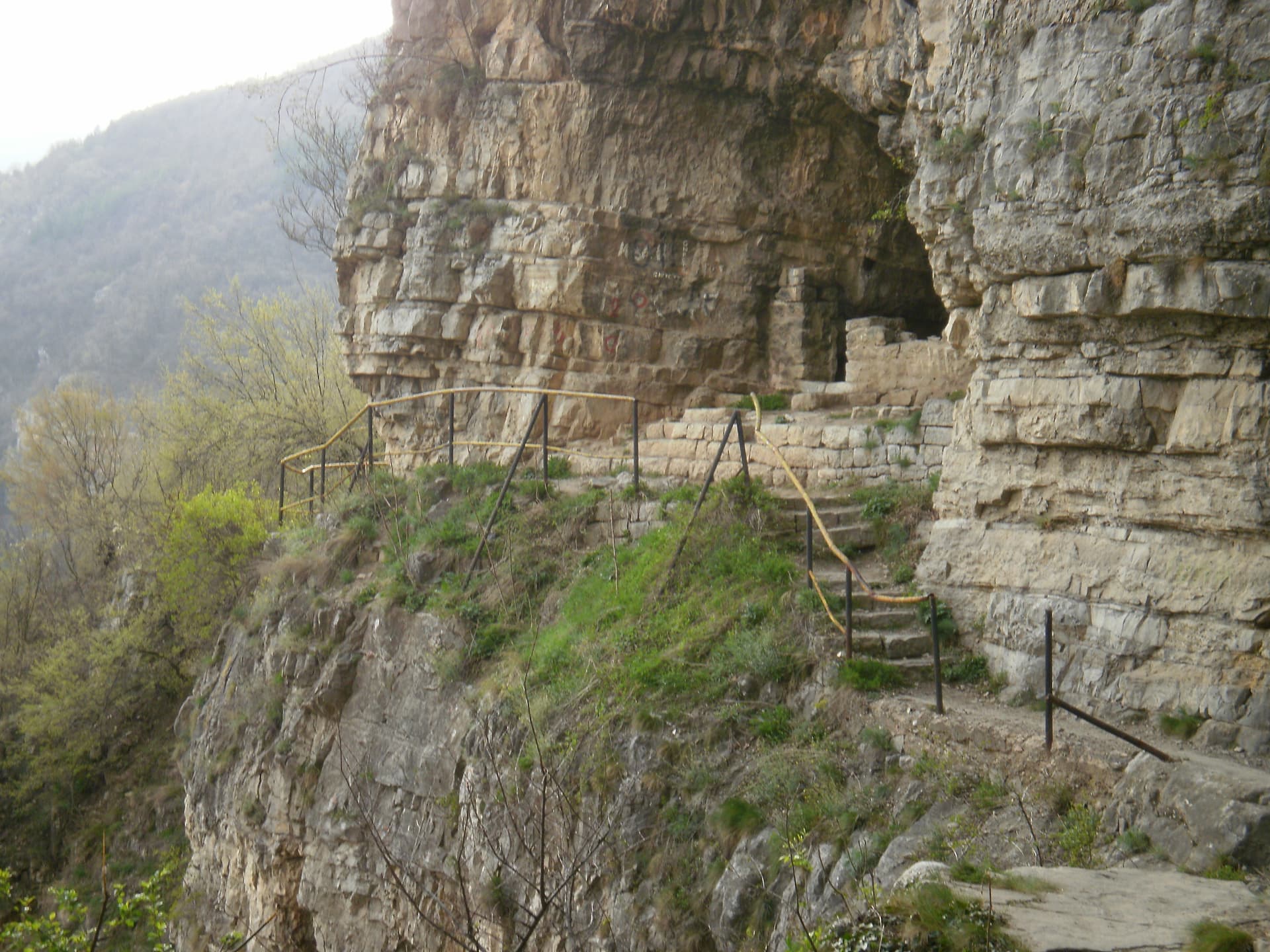
Lovech
5.9 km away

Lovech
7.9 km away
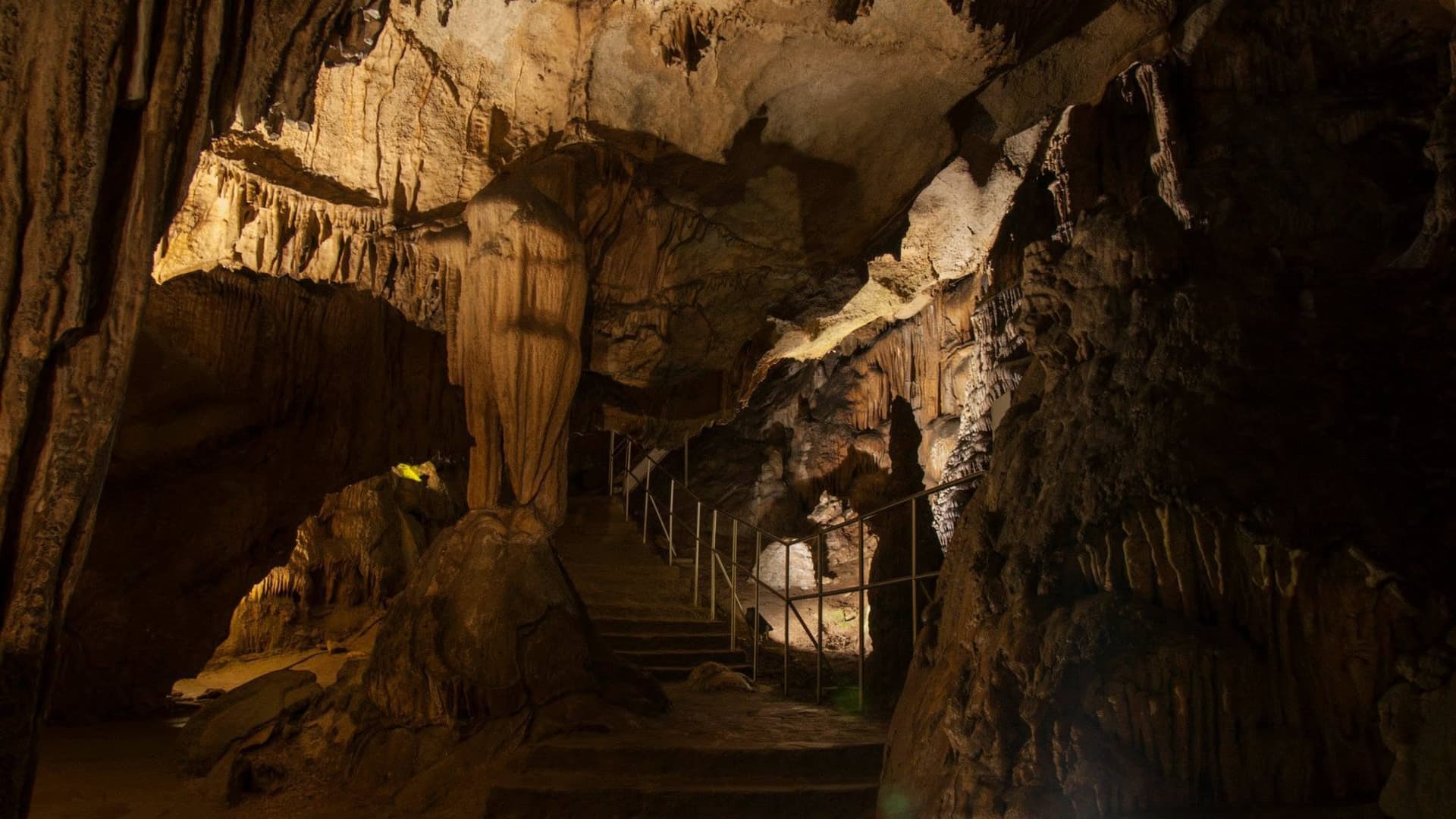
A guide to Bulgaria's show caves — Prohodna, Devetashka, the Devil's Throat, Ledenika, Bacho Kiro, Magura, Yagodina, Saeva Dupka and Snezhanka — with what each one is actually for and how to pair them.
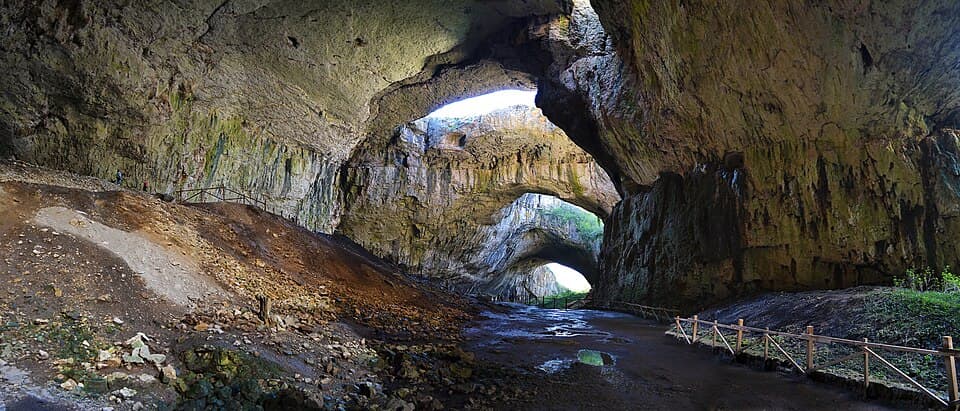
A guide to the karst country around Lovech: the vast film-famous Devetashka Cave, the turquoise Krushuna Falls and the God's-eyes Prohodna Cave — three of Bulgaria's natural wonders in one day trip.
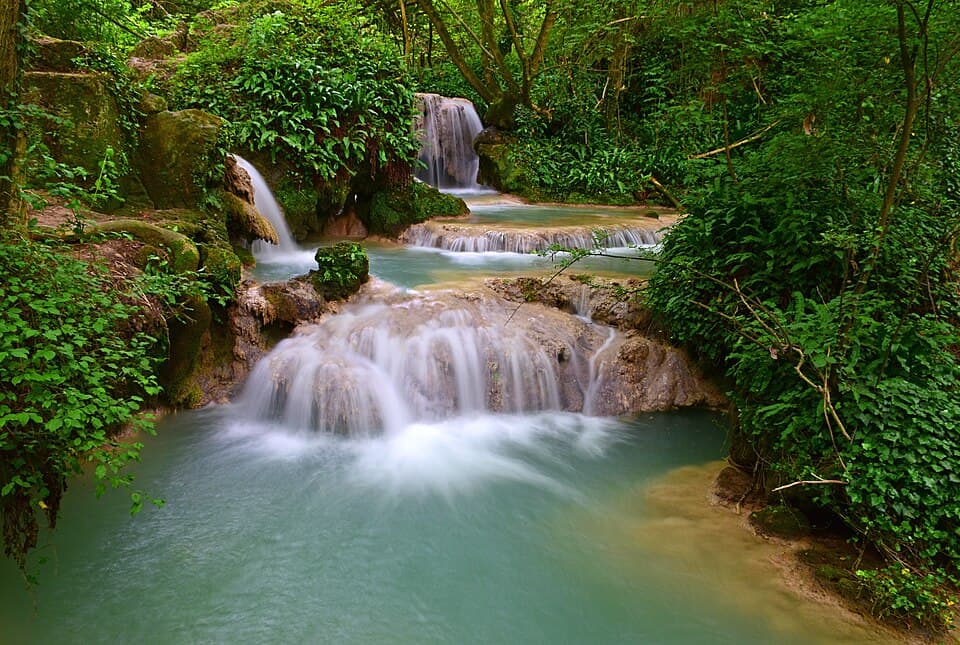
How to visit Krushuna Falls, Bulgaria's largest travertine cascade: the eco-trail loops, entrance fee, best season for full water, photography tips and pairing it with Devetashka Cave and Prohodna.
Prohodna cave is located in Lovech, Bulgaria.
Prohodna cave is most easily reached by car. Use the coordinates above to navigate, or open the location in OpenStreetMap or your preferred maps app for turn-by-turn directions. Public transport options vary by region — for remote destinations a rental car gives the most flexibility.
Caves can be visited year-round — the temperature inside stays roughly 10–12°C regardless of season. Spring and autumn are quieter than peak summer. Bring a warm layer and sturdy footwear; some caves close in winter when access roads become impassable.
Access to caves varies. Show caves typically run guided tours during posted opening hours; wild caves require proper equipment and experience. Inside, the temperature stays cool year-round (~10–12°C) — bring a warm layer, sturdy non-slip footwear, and a torch even on guided tours.