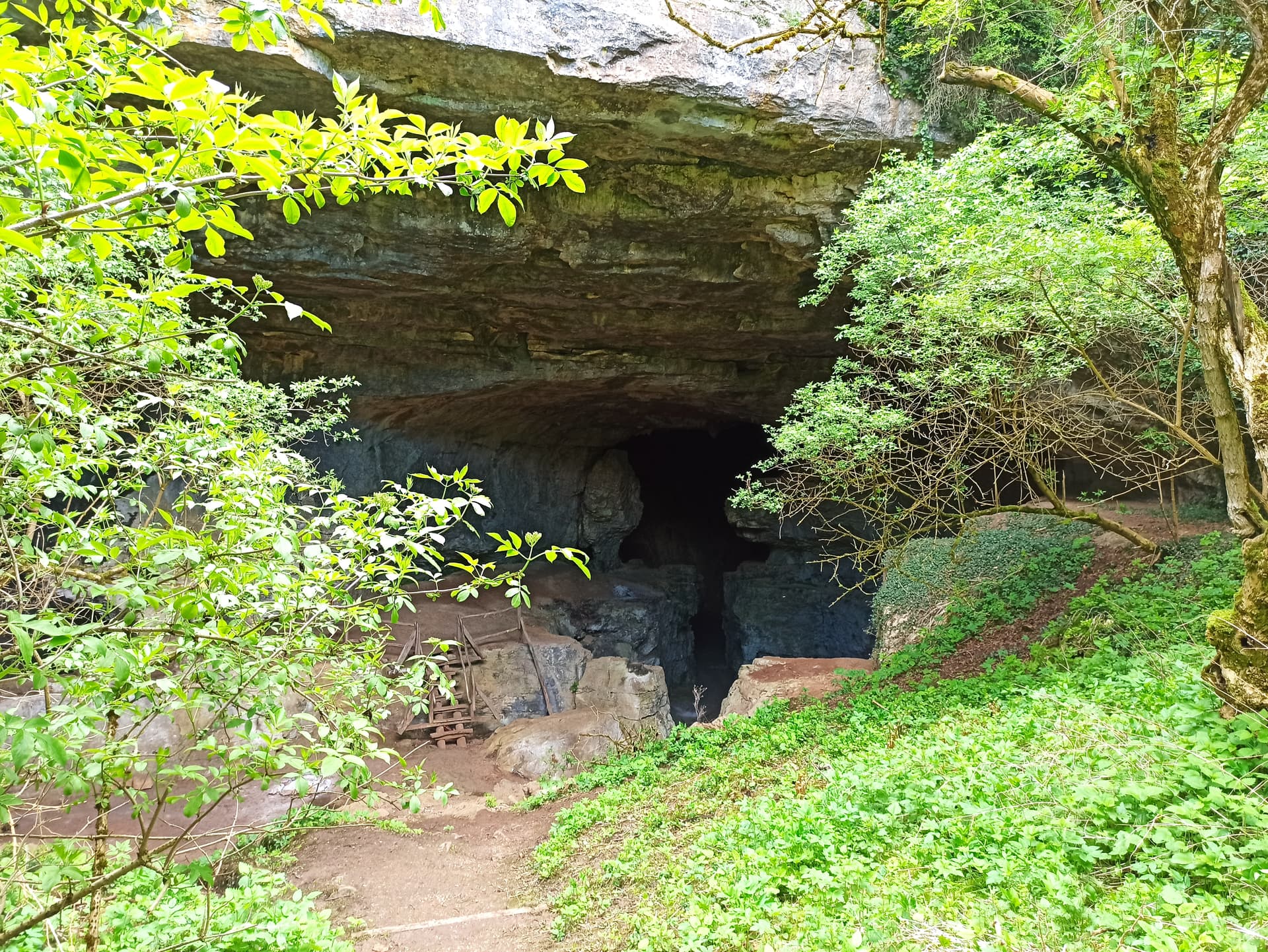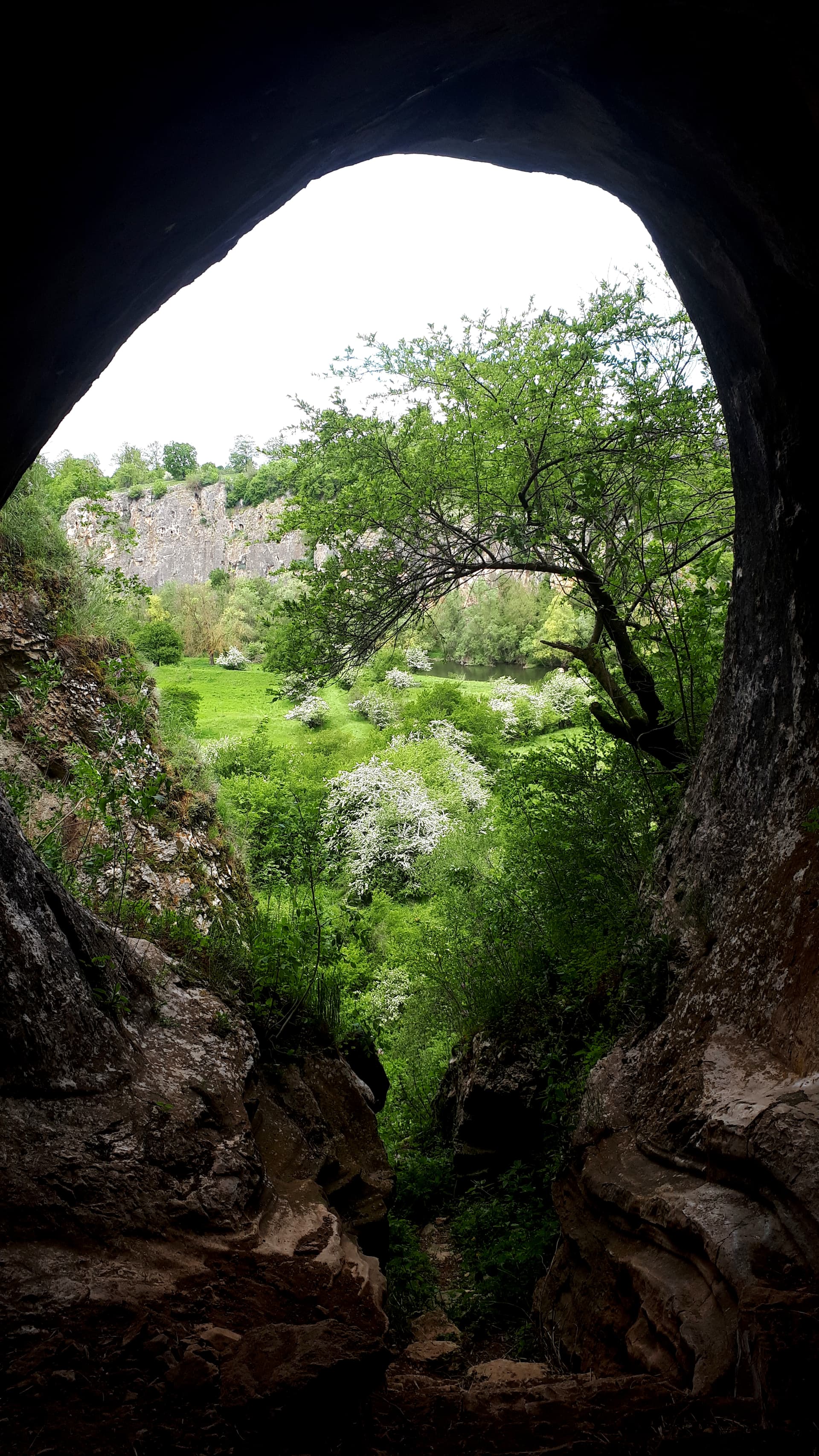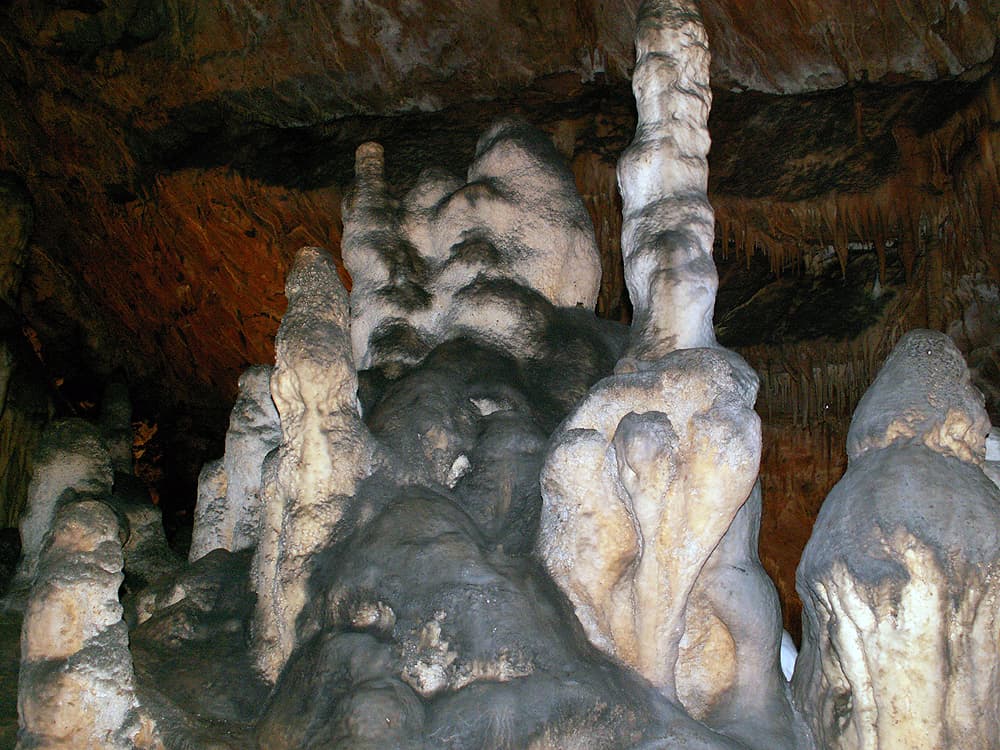
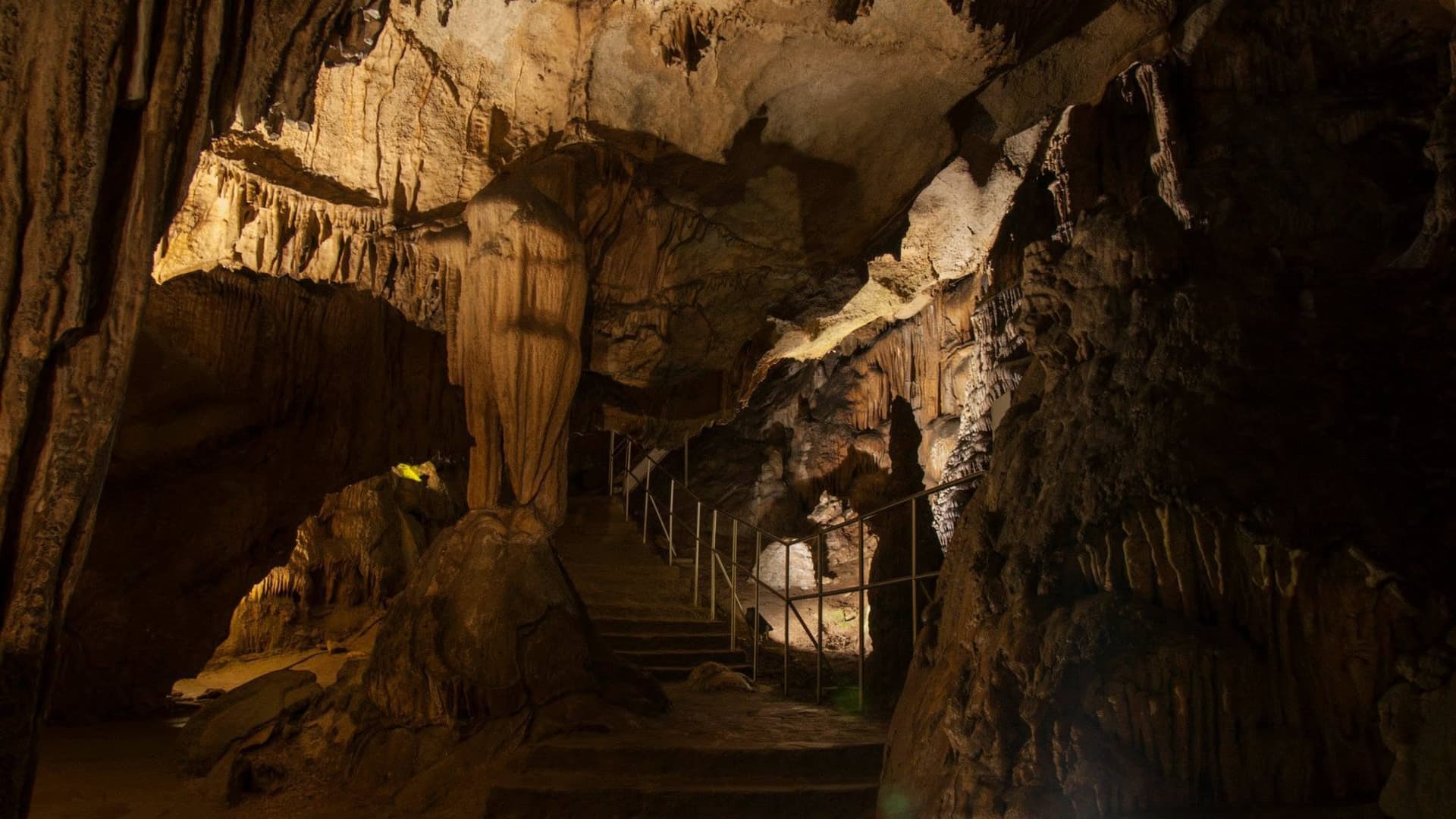
Saeva Dupka is one of the most stunning and visually captivating caves in Bulgaria, located in the central Pre-Balkan region of the Lovech District. It is situated 3 kilometers south of the village of Brestnitsa, 10 km from Yablanitsa, and 25 km from Teteven. Nestled at an altitude of 520 meters above sea level, the cave was officially declared a natural landmark in 1962. It holds a proud place under number 33 in the 100 National Tourist Sites of the Bulgarian Tourist Union, where visitors can collect their official commemorative stamps. Alongside the Yagodina Cave, Saeva Dupka is considered the most beautiful cave in the country, showcasing a unique color palette of green, brown, and white, along with a complete display of speleothems — stalactites, stalagmites, helictites, dendrites, and a massive stalagnate (column) boasting a spectacular circumference of 60 meters. Estimated to be around 3 million years old, the cave shares a deep connection with local history. It owes its name to two shepherd brothers, Sayu and Seyo, who discovered the underground cavern by chance and used it as a hideout during the Ottoman rule. During the safety adaptations of the interior, researchers unearthed animal bones, ancient pottery, and coins dating back to the reign of the Roman Emperor Antoninus, confirming that the cave was inhabited during antiquity. The first scientific exploration was conducted in 1883 by Professor Georgi Zlatarski, followed a decade later by the renowned brothers Karel and Herman Škorpil, with detailed mapping continuing throughout the 20th century. The cave was electrified and opened for tourism in 1967. After a period of closure and vandalism in the 1990s, it was successfully re-illuminated in 2004 and is currently managed by the Bulgarian Tourist Union. The cave features a total length of 205 meters, maintaining a constant internal temperature between 7 and 11 °C with a high humidity level of 90-98%, while an underground river flows 70 meters beneath the surface. The guided tour leads visitors through five distinct chambers and several connecting galleries: - Kupena (The Hayrick): The first chamber near the entrance, relatively modest in size, named after a large stalagmitic formation that resembles a classic hayrick. - Srutisheto (The Landslide): The second chamber, heavily affected by a powerful earthquake in 1893 that shattered and brought down all its ceiling stalactites. During the collapse, one of the massive columns snapped, taking on the distinct shape of a cannon, while young miniature formations can now be seen growing on the ceiling. - The Concert Hall (Haramana): The third chamber, celebrated for its perfectly flat floor and phenomenal acoustic properties. It has hosted performances by legendary Bulgarian singers like Lili Ivanova and Emil Dimitrov, as well as the Children's Choir of the Bulgarian National Radio. This hall showcases rare helictites — coral-like formations shaped by air currents that push falling water droplets sideways. - Kosmos (Cosmos): Named after a striking stalactite shaped like a space rocket. This chamber also features a whimsical arrangement of formations known as Snow White and the Seven Dwarfs. - Beliat Zamak (The White Castle): The final hall of the tour, named after a monumental, colossal column that resembles a magnificent medieval fortress.

Lovech
0.3 km away
Lovech
2.0 km away
Lovech
8.0 km away

Lovech
15.7 km away
A guide to Bulgaria's show caves — Prohodna, Devetashka, the Devil's Throat, Ledenika, Bacho Kiro, Magura, Yagodina, Saeva Dupka and Snezhanka — with what each one is actually for and how to pair them.
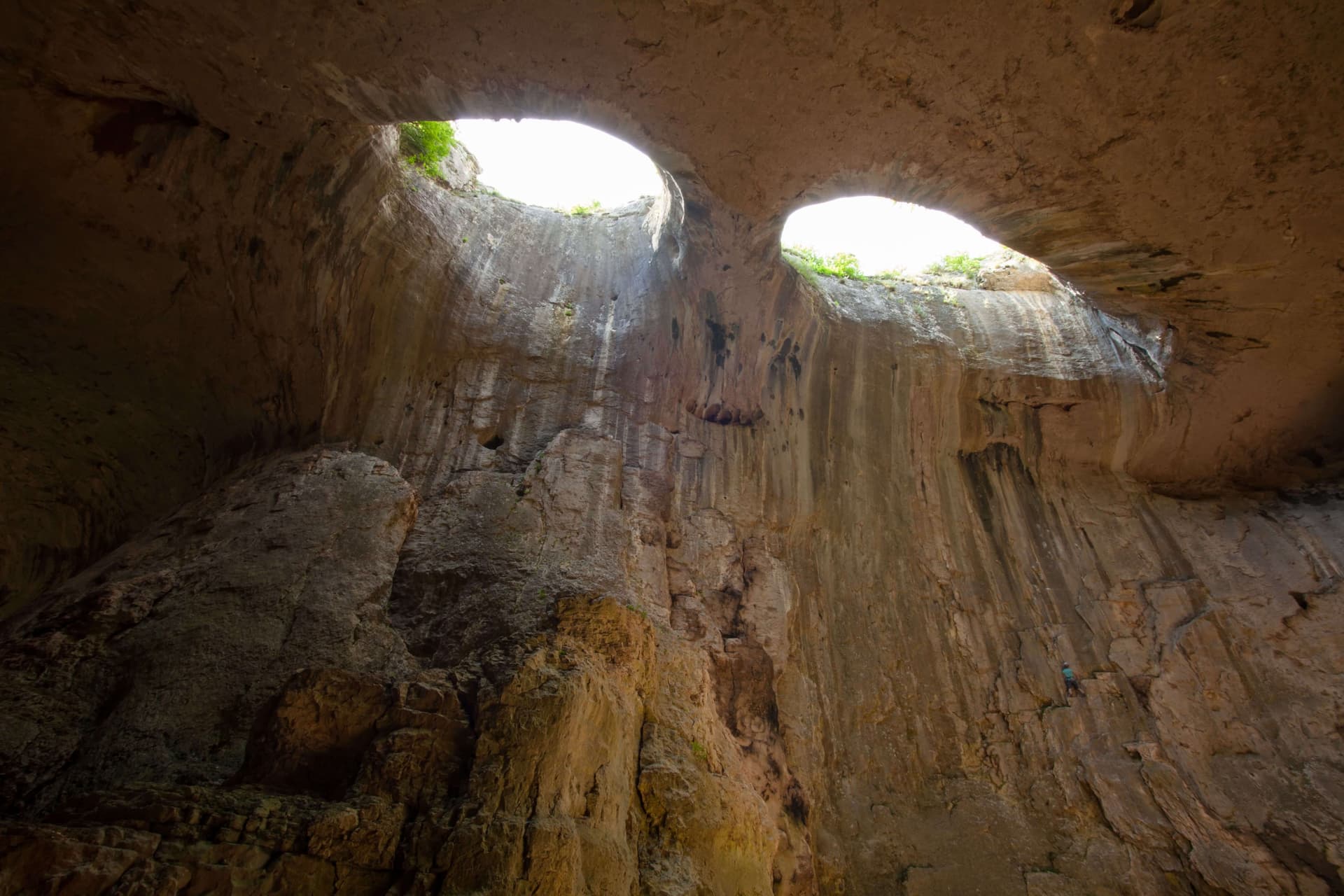
Discover Bulgaria's top natural wonders: Prohodna Cave ('God's Eyes'), Krushuna Waterfalls, Belogradchik Rocks, earth pyramids, and Pobiti Kamani.
Sаeva dupka cave is located in Lovech, Bulgaria.
Sаeva dupka cave is most easily reached by car. Use the coordinates above to navigate, or open the location in OpenStreetMap or your preferred maps app for turn-by-turn directions. Public transport options vary by region — for remote destinations a rental car gives the most flexibility.
Caves can be visited year-round — the temperature inside stays roughly 10–12°C regardless of season. Spring and autumn are quieter than peak summer. Bring a warm layer and sturdy footwear; some caves close in winter when access roads become impassable.
Access to caves varies. Show caves typically run guided tours during posted opening hours; wild caves require proper equipment and experience. Inside, the temperature stays cool year-round (~10–12°C) — bring a warm layer, sturdy non-slip footwear, and a torch even on guided tours.