

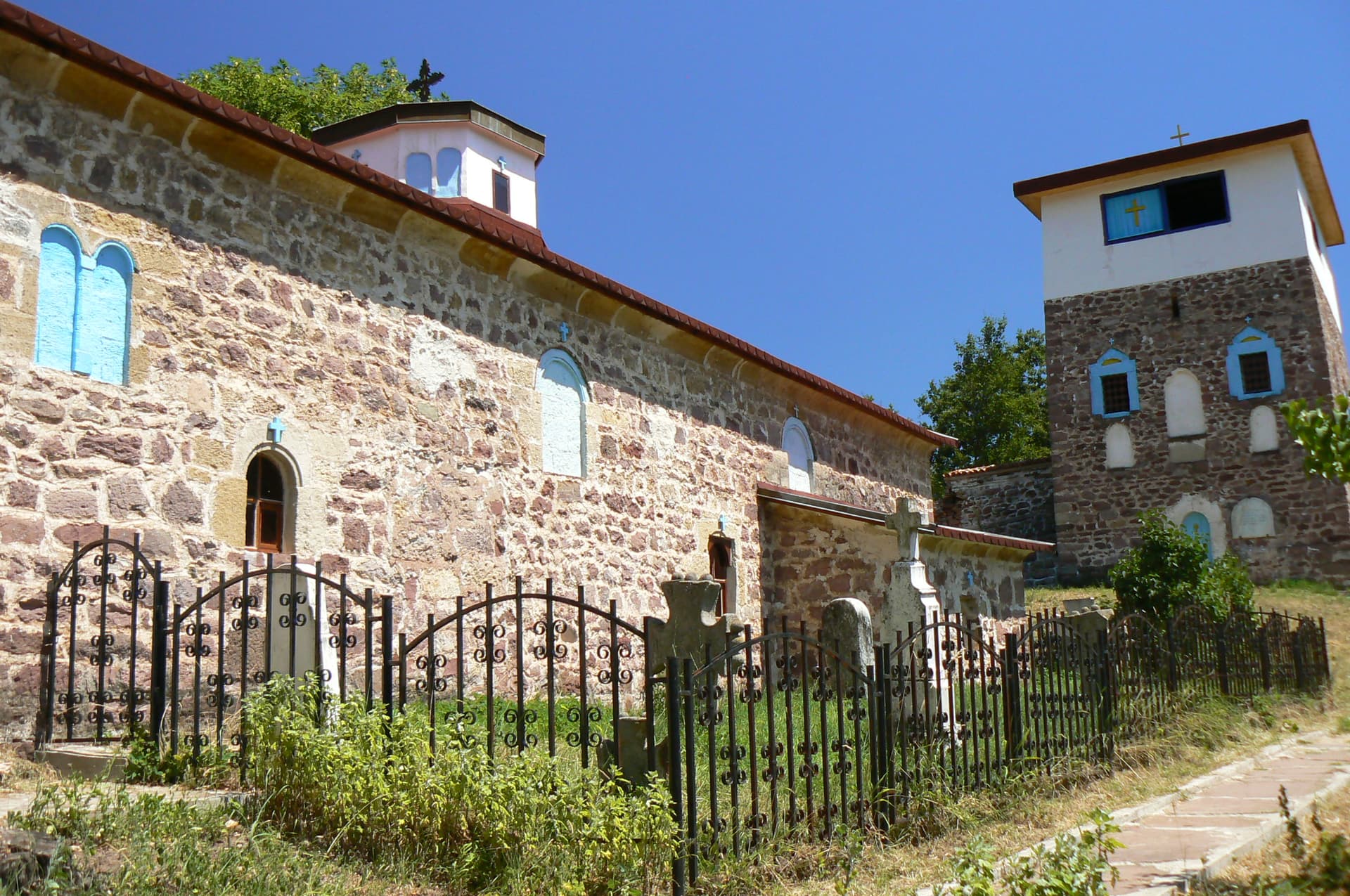
Chiprovtsi Monastery
Set in the picturesque valley of the Chiprovska Ogosta River, roughly 5 km northeast of the historic mountain town of Chiprovtsi, Chiprovtsi Monastery of St. Ivan of Rila (Chiprovski manastir) stands as one of the most resilient and historically significant Orthodox sanctuaries in Bulgaria. Enfolded by the slopes of the Western Balkan Mountains, this monastery in the Vidin Eparchy has served for centuries as a beacon of faith, education, and national resistance.
The monastery is easily accessible via a short detour off the main road connecting the villages of Belimel and Zhelezna.
Nine Centuries of Resilience: Destruction & Rebirth
Historical records written by the 17th-century Catholic Archbishop Petar Bogdan indicate the monastery was originally established in the 10th century. For over nine hundred years, it functioned as a major spiritual and educational hub, as well as a sanctuary during foreign invasions.
Throughout its turbulent timeline, Chiprovtsi Monastery was destroyed and burned to the ground six times (in 1412, 1688, 1806, 1828, 1837, and 1876):
- The Chiprovtsi Uprising (1688): The most devastating attack occurred following the suppression of the 1688 Chiprovtsi Uprising against Ottoman rule, when the monastery's vast library of medieval Slavic manuscripts, icons, and sacred relics were completely incinerated.
- Russian Connections: Following its 19th-century reconstruction, the monastery formed ties with Russian Orthodox institutions, receiving a gold-embroidered Gospel from Emperor Paul I (now preserved at the National History Museum in Sofia).
- Revolutionary Role: During the 19th century, the monastery repeatedly sheltered thousands of freedom fighters (chetnitsi). Its monks actively joined local independence conspiracies, and in July 1876, the surrounding hills hosted battles led by famed commanders Panayot Hitov and Filip Totyu.
Architecture & Key Highlights
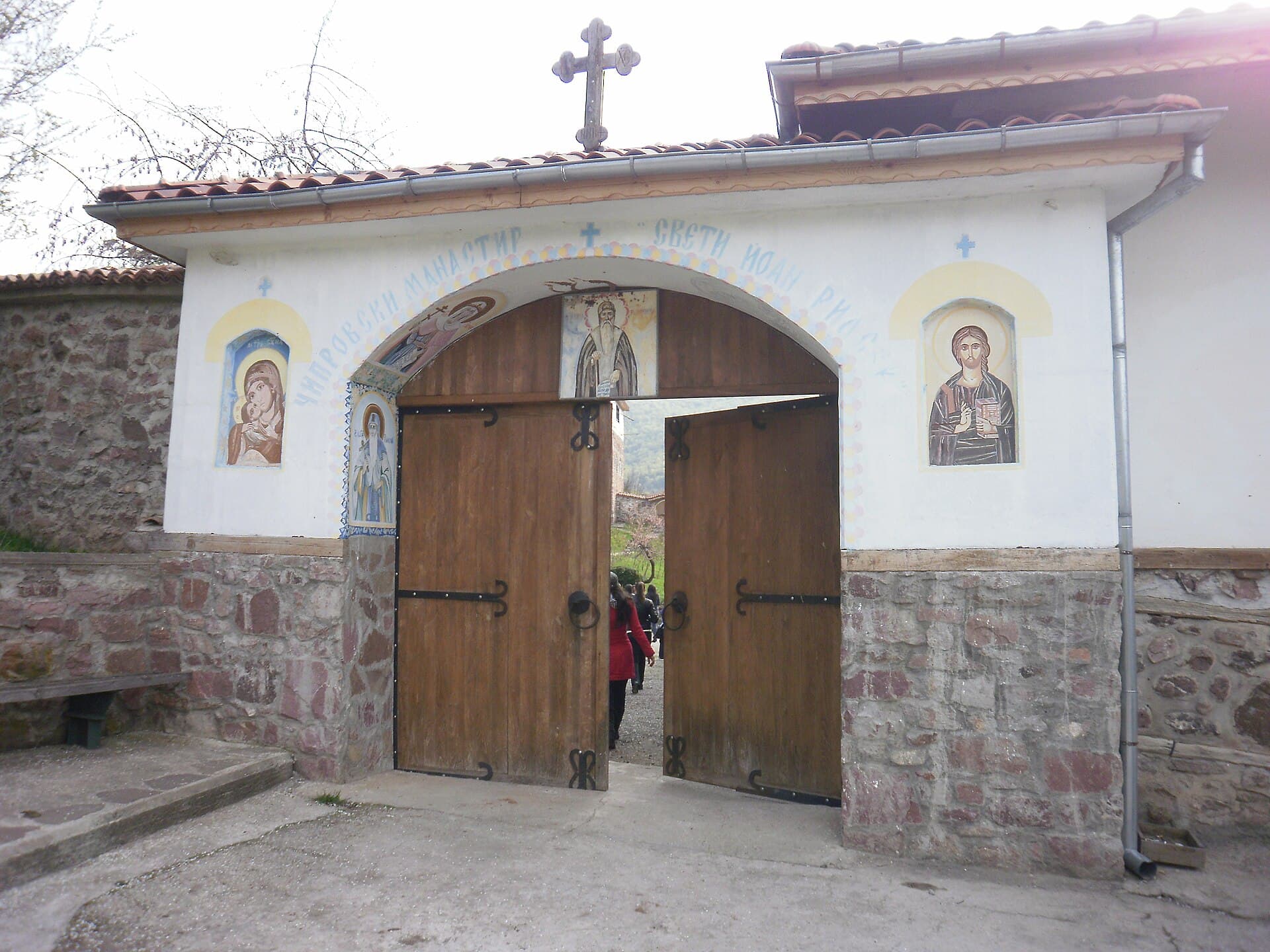
Enclosed by massive stone walls with three gates, the complex resembles a medieval mountain fortress:
- Church of St. Ivan of Rila: Rebuilt in 1829, the single-nave domed church features an intricately carved gilded iconostas, with key icons painted by Hristo Enchev from Tryavna.
- The Tower Ossuary: The hallmark feature of the central courtyard is a three-story stone bell tower. The ground floor houses an ossuary preserving the remains of monks and fallen heroes of the 1688 uprising. A commemorative plaque lists legendary figures including Petar Parchevich, Georgi Peyachevich, Panayot Hitov, and Filip Totyu.
- Residential Wing: The 75-meter-long residential building features sweeping open wooden balconies (chardatsi). On its upper floor sits the Chapel of St. Athanasius, erected in 1879 to commemorate Bulgaria's liberation.
Useful Visitor Information
- Location: Montana Province, 5 km from Chiprovtsi, 30 km from Montana, and 120 km north of Sofia.
- Accessibility: Easily reached by car via an asphalt road with parking right outside the entrance gates.
- Facilities: Peaceful courtyard, church gift counter, and scenic walking grounds.
- Trip Tip: Combine your visit to Chiprovtsi Monastery with a cultural tour of Chiprovtsi town (famous for its UNESCO-recognized handwoven carpets) and a scenic hike to the nearby Chiprovtsi Waterfall.
7-day forecast
Weather data from MET NorwayNearby Places
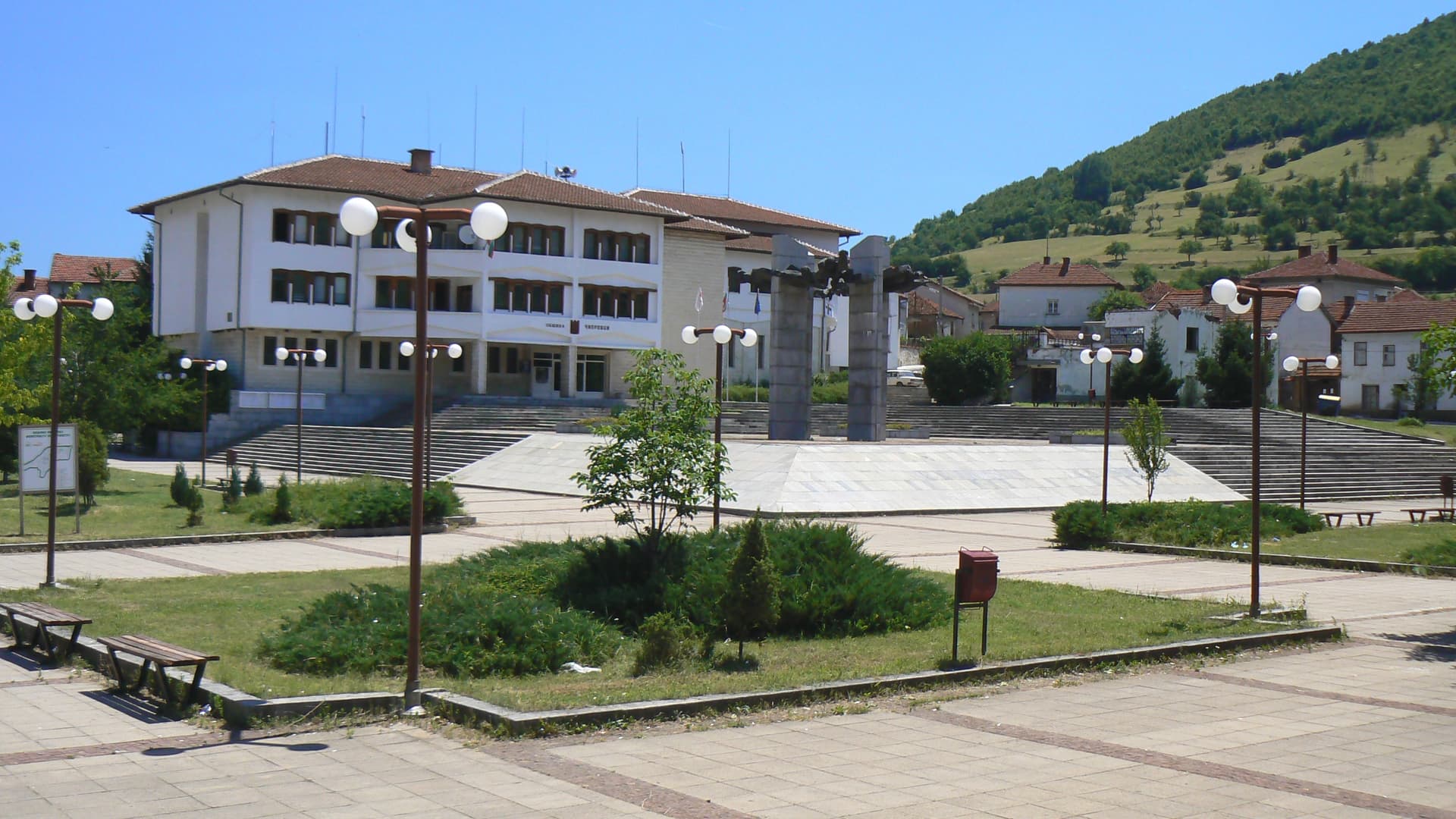
Chiprovtsi
Montana region
4.8 km away

Vodniya Skok
Montana region
10.8 km away

Chiprovtsi Waterfall
Montana region
10.9 km away
More to explore
Read more in our travel guides
Chiprovtsi: Carpets, a Monastery and a Lost Uprising
A guide to Chiprovtsi in Bulgaria's far north-west: the UNESCO-listed kilim weaving tradition, the 1688 uprising that destroyed the town, the monastery of St John of Rila, and the waterfalls above it.
North-West Bulgaria Road Trip: 4-Day Itinerary & Driving Guide
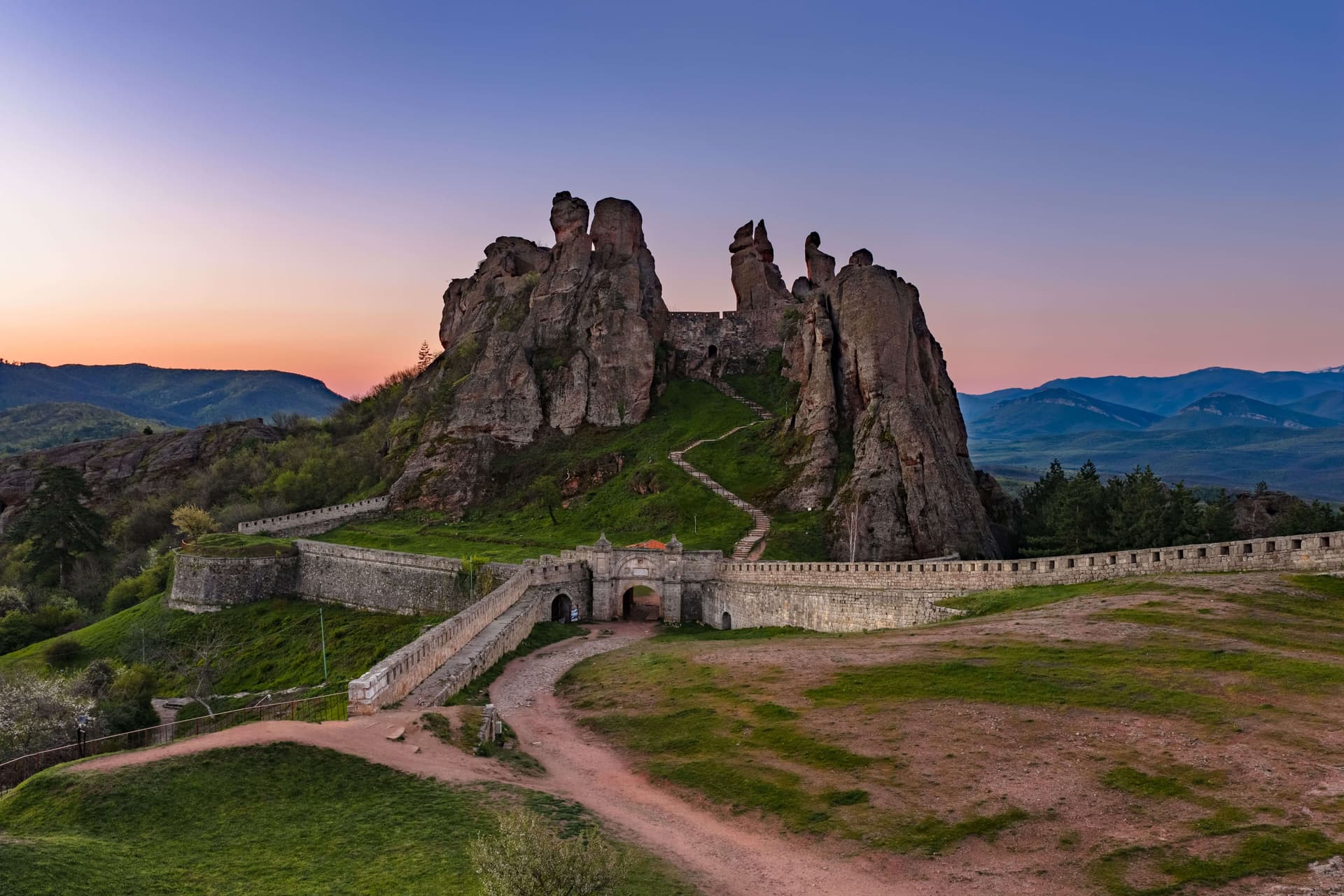
A complete 4-day road trip itinerary through Bulgaria's least-visited region: Iskar Gorge, Vratsa, God's Bridge, Chiprovtsi, Belogradchik Rocks, Magura Cave, and Vidin.
Vidin Travel Guide: Baba Vida Castle & Top Things to Do
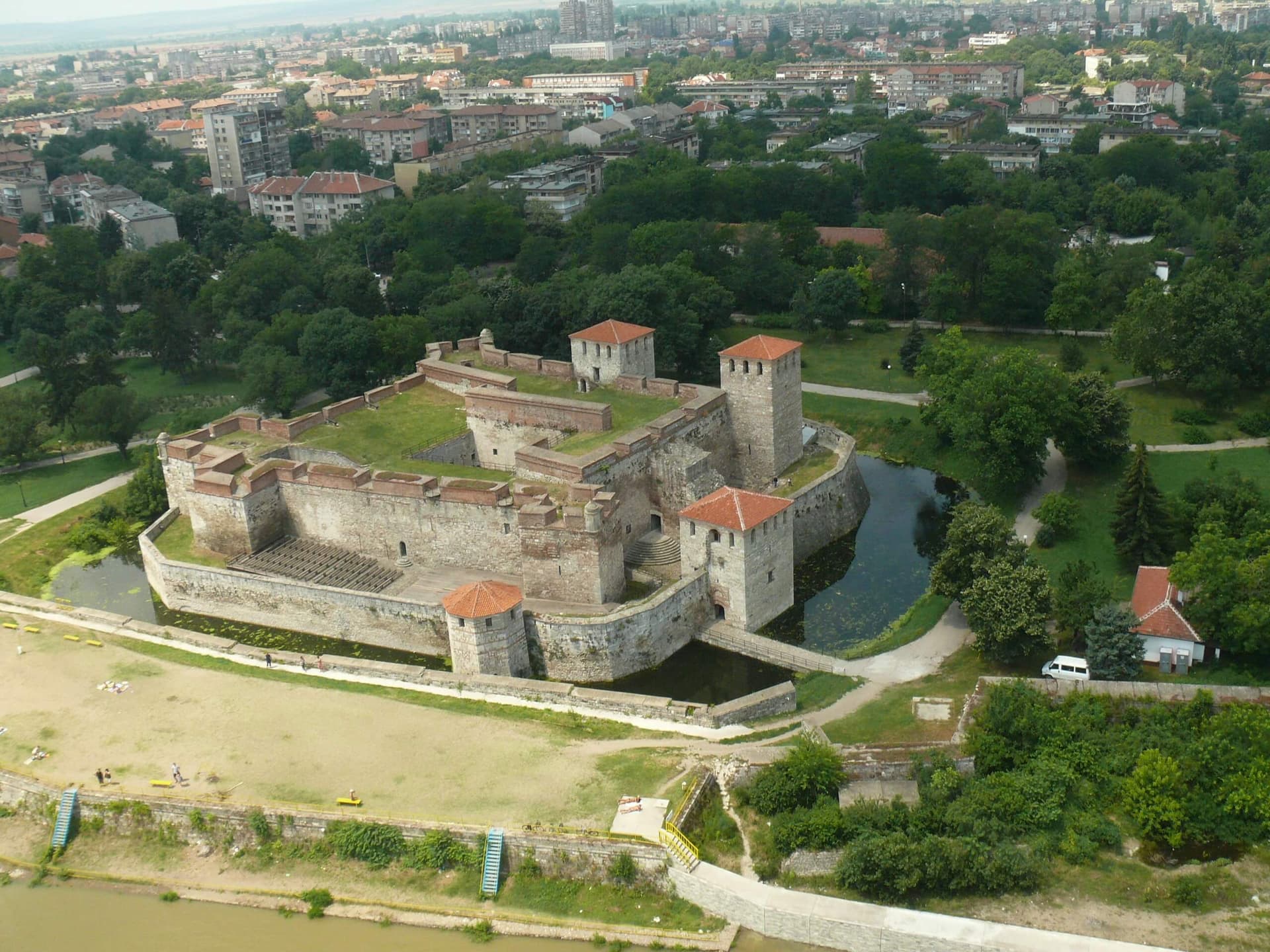
A complete travel guide to Vidin on the Danube: Explore Baba Vida castle, visit the restored Synagogue (Jules Pascin Centre), and pair it with Belogradchik and Magura Cave.
Frequently asked questions
Where is Chiprovtsi Monastery located?
Chiprovtsi Monastery is located in Montana, Bulgaria.
How do I get to Chiprovtsi Monastery?
Chiprovtsi Monastery is most easily reached by car. Use the coordinates above to navigate, or open the location in OpenStreetMap or your preferred maps app for turn-by-turn directions. Public transport options vary by region — for remote destinations a rental car gives the most flexibility.
What is the best time to visit Chiprovtsi Monastery?
Chiprovtsi Monastery can be visited year-round. Spring and autumn offer the most pleasant conditions for exploring, with mild temperatures and fewer crowds. Summer is ideal for photography and longer day trips; winter visits are possible but weather can limit access at some sites.
What should I know before visiting Chiprovtsi Monastery?
Most natural landmarks in Bulgaria are freely accessible and open year-round, though some sites have entrance fees or require a guide. Wear sturdy footwear and bring water, as the terrain can be uneven. Respect any protective barriers and stay on marked paths to preserve the site.