

Day Trip to Iskar Gorge from Sofia by Train: Sights & Guide
In this guide▾
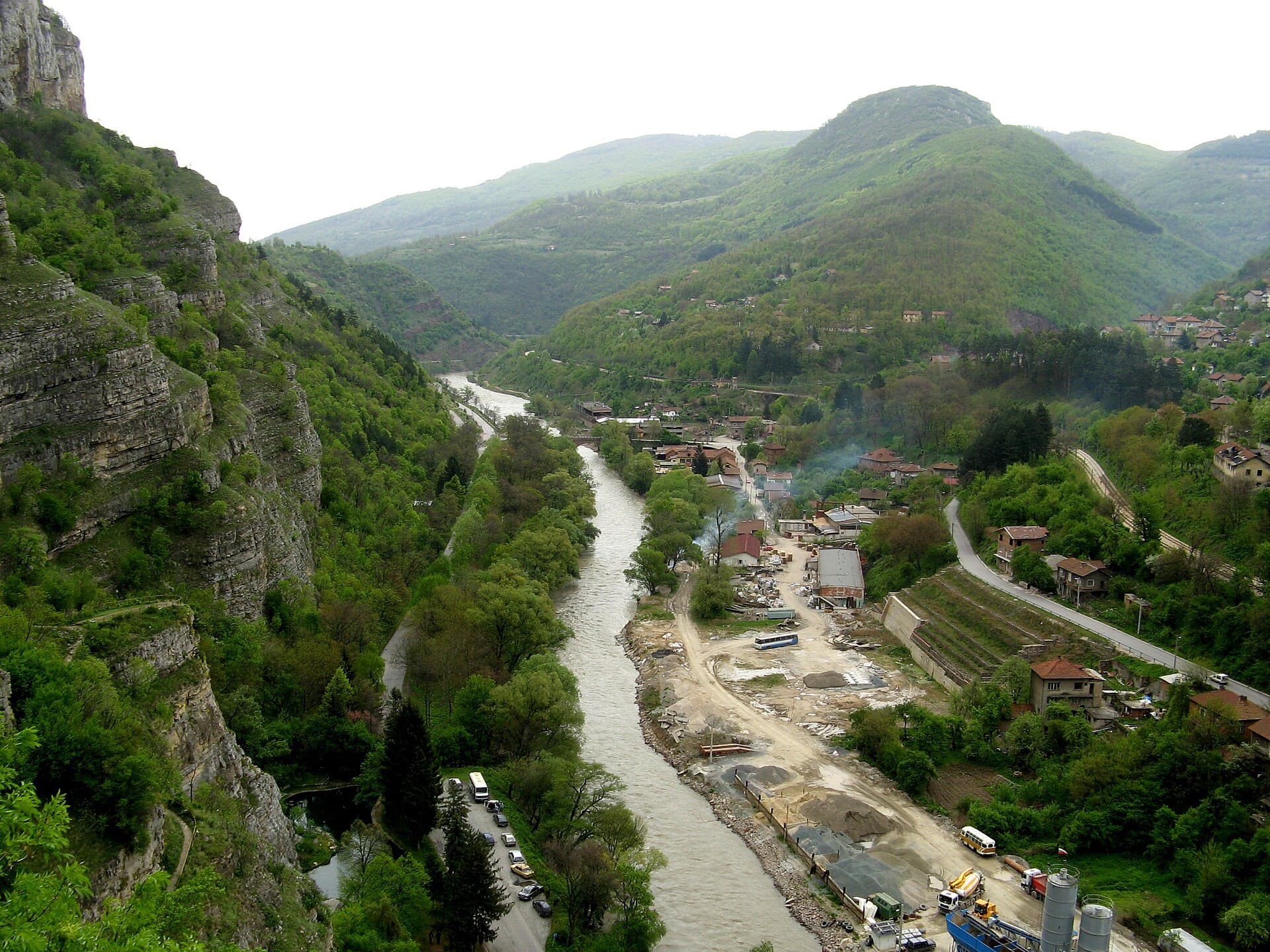
Sofia is surrounded by mountains on three sides, and while most visitors head straight up Vitosha Mountain, heading north leads to a completely different landscape: a 65-kilometre canyon where the Iskar River cuts directly through the main ridge of the Balkan Mountains.
The Iskar Gorge is the longest and deepest canyon in Bulgaria. Best of all for travellers, you don't need a rental car to explore it — the main railway line runs along the river the entire way.
🌍 Why Does the Iskar Gorge Exist?
Most rivers originate in mountains and flow away from them. The Iskar River does the opposite — it cuts straight through the range.
Originating in the Rila Mountains south of Sofia, the Iskar crosses the Sofia basin near Novi Iskar. Instead of veering away, it carves a path north through the Balkan Mountains toward the Danube. Geologists call this an antecedent river — one that established its flow before the mountains uplifted, continuously eroding its bed as the land rose.
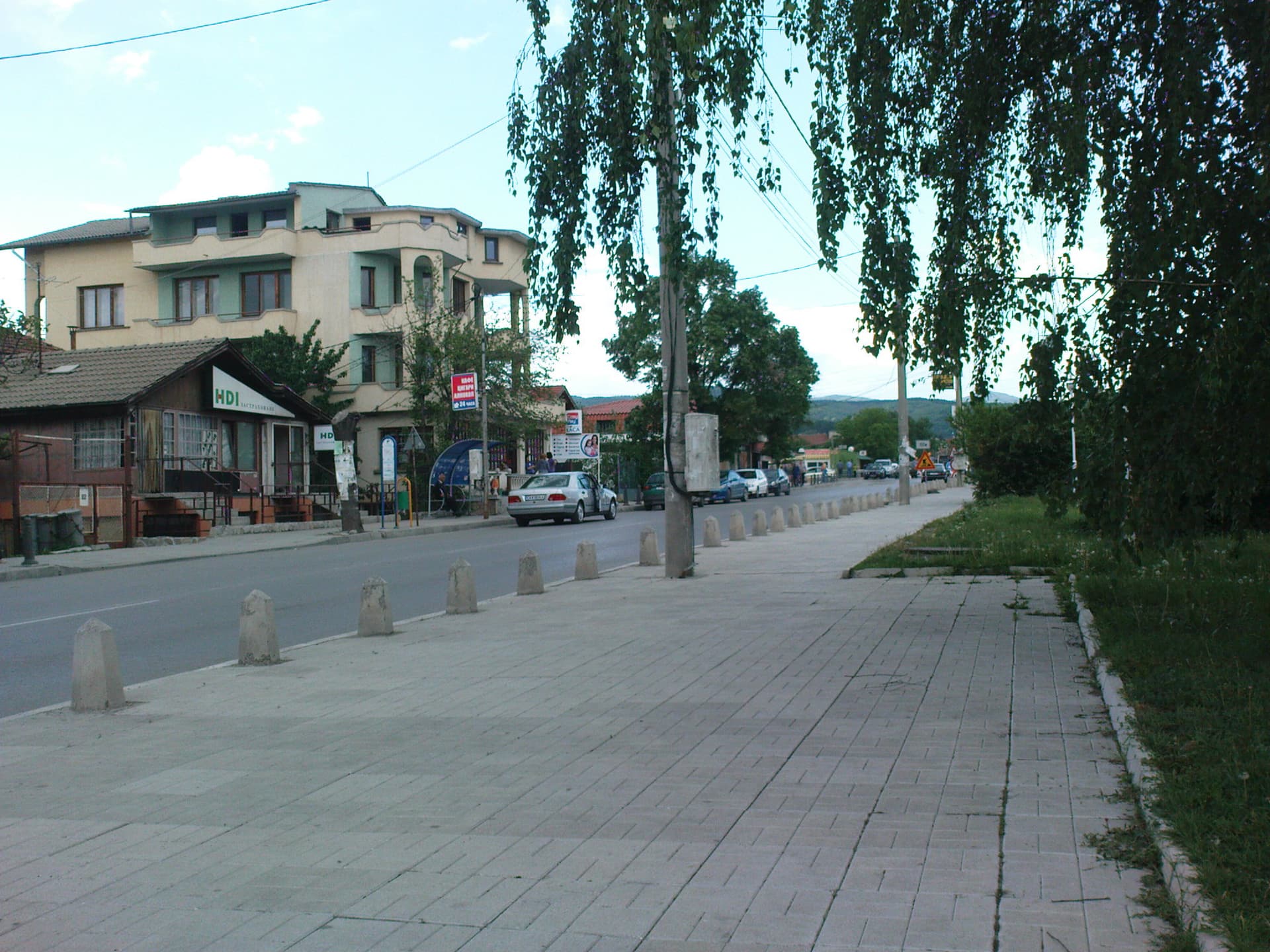
The result is a dramatic canyon flanked by towering limestone cliffs on both sides.
🚂 Exploring the Gorge by Train
Taking the train is by far the most enjoyable way to visit. The Sofia–Mezdra railway winds along the riverbank, making it one of the most scenic train journeys in Bulgaria.
The ride takes between 1.5 and 2 hours from Sofia Central Station, with easy access to several key stops:
| Station | Highlights & Trailheads |
|---|---|
| Svoge | The main town in the gorge with shops, cafes, and local connections. |
| Bov | Access to the Ivan Vazov Eco-Trail and Skaklya Waterfall near Zasele village. |
| Lakatnik | The Lakatnik Rocks, panorama viewpoint, and caves. The top stop to pick. |
| Cherepish | Cherepish Monastery (a short 15-minute walk from the platform). |
| Lyutibrod | The Ritlite geological rock walls at the northern exit of the canyon. |
Sit on the right-hand side facing forward when heading north for the best views of the river. Always check the official BDZ train timetables in advance. For more details, consult our guide on getting around Bulgaria by public transport.
Driving along the gorge is also possible via the parallel road, but taking the train allows you to relax and enjoy the scenery without navigating narrow mountain curves.
🧗 Lakatnik Rocks: The Highlight of the Canyon
If you only have time for one stop, choose Lakatnik.
The massive limestone cliffs tower nearly 250 metres directly above the train station. This sheer, pale wall is one of Bulgaria’s premier rock-climbing destinations, featuring dozens of established routes.

You don't need climbing gear to reach the top. A marked, zigzagging hiking path leads up to the clifftop viewing platform and the iconic "Eagle's Nest" red shelter. The climb takes about 45 minutes up and offers panoramic views across the gorge. Take care during wet weather as parts of the trail can be slippery.
Nearby lies the entrance to Temnata Dupka (The Dark Hole), one of the longest cave systems in the area. Caving here requires proper equipment and guidance.
⛪ Cherepish Monastery
Further down the gorge, tucked into a bend of the Iskar River beneath soaring rock faces, stands Cherepish Monastery.

Local history links its origins to the Second Bulgarian Empire, though the current buildings date mainly from the Bulgarian National Revival period. The true attraction here is the setting: a quiet courtyard bordered by the rushing river on one side and vertical cliffs on the other. It is an easy 1 km walk from Cherepish station.
Visiting: entry is free. By car, it is an easy drive on the Sofia–Mezdra road, with a turn-off shortly before Mezdra; by train, it is about 15 minutes on foot from Cherepish station on the Sofia–Mezdra line.
Interested in monastic heritage? Read our day-trip guides to Rila Monastery and the Bachkovo, Troyan, and Rozhen monasteries.

🪨 The Ritlite Rock Formations
Near Lyutibrod at the northern end of the canyon, four long parallel limestone walls project out from the hillside down to the water. They resemble the slatted wooden sideboards of traditional Bulgarian ox carts (ritli), giving the site its name.
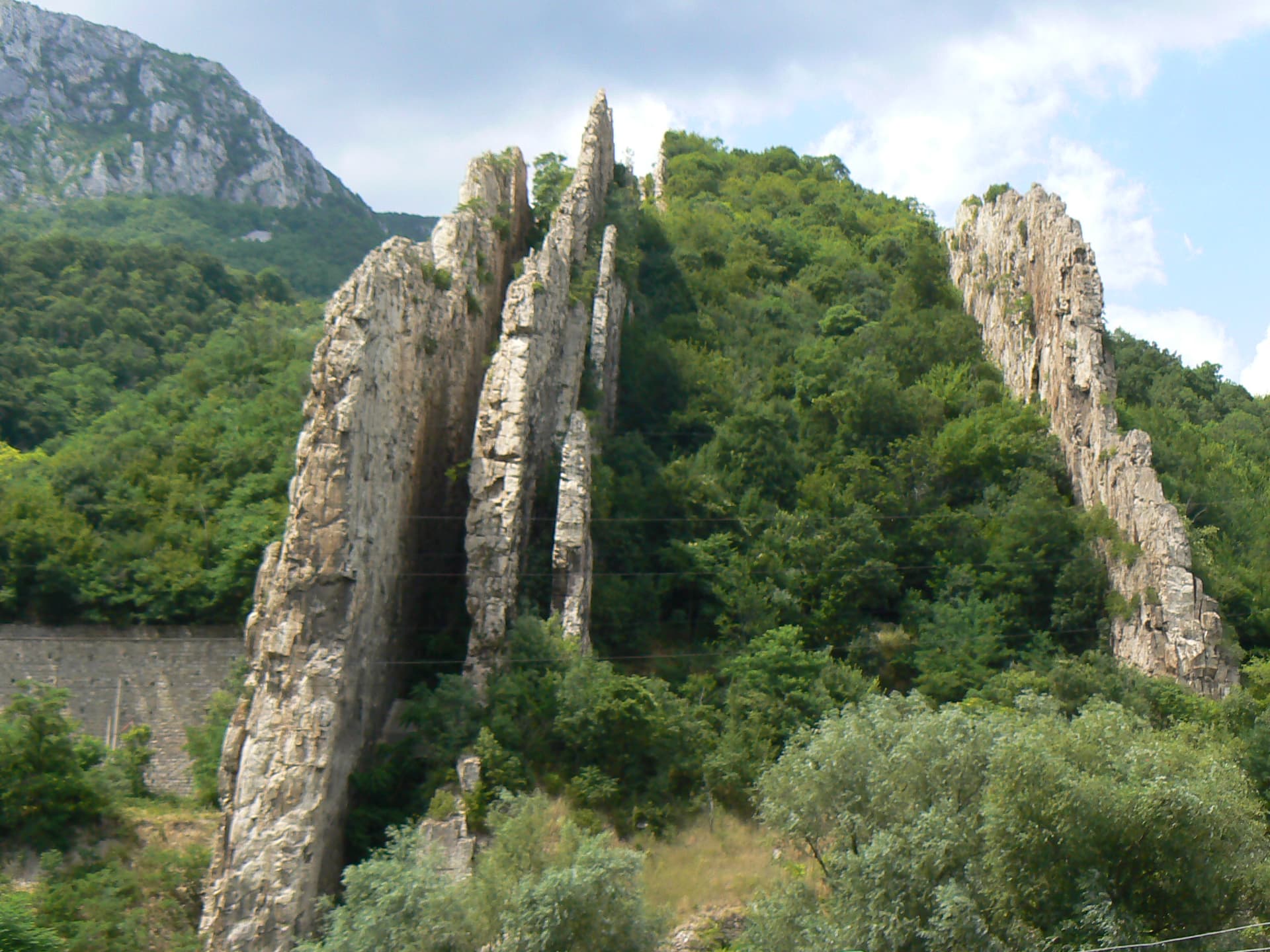
This striking geological formation marks the transition where the narrow gorge opens out toward Mezdra and the Danubian Plain.

🥾 Hiking & Waterfalls in the Area
The Iskar Gorge offers excellent trail networks:
- Skaklya Waterfall & Vazov Eco-Trail: Located above Bov near Zasele, this impressive waterfall is best visited during spring snowmelt (April–May). By late summer, the water flow decreases significantly.
- Iskar Reservoir: Located south of the gorge near Samokov, this large lake is a separate recreational area and should not be confused with the Iskar Gorge itself.
🗓️ Best Time to Visit & Nearby Destinations
Spring brings high water levels and lush greenery, making it the best season for waterfalls. Autumn transforms the beech forests along the canyon into brilliant gold and offers crisp hiking weather (see our autumn in Bulgaria guide). Summer provides cool river air, while winter offers quiet, snow-dusted landscapes.
North of the gorge, you can continue exploring Northwestern Bulgaria:
- Vratsa & Ledenika Cave (~50 km): High cliffs, ice caves, and Thracian gold treasures.
- Belogradchik Rocks & Fortress (~150 km).
- Prohodna Cave (God's Eyes) near Lukovit.
For more day-trip ideas from the capital, browse our list of the best day trips from Sofia.
A dramatic river canyon cut through the mountains, easily accessible by a short train ride from the capital. Plan your day trip to the Iskar Gorge with Mestala.com.
This guide covers 7 places
Want more Mestala in your Google results?
Add mestala.com as a preferred source and our guides will show up more often when you search. Requires a Google account.
Frequently Asked Questions
Where is the Iskar Gorge and how long is it?▾
The Iskar Gorge stretches roughly 65 to 70 km north of Sofia, where the Iskar River cuts straight through the Balkan Mountains between Novi Iskar and Mezdra. It is the deepest and longest river canyon in Bulgaria.
Can you visit the Iskar Gorge without a car?▾
Yes — this is one of the few nature destinations in Bulgaria that is actually better explored by train. The Sofia–Mezdra railway runs the entire length of the gorge, stopping at main sights including Svoge, Bov, Lakatnik, Cherepish, and Lyutibrod.
What are the Lakatnik Rocks?▾
The Lakatnik Rocks are a massive limestone cliff face rising 250 metres directly above Lakatnik train station. They form Bulgaria's most famous rock-climbing spot and feature a marked hiking trail leading to a scenic viewpoint and shelter.
What is Cherepish Monastery?▾
Cherepish Monastery of the Dormition of the Mother of God is an active Orthodox monastery nestled on a bend of the Iskar River beneath sheer cliffs. Located just 1 km from Cherepish train station, it is famous for its dramatic setting. Entry is free.
What are the Ritlite rock walls?▾
Located near the village of Lyutibrod at the northern end of the gorge, the Ritlite are four parallel vertical limestone walls reaching down to the riverbank. They are a unique geological landmark resembling the sideboards of a traditional cart.
How long do you need for a trip to the Iskar Gorge?▾
A full day is recommended. Rather than trying to see every stop, choose one or two key highlights (such as Lakatnik for hiking and Cherepish for the monastery) to comfortably match the regional train timetable.
You might be interested in
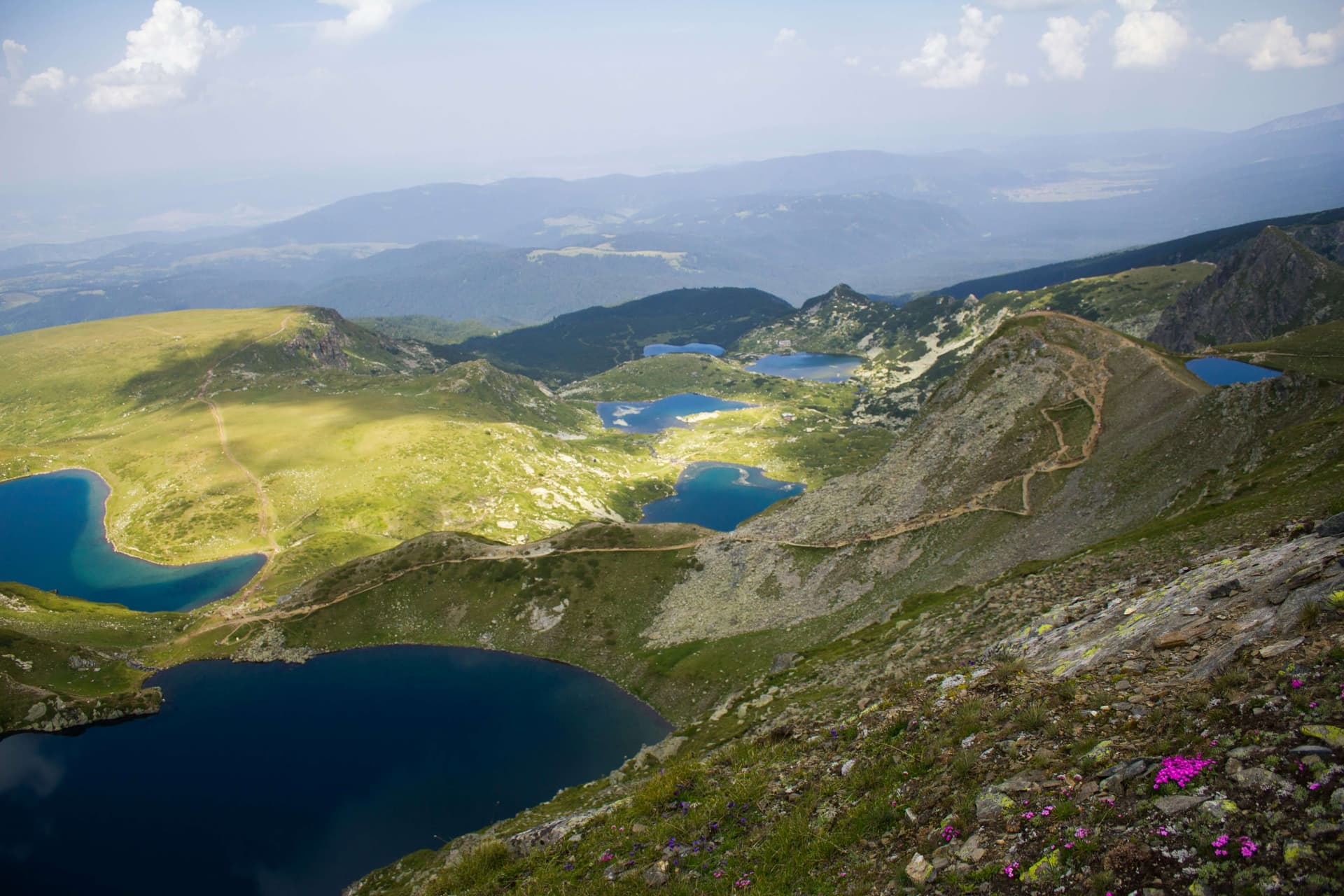
Bulgaria's National & Nature Parks: The Complete Picture
A guide to Bulgaria's three national parks and eleven nature parks — Rila, Pirin, Central Balkan, Vitosha, Vrachanski Balkan, Strandzha, Persina and the rest — what the categories mean and which to visit.
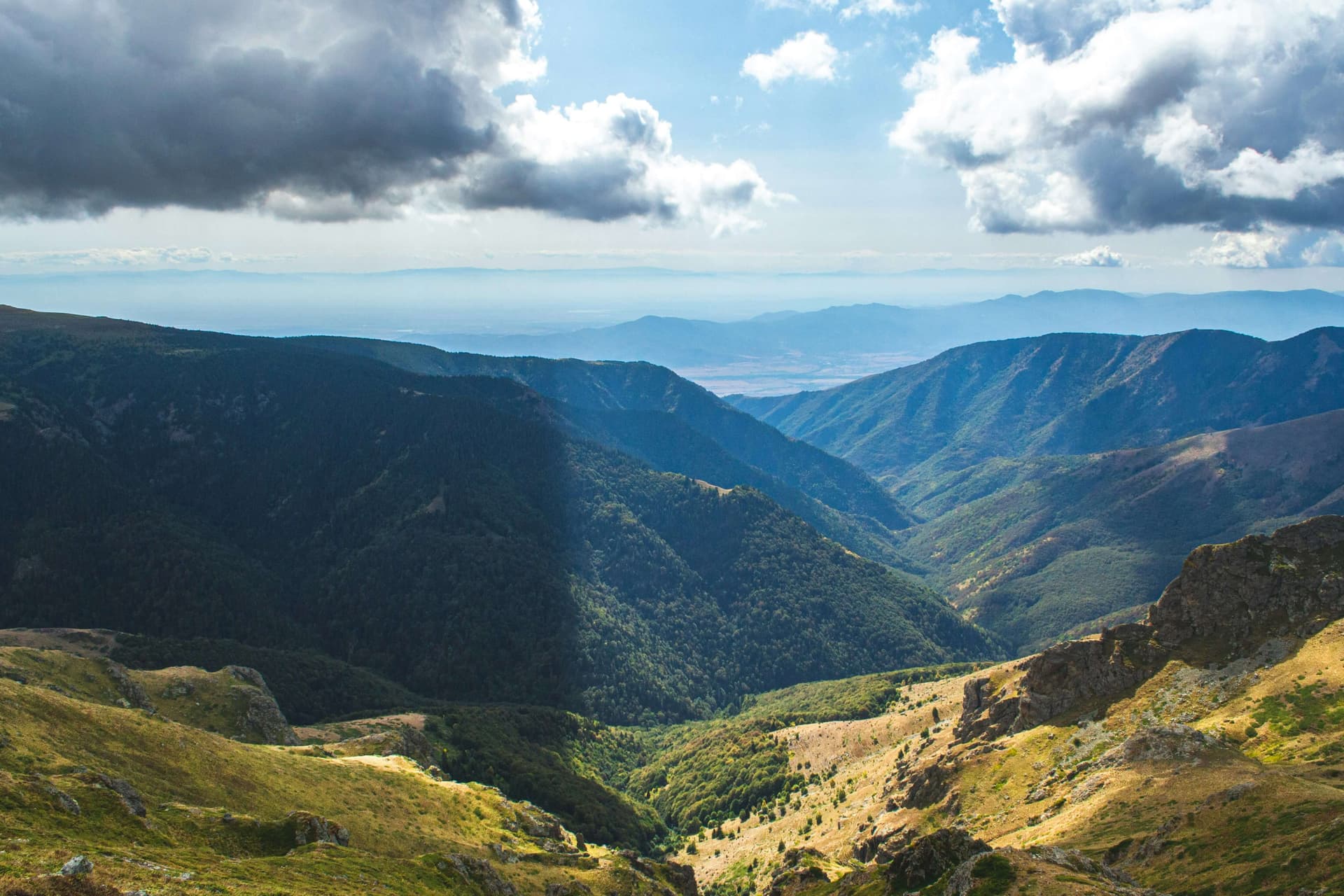
Central Balkan National Park: Bulgaria's Wildest Reserve
A guide to Central Balkan National Park: its nine strict reserves, the UNESCO-listed primeval beech forests of Boatin and Tsarichina, the Dzhendema cliffs, bears and wolves, and which town to enter from.
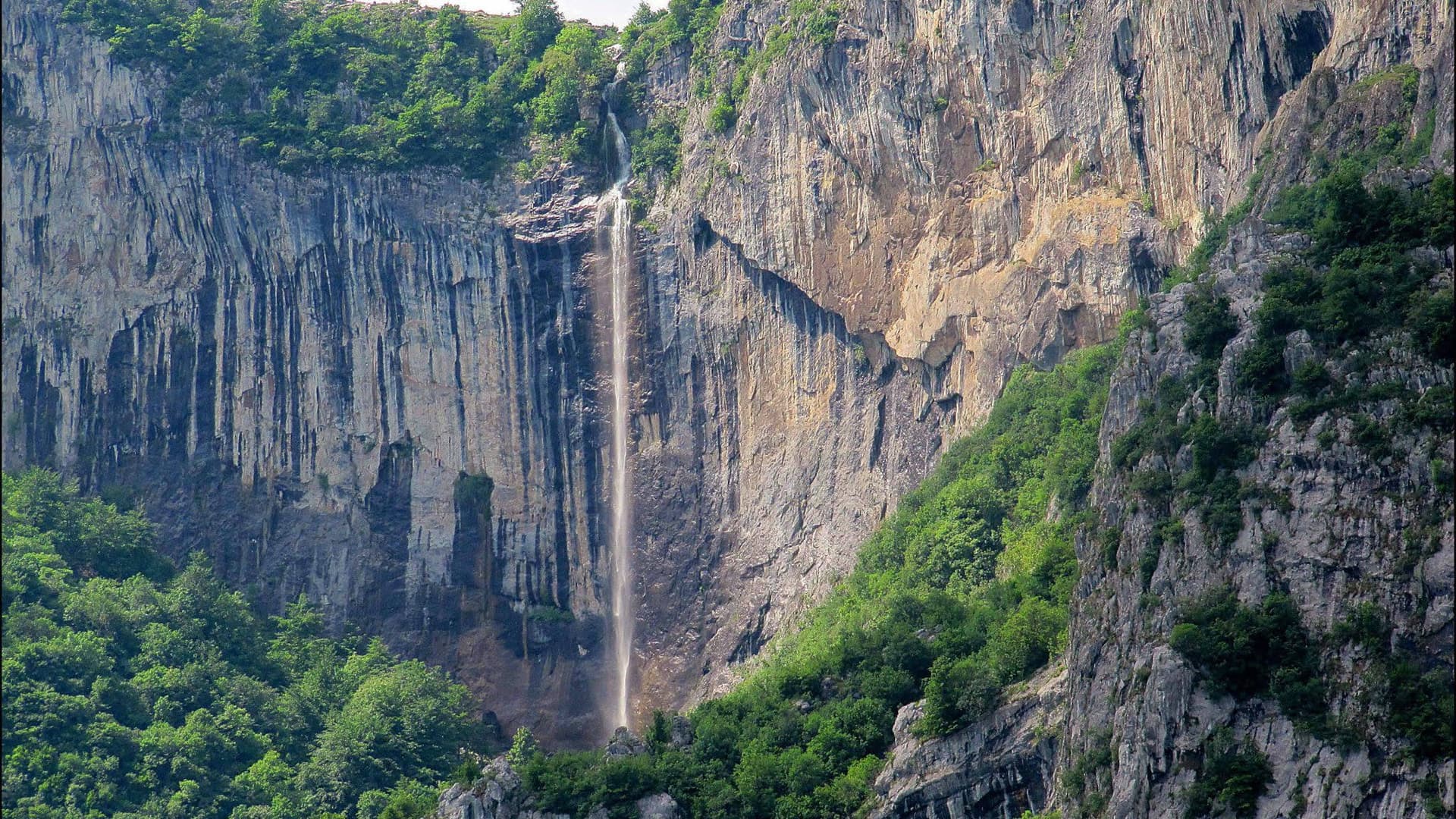
God's Bridge & Skaklya: Walking the Vrachanski Balkan
A guide to the Vrachanski Balkan Nature Park: the God's Bridge rock arch near Lilyache, the seasonal Skaklya waterfall above Vratsa, the Borov Kamak eco-trail, and when in spring to time the water.
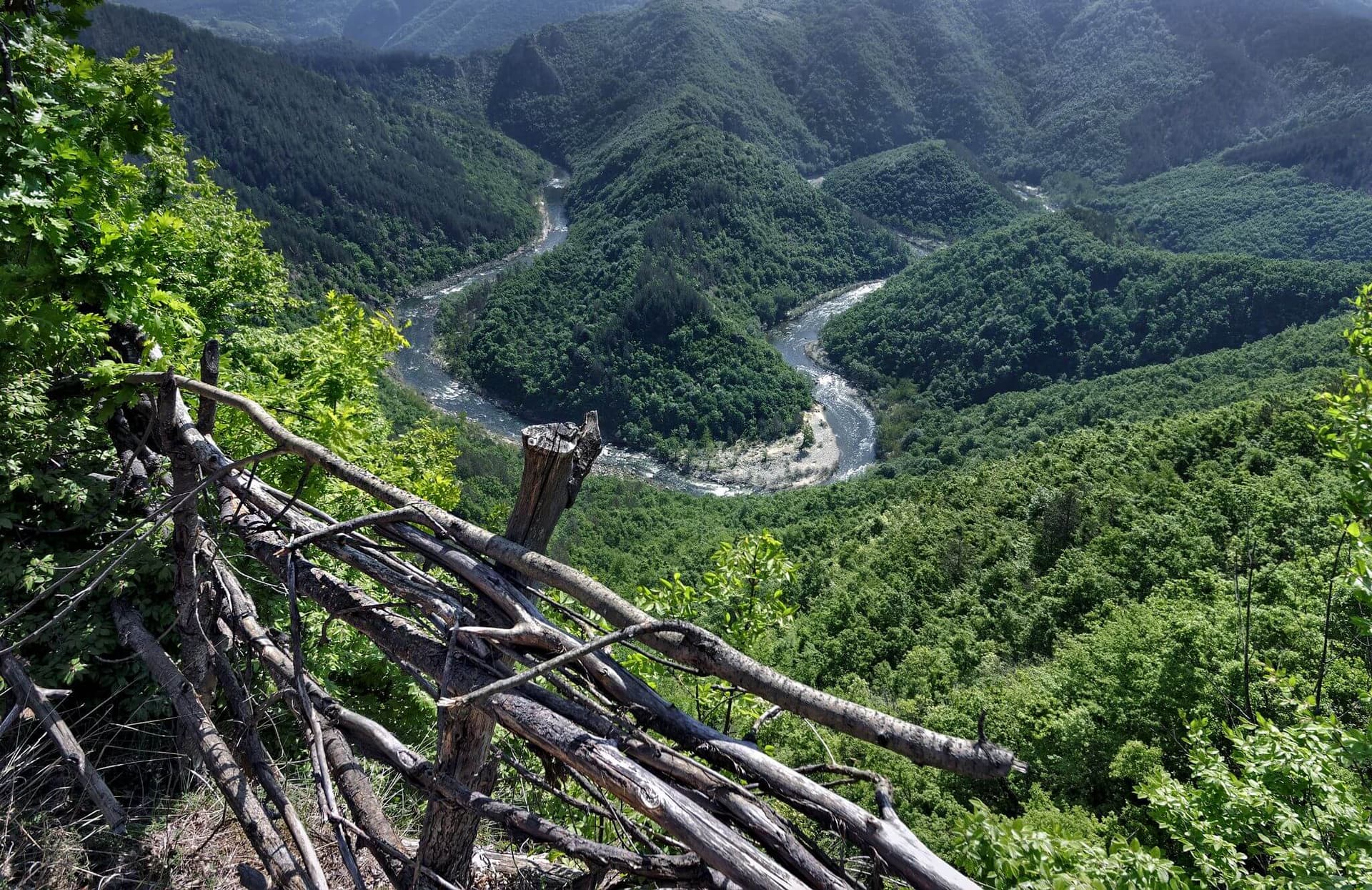
The Rhodopes: A Complete Travel Guide to Bulgaria's Mystical Mountains
Everything you need to plan a Rhodope Mountains trip: Smolyan, Pamporovo, Trigrad Gorge, Shiroka Laka, Perperikon, caves, spa towns, food, itineraries and when to go.