

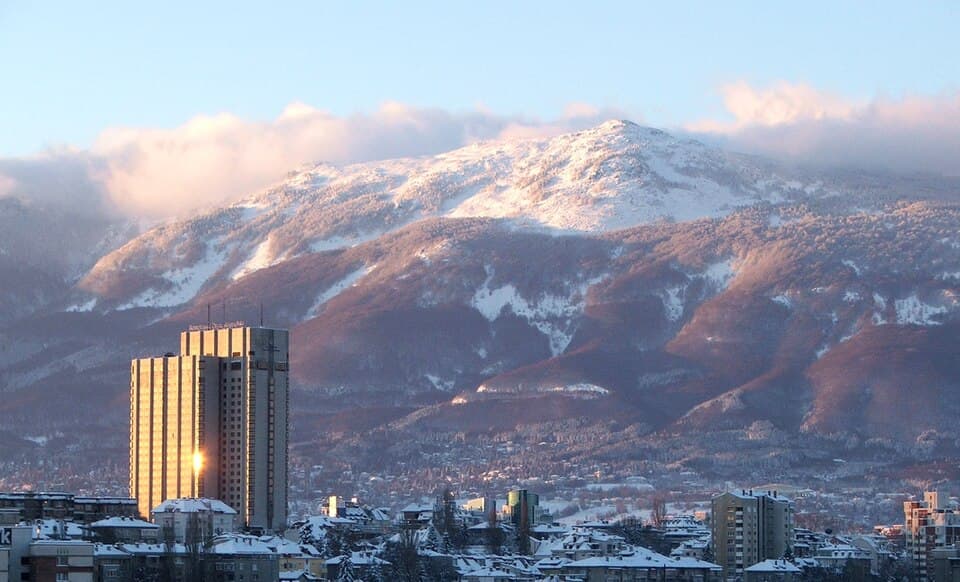
Vitosha Mountain: Sofia's Backyard Escape
In this guide▾
Few European capitals have a 2,000-meter mountain on their city bus network. Vitosha Mountain rises directly off Sofia's southern edge — reachable in under an hour, yet wild enough near the top to need a warm windbreaker even in summer.
While many hikers focus only on the summit, Vitosha is a destination in its own right: a UNESCO-listed medieval church, a monastery, giant boulder rivers, a waterfall, and trails for every level. This guide covers how to get up by bus or car, the winter car ban, which lifts actually run, the main sights, and what suits families.

📍 Vitosha Nature Park Overview
Designated in 1934, Vitosha Nature Park is the oldest nature park in the Balkan Peninsula. Unlike the jagged crests of nearby Rila and Pirin, Vitosha is a broad, rounded dome with a wide high plateau.
Its highest peak, Cherni Vrah ("Black Peak") at 2,290 meters, rises above alpine meadows. Lower down, pine and beech forests give way to stone rivers (moreni) — long runs of rounded granite boulders shaped by weathering.
🚗 How to Reach Vitosha: Buses, Cars & Lifts
Vitosha has two main high-mountain gateways: Aleko (1,810 m) on the eastern side and Zlatni Mostove (Golden Bridges) on the western side. Boyana Church and Dragalevtsi Monastery sit at the foot of the mountain, on the edge of the city.
By Car
- To Aleko: a paved road climbs from the Dragalevtsi district, about 20 km from the centre of Sofia.
- To Zlatni Mostove: a paved road climbs from the Boyana district.
- Parking: free everywhere on the mountain. At Aleko there are spaces by the hut and around Hotel Moreni, and at Zlatni Mostove parking is free as well — but at weekends both are very hard to find a space in. Arrive early or take the bus.
The winter car ban: from 1 December to 31 March, Sofia Municipality bans private cars on the roads from Boyana to Zlatni Mostove and from Dragalevtsi to Aleko on weekends and holidays, 11:00–16:00. Buses, mountain rescue and the service vehicles of the huts and tourist sites keep unrestricted access. Beyond the fixed hours, cars can also be turned back whenever the car parks fill up, in bad weather, or during mass visits and events, and the road can be closed outright for snow, ice or clearing; in winter, stopping and parking along it is banned overnight (22:00–06:00). The municipality sets these rules by order, so check before a winter trip.
By City Bus
- Bus 66: runs from the Zoo, via Vitosha metro station and Dragalevtsi, all the way up to Aleko. Buses run every 60–120 minutes, mainly at weekends and on holidays, so check the timetable and plan your return around the last bus down. The last services down are the pinch point: on busy winter weekends crowds build up at the stop and people wait in the cold for the extra buses the city puts on.
- Bus 63: runs from Tsar Boris III Boulevard through Boyana to Zlatni Mostove, with the most frequent service at weekends.
- Buses 64, 107 and 65: serve Boyana Church at the foot of the mountain. Line 65 is the newest of the three.
Which Lifts Still Run?
- Simeonovo gondola: not running.
- Dragalevtsi chairlift: out of service for years.
- Vitoshko Lale 1 and 2 (from Aleko): run on summer weekends, 09:00–16:30, weather permitting, climbing toward Golyam Rezen near the summit ridge. A ride costs €3.50 for adults, and €11 covers both lifts up and down (checked September 2026). The full price table is in our Cherni Vrah guide.
🧥 Weather warning: the high plateau is often around 10°C colder than central Sofia, and much windier. Pack an insulated jacket and a windshell whatever the city forecast says.
🏛️ Top Sights in the Foothills: Boyana
Boyana Church (UNESCO World Heritage)
In the Boyana district at the foot of the mountain, Boyana Church is famous for its frescoes of 1259, painted with a warmth and realism rare in medieval art. It has been on the UNESCO World Heritage List since 1979.

- Opening hours: daily, 09:30–18:00 from April to October and 09:00–17:30 from November to March. The ticket office closes 10 minutes earlier.
- Tickets: €10 for adults, €3 for students and pupils, free for children under 7 (checked September 2026). Guided tours cost extra.
- Free entry: on the last Monday of each month after 15:00, and on 18 May, 17 September and 1 November.
- Visit limit: only 9 visitors at a time, for 10 minutes, to protect the frescoes. At busy times, expect to wait your turn in the garden.
- Parking: there is no car park at the church. You park on the surrounding streets, which is normally free, but the spaces are few and fill up at weekends and on busy afternoons. Buses 64, 107 and 65 avoid the problem entirely.
- How long you need: about an hour, including the small museum and the garden.
Boyana Waterfall
Boyana Waterfall, at about 25 meters, is the tallest waterfall on Vitosha. Trails start from above Boyana Church and take about 2 hours up, with around 550 m of ascent from Boyana square. The direct path along the river is steep and rocky, not for inexperienced hikers, and freezes in winter; a gentler path climbs past Boyana Lake. The fall is at its fullest during the spring snowmelt.
🪨 Zlatni Mostove (The Golden Bridges)
Between about 1,350 and 1,500 meters, Zlatni Mostove is the largest stone river on Vitosha: a long run of huge granite boulders along the upper Vladayska River. The name ("Golden Bridges") comes from the golden lichen on the stones — or, as another story goes, from gold once washed from the river sand.
It's Vitosha's favourite family spot: easy, shaded paths, boulders to scramble on, picnic meadows, and a starting point for longer trails toward Kumata hut and Cherni Vrah.
⛪ Dragalevtsi Monastery & Kopitoto Viewpoint
- Dragalevtsi Monastery: founded in 1345 by Tsar Ivan Alexander, in the forest above the Dragalevtsi district. Vasil Levski stayed here repeatedly in 1871–1872 while building Sofia's revolutionary committee. Today it is a working convent, so dress modestly and keep your voice down.
- Kopitoto: a rocky outcrop with a TV tower above the Boyana and Knyazhevo side, with sweeping views over the whole Sofia valley — best at sunset.
🥾 Hiking Trails & Reaching Cherni Vrah
- Cherni Vrah from Aleko: about 3 km and 480 m of ascent on a stony, red-marked path. Allow roughly 1.5 hours up and 1 hour down. Easy to moderate — wear shoes with grip, not trainers.
- Zlatni Mostove and Aleko walks: easy, mostly short paths through meadows and forest — the best choice for small children.
- Boyana Waterfall: moderate, with a steep direct path; see above.
Our Cherni Vrah summit guide has the full route, longer approaches from Zlatni Mostove, Vladaya, Zheleznitsa and Yarlovo, and winter advice.
⛷️ Winter at Aleko
In winter, Aleko is Sofia's own ski area — a few runs close enough for a morning or evening on the snow, but far smaller than the big resorts. How much of it runs varies from season to season, so check with the operator, Vitosha Ski, before you go, and remember the weekend car ban.
For a proper ski holiday, see our guides to Bansko and Borovets, and our Bulgarian ski resort comparison.
🗓️ Best Time to Visit Vitosha
- Spring (May – June): full waterfalls, fresh green forests and mild temperatures for lower walks. Snow can linger on the high plateau into May.
- Summer (July – August): the best escape from the city heat. Watch for afternoon thunderstorms on the open plateau.
- Autumn (September – October): crisp air, clear summit views and golden beech forests.
- Winter (December – March): skiing, snowshoeing and sledging — plus the weekend car ban.
- Crowds: sunny weekends bring half of Sofia up the mountain. Weekday mornings are far quieter, and on weekends you'll do better on the bus than hunting for a parking space.
👨👩👧👦 Is It Suitable for Children?
Yes — Vitosha is one of the best family outings from Sofia.
- Small children: Zlatni Mostove and the meadows around Aleko have easy walks, picnic spots and boulders to climb. On summer weekends, the Vitoshko Lale chairlifts are a treat in themselves, and children under 7 ride free with a parent.
- Older children used to walking can manage Cherni Vrah from Aleko.
- Pushchairs: fine on the paved areas at Aleko and in Boyana Church's garden, but not on the stony mountain trails — bring a child carrier.
- Boyana Church: children under 7 enter free, and the 10-minute visit suits short attention spans.
🛏️ Where to Stay
- Sofia: most visitors stay in Sofia and visit the mountain on day trips — the widest choice and the bus network to the mountain. Pair your outings with our 72 Hours in Sofia itinerary.
- Boyana and Dragalevtsi: hotels and guesthouses at the foot of the mountain, quieter than the centre and closer to the trailheads, but you'll depend on buses or taxis to get into town.
- On the mountain: Aleko hut and the hotels around it, or huts such as Kumata, for an early start or a night above the city.
🧭 What Is Nearby
- Pernik (~40 min by car) — the Underground Mining Museum, Krakra Fortress and, in late January, the Surva mask festival.
- Bankya (~30 min) — a leafy spa town on Sofia's western edge, with mineral springs and a park for an easy afternoon.
- Zheleznitsa to Kokalyane Monastery (~30 min to Zheleznitsa) — a quieter forest walk on Vitosha's southeastern side.
Further afield, Rila Monastery is about two hours away. For more ideas, see our best day trips from Sofia.
Easy access to mountain wilderness and wide panoramas, right above the capital. Plan your visit with Mestala.com.
This guide covers 6 places
Want more Mestala in your Google results?
Add mestala.com as a preferred source and our guides will show up more often when you search. Requires a Google account.
Frequently Asked Questions
How do you get to Vitosha Mountain from central Sofia?▾
Vitosha rises right above Sofia's southern edge. By car, Aleko is about 20 km from the centre via Dragalevtsi, and Zlatni Mostove is reached via Boyana. By city bus, line 66 runs from the Zoo, via Vitosha metro station and Dragalevtsi, up to Aleko, mainly at weekends and on holidays, and line 63 runs from Tsar Boris III Boulevard to Zlatni Mostove. Buses 64, 107 and the newer line 65 serve Boyana Church at the foot of the mountain.
What are the main things to do on Vitosha besides hiking Cherni Vrah?▾
Top attractions include the UNESCO-listed Boyana Church, the Zlatni Mostove (Golden Bridges) stone river, Boyana Waterfall, the 14th-century Dragalevtsi Monastery and the city views from Kopitoto. In winter, Aleko is Sofia's local ski area.
How high is Vitosha Mountain and is it difficult to hike?▾
Vitosha's highest peak, Cherni Vrah, stands at 2,290 meters. From Aleko hut (~1,810 m), the summit hike is about 3 km and 480 m of ascent, roughly 1.5 hours up and 1 hour down on a stony, red-marked path. Lower down, the walks around Zlatni Mostove and Aleko are easy and suit families.
Are the lifts on Vitosha running?▾
Only partly. The Simeonovo gondola is not running, and the Dragalevtsi chairlift has been out of service for years, so you reach Aleko by car or bus 66. From Aleko, the Vitoshko Lale 1 and 2 chairlifts run on summer weekends from 09:00 to 16:30, weather permitting; one ride costs €3.50 for adults (checked September 2026).
Can you drive up Vitosha at weekends?▾
Yes, except at the busiest winter hours. From 1 December to 31 March, Sofia Municipality bans private cars on the roads from Boyana to Zlatni Mostove and from Dragalevtsi to Aleko on weekends and holidays between 11:00 and 16:00; public transport still runs. The roads can also be closed at short notice in heavy snow. Parking at Aleko and Zlatni Mostove is free, but at weekends it is very hard to find a space, so arrive early or take the bus.
How much does Boyana Church cost and when is it open?▾
Entry is €10 for adults and €3 for students and pupils, and free for children under 7 (checked September 2026). The church is open daily: 09:30–18:00 from April to October and 09:00–17:30 from November to March. Only 9 visitors are allowed inside at a time, for 10 minutes, so expect a short wait at busy times.
Is Vitosha Mountain family-friendly?▾
Yes. Zlatni Mostove and the meadows around Aleko offer easy walks, picnic spots and big boulders to scramble on, and children used to walking can manage Cherni Vrah. The trails are stony, so pushchairs only work on the paved areas. Always carry extra warm layers, as the upper mountain is much cooler than the city.
You might be interested in

Cherni Vrah: Hiking Vitosha's Summit from Sofia
How to hike Cherni Vrah (2,290 m), the summit of Vitosha above Sofia — the route from Aleko, bus 66, the lifts that still run, difficulty, and season.
Malyovitsa: Rila's Most Iconic Day Hike
How to hike Malyovitsa (2,729 m), the cradle of Bulgarian mountaineering in northern Rila — the route from the resort and hut, parking, difficulty and season.
Hiking the Seven Rila Lakes: Trail, Lift & Best Time
A complete guide to hiking the Seven Rila Lakes: the trailhead, chairlift prices and hours, the loop trail, parking, family tips, distances from Sofia, and where to stay.
Chepelare: Bulgaria's Quiet Ski Town in the Rhodopes
A practical guide to Chepelare: the Mechi Chal ski area, Snezhanka Peak, getting there from Plovdiv, parking, where to stay, and why it beats Pamporovo on price.