

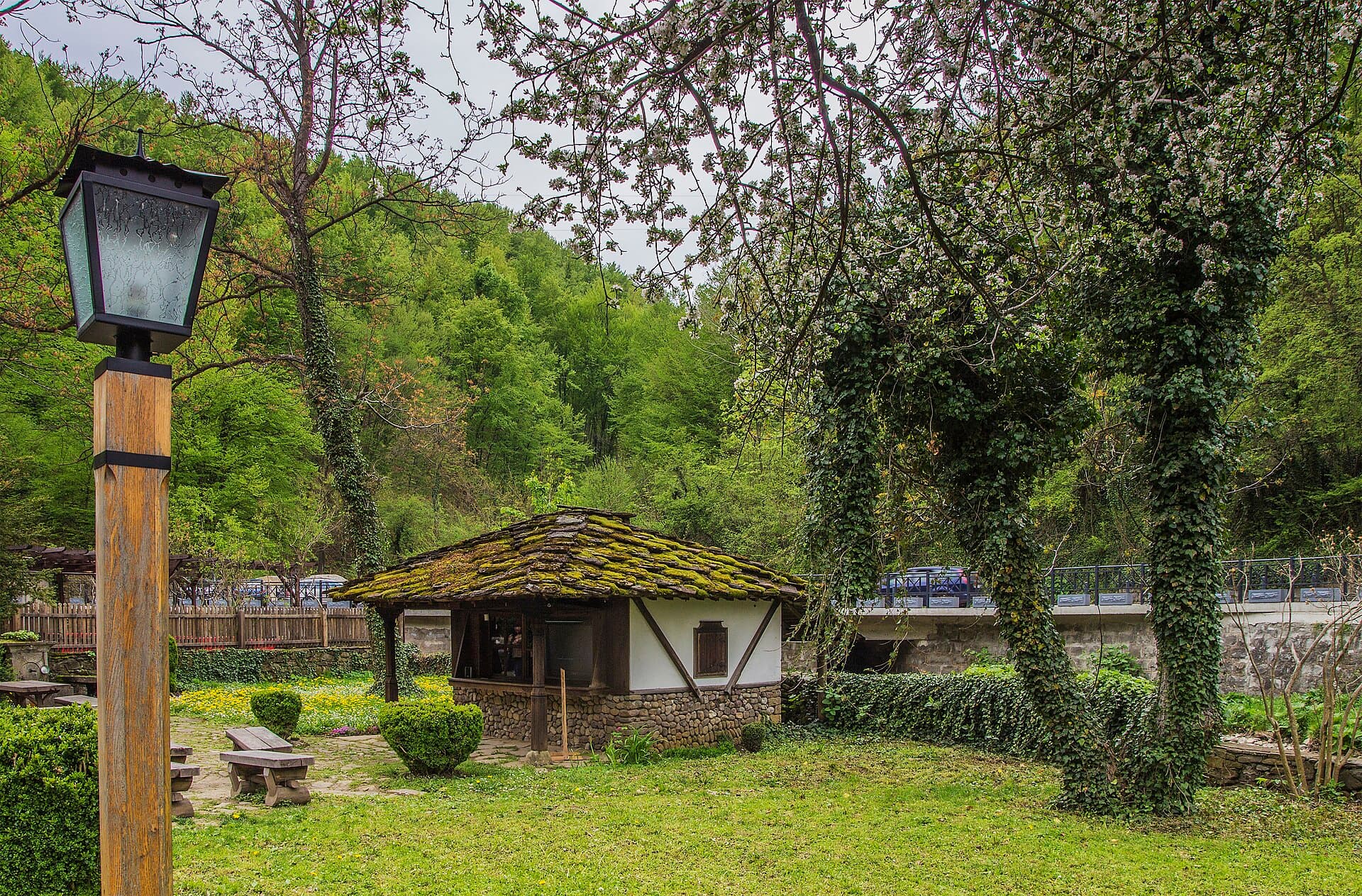
Etar: Bulgaria's Working Open-Air Museum
In this guide▾
Open-air museums usually ask visitors to imagine how things used to work. Etar does not. The workshops along its cobbled craft street are connected to an active water channel, where wooden water wheels, heavy drop-hammers, and grinding stones turn before your eyes.
Set in a wooded river valley just south of Gabrovo, the Etar Regional Ethnographic Open-Air Museum (long known as the Etar Architectural-Ethnographic Complex) reconstructs an authentic Bulgarian Revival craft street, complete with timber-framed houses, workshops, and hydraulic installations characteristic of 18th- and 19th-century Balkan trade towns. Opened on 7 September 1964, it was the first open-air museum of its kind in Bulgaria and remains one of the country's most compelling cultural stops.
📍 Location & Access
Etar lies 8 km south of Gabrovo, along the Sivek river on the northern slopes of the Balkan range — close enough to town for a quick visit, yet nestled far enough into the valley to feel transported to another century.
| From | Distance | Driving time |
|---|---|---|
| Gabrovo | ~8 km | ~15 min |
| Bozhentsi | ~25 km | ~35 min |
| Tryavna | ~30 km | ~40 min |
| Veliko Tarnovo | ~50 km | ~1 h |
| Sofia | ~225 km | ~3 h |
Local city buses run regularly from Gabrovo. The car park in front of the main entrance is small, with room for about 20 cars and 6 buses; it costs €1.54 for the whole day and is free in December, January and February. If it is full, there are other places to park nearby. Driving is recommended if you plan to combine Etar with surrounding mountain villages — see our driving and car rental guide for Bulgaria.
🎟️ Opening Hours & Tickets
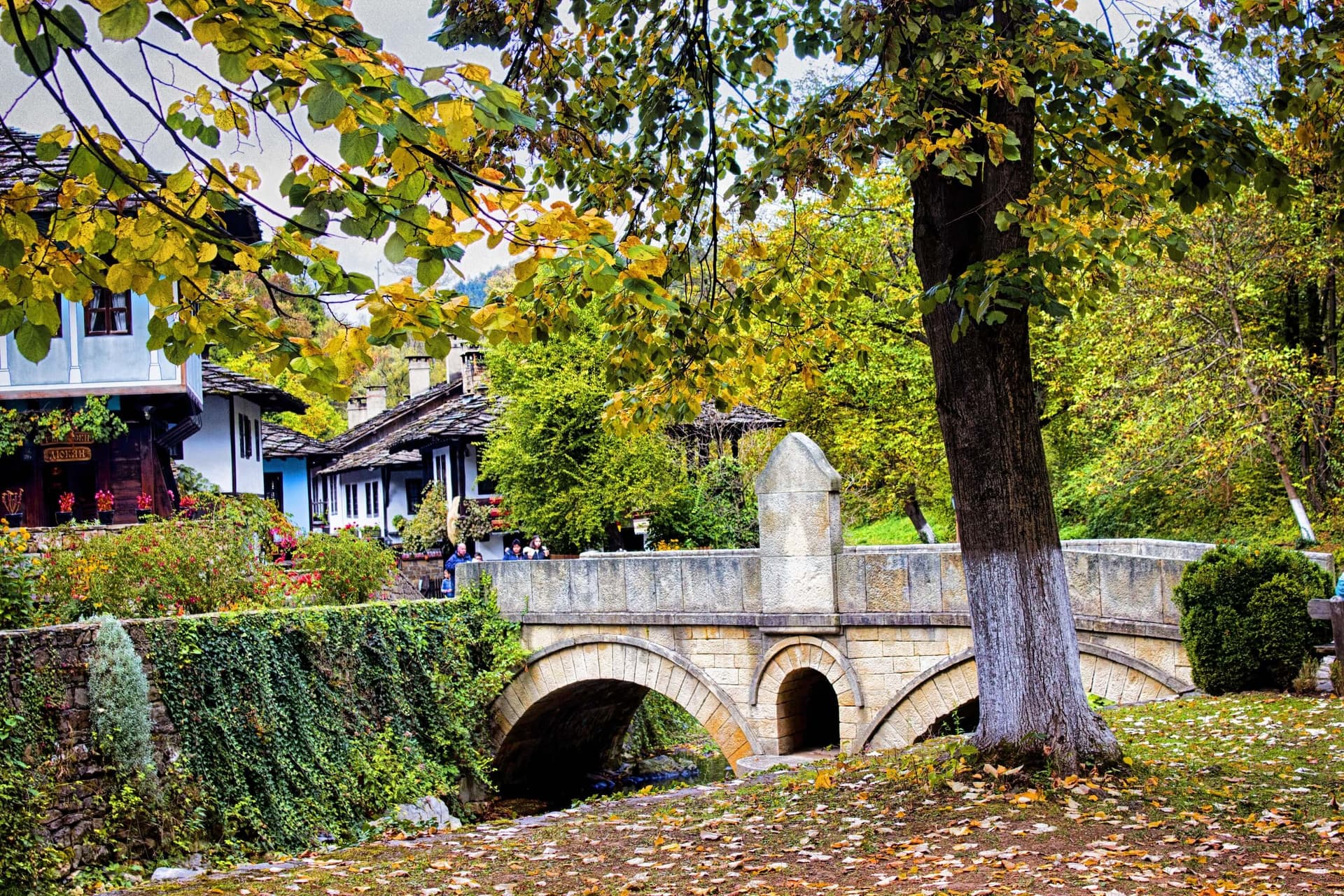
Etar is open every day: 09:00–19:00 from late April to late September and 09:00–17:00 the rest of the year. Hours are shorter on 1 January (12:00–17:00) and on 24 and 31 December (09:00–15:30).
| Ticket | Price |
|---|---|
| Adults | €7 |
| Children over 4, pupils, students | €3 |
| Pensioners | €4 |
| Family with children up to 18 | €16.50 |
| Group ticket with a game (two adults, a family, or four students) | €17 |
| Children under 4, visitors with disabilities | free |
For a closer look at a craft, the museum runs hands-on sessions with the artisans:
- Learn and experience — a craft of your choice, with a demonstration you take part in: €19 adults, €11 students.
- Discover what you can do — a traditional household skill: €14 adults, €10 students.
- Herbs: beauty and health — making natural soap or herbal cosmetics in the herb shop: €14 adults, €8 students.
- Recreate the traditions — traditional holiday customs, for a family: €25.
Combining more than one session in a visit gives 20% off. Prices checked September 2026; they can change.
💧 Harnessing Water Power
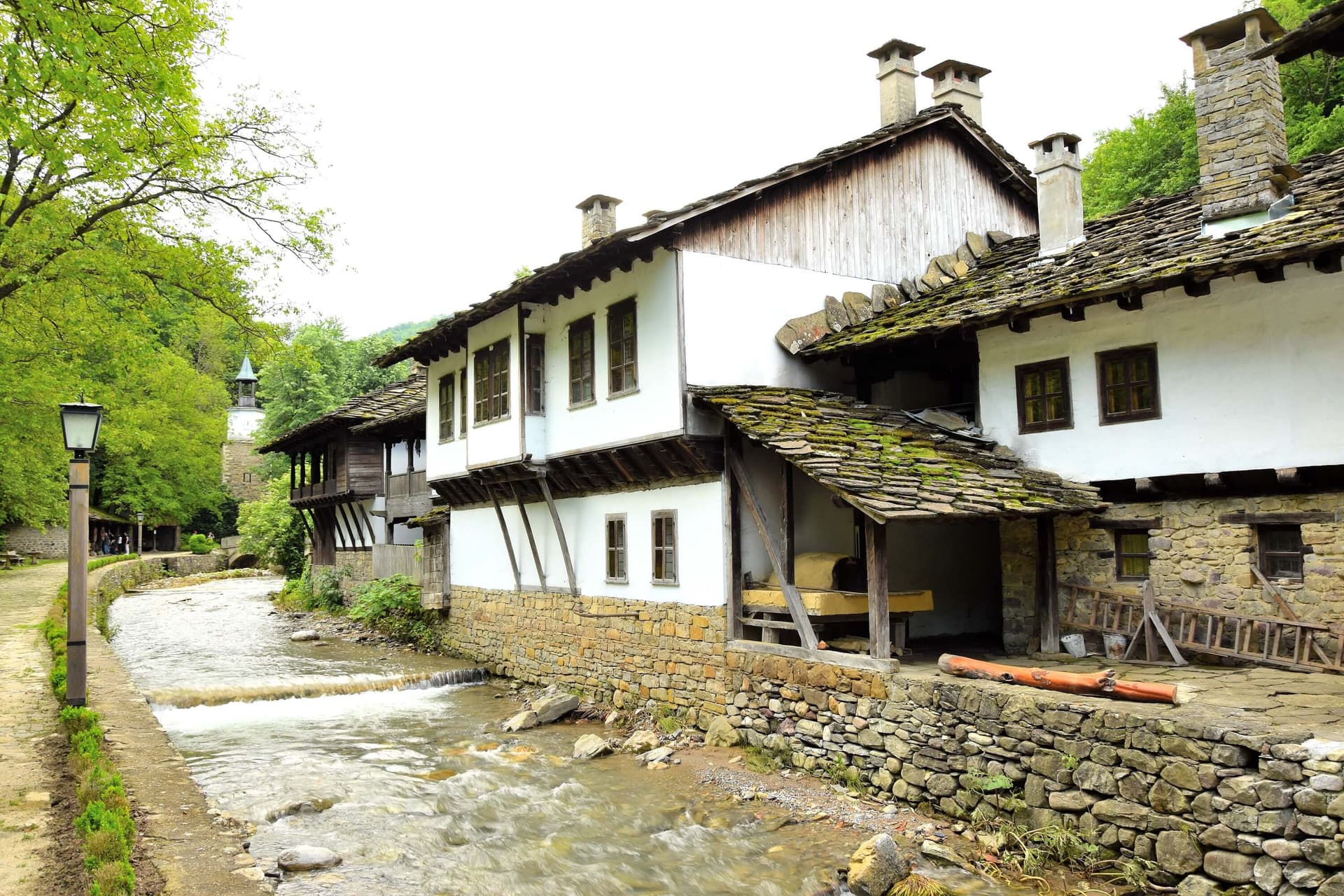
The defining feature of Etar is a diverted river canal running behind the craft street, feeding a cascade of historic hydraulic machinery. Water power performed the heavy, repetitive labor that craftsmen could not manage by hand — flour milling, wood turning, metal sharpening, and fulling woolen cloth.
As you walk through the grounds, you will experience the sounds and motion of pre-industrial engineering: a thumping fulling mill (tepavitsa) processing woven blankets, spinning grinding stones, and a functioning flour mill (karadzheyka). With ten water-powered installations, all still in working order, it is the only collection of its kind in Bulgaria.
🛠️ The Artisan Craft Street
The central street gathers traditional 19th-century Balkan trades under a continuous row of Revival facades:
- Pottery: Thrown by hand on traditional pottery wheels.
- Woodcarving: Continuing the renowned woodcarving heritage of neighbouring Tryavna.
- Coppersmithing & Cutlery: Hand-forged copper vessels and traditional handcrafted knives.
- Braid-Making (Gaytandzhiystvo): Textile braiding powered by a multi-spool water wheel system.
- Icon Painting, Bakery & Confectionery: The traditional sweet shop (shekerdzhiynitsa) serves white sugar paste (byala zahar), sesame halva, and Turkish delight.
Most items crafted in the workshops are available for purchase directly from the artisans, offering high-quality, authentic handcrafted souvenirs.
💡 Visitor Tip: Workshop activity varies slightly depending on the season. During peak summer, the craft street is fully active with master artisans at work, whereas quiet winter weekdays offer a peaceful atmosphere with fewer live demonstrations.
🕰️ Recommended Visit Duration
Allow two to three hours to explore the complex comfortably — time enough to stroll the craft street, watch live demonstrations across several workshops, inspect the water mills, and pause at the café.
Traditional restaurants (mehana) on site serve regional Bulgarian dishes and freshly baked goods — explore our guide to traditional Bulgarian cuisine for dish recommendations.
👨👩👧 Family Visits
Etar is an excellent family-friendly destination. Because the crafts and machinery are operated live, children remain engaged watching potters shape clay on the wheel, blacksmiths strike hot iron, and massive water wheels churn.
The museum also has a children's centre: the "I Know and I Can" hall is free, and the "Get Crafting, Little Hands!" workshop costs €3.50.
The main pathways are compact and flat, though the historic cobbles can be bumpy for lightweight strollers. See our family travel guide for Bulgaria to learn how Etar fits into a broader family itinerary.
🏨 Where to Stay
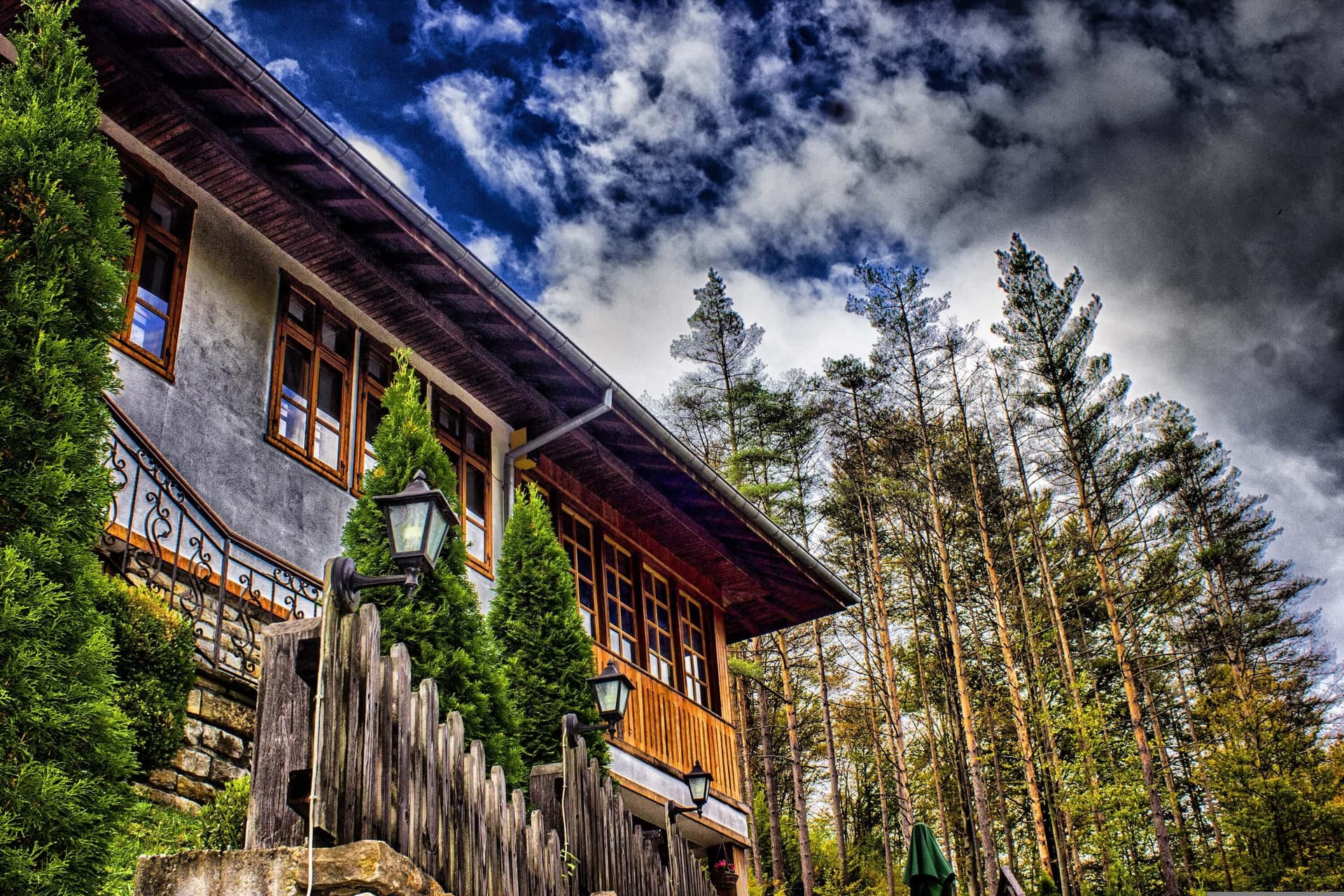
Hotel Etar, at the museum itself, lets you walk the craft street before the day visitors arrive. Room prices (checked September 2026):
- Twin room: €40
- Triple room: €45
- Room for four: €48
- Apartment: €53
For more choice of hotels and restaurants, stay in Gabrovo, 15 minutes away, or in Tryavna for a quieter Revival-town base.
🌿 Nearby Destinations & Day Trip Combinations
Etar makes a great half-day stop that pairs easily with regional attractions within a 30 km radius:
- Sokolski Monastery (~3 km): Situated just above Etar, featuring a quiet stone courtyard and an eight-spout stone fountain built by master Kolyu Ficheto.
- Gabrovo (~8 km): Regional hub famous for its humor culture and the House of Humour and Satire.
- Bozhentsi Architectural Reserve (~25 km): A preserved historic village featuring stone-roofed 19th-century houses.
- Tryavna (~30 km): Renowned for its clock tower square, woodcarving museum, and Revival architecture.
- Dryanovo Monastery & Bacho Kiro Cave (~25 km): Historic monastery set inside a limestone gorge.
- Shipka Pass & Freedom Monument (~15 km): Up the same road to the south, offering panoramic views, with the Shipka Memorial Church beyond the ridge. The monument itself is closed for restoration until 2029 — see our Shipka Pass guide.
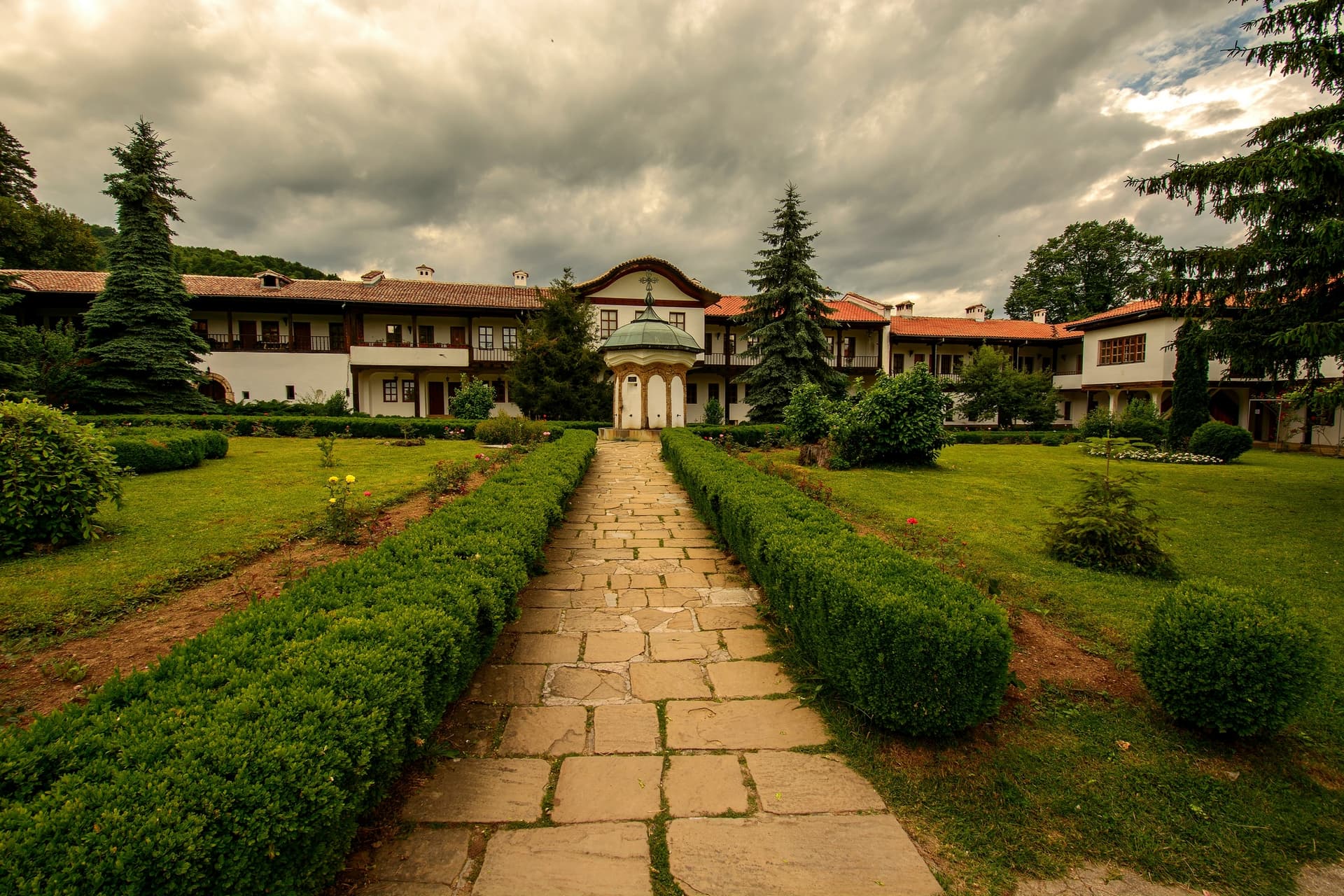
Veliko Tarnovo is located roughly one hour north and serves as an ideal base for exploring the region.
🗓️ When to Visit
The museum complex is open year-round. Late spring through early autumn is the best time to visit, when all workshops are fully active and the valley foliage is vibrant. Autumn turns the surrounding beech forests gold and red — see our autumn guide to Bulgaria.
Winter visits are quieter with fewer active artisans, but the water channels continue to run, and the snowy Revival roofs create a picturesque backdrop.
A living craft street powered by mountain waters — experience authentic 19th-century Bulgarian craftsmanship at Etar with Mestala.com.
This guide covers 6 places
Want more Mestala in your Google results?
Add mestala.com as a preferred source and our guides will show up more often when you search. Requires a Google account.
Frequently Asked Questions
Where is the Etar complex and how do you get there?▾
Etar sits about 8 km south of Gabrovo, in the valley of the Sivek river on the northern slopes of the Balkan Mountains. It is roughly 30 km from Tryavna, about 50 km from Veliko Tarnovo, and around 225 km from Sofia. Local city buses connect from Gabrovo, and a small car park in front of the main entrance costs €1.54 for the day (free December–February).
What makes Etar different from other open-air museums?▾
The machinery actually works. Etar is built around a functioning water channel that powers grain mills, fulling mills, grinding stones, and wood-turning lathes, demonstrating pre-industrial trades in real-time operation rather than static display.
How long should you allow for Etar?▾
Two to three hours allows a comfortable visit — long enough to stroll the artisan street, watch several workshops in action, inspect the water-powered installations, and enjoy local pastries.
What crafts can you see at Etar?▾
The craft street features traditional 19th-century trades: pottery, woodcarving, coppersmithing, cutlery, braiding, weaving, icon painting, bakery, and confectionery. Artisans craft items by hand on site using traditional techniques.
Can you visit Etar with children?▾
Yes, it is one of the most engaging family stops in the region. The moving water wheels, falling hammers, and live craft demonstrations keep children interested. Cobbled streets are accessible, though stroller rides will be bumpy.
Is Etar worth combining with nearby destinations?▾
Yes — it pairs naturally with nearby regional highlights. Gabrovo is 8 km away, Sokolski Monastery is 3 km up the road, Tryavna is 30 km, the architectural reserve village of Bozhentsi is 25 km away, and the Shipka Pass is about 15 km south.
You might be interested in
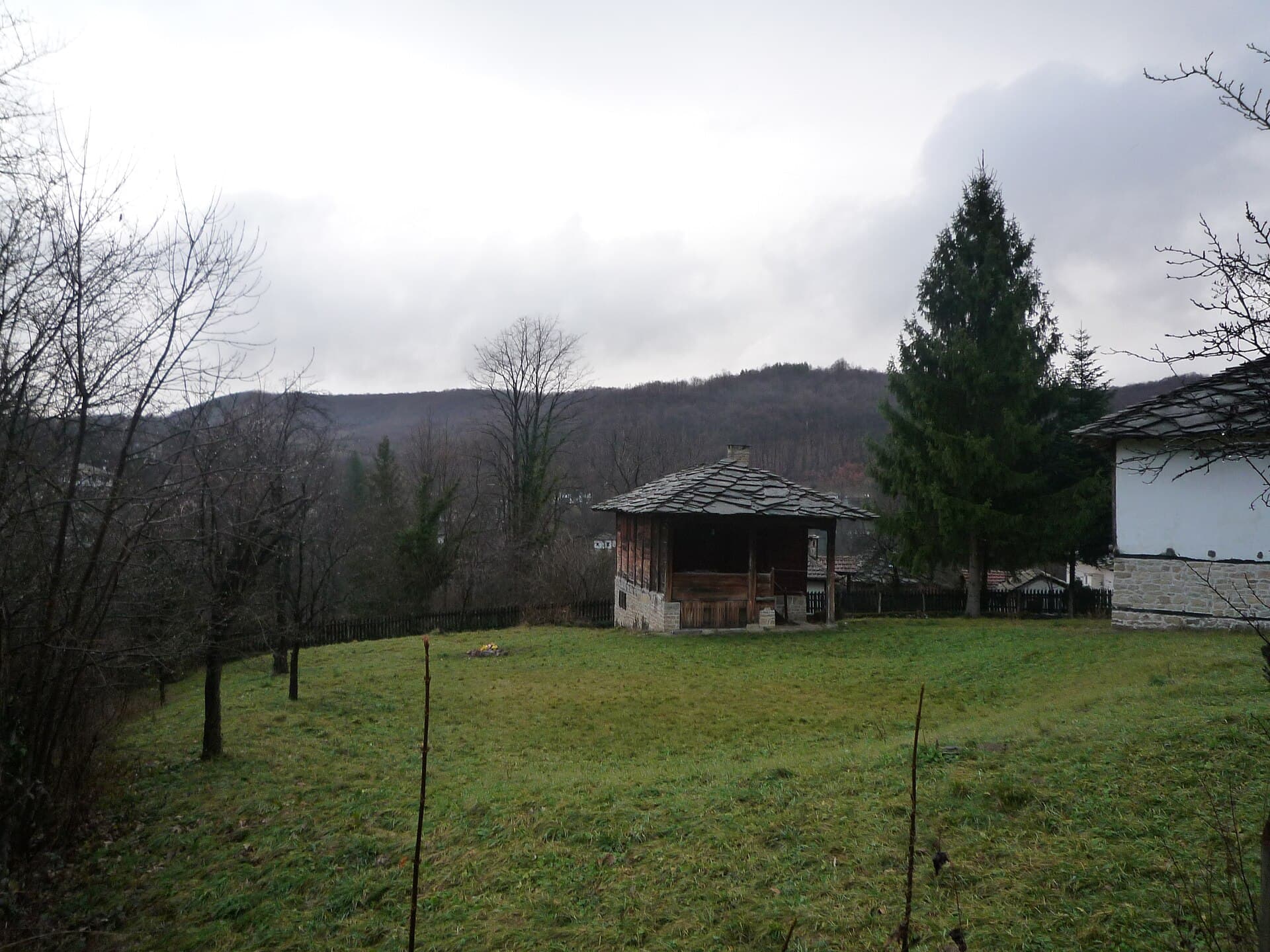
Bozhentsi: The Village That Stopped in 1870
A guide to Bozhentsi, the protected architectural reserve village near Gabrovo: about a hundred stone-roofed Revival houses, the Doncho Popa house-museum, the founding legend, and why it stays quiet when Koprivshtitsa fills up.
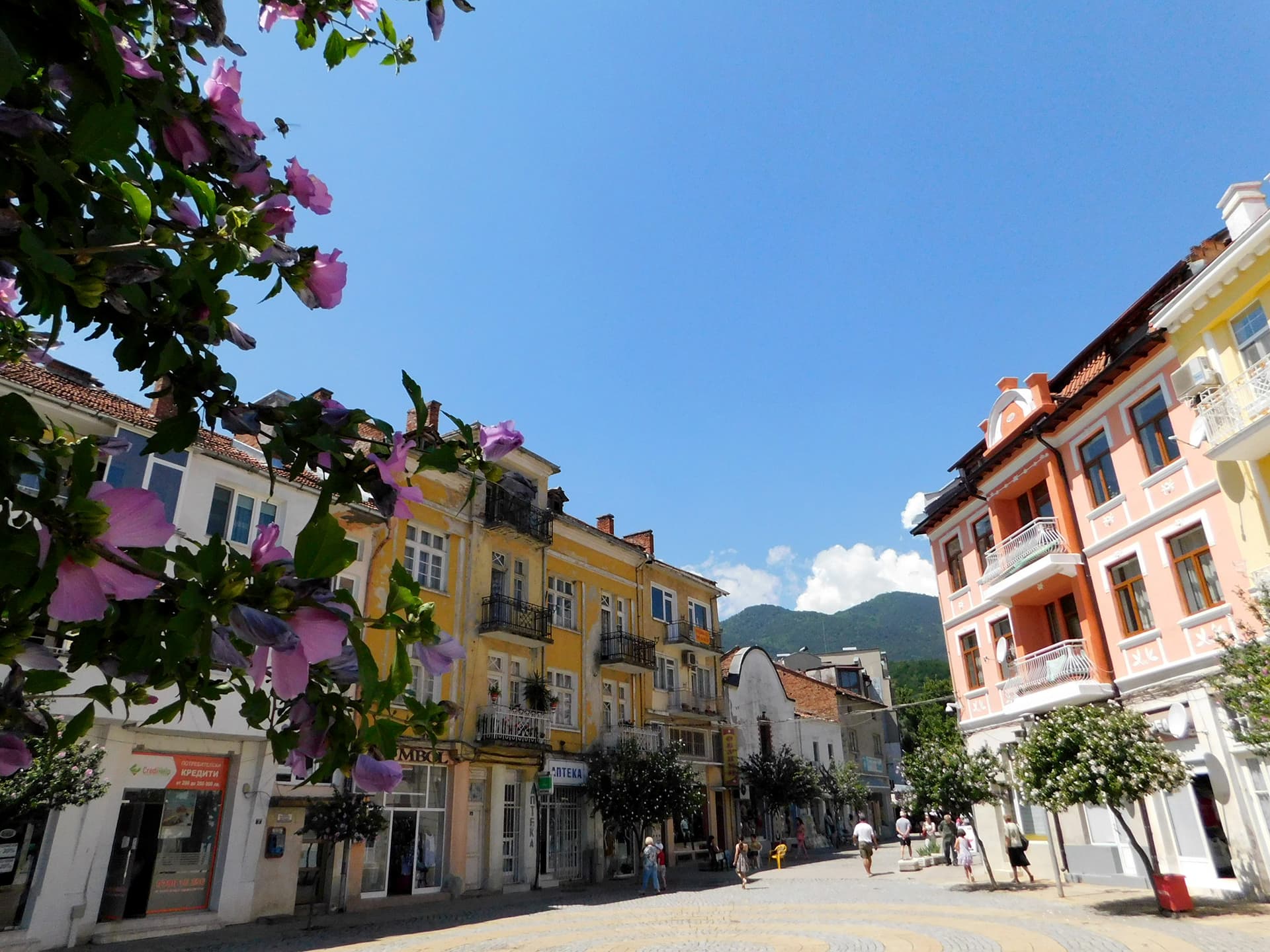
Gotse Delchev: Kovachevitsa, Leshten & the Mesta Valley
Roman ruins at Nicopolis ad Nestum, the stone villages of Kovachevitsa and Leshten, and Ognyanovo's hot springs — what to see around Gotse Delchev.
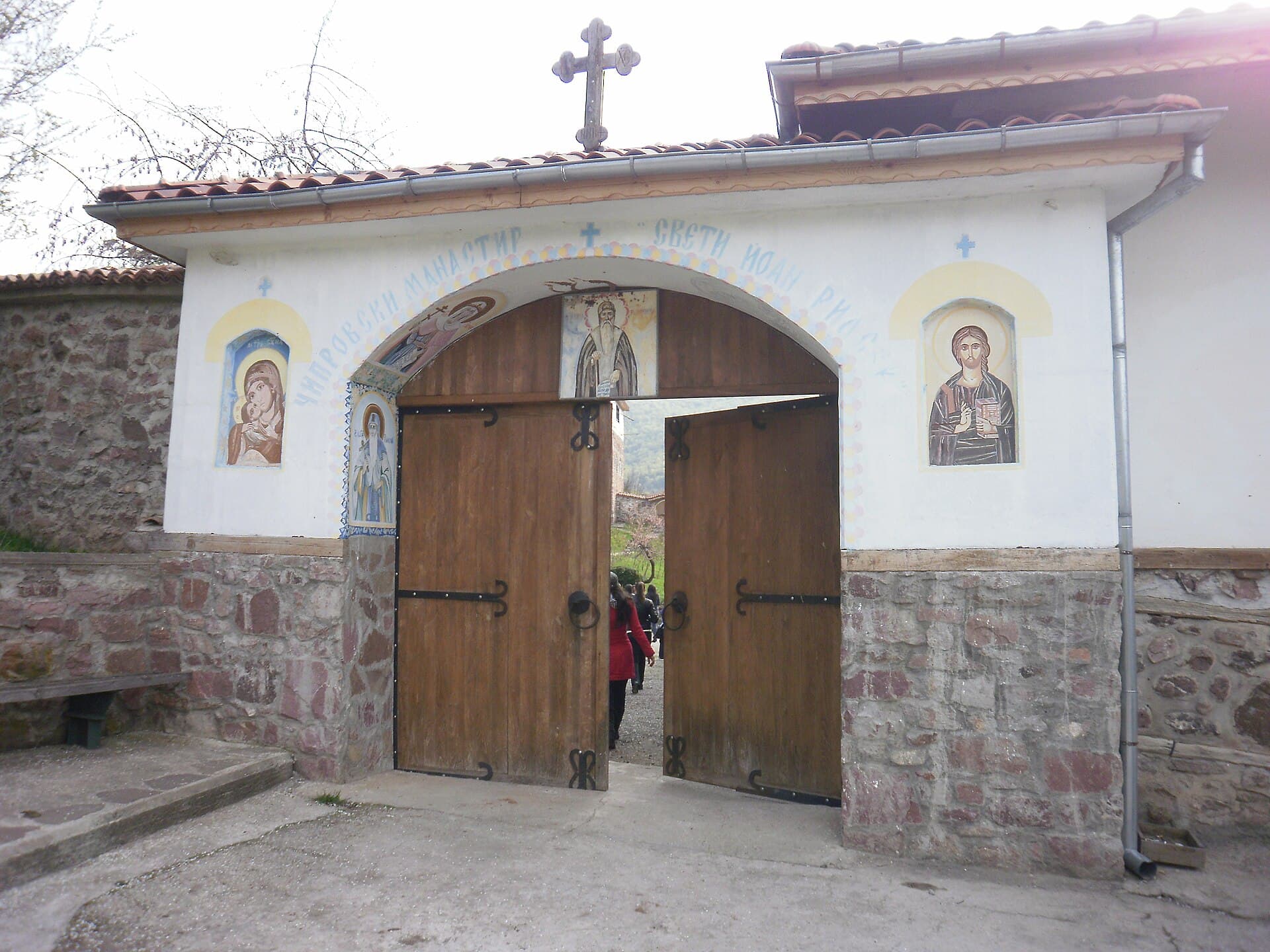
Chiprovtsi: Carpets, a Monastery and a Lost Uprising
A guide to Chiprovtsi in Bulgaria's far north-west: the UNESCO-listed kilim weaving tradition, the 1688 uprising that destroyed the town, the monastery of St John of Rila, and the waterfalls above it.
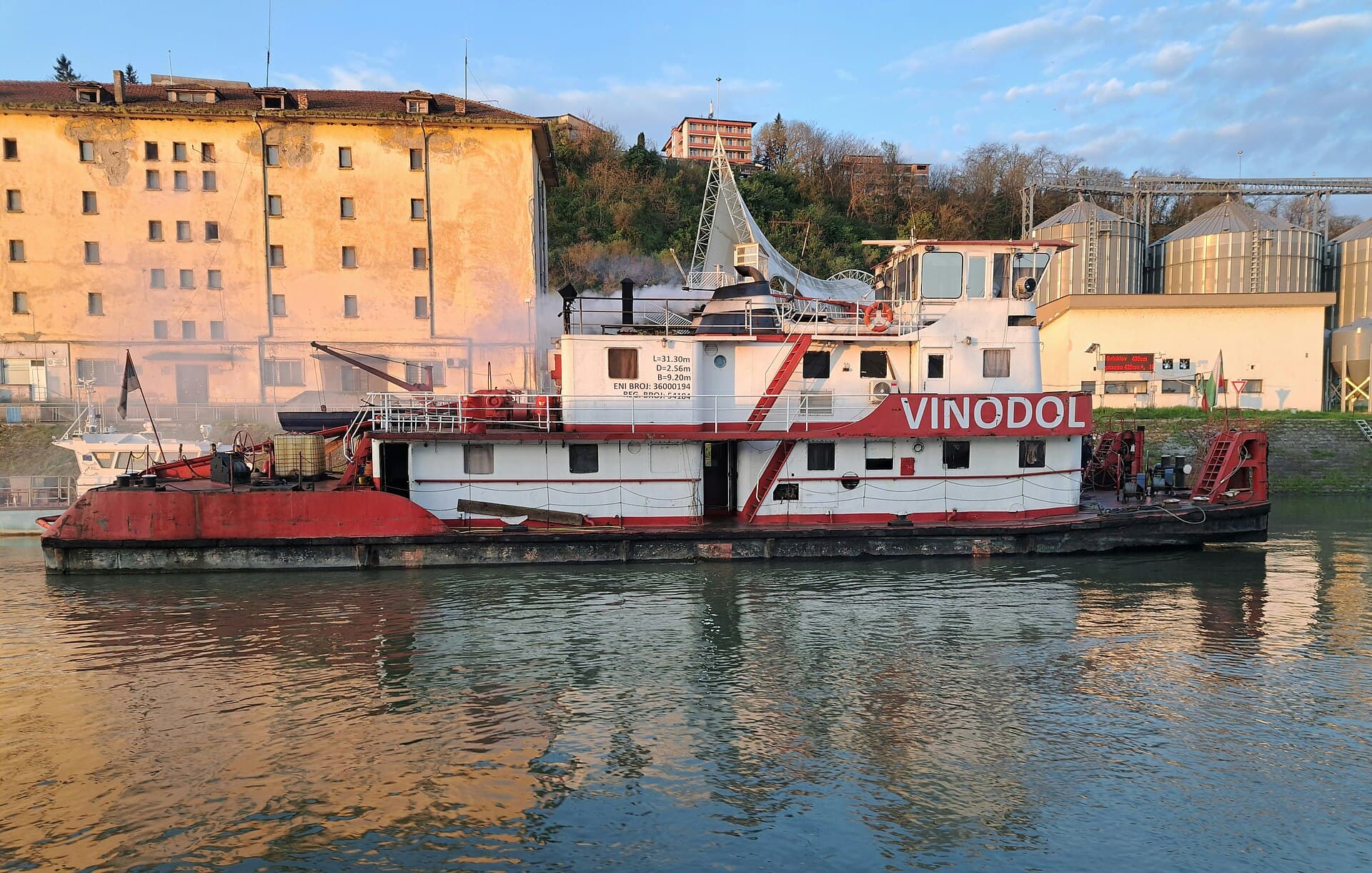
Svishtov, Nikopol & Belene: The Forgotten Danube
A guide to three Danube towns in northern Bulgaria: the 1877 crossing at Svishtov, the 1396 Battle of Nicopolis, the Persina wetlands, and the Belene labour camp that Bulgaria spent decades not discussing.