

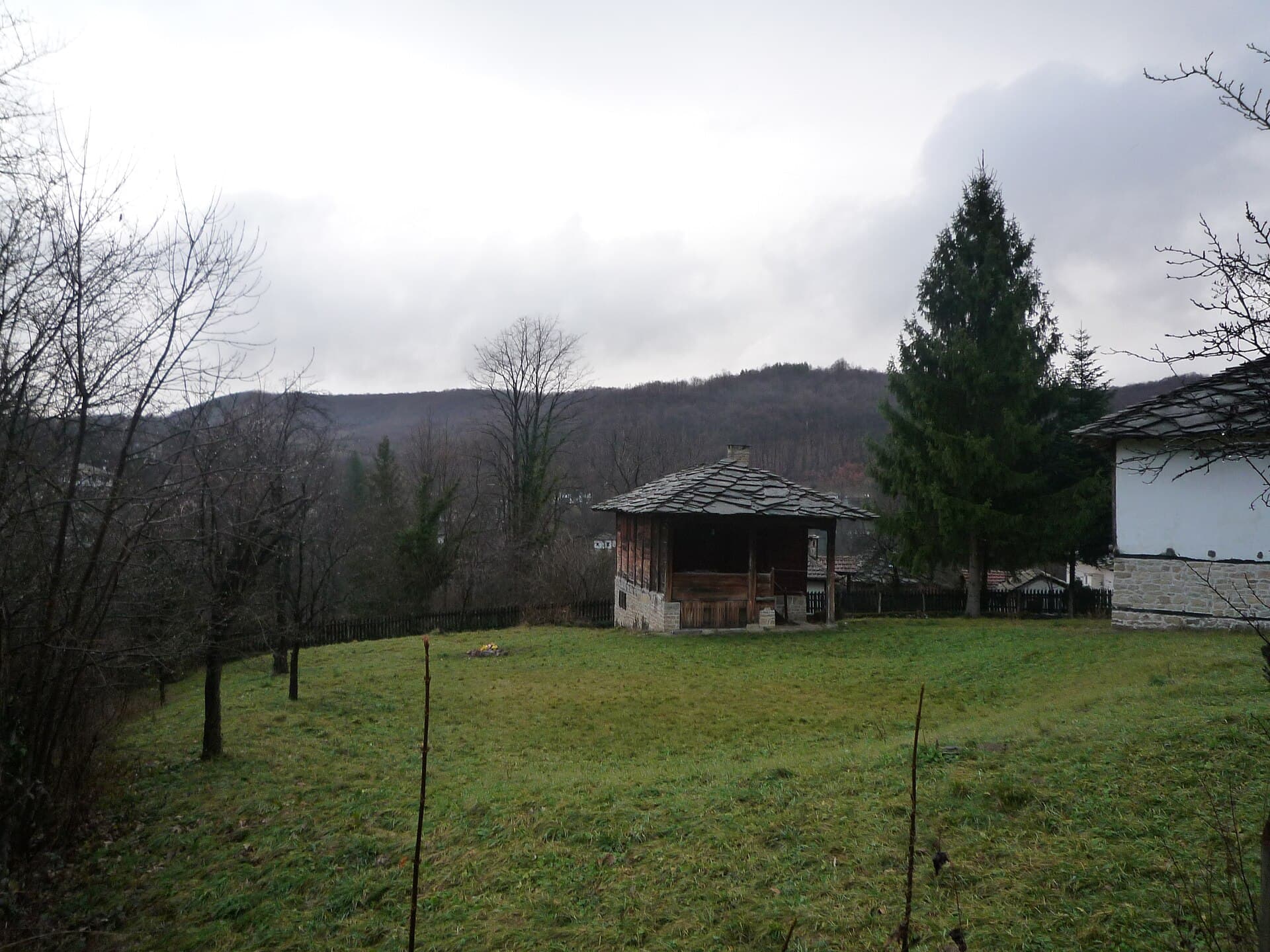
Bozhentsi: The Village That Stopped in 1870
In this guide▾
Bulgaria has several preserved Revival towns and only a handful of protected Revival villages. Bozhentsi is among the most complete of them — a settlement small enough that nothing modern was ever built inside it, and whole enough that walking through it feels less like visiting a museum than arriving somewhere a century and a half late.
Bozhentsi is about a hundred houses in a fold of the Balkan foothills east of Gabrovo, inside Bulgarka Nature Park and protected as an architectural and historical reserve since 6 September 1964. It has no headline monument, no famous battle and nothing you have to see. That is precisely the appeal.

📍 Getting There
| From | Distance | Driving time |
|---|---|---|
| Gabrovo | ~15 km | ~25 min |
| Tryavna | ~20 km | ~30 min |
| Etar museum | ~25 km | ~35 min |
| Veliko Tarnovo | ~45 km | ~55 min |
| Sofia | ~230 km | ~3 h |
The last stretch is a narrow country road through the hills. A large paid car park sits at the entrance to the reserve — roughly €2 for a stay of up to 5 hours — and a paved path takes you to the centre of the village in a few minutes. Vehicles are kept out of the historic core, which is a large part of why it works. Public transport is not a realistic option here; see our car rental guide.
🏘️ What You Are Looking At
The village is built in one material vocabulary, and that consistency is the whole effect:
- Stone slab roofs. Split stone rather than tile — a Balkan-range tradition using local quarried rock. It weathers to grey and green and gives the village its colour.
- Timber upper storeys over stone ground floors, with the upper level often oversailing the lower.
- Wide overhanging eaves, deep enough to shade the walls and throw rain clear of the foundations.
- High stone yard walls and heavy wooden gates, so the lanes are corridors between enclosures rather than open streets.
Nothing is monumental. Everything is well made. It is the architecture of a prosperous but not wealthy craft village, and it survives because the reserve designation froze it before the twentieth century could get to it.

📜 Bozhana's Village
The founding story is a good one, and it is a legend rather than documented history — worth saying plainly, since it is usually told as fact.
Tradition holds that after Veliko Tarnovo fell to the Ottomans in 1393, a noblewoman named Bozhana fled the capital with her children and settled in these hills, far enough into the forest to be left alone. The village that grew there took her name.
What is better documented is what came after: Bozhentsi became a crafts and trading settlement of shepherds, beekeepers, smiths and silk-spinners, dealing in wool, hides and beeswax, with its merchants trading as far as Bucharest, Vienna and Istanbul. Before the Liberation the village had 103 houses, and the ones you are walking past were built on that money.
For the wider story of the period that produced these villages and towns, see our National Revival trail.
🚪 What to Actually Do
Not much, deliberately. The village rewards wandering rather than ticking off. That said:
The Doncho Popa House
The best-known house-museum in the village, a substantial merchant's house showing how a well-off Bozhentsi family actually lived — the rooms, the furniture, the storage, the division between working and receiving space. If you visit one interior, make it this one.
The reserve's museum also runs the Baba Rayna house, the mengema — a wax-refining workshop that recalls the village's beeswax trade — and a small cell school.
Tickets: one ticket covers the Baba Rayna and Doncho Popa house-museums and the Mengema workshop, with a 60-minute guided talk in Bulgarian included. Groups start from the museum's information centre.
| Ticket | Price |
|---|---|
| Adults | €4.60 |
| Pupils, students, pensioners | €3.07 |
| Family (two adults with children up to 18) | €9.71 |
| Children under 7, visitors with special needs | free |
Prices checked September 2026; they can change. The reserve's museum is No. 20 on the list of the 100 National Tourist Sites, so bring your stamp booklet.

The Church of St Elijah
The village church of St Prophet Elijah, built around 1840, follows the pattern of Ottoman-era Bulgarian churches: modest on the outside, low, and far more elaborate within.
The Old and New Schools
Two nineteenth-century schoolhouses — the New School was built in 1872 — of the type that Revival-era villages raised as a point of pride as soon as they could afford one. Both now hold exhibitions.
Simply Walking
The lanes, the gates, the yard walls and the views out over the hills. An hour of this is the real visit.

Practical note: the house-museums are open every day, 09:00–17:15, and the guided visit takes about an hour, so arrive by mid-afternoon if you want to see the interiors.
☕ Eating and Staying
There are a handful of small taverns and guesthouses inside the village, mostly in restored houses. A night in the cheapest guesthouses starts at around €60, rising with the comfort (checked September 2026). The food is regional and unfussy — see our Bulgarian food guide for what to look for.

Staying overnight is the insider move. Bozhentsi takes day visitors, and by early evening they have all gone. What is left is a village of stone roofs with almost nobody in it, which is an experience the daytime visit does not give you.
🌿 Combining It
Bozhentsi is a two-to-three hour stop, so build a day around it:
- Etar open-air museum (~25 km): the working craft street, and the natural pairing — Etar shows you the trades, Bozhentsi shows you where the people who practised them lived.
- Tryavna (~20 km): the woodcarving town.
- The Tryavna–Bozhentsi trail: the marked walking route linking the two, for anyone who would rather arrive on foot.
- Dryanovo Monastery and Bacho Kiro cave (~25 km).
- Gabrovo (~15 km): the regional centre.
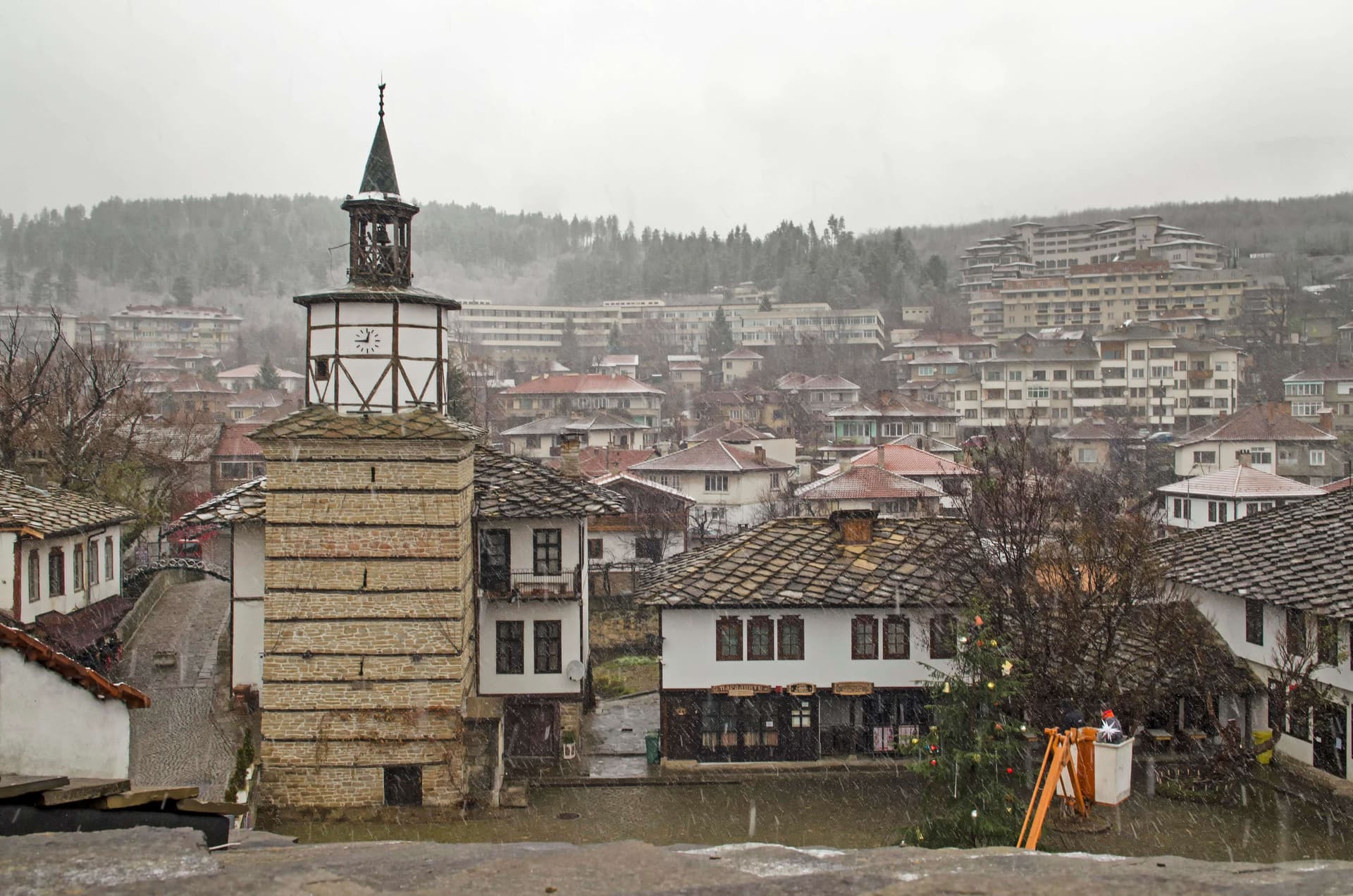
Veliko Tarnovo is under an hour away.
🗓️ When to Go
Autumn is the pick. The surrounding beech forest turns, the light drops low, and the grey stone roofs look their best against it — see our autumn guide. Late spring is a close second, with everything green and the village at its quietest.
Summer weekends bring day-trippers from Gabrovo and Veliko Tarnovo; a weekday visit in any season is noticeably better. Winter is cold and can leave the approach road tricky in snow, but a dusted Bozhentsi is genuinely beautiful if you are prepared to drive carefully.
A hundred stone-roofed houses, no monuments, and almost no one there after five o'clock. Bozhentsi is the quietest good thing in the Central Balkan foothills — find it with Mestala.com.
This guide covers 4 places
Want more Mestala in your Google results?
Add mestala.com as a preferred source and our guides will show up more often when you search. Requires a Google account.
Frequently Asked Questions
Where is Bozhentsi and how do you get there?▾
Bozhentsi is a small village about 15 km east of Gabrovo, in the foothills of the Balkan Mountains in north-central Bulgaria. It's roughly 20 km from Tryavna, around 25 km from the Etar open-air museum and about 45 km from Veliko Tarnovo. The approach is a narrow country road; there is no useful public transport, so a car is effectively required.
What makes Bozhentsi special?▾
It's a protected architectural and historical reserve — roughly a hundred houses from the eighteenth and nineteenth centuries preserved as a whole settlement rather than as isolated monuments. Because it was declared a reserve in 1964, no modern building was allowed to intrude, so the village reads as a continuous piece of pre-industrial Balkan architecture.
How long do you need in Bozhentsi?▾
Two to three hours is enough to walk every lane, visit a house-museum or two and stop for a coffee. It's small. One ticket (€4.60 for adults) covers the three museum sites with an hour-long guided talk in Bulgarian. The case for staying overnight is atmospheric rather than logistical — the village empties completely in the evening, and that is when it is at its best.
What is the legend behind the village's name?▾
Tradition holds that Bozhentsi was founded by a noblewoman named Bozhana, who fled Veliko Tarnovo with her children after the capital fell to the Ottomans in 1393 and settled in these hills. The story is a legend rather than documented history, but it is the version every local will tell you, and the village carries her name.
Why are the roofs made of stone?▾
The houses are roofed with split stone slabs rather than tiles — a regional building tradition of the Balkan range using locally quarried stone. Combined with timber upper storeys, wide overhanging eaves and stone-walled yards, it produces the grey-and-brown look that gives Bozhentsi its unity.
Is Bozhentsi better than Koprivshtitsa?▾
It's different rather than better. Koprivshtitsa is larger, more colourful, has far more museum houses and carries the heavier historical weight of the April Uprising. Bozhentsi is smaller, greyer, quieter and more complete as a village. If you want museums and history, go to Koprivshtitsa; if you want atmosphere and near-silence, go to Bozhentsi.
You might be interested in
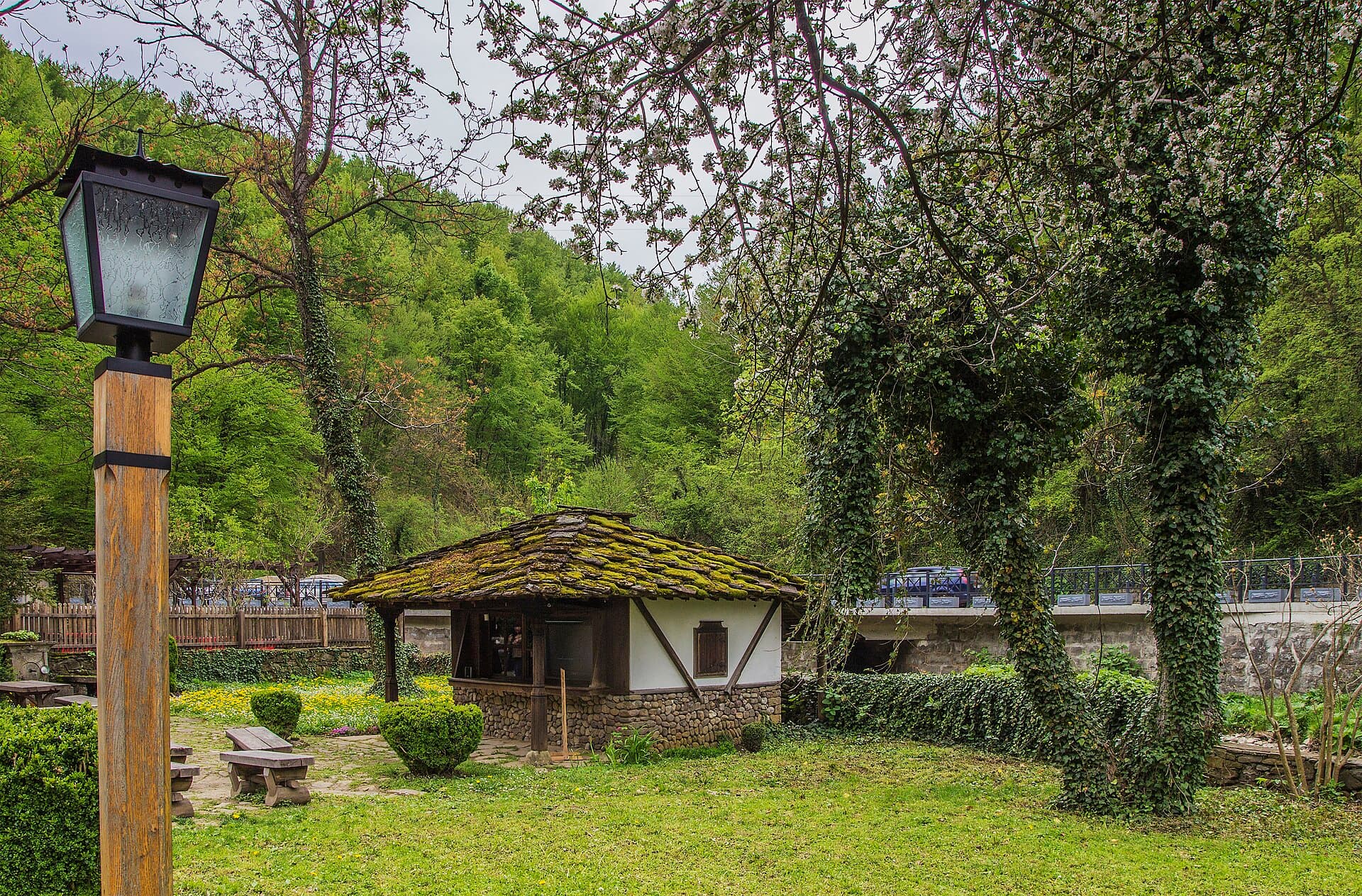
Etar: Bulgaria's Working Open-Air Museum
A guide to the Etar Architectural-Ethnographic Complex near Gabrovo: a reconstructed Revival craft street where the workshops still run on water power, what each trade does, how long to allow, and how to combine it with Tryavna and Bozhentsi.
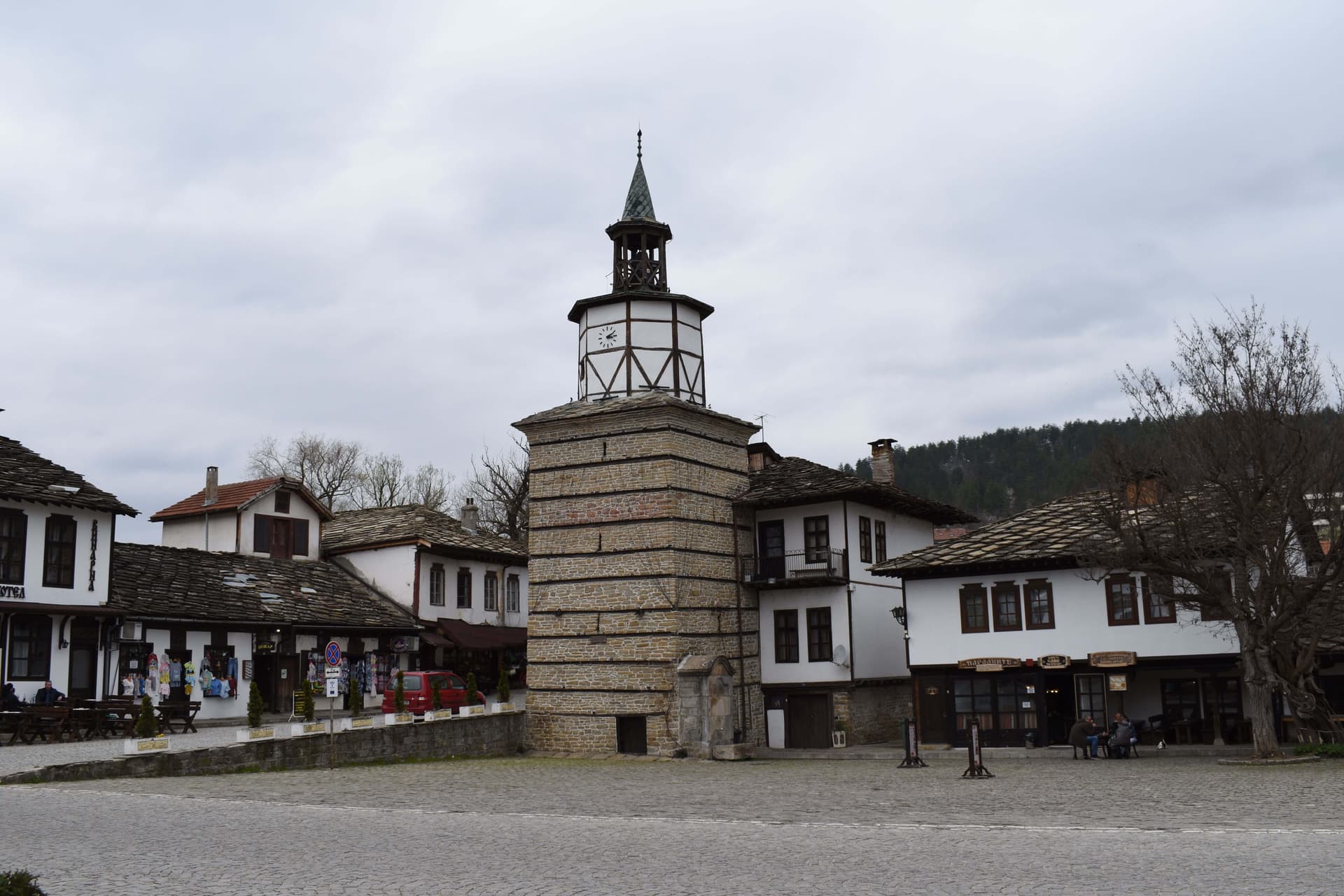
Tryavna: Bulgaria's Woodcarving Town
A travel guide to Tryavna in the Balkan Mountains: the oldest preserved Revival square in Bulgaria, the 1814 clock tower, the Daskalov House sun ceilings, the Tryavna woodcarving school, and how to combine it with Bozhentsi and Dryanovo.
Gotse Delchev: Kovachevitsa, Leshten & the Mesta Valley
Roman ruins at Nicopolis ad Nestum, the stone villages of Kovachevitsa and Leshten, and Ognyanovo's hot springs — what to see around Gotse Delchev.
Chiprovtsi: Carpets, a Monastery and a Lost Uprising
A guide to Chiprovtsi in Bulgaria's far north-west: the UNESCO-listed kilim weaving tradition, the 1688 uprising that destroyed the town, the monastery of St John of Rila, and the waterfalls above it.