

Tryavna: Bulgaria's Woodcarving Town
In this guide▾
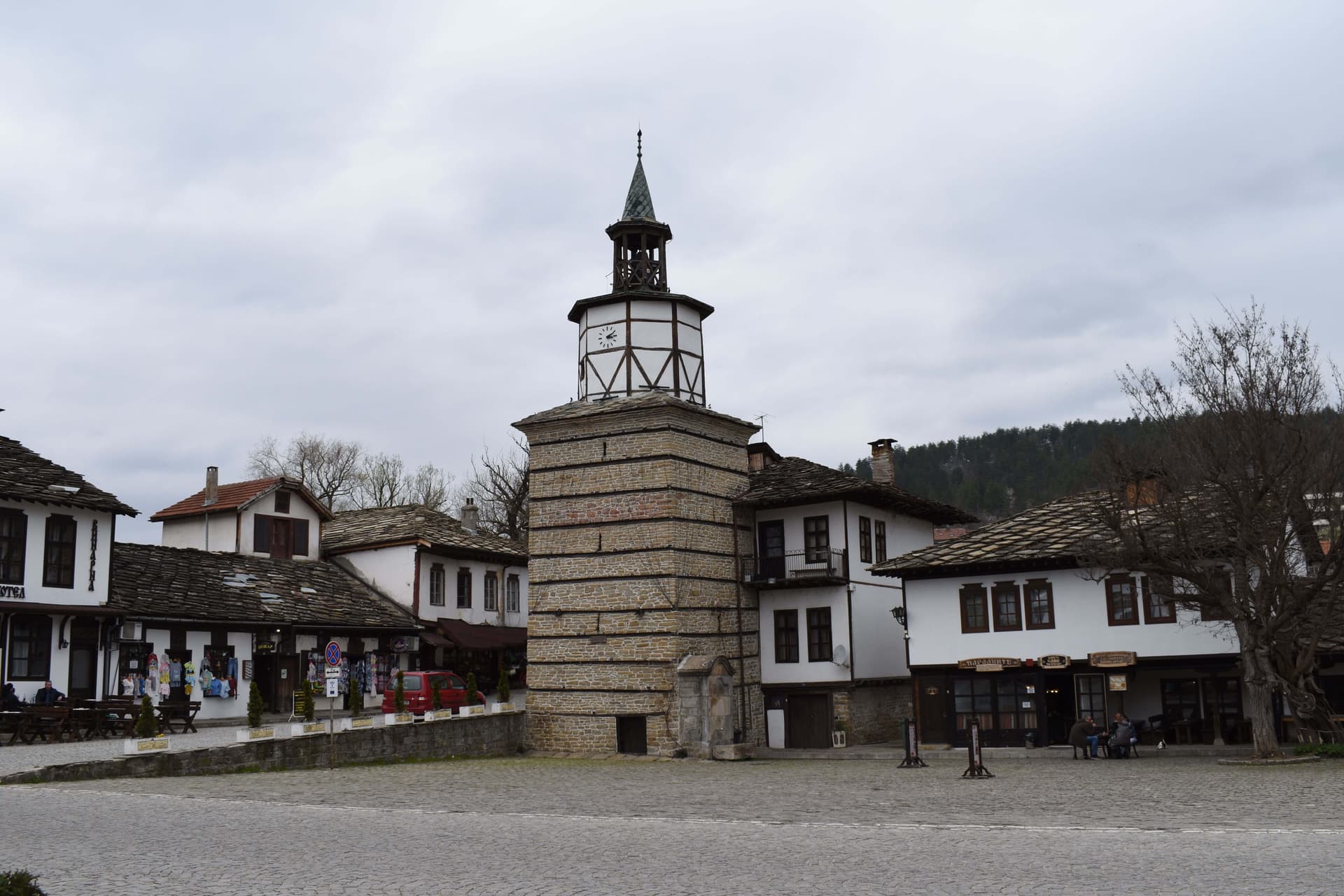
Bulgaria has a handful of towns that survived the twentieth century with their nineteenth-century core intact, and Tryavna is the one that did it best. Tucked into a narrow valley on the northern slopes of the Balkan range, it is small enough to cross on foot in twenty minutes and dense enough with carved timber, stone roofs and Revival façades to justify a whole day.
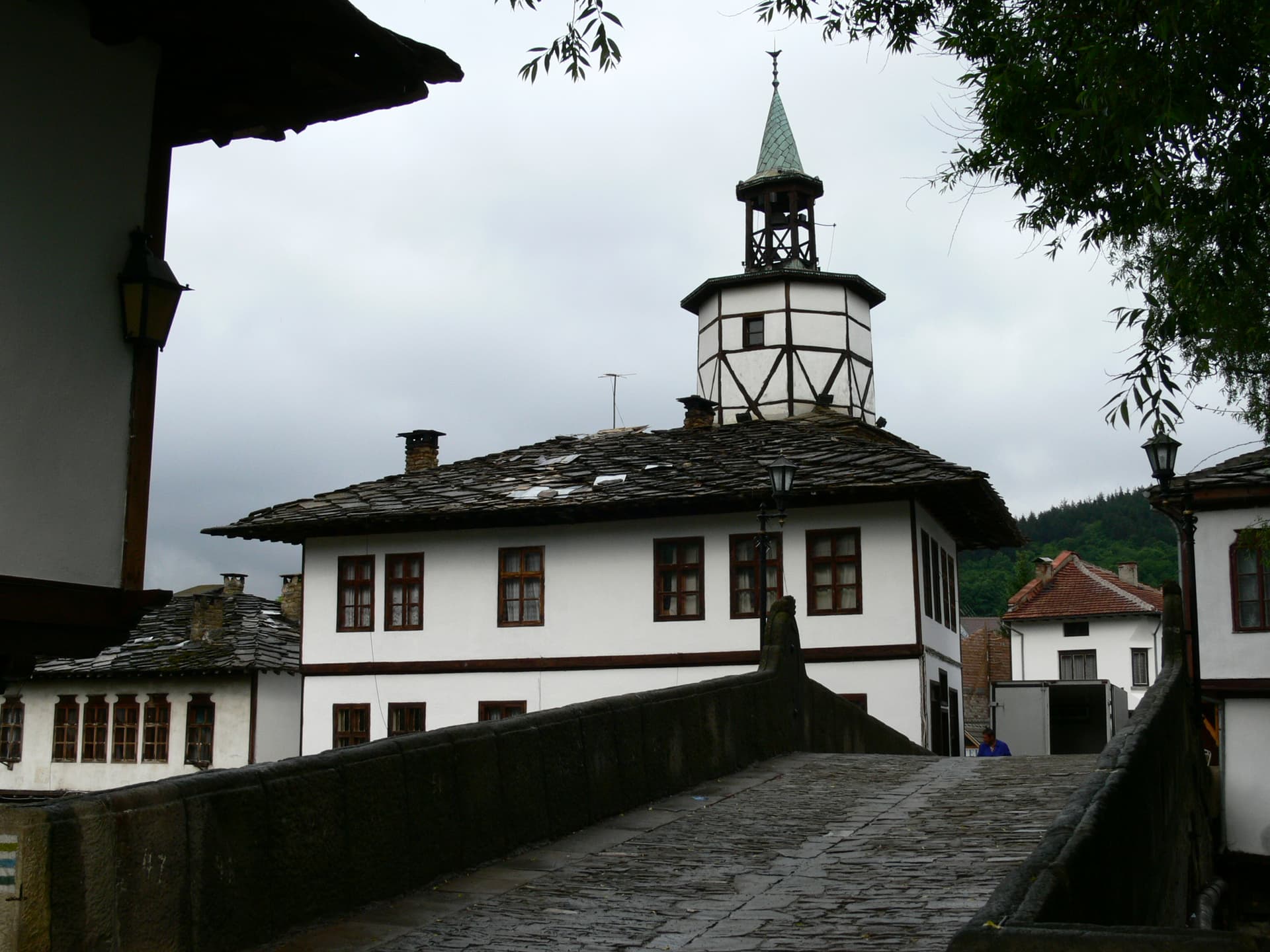
What sets it apart from the better-known Revival towns is not scale but craft. Tryavna was a woodcarving town — the home of a school of carvers and icon painters whose work ended up in churches and monasteries across the country. You can see the results in situ here, in the houses they built for themselves.
📍 Orientation: One Square, One Valley
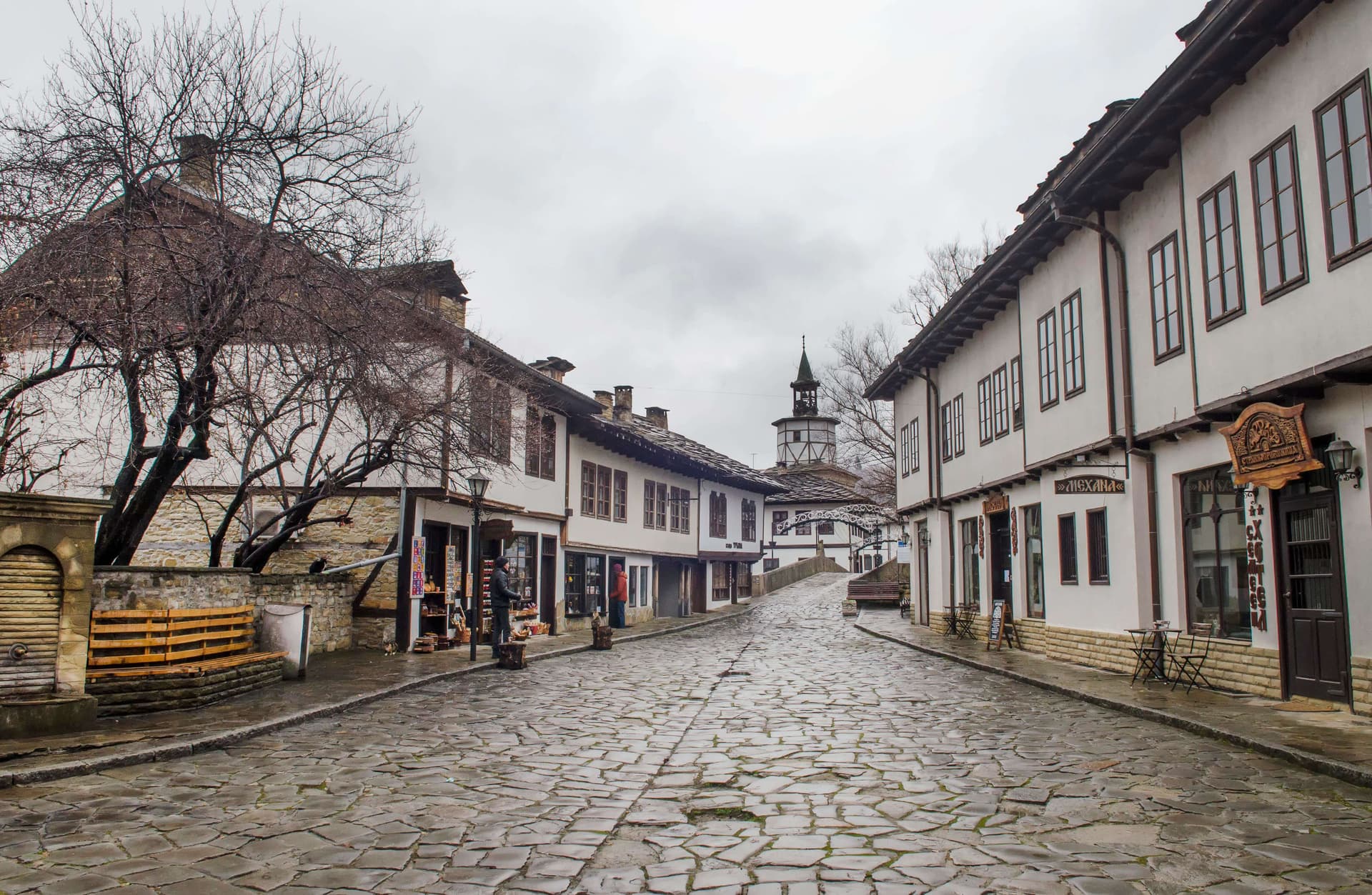
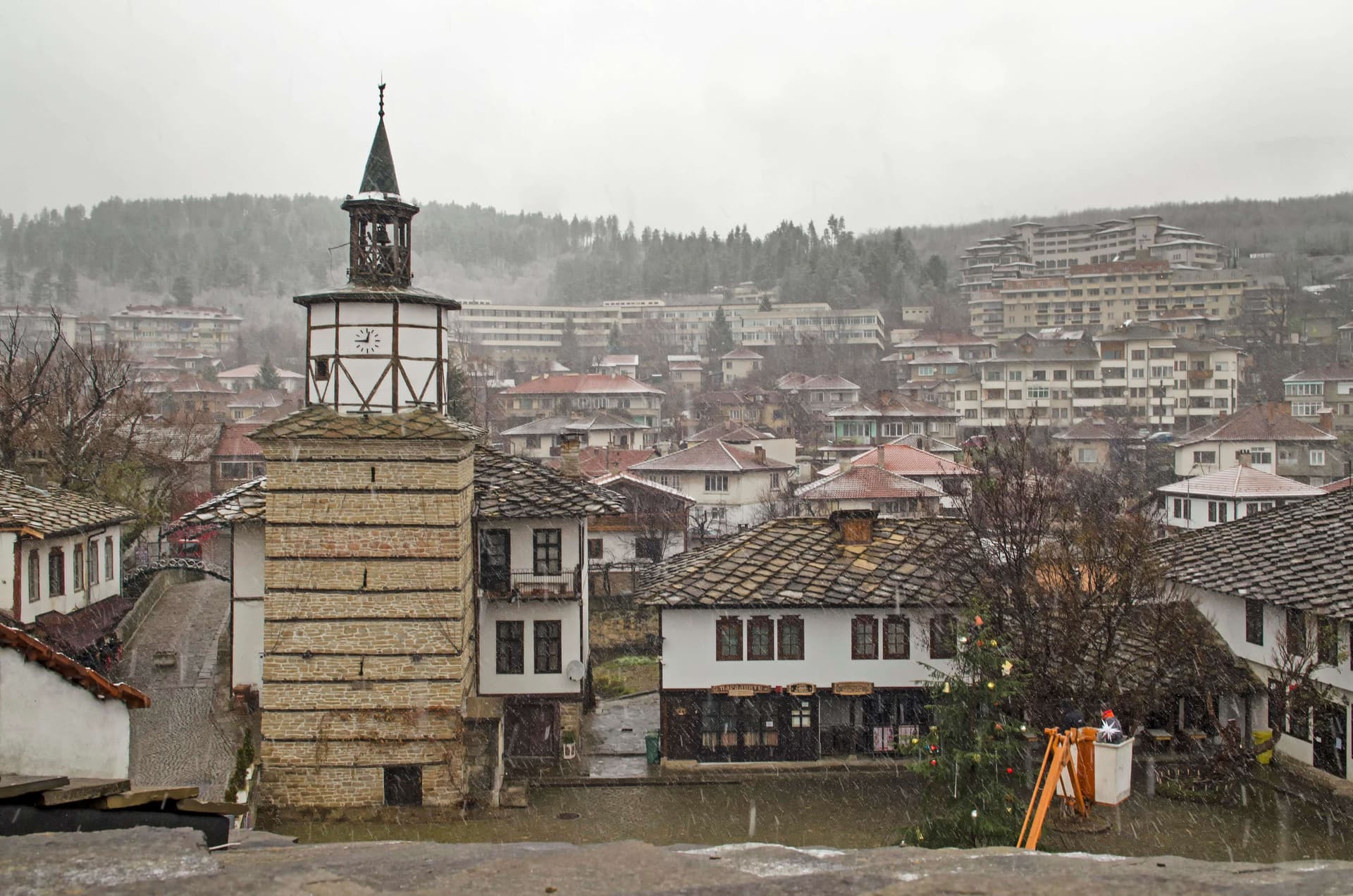
Tryavna's historic centre is unusually compact. Everything orbits Kapitan Dyado Nikola Square, widely described as the oldest preserved National Revival square in Bulgaria — an irregular cobbled space closed in by two-storey timber-framed houses, with the clock tower at one end and a humpbacked stone bridge of 1844–1845 over the Trevnenska river at the other.
The modern town spreads down the valley, but the part you have come to see is this: the square, the two streets running off it and the church just above.
🚗 Getting There
| From | Distance | Driving time |
|---|---|---|
| Gabrovo | ~22 km | ~30 min |
| Veliko Tarnovo | ~45 km | ~50 min |
| Bozhentsi | ~20 km | ~30 min |
| Sofia | ~230 km | ~3 h |
Tryavna sits on the railway line that crosses the Balkan range from Gorna Oryahovitsa to Stara Zagora, and buses run from Gabrovo and Veliko Tarnovo. But the villages and monasteries that make this region worth a stay are poorly served by public transport — if you can drive, drive. For the wider picture on moving around the country, see our transport guide and the car rental and driving guide.
Parking: Tryavna has no Blue Zone — parking is free. Use any free space, as long as you do not block the traffic.
🕰️ The Clock Tower
The stone clock tower of 1814 is Tryavna's emblem and the anchor of the square. It is plain by design — a tall stone shaft with a timber top — and it was built at a moment when a public clock was a statement of municipal self-confidence under Ottoman rule. Nearly every photograph of the town is taken from within thirty metres of it.
🪵 The Tryavna School of Woodcarving
This is the reason to come. From the seventeenth century, and above all in the eighteenth and nineteenth, Tryavna's carvers developed a distinct style — deep, dense floral and geometric relief, worked mainly in walnut — and its icon painters a matching one. Whole families passed the craft down, and their commissions travelled: iconostases, ceilings and church furniture attributed to Tryavna masters turn up far beyond the Balkan range.
The Daskalov House
The Daskalov House, built in 1804–1808 for a wealthy local merchant, is now the Museum of Woodcarving and Icon-Painting Art — and it holds the school's most famous object. Two of its rooms have a carved wooden sun set into the ceiling, and the story attached to them is the one every guide tells: they were made as a competition between the master Dimitar Oshanetsa and his apprentice Ivan Bochukovetsa, reportedly over six months of work.
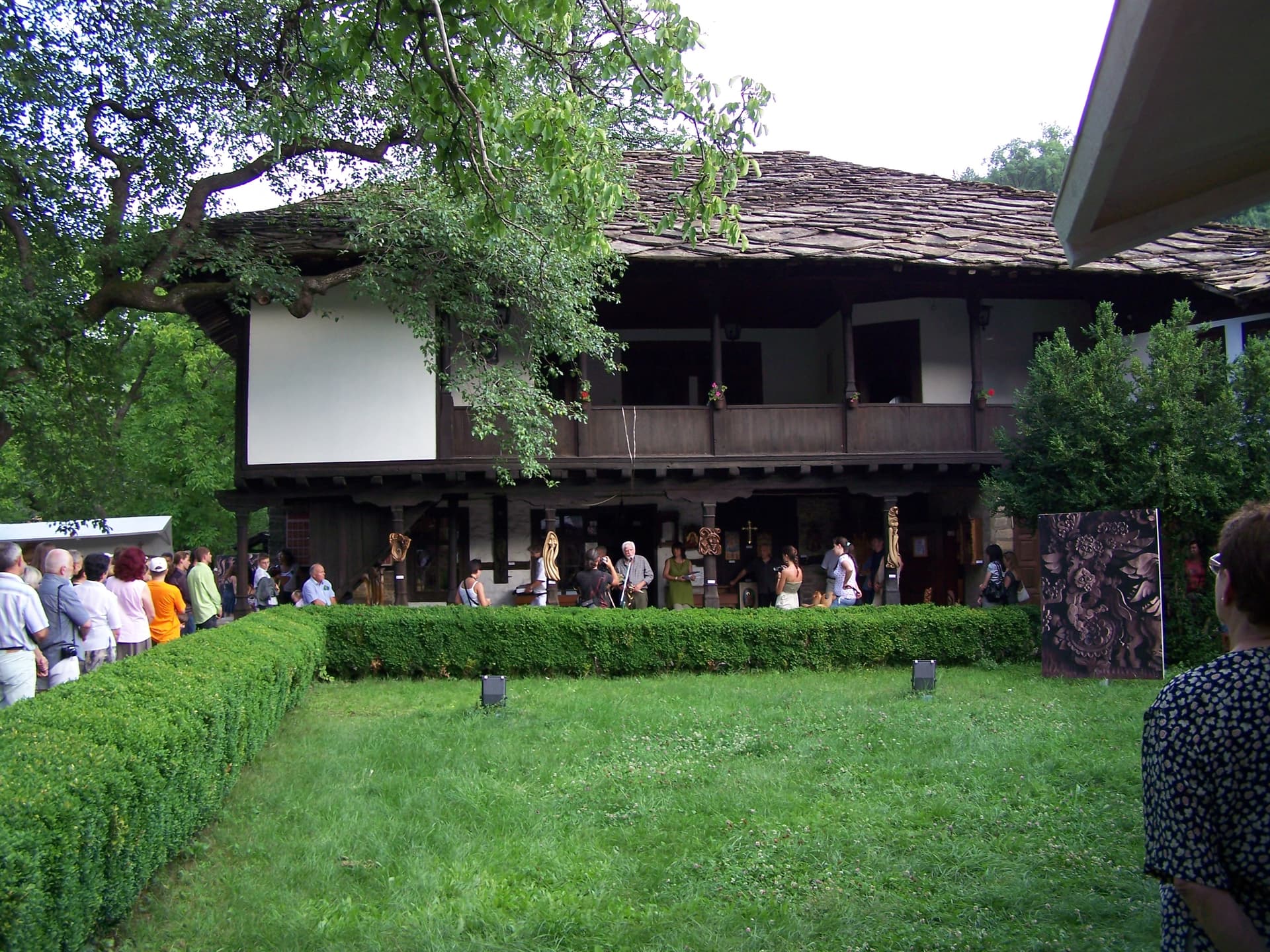
Standing under them, the point of the Tryavna School stops being abstract. This is domestic architecture treated as sculpture.
The Slaveykov School
The Old School, built in 1836–1839 — often called the Slaveykov School, after the writer Petko Slaveykov, who taught here for eight years — sits beside the church. It is one of the earliest secular school buildings in the country, and its galleried courtyard is a good place to understand what a Revival-era town invested in.
⛪ The Church of St Archangel Michael
Just above the square stands the Church of St Archangel Michael, the oldest church in town. Tradition ties it to the medieval battle in the Tryavna Pass in 1190; it was burned by kardzhali raiders in 1798 and rebuilt in 1819. Like many Bulgarian churches of the Ottoman period it is sunk below ground level with a deliberately low door — a rule that limited how tall and how visible a Christian church could be. Inside is Tryavna carving in its natural setting: the iconostasis is the town's craft doing the job it was made for.
Practical note: the Old School and the Daskalov House open daily, but several other museums — the Slaveykov and Raykova houses, the icon-painting museum and the Asian and African Art museum — close on Mondays and Tuesdays, and most take a lunch break in summer. Plan around those days if you want to see everything — this is a town where an afternoon can quietly evaporate.
Museum Tickets
Tickets are sold at the entrance of each museum, and the more you see, the less each one costs:
| Ticket | 1 museum | 3 museums | 6 museums |
|---|---|---|---|
| Adults | €3 | €7.50 | €15 |
| Pensioners, students | €2 | €5 | €10 |
| Pupils, visitors with disabilities | €1 | €2.50 | €5 |
Children under 7 go in free. The opening hours: the Old School and the Daskalov House are open every day, 09:00–18:00 in summer and 09:00–17:00 in winter; the other museums 09:30–13:30 and 14:00–18:00 in summer, closed on Mondays and Tuesdays.
A guided talk costs €6 in Bulgarian or €15 in a foreign language (€30 / €40 for three museums; book ahead, in Bulgarian or English). Several houses add small hands-on extras: a woodcarving demonstration at the Old School or the Daskalov House and an icon-painting demonstration at the icon school (€6 an hour each), weaving on a small loom or painting a traditional costume at the Raykova House (€3), and puzzles or ivy-leaf painting for children (€2). Prices checked September 2026; they can change.
🏛️ The Museum of Asian and African Art
An unexpected one. Tryavna holds a Museum of Asian and African Art, housed in the old town baths and built from the collection Zlatko Paunov gathered on his travels in India, Tibet, Nepal, China and Africa — completely unrelated to the town's own history. It is a genuine curiosity and a good rainy-hour option, and it says something about how much museum weight this town of a few thousand people carries.
🌿 What's Nearby
Tryavna's real argument is its neighbours. Within roughly half an hour:
- Bozhentsi (~20 km): a protected architectural reserve village of about a hundred houses, and the most complete surviving picture of a pre-industrial Balkan settlement in the country. The marked trail between the two is walkable if you would rather not drive.
- The Etar open-air museum (~30 km, near Gabrovo): a working reconstruction of a Revival-era craft street, with the workshops driven by water.
- Dryanovo Monastery and the Bacho Kiro cave (~25 km): a monastery at the mouth of a limestone gorge with a show cave directly above it.
- Gabrovo (~22 km): the region's main town, and the home of Bulgaria's House of Humour and Satire.

Further out, Veliko Tarnovo is under an hour away, which makes Tryavna an easy and much quieter base for the old capital. For an even quieter Revival town, Elena is about 1 h 30 east over the mountain road. To link Tryavna with Veliko Tarnovo, Etar, Shipka and Kazanlak in one drive, follow our Central Balkan road trip.
🛏️ Where to Stay & When to Go
Tryavna is guesthouse country. The historic core has small family-run places in restored Revival houses, and staying inside the old town is the whole point — the square empties after the day-trippers leave, which is when it is at its best.
Late spring to early autumn is the easiest season. Autumn is the pick if you have a choice: the beech forests on the surrounding slopes turn, and the low light suits the stone and timber. Winter is cold and often snowy, but the museums stay open and the town holds up well — see our Bulgaria in autumn guide and the winter round-up for how the seasons play out nationally.
If Tryavna gives you a taste for the period, the full circuit of Revival towns is covered in our National Revival trail, and Koprivshtitsa is its closest rival for best-preserved.
A square that has barely changed in two centuries, and ceilings carved as a contest between master and apprentice — Tryavna rewards slow walking. Plan the route with Mestala.com.
This guide covers 9 places
Want more Mestala in your Google results?
Add mestala.com as a preferred source and our guides will show up more often when you search. Requires a Google account.
Frequently Asked Questions
Where is Tryavna and how do you get there?▾
Tryavna sits in a narrow valley on the northern slopes of the Balkan Mountains, in Gabrovo Province. It's about 22 km from Gabrovo, roughly 45 km from Veliko Tarnovo and around 230 km from Sofia — about a 3-hour drive. Tryavna is on the railway line from Gorna Oryahovitsa over the Balkan range to Stara Zagora, and buses run from Gabrovo and Veliko Tarnovo, but a car makes the surrounding villages far easier to reach.
What is Tryavna famous for?▾
Woodcarving and icon painting. The Tryavna School, which took shape from the seventeenth century and flourished in the eighteenth and nineteenth, produced generations of master carvers and icon painters whose work fills churches and monasteries across Bulgaria. The town also preserves what is generally considered the oldest intact National Revival square in the country, along with its 1814 clock tower.
What are the main things to see in Tryavna?▾
Kapitan Dyado Nikola Square with the clock tower and the humpbacked stone bridge; the Church of St Archangel Michael; the Daskalov House with its two carved sun ceilings; the Slaveykov School; and the Museum of Asian and African Art. The historic core is small — most of it is within a few minutes' walk of the square.
How long do you need in Tryavna?▾
Half a day covers the square and two or three house-museums at an unhurried pace. Stay a night and you can pair it with Bozhentsi, Dryanovo Monastery or the Etar open-air museum, all within about 30 km — which is the way most people get the best out of this corner of the Balkan range.
What are the two sun ceilings in the Daskalov House?▾
The house's two most famous rooms each hold a carved wooden sun in the ceiling, made in a legendary competition between the master carver Dimitar Oshanetsa and his apprentice Ivan Bochukovetsa. The contest reportedly took six months, and the two ceilings remain the single most recognisable work of the Tryavna School.
When is the best time to visit Tryavna?▾
Late spring through early autumn gives the easiest walking and the greenest surroundings, and the town is at its quietest on weekdays. Autumn is particularly good here — the beech forests of the Balkan range turn, and the stone-and-timber houses look their best under low light. Winter is cold and can bring snow, but the museums stay open and the town is genuinely atmospheric.
You might be interested in
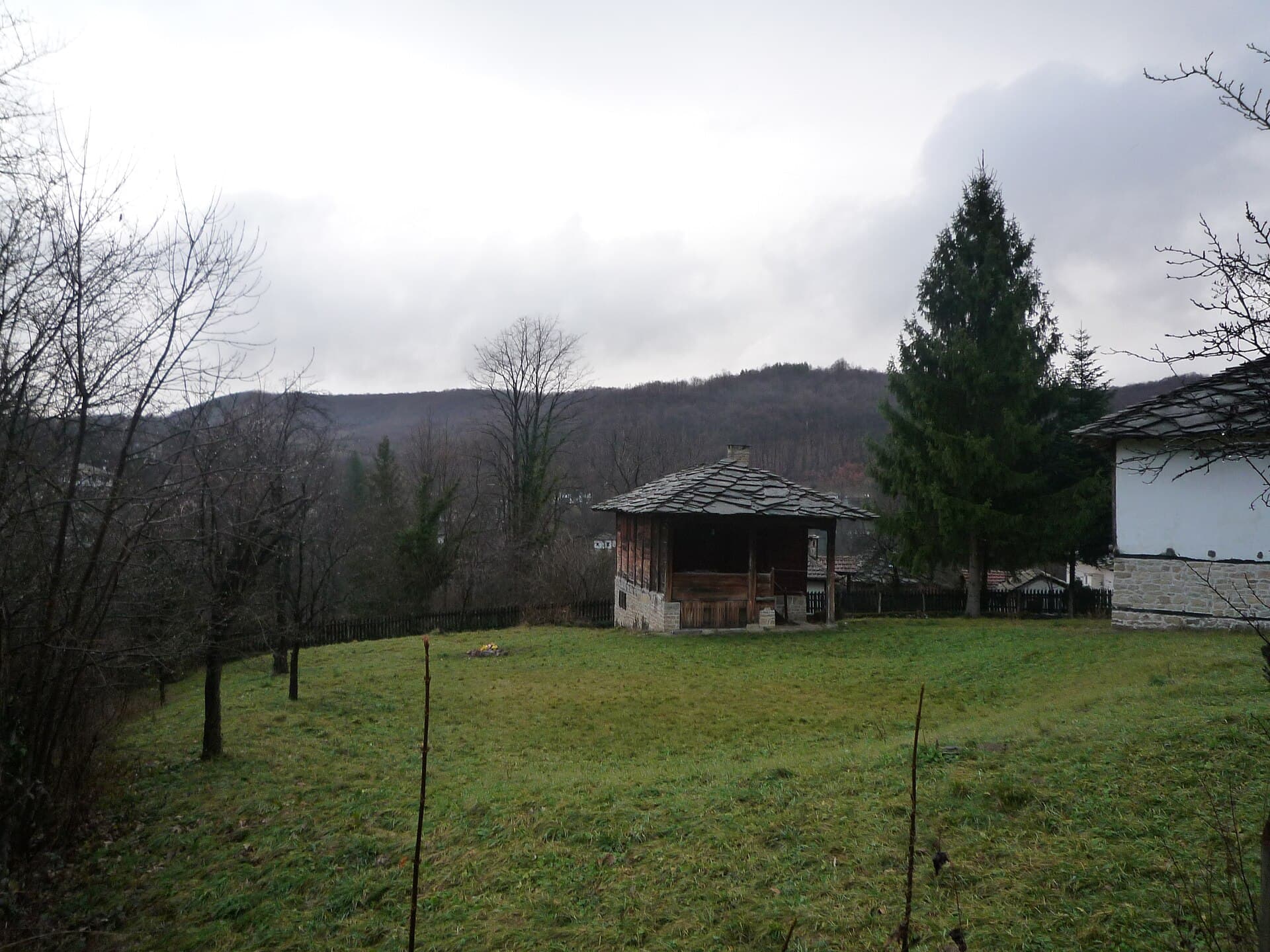
Bozhentsi: The Village That Stopped in 1870
A guide to Bozhentsi, the protected architectural reserve village near Gabrovo: about a hundred stone-roofed Revival houses, the Doncho Popa house-museum, the founding legend, and why it stays quiet when Koprivshtitsa fills up.
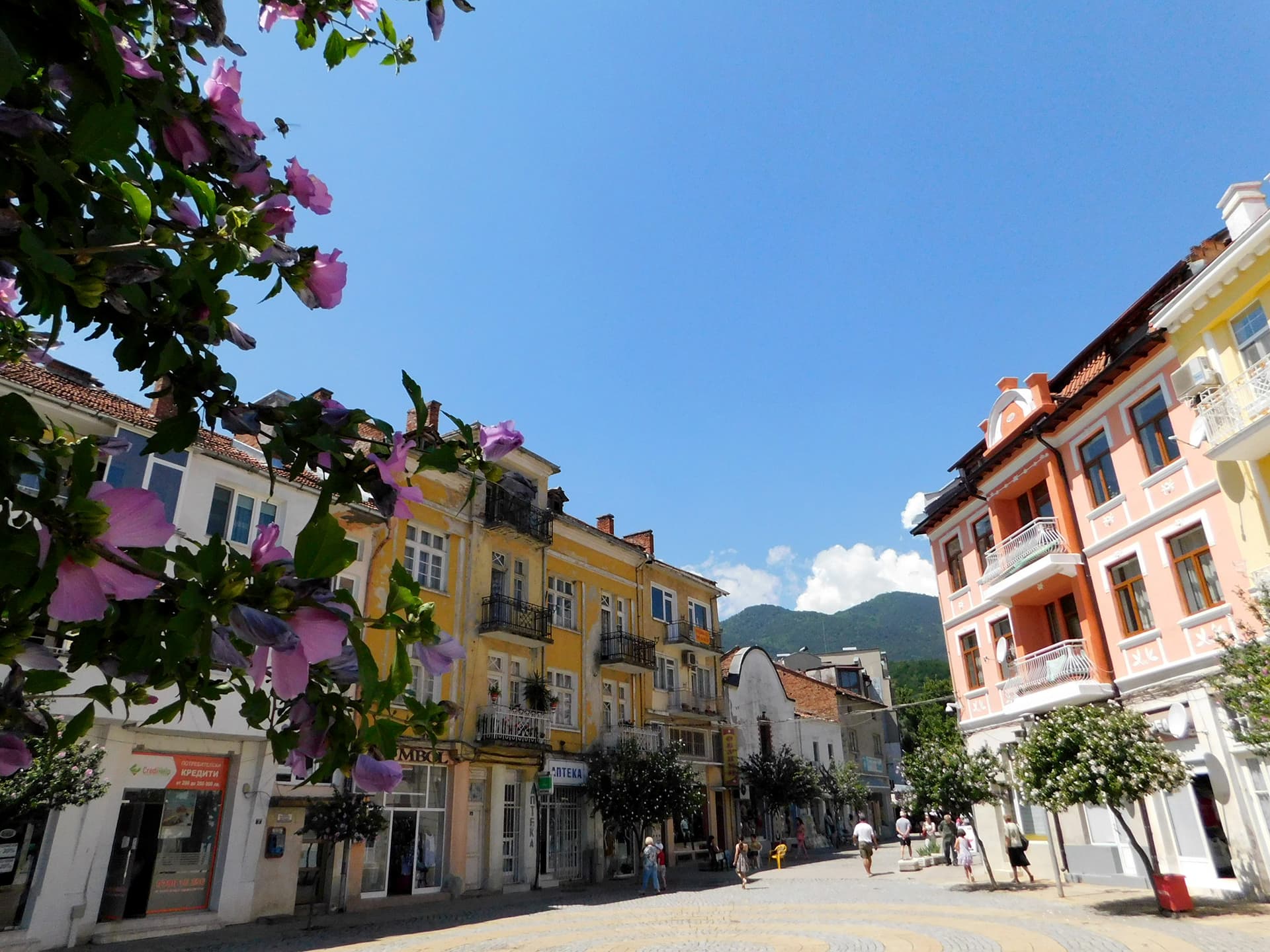
Gotse Delchev: Kovachevitsa, Leshten & the Mesta Valley
Roman ruins at Nicopolis ad Nestum, the stone villages of Kovachevitsa and Leshten, and Ognyanovo's hot springs — what to see around Gotse Delchev.
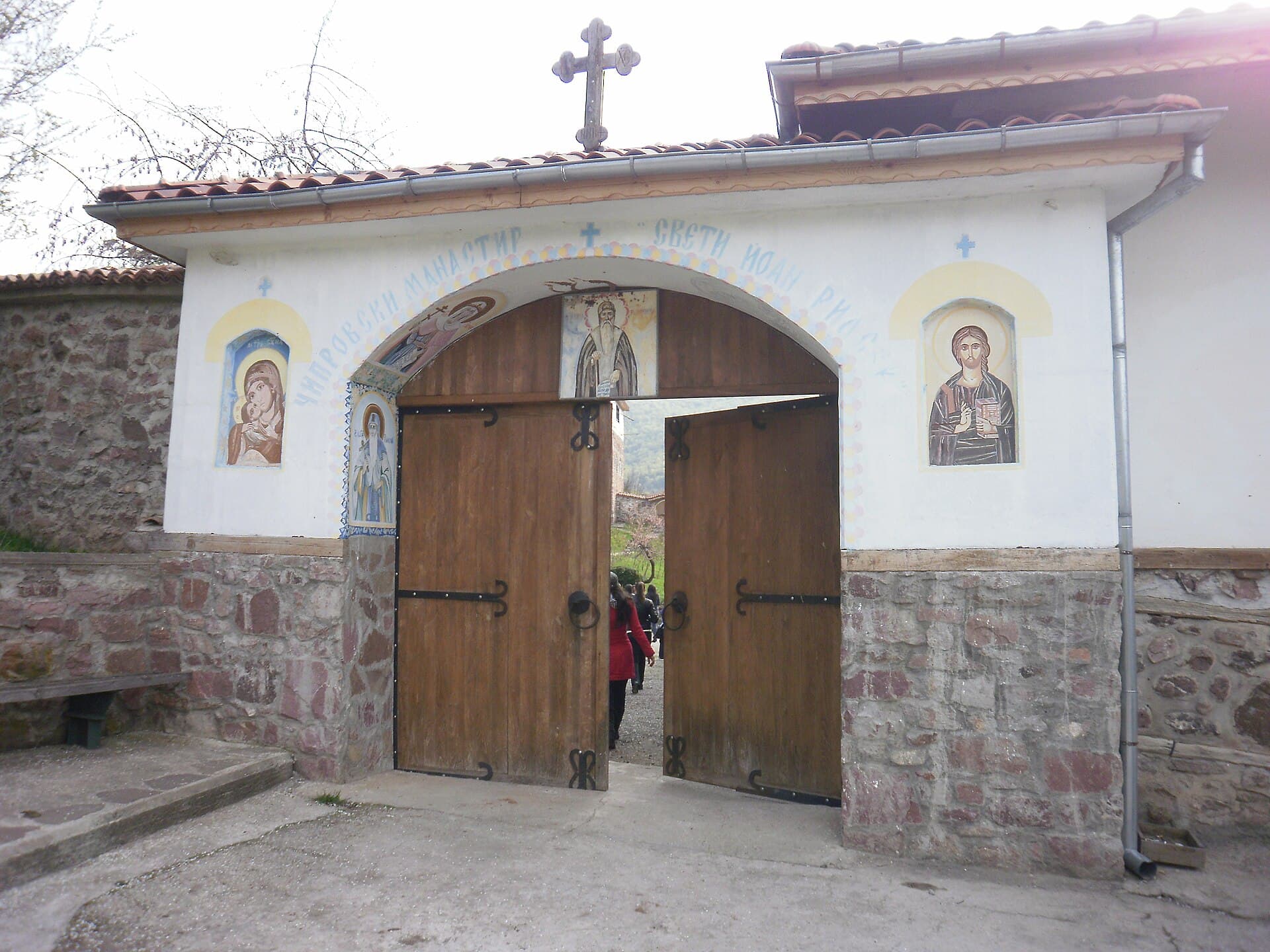
Chiprovtsi: Carpets, a Monastery and a Lost Uprising
A guide to Chiprovtsi in Bulgaria's far north-west: the UNESCO-listed kilim weaving tradition, the 1688 uprising that destroyed the town, the monastery of St John of Rila, and the waterfalls above it.
Svishtov, Nikopol & Belene: The Forgotten Danube
A guide to three Danube towns in northern Bulgaria: the 1877 crossing at Svishtov, the 1396 Battle of Nicopolis, the Persina wetlands, and the Belene labour camp that Bulgaria spent decades not discussing.