

Koprivshtitsa: A Guide to Bulgaria's Museum Town
In this guide▾
There are places that do not just preserve history—they are history. Koprivshtitsa is exactly such a place. The moment you step onto its cobblestone streets, it feels as if you have walked through a portal in time. The high stone walls, heavy wooden gates, brightly coloured facades, and the gentle murmur of the Topolnitsa River create an unforgettable atmosphere that is hard to put into words.
Koprivshtitsa, at about 1,060 m in the Sredna Gora, has been a protected architectural reserve since 1978 and is one of the most complete National Revival towns in Bulgaria. This is not merely a beautiful mountain town; it was one of the leading towns of the Revival and the place where the April Uprising of 1876 began.
Here is everything you should not miss when visiting this architectural masterpiece.
🏛️ The Must-Visit House-Museums
The true wealth of Koprivshtitsa lies in its homes. Each of the famous house-museums tells a different story—from revolutionary fervor to poetic melancholy and luxurious merchant lifestyles.
-
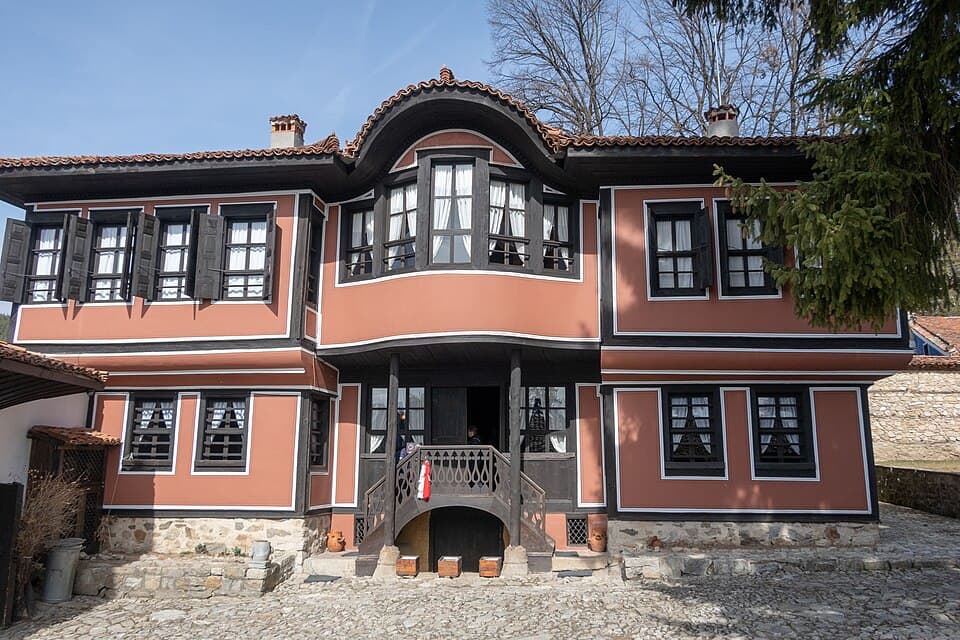
Todor Kableshkov House-Museum: The birthplace of Todor Kableshkov, who on 20 April 1876 wrote the famous "Blood Letter" announcing the uprising to Panagyurishte. The building itself is an exceptional example of the symmetrical Plovdiv-style Revival house, with beautiful wood carvings.
-
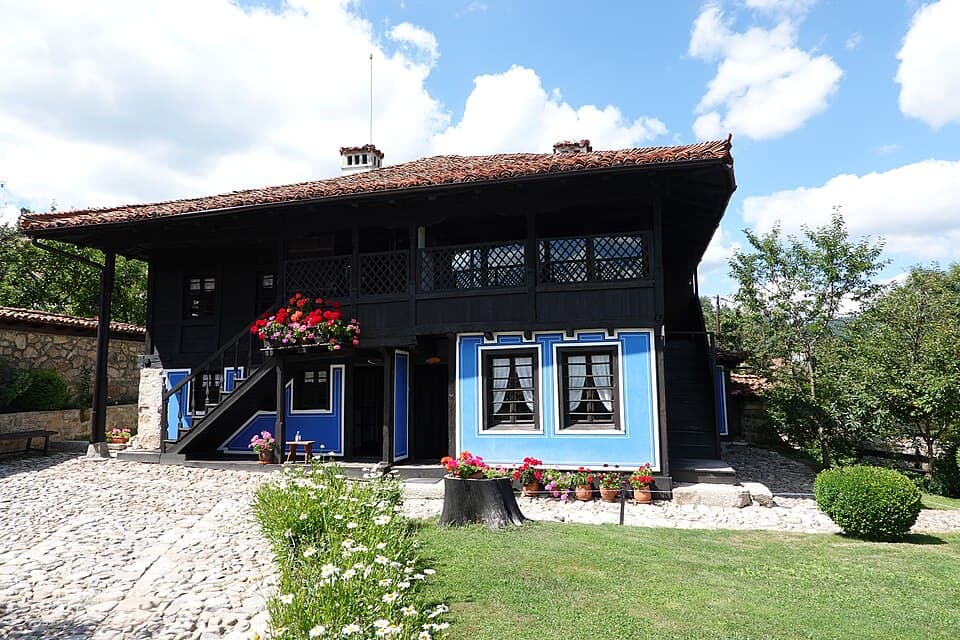
Georgi Benkovski House-Museum: Perched high on one of the hills, this authentic wooden house is the birthplace of Gavril Hlatev, who went down in history as Georgi Benkovski, the legendary leader of the "Flying Detachment" (Hvarkovatata cheta). It is a more modest home, but it carries an incredible fighting spirit.

-
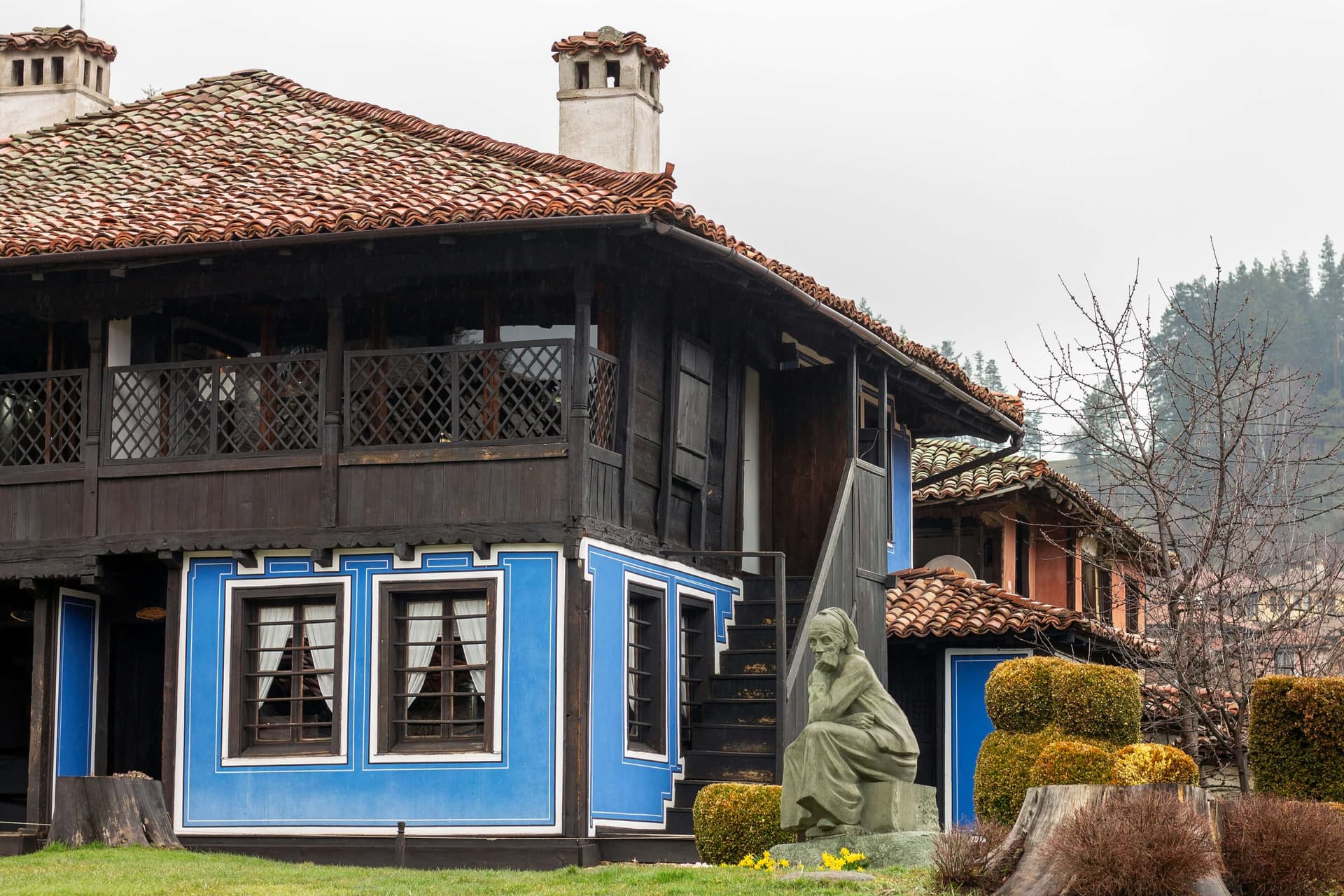
Dimcho Debelyanov House-Museum: The most romantic and poetic home in the town. This beautiful blue-green house with a spacious courtyard preserves the memory of one of Bulgaria's most tender lyrical poets. In its courtyard, you will find Ivan Lazarov's touching sculpture of the poet's mother, eternally waiting for her son on the threshold. It first stood on the poet's grave by the Church of the Assumption, where a copy now stands; the original was moved to the house in 1968.
-
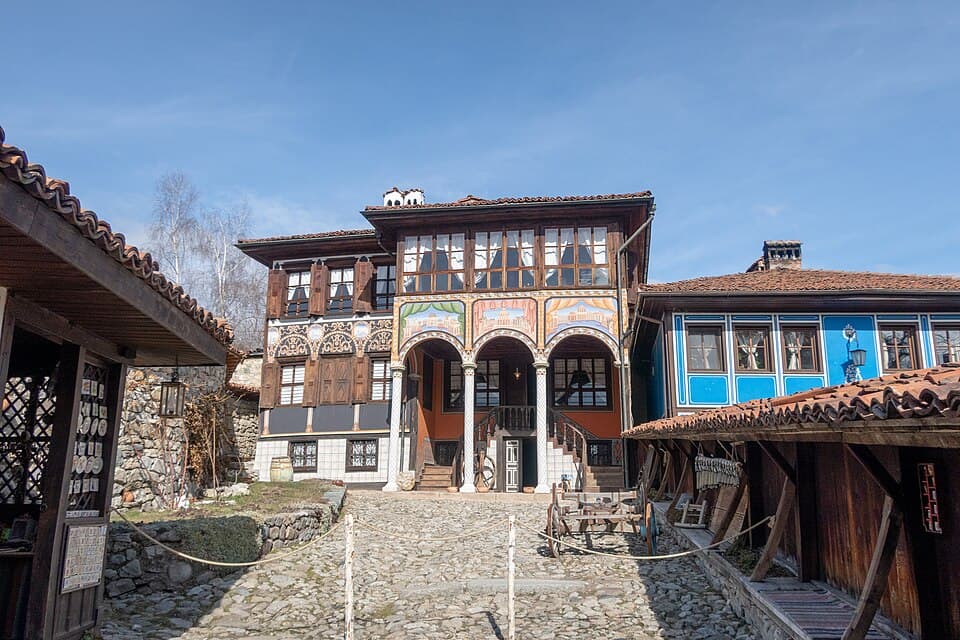
Lyutov House: If you want to see how the wealthiest Koprivshtitsa merchants (dzhambazi) lived, this is the place. It is the most richly decorated house in the town, featuring stunning frescoes, decorative niches (alafrangas), and intricately carved ceilings that showcase the luxurious lifestyle of the mid-19th century.

-
Oslekov House: Another architectural masterpiece built by a wealthy merchant. Built in 1856, it impresses with its wooden columns of Lebanese cedar, rich wall paintings — including views of distant cities — and spacious rooms.
🌉 The Symbols of the Town: Historic Bridges and Fountains
Koprivshtitsa is famous for its masterful stonemasonry, which is evident in every detail of the urban environment.
- Kalachev Bridge (The Bridge of the First Gun): One of the most sacred places in Bulgarian history. Right here, on 20 April 1876, the first gunshot rang out, marking the beginning of the April Uprising. The bridge is built of solid stone and is a mandatory photo stop.
- The Stone Fountains: In the past, building a public water fountain was a matter of honour, nobility, and charity. Strolling through the town, you will pass some of its more than 40 stone fountains, with spouts and carved inscriptions, whose ice-cold mountain water still flows today.
⛰️ Panoramas and Walks in Sredna Gora
- The Monument of Georgi Benkovski: Towering above the town is the 11-metre monument of Benkovski charging on horseback, unveiled in 1976; the horse stands on five great stones for the five centuries of Ottoman rule. The short climb up the hill to it is steep but easy. The effort is highly rewarding—from the top, you get the best panoramic view of Koprivshtitsa's iconic red roofs nestled in the green embrace of the mountain.
- Surrounding Nature: The town is tucked away in the heart of the Sredna Gora mountain range. Nature lovers can enjoy easy hiking trails and eco-paths through the ancient beech forests in the area, offering silence, fresh air, and cool temperatures during the summer. For a far quieter Sredna Gora village with the same era of architecture and a marked forest walk up to a hut, see our Svezhen guide.
📍 Location and Distances from Major Cities
Koprivshtitsa is easily accessible by car and is a perfect destination for both a day trip and a long weekend getaway. The drive takes you through highly scenic mountain regions.
| Starting Point | Distance | Estimated Drive Time | Route |
|---|---|---|---|
| Sofia | ~110 km | 1 hour and 40 minutes | Via the Sub-Balkan road |
| Plovdiv | ~90 km | 1 hour and 30 minutes | Via the town of Strelcha |
By public transport: Direct buses run from Sofia. Trains on the Sofia–Karlovo–Burgas line stop at Koprivshtitsa station, but it lies 7–8 km below the town; a minibus meets the trains, so check both timetables before you travel.
Parking: the centre of Koprivshtitsa is a paid Blue Zone, at about €1 an hour.
How long to stay: A full day covers the house-museums, the Kalachev Bridge and the Benkovski monument. Stay a night if you can — the town is at its best in the evening, once the day-trippers have left.
When to go: Late spring to early autumn, when the museums keep their longer summer hours (1 April–1 November) and the hills are green. Every five years, in early August, the National Folklore Festival brings thousands of performers to the meadows above the town; the last one was on 8–10 August 2025.
🛏️ Where to Stay: The Magic of Revival-Era Accommodation
To truly feel the spirit of Koprivshtitsa, we highly recommend staying for at least one night. The accommodation options here are a core part of the experience.
- Revival-Style Guesthouses: Many of the old historic houses have been converted into cosy guesthouses. You will have the opportunity to sleep in an authentic, antique setting featuring exposed wooden ceilings, traditional built-in sofas (minders), hand-woven rugs, and fireplaces, all cleverly combined with modern amenities.
- Family Hotels and Traditional Complexes: The town has excellent family-run hotels that often feature their own traditional taverns (mehanas). In the morning, they will serve you homemade mekitsi (fried dough) or French toast, and in the evening, you can taste traditional Koprivshtitsa specialties and local barbecue.
- Book Early: Koprivshtitsa is an extremely popular weekend tourism destination year-round. Accommodations, especially those with an authentic vibe and high ratings, fill up very quickly, so it is highly advisable to plan and book your stay at least a few weeks in advance.
🎒 Practical Tips for Travelers
- The Combined Ticket: Do not buy separate tickets at every museum. The combined ticket covers six museums — the Kableshkov, Benkovski, Debelyanov and Karavelov houses, the Lyutov House and the Museum of Education — for €10 (€5 for pupils, students and pensioners), the price of two single tickets at €5 (€3). A family ticket for all six is €20, a guided talk for all six €20 (€5 for one museum), and an audio guide in seven languages €15 for the day. Visitors with disabilities go in free, and the last Monday of each month is free for everyone. Prices checked September 2026; they can change.
- Opening Days: museum hours are 09:30–17:30 from 1 April to 1 November and 09:00–17:00 in winter. The Kableshkov, Debelyanov and Lyutov houses close on Mondays; the Benkovski and Karavelov houses and the Museum of Education on Tuesdays. To see all six in one day, go between Wednesday and Sunday.
- Shoes are Key: Leave your high heels and thin-soled elegant shoes at home. The cobblestone in Koprivshtitsa is authentic, large, and uneven. To enjoy your walk safely and comfortably, you will absolutely need sturdy and comfortable sports shoes or sneakers.
Ready to immerse yourself in the living fairytale of the Bulgarian National Revival? Keep planning your journey across Bulgaria with Mestala.com!
This guide covers 6 places
Want more Mestala in your Google results?
Add mestala.com as a preferred source and our guides will show up more often when you search. Requires a Google account.
Frequently Asked Questions
What is there to see in Koprivshtitsa?▾
The must-see sights in Koprivshtitsa are the house-museums of Todor Kableshkov, Georgi Benkovski, Dimcho Debelyanov, the Lyutov House and the Oslekov House, the Lyuben Karavelov House, the Kalachev Bridge (the Bridge of the First Gun), the historic stone fountains, and the Georgi Benkovski monument above the town. Koprivshtitsa has been a protected architectural reserve since 1978 and is one of the most complete National Revival towns in Bulgaria.
How much does a museum ticket cost in Koprivshtitsa?▾
Do not buy separate tickets at every museum. A combined ticket covers six museums — the Kableshkov, Benkovski, Debelyanov and Karavelov houses, the Lyutov House and the Museum of Education — for €10 (€5 for pupils, students and pensioners, €20 for a family with children under 18), against €5 (€3) for a single museum. A guided talk for all six is €20, and an audio guide in seven languages €15. Entry is free on the last Monday of each month (checked September 2026). Note that some museums close on Mondays and others on Tuesdays.
Why is Koprivshtitsa important to Bulgarian history?▾
Koprivshtitsa was a leading town of the Bulgarian National Revival and the place where the April Uprising of 1876 began. On 20 April 1876 the first shot of the uprising rang out at the Kalachev Bridge, and the same day Todor Kableshkov, a son of the town, wrote the famous 'Blood Letter' announcing the revolt to Panagyurishte.
How far is Koprivshtitsa from Sofia?▾
Koprivshtitsa is about 110 km from Sofia, roughly 1 hour and 40 minutes by car along the scenic Sub-Balkan road. From Plovdiv it is ~90 km (about 1 hour and 30 minutes) via the town of Strelcha.
Is it worth staying overnight in Koprivshtitsa?▾
Yes. To truly feel the spirit of the town, we recommend staying for at least one night in an authentic Revival-style guesthouse or a family hotel with a traditional tavern. Highly rated places fill up quickly, so book a few weeks in advance.
You might be interested in
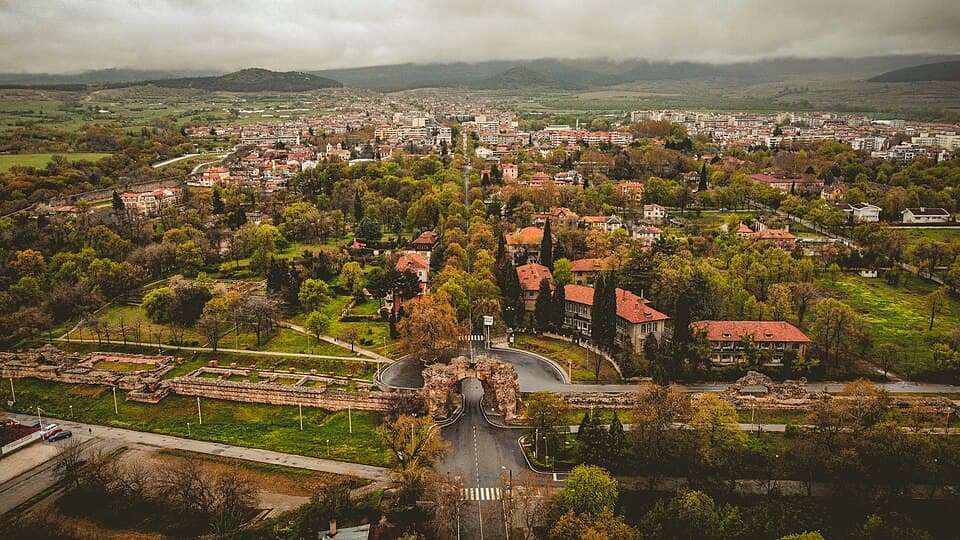
Hisarya and Pavel Banya: Spa Weekends in Sredna Gora
Hisarya or Pavel Banya for a spa weekend: Roman walls and mineral fountains, or a five-star spa base in the Rose Valley — tickets, parking, prices and which to pick.
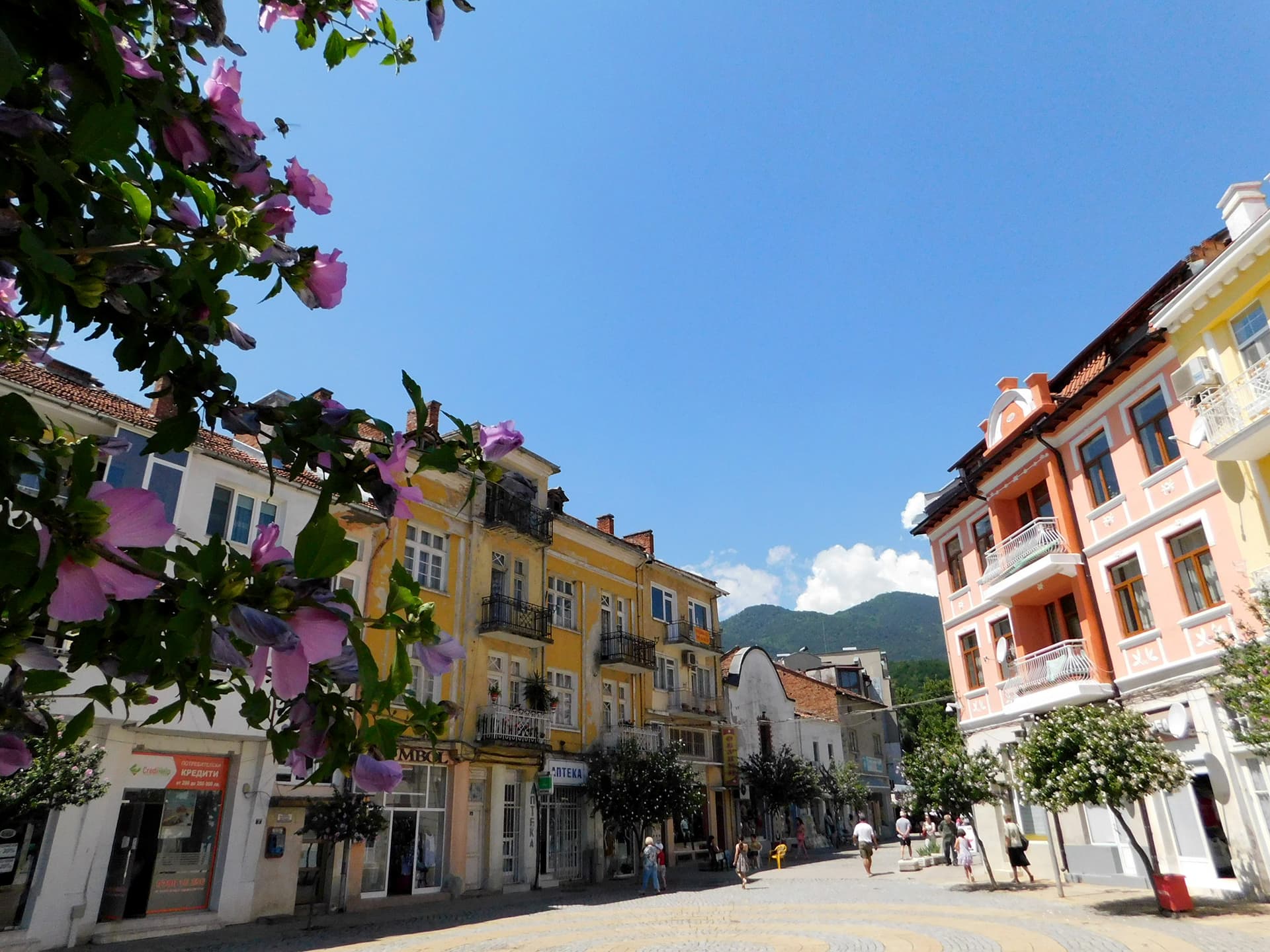
Gotse Delchev: Kovachevitsa, Leshten & the Mesta Valley
Roman ruins at Nicopolis ad Nestum, the stone villages of Kovachevitsa and Leshten, and Ognyanovo's hot springs — what to see around Gotse Delchev.
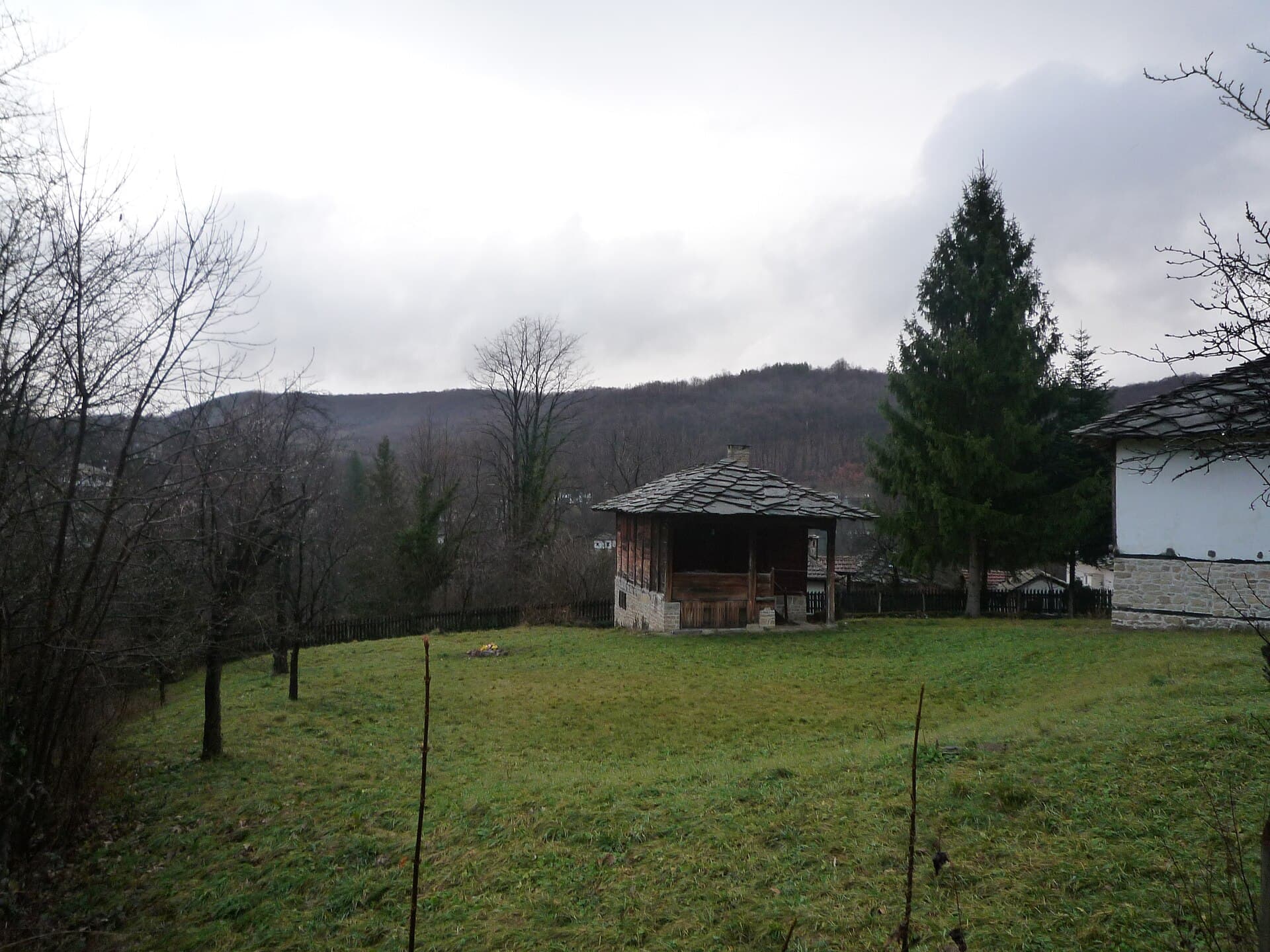
Bozhentsi: The Village That Stopped in 1870
A guide to Bozhentsi, the protected architectural reserve village near Gabrovo: about a hundred stone-roofed Revival houses, the Doncho Popa house-museum, the founding legend, and why it stays quiet when Koprivshtitsa fills up.
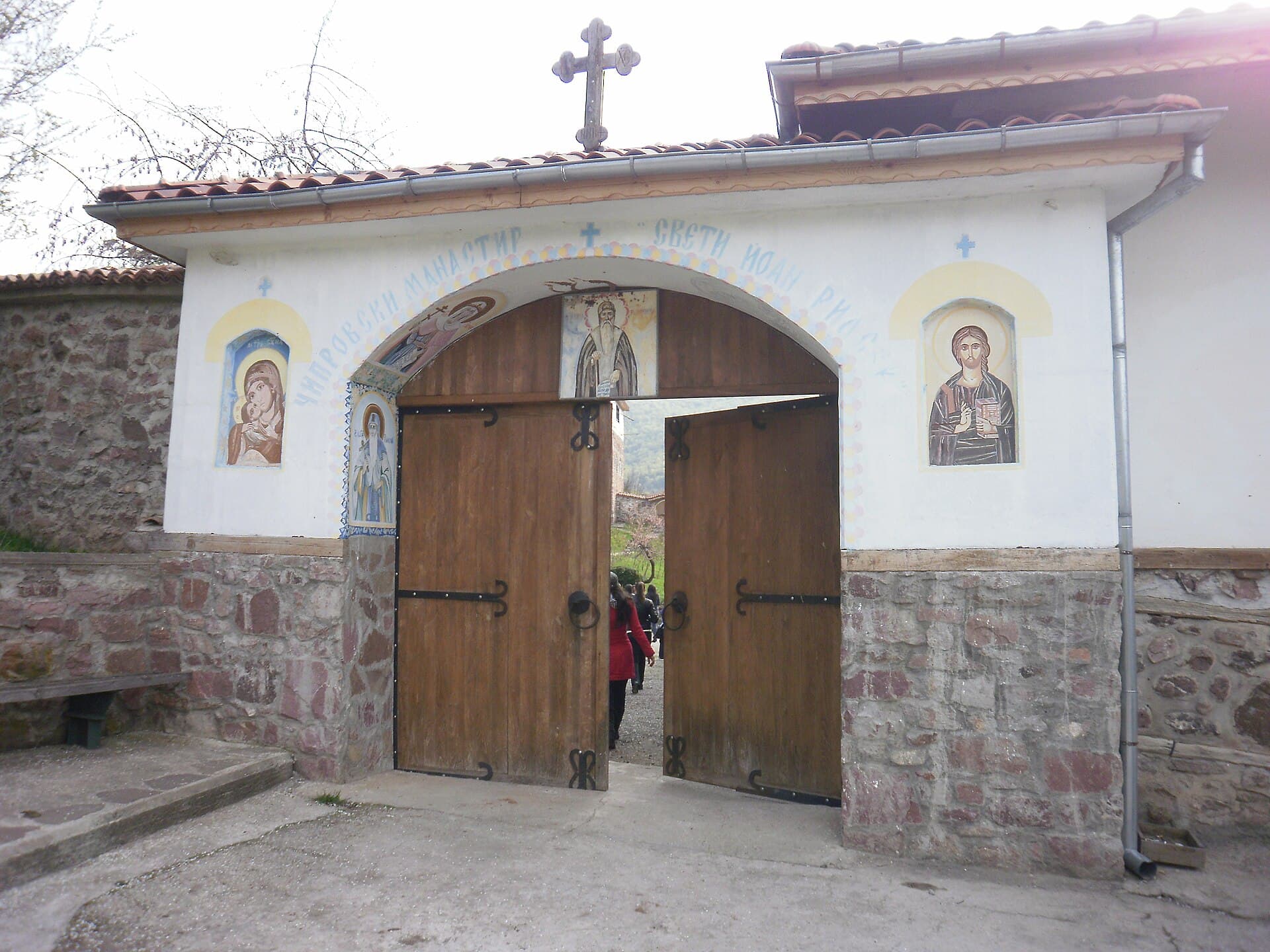
Chiprovtsi: Carpets, a Monastery and a Lost Uprising
A guide to Chiprovtsi in Bulgaria's far north-west: the UNESCO-listed kilim weaving tradition, the 1688 uprising that destroyed the town, the monastery of St John of Rila, and the waterfalls above it.