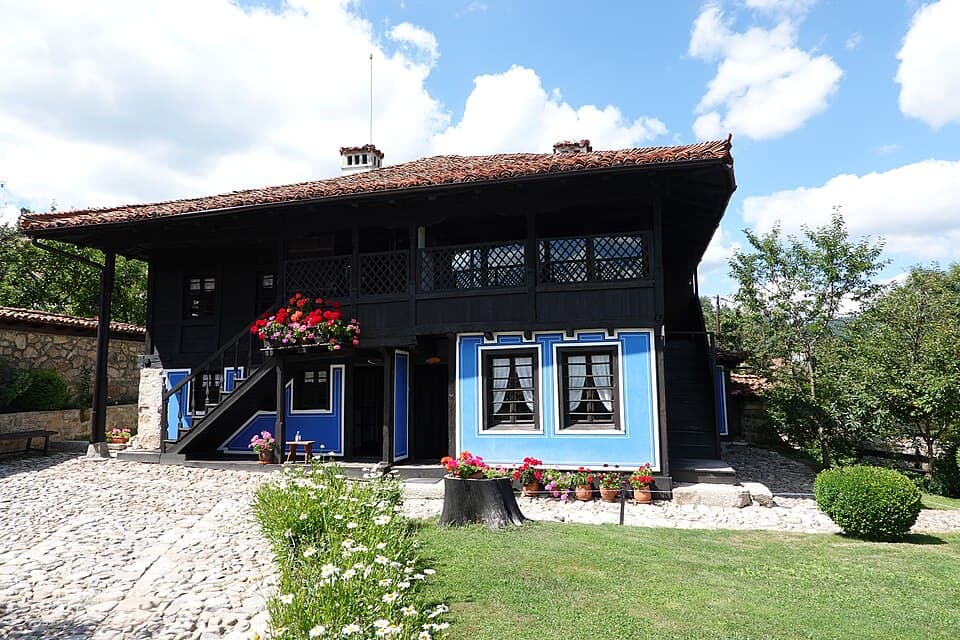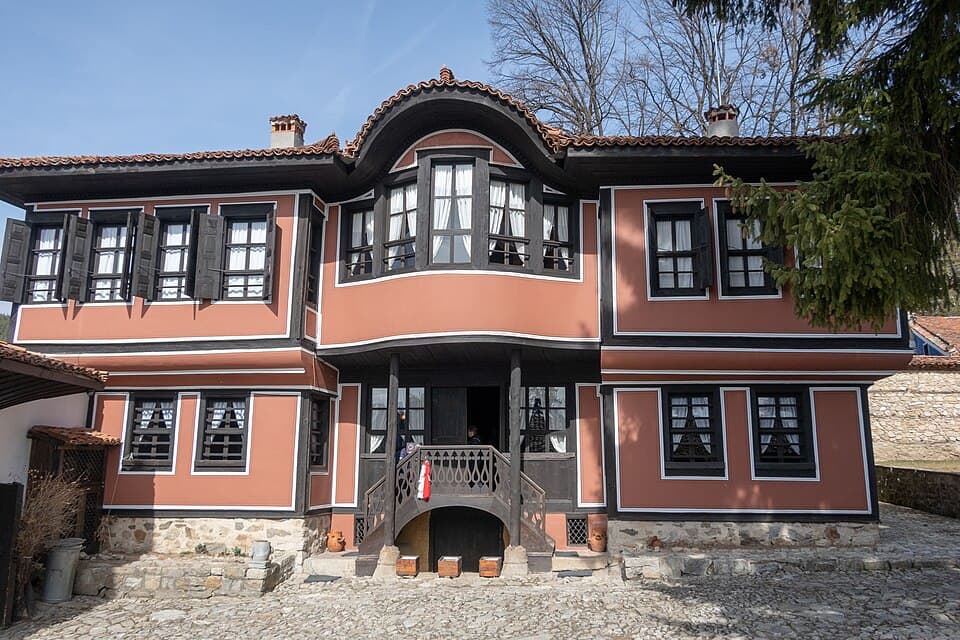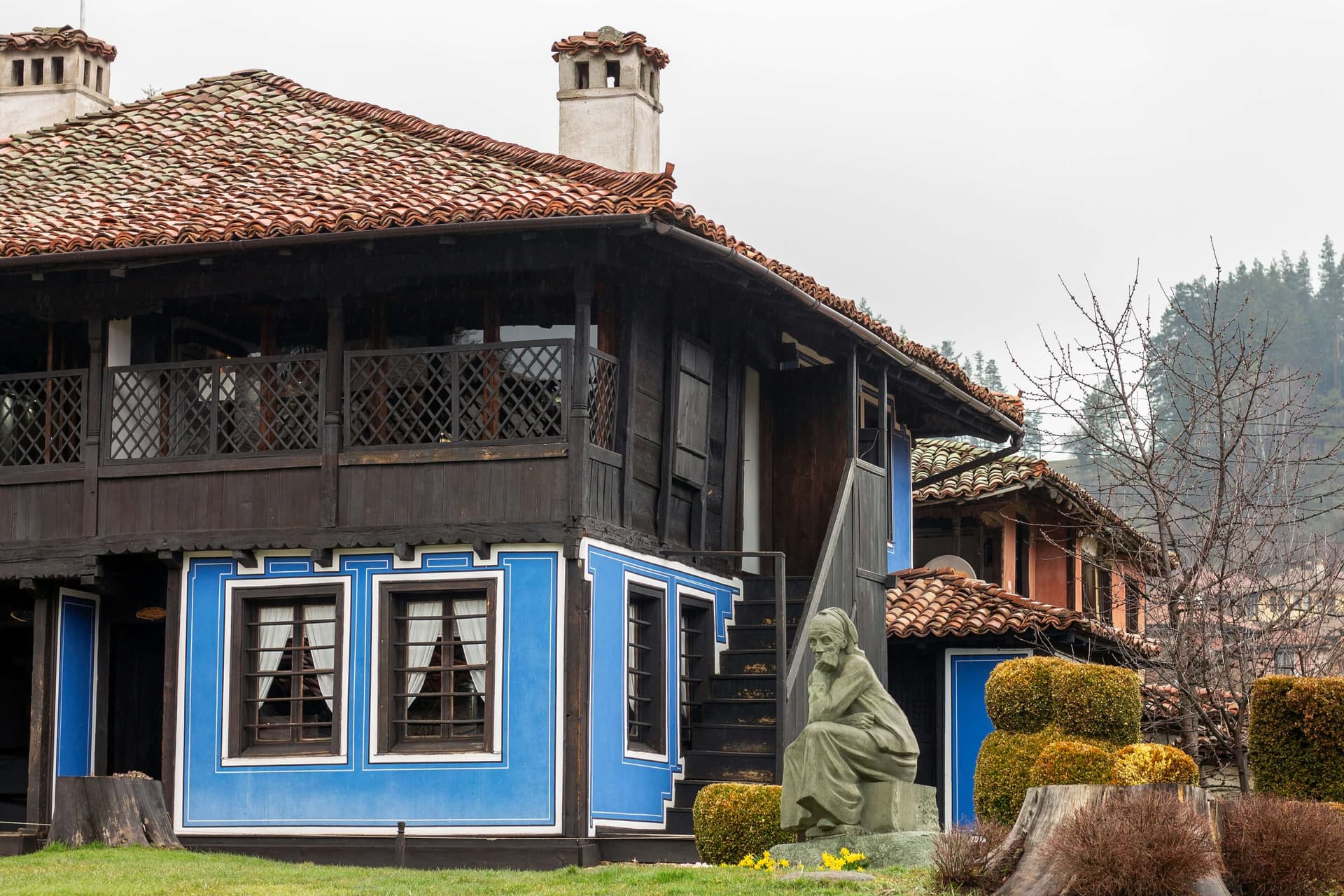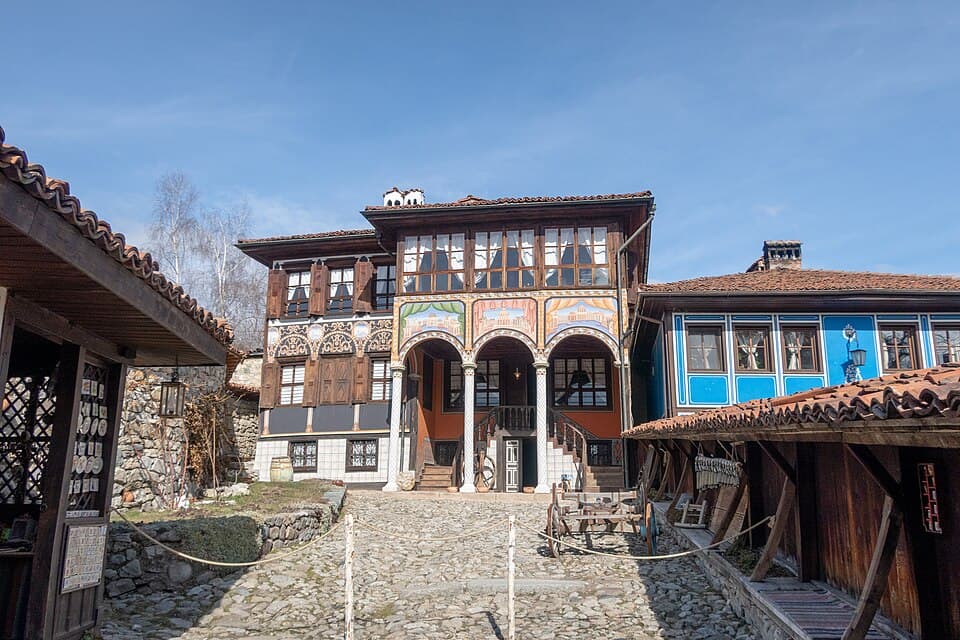
The Oslekov House stands as one of the most prominent, opulent, and architecturally significant monuments of culture stemming from the Bulgarian National Revival epoch, situated within the perimeter of the town of Koprivshtitsa. This unique building was erected in the historical year 1856 to satisfy the residential requirements of the prosperous Koprivshtitsa merchant and large-scale manufacturer of traditional woolen goods - the tailor (abadzhiya) Nencho Oslekov, born in 1821 and who died heroically during the revolutionary year of 1876. Positioned in close proximity to the historic town center, the house mirrors the economic and cultural ascent characterizing the local merchant-artisan class during the 19th century.
In architectural terms, the Oslekov House is designed and executed in a classical National Revival Baroque style. It rises within a spacious, fully enclosed courtyard, equipped with a picturesque and carefully maintained flower parterre. The internal spatial layout of the residential floor stands out with a specific asymmetrical blueprint, rendering it exceptionally interesting for researchers analyzing Bulgarian architecture.
The core components of the interior distribution incorporate:
Back in the historical year 1956, the Oslekov House was officially designated a state Ethnographic Museum, showcasing the authentic Koprivshtitsa lifestyle, culture, and handicrafts from the second half of the 19th century to the general public and international travelers. For decades, it functioned as a vital structural component of the unified museum complex of Koprivshtitsa. Since 2013, the status of the monument transitioned into private ownership, operating subsequently as a specialized private museum with a fully updated and rearranged exhibition layout. To satisfy long-term preservation parameters, a large-scale professional restoration tracking the unique murals across the exterior facade was successfully executed in 2018.
The internal museum exhibition offers a detailed look into the material culture of National Revival society via several thematic collections:

Sofia region
0.1 km away
Sofia region
0.1 km away
Sofia region
0.1 km away
Oslekovata house is located in Sofia Province, Bulgaria.
Oslekovata house is most easily reached by car. Use the coordinates above to navigate, or open the location in OpenStreetMap or your preferred maps app for turn-by-turn directions. Public transport options vary by region — for remote destinations a rental car gives the most flexibility.
Oslekovata house can be visited year-round. Verify current opening hours directly with the museum before your visit, as schedules change seasonally and on public holidays.
Opening hours and admission fees vary, and most Bulgarian museums close one day per week (commonly Monday). Verify current schedules and prices directly with the museum or the local tourist information office before visiting Oslekovata house, especially on public holidays.