


Digital Nomad Guide to Bulgaria: Visa, Tax and Where to Base
In this guide▾
Bulgaria has quietly become one of Europe's better remote-work bases, and in late 2025 it finally got the paperwork to match: a digital nomad visa, which officially opened for applications in December 2025. Add the EU's lowest flat tax, some of the continent's fastest and cheapest internet, and a thriving nomad community in Bansko, and the case builds itself.
This guide covers the visa, the tax picture, and where to actually base yourself — Sofia, Plovdiv or Bansko. A caveat up front: the visa and tax rules are newly established and subject to change, so treat everything here as a starting point and confirm the specifics with a consulate and a Bulgarian accountant before you commit.
🛂 The Digital Nomad Visa
Bulgaria introduced a digital nomad residence permit through changes to its Law on Foreigners. The headline terms:
- Who it's for — non-EU/EEA/Swiss remote workers. EU, EEA and Swiss citizens do not need it and can already live and work in Bulgaria freely.
- Validity — one year, renewable for a second.
- Family — dependents can be included through family reunification.
The three eligibility routes:
- You work remotely as an employee of a company registered outside the EU/EEA/Switzerland.
- You own 25%+ of a company registered outside those areas, providing remote services.
- You're an established freelancer (roughly a year or more) serving non-Bulgarian clients.
Alongside one of those, you will generally need a minimum income, health insurance covering Bulgaria and the EU, accommodation, and a clean criminal record. The income threshold has been widely reported at around €31,000 a year — but because it is pegged to Bulgaria's minimum wage and can move, you must confirm the current figure officially.
📋 The process, in short: Apply for a Type D long-stay visa at a Bulgarian embassy in your home country (allow 1–2 months), enter Bulgaria, then apply for the residence permit within your first days in-country. Build in buffer time — this is not a same-week turnaround.
For short visits, you may not need any of this — our visa and entry requirements guide covers who can enter Bulgaria visa-free and for how long.
💶 Tax: The EU's Lowest Flat Rate
This is a massive part of Bulgaria's appeal, and it is worth understanding how it works rather than just repeating the "10%" headline.
- Personal income tax is a flat 10% — the lowest in the EU, with no tax-free allowance.
- Registered freelancers (a locally registered svobodna profesiya, "free profession") get an automatic 25% deduction for expenses before tax is applied — resulting in an effective income-tax rate of about 7.5%.
- Social-security contributions apply on top, but only on a self-chosen base within a set band, not necessarily your full income.
The catch that trips people up is tax residency. You generally become a Bulgarian tax resident — and taxable on your worldwide income — if you spend more than 183 days a year in Bulgaria, or if your centre of vital interests is there. Low rates only help if you are actually resident for tax purposes; if you are not, you may still owe tax at home.
⚠️ This is general information, not personalised tax advice. Cross-border tax is genuinely complicated — speak to a Bulgarian accountant about your own situation before making financial decisions. Our cost guide covers day-to-day living expenses.
Note also that Bulgaria adopted the euro in 2026, meaning there is no lev exchange to manage from the eurozone — see our euro guide.
📶 Internet and Connectivity
No hesitation here: Bulgaria has some of the fastest and cheapest fixed broadband in Europe, and it remains one of the country's most underrated advantages for remote work.
- Fibre is standard in Sofia, Plovdiv, and Bansko, and coworking spaces run reliable business connections.
- Mobile coverage is strong in cities and towns; it thins out on remote mountain routes, but that will not affect a city base.
- Getting a local eSIM or SIM is cheap and easy for backup data and tethering — our eSIM and SIM card guide lists the best providers.
🏙️ Where to Base: Sofia vs Plovdiv vs Bansko
Bulgaria's three nomad hubs suit three different working styles. Most nomads end up trying more than one.
Sofia — the capital
The city with the most of everything: jobs, flights, coworking spaces, nightlife, international community, and Vitosha mountain on the doorstep for weekends. It also has the highest costs in the country, though it remains highly affordable by Western standards. Best if you want a full-service capital and easy travel connections. Our Sofia weekend itinerary shows off the city, and Sofia vs Plovdiv weighs the two.
Plovdiv — the smaller city
Smaller, older and prettier, with a relaxed pace, a highly walkable old town, and lower costs than Sofia. This is a strong middle option — offering city amenities without the capital's price tag or intensity. See our Plovdiv weekend itinerary.
Bansko — the mountain hub
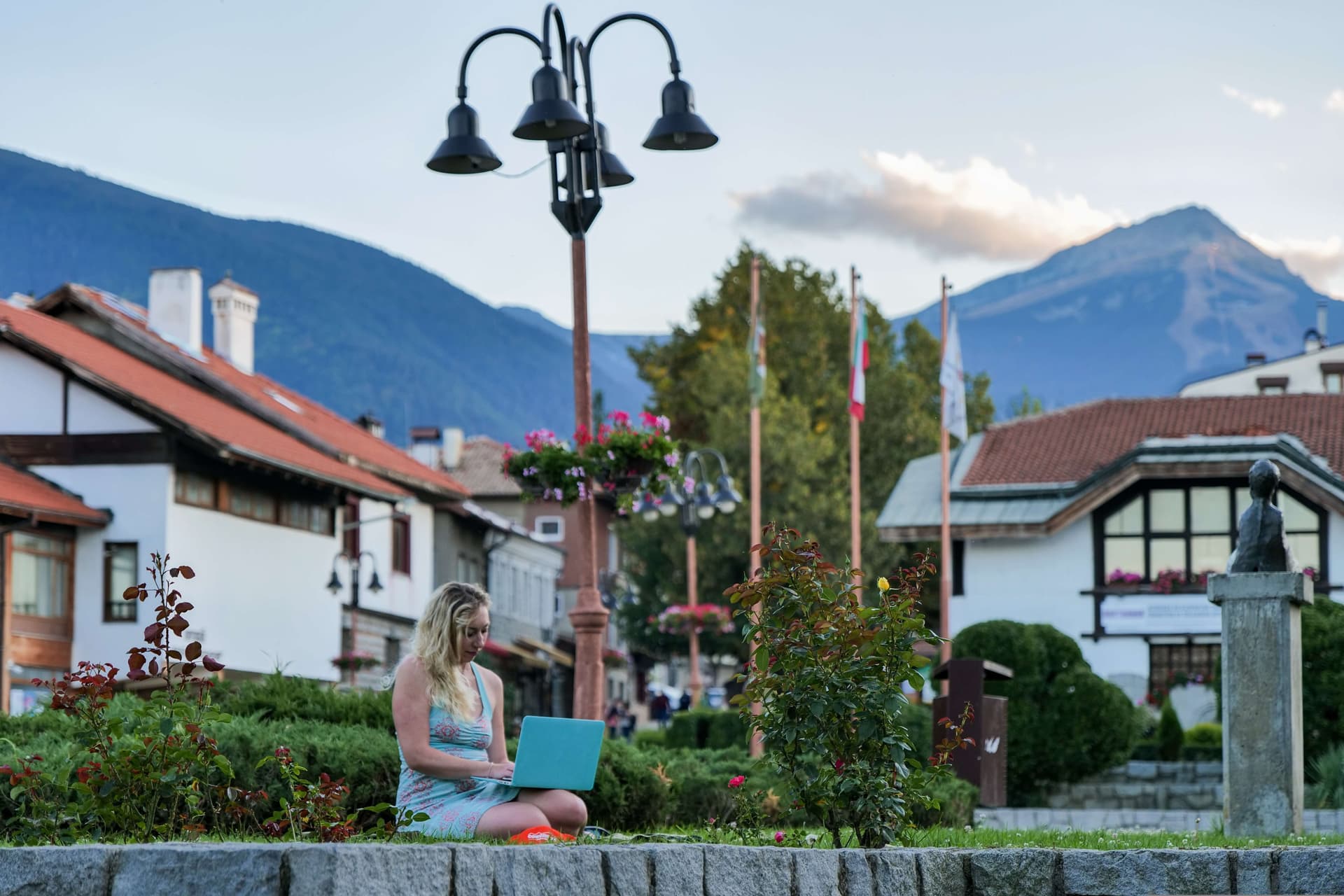
The surprise option. Bansko is a ski town in the Pirin mountains that has evolved into one of Europe's best-known nomad communities, built around Coworking Bansko and the annual Bansko Nomad Fest. The community is tight-knit and genuinely welcoming, the costs are the lowest of the three (furnished rentals are often €200–400/month), and you can ski in winter and hike in summer. The honest caveats: it is small, and it is quietest in the shoulder seasons between the ski and summer rushes.
Rough monthly costs: Coworking memberships run €100–150; comfortable living in Bansko lands around €600–1,000, with Sofia and Plovdiv slightly higher but still incredibly modest.
🎒 Practical Notes for Settling In
- Cost of living — one of the cheapest in the EU; see the budget guide.
- Getting around — good trains and buses between cities; a car helps for the mountains. See getting around and, if you plan to drive, the driving guide.
- When to arrive — spring and autumn are ideal in the cities; Bansko is busiest in the ski season and mid-summer. The best time to visit guide helps narrow it down.
- What to pack — the altitude means real seasonal temperature swings; our packing guide has the comprehensive list.
- Food and life — cheap, hearty and social; our food guide is a great starting primer.
A real nomad visa, the EU's lowest tax, fast cheap internet, and a thriving mountain community — Bulgaria's remote-work case is stronger than its profile. Verify the visa and tax details before you commit, and keep planning your move with Mestala.com.
Latest prices as of October 2026 — fees change, so check before you travel.
Want more Mestala in your Google results?
Add mestala.com as a preferred source and our guides will show up more often when you search. Requires a Google account.
Frequently Asked Questions
Does Bulgaria have a digital nomad visa?▾
Yes, as of December 2025. Bulgaria introduced a digital nomad residence permit following changes to its Law on Foreigners. It is aimed at non-EU/EEA/Swiss remote workers, is valid for one year and renewable for a second, and is applied for via a Type D long-stay visa. EU/EEA and Swiss citizens don't need it — they can already live and work in Bulgaria freely. Rules are newly established and subject to change, so verify the current details with a Bulgarian consulate before applying.
What are the requirements for Bulgaria's digital nomad visa?▾
Broadly, you must work remotely for a company outside the EU/EEA/Switzerland, own at least 25% of such a company, or be an established freelancer serving foreign (non-Bulgarian) clients — plus meet a minimum income threshold, hold health insurance covering Bulgaria and the EU, and have accommodation and a clean criminal record. The income figure has been widely reported at around €31,000 per year, but as it is tied to the minimum wage it can fluctuate, so confirm the current number officially.
How much tax do digital nomads pay in Bulgaria?▾
Bulgaria has a flat 10% personal income tax, the lowest in the EU. Freelancers registered locally as a 'free profession' get an automatic 25% deduction for expenses before tax, giving an effective income-tax rate of about 7.5%, though social-security contributions apply on top. Whether you owe Bulgarian tax depends on tax residency — generally spending more than 183 days a year in the country, or having your centre of vital interests there. This is general information, not tax advice; consult a Bulgarian accountant for your specific situation.
Is the internet good enough for remote work in Bulgaria?▾
Yes — Bulgaria has some of the fastest and cheapest fixed broadband in Europe, and strong mobile coverage in cities and towns. Fibre is standard in Sofia, Plovdiv and Bansko, and coworking spaces have highly reliable business connections. Coverage thins on remote mountain routes, but for any city or nomad hub base, it is a non-issue. See our eSIM guide for mobile data options.
Which city is best for digital nomads in Bulgaria — Sofia, Plovdiv or Bansko?▾
Sofia has the most jobs, flights, coworking spaces and nightlife, but the highest costs; Plovdiv is smaller, prettier and cheaper with a relaxed pace; Bansko is a mountain ski town with a famous, tight-knit nomad community and the lowest costs, though it is quietest in the shoulder seasons. Many nomads split their time between them. Bansko's coworking scene and its annual Nomad Fest punch far above the town's size.
How much does it cost to live in Bulgaria as a digital nomad?▾
Bulgaria is one of the cheapest countries in the EU. Bansko is the most affordable of the hubs, with furnished rentals often €200–400/month and comfortable living around €600–1,000/month; Sofia and Plovdiv cost more but remain extremely cheap by Western standards. Coworking memberships run roughly €100–150/month. Bulgaria adopted the euro in 2026, meaning there is no currency exchange to manage if you are earning or spending within the eurozone.
You might be interested in
Sofia Airport to the City Center & Central Station: Every Option (2026)
Metro to the center in 20 minutes for €0.80, or to the Central Bus and Railway Station with one change. Buses 84/184, night bus N4, taxi fares, Terminal 1 vs 2.
Varna Airport to the City Center & Golden Sands (2026)
Bus 409 reaches central Varna in 20 minutes from €0.50 and Golden Sands in 50. The two operators to tell apart, the T-Ticket app, and taxi costs.
Getting Around Burgas: Buses, Terminals, Taxis & Bike Hire
How to get around Burgas without a car: Burgasbus routes, the South and West terminals, buses to Sunny Beach and Nessebar, taxis and bike hire.
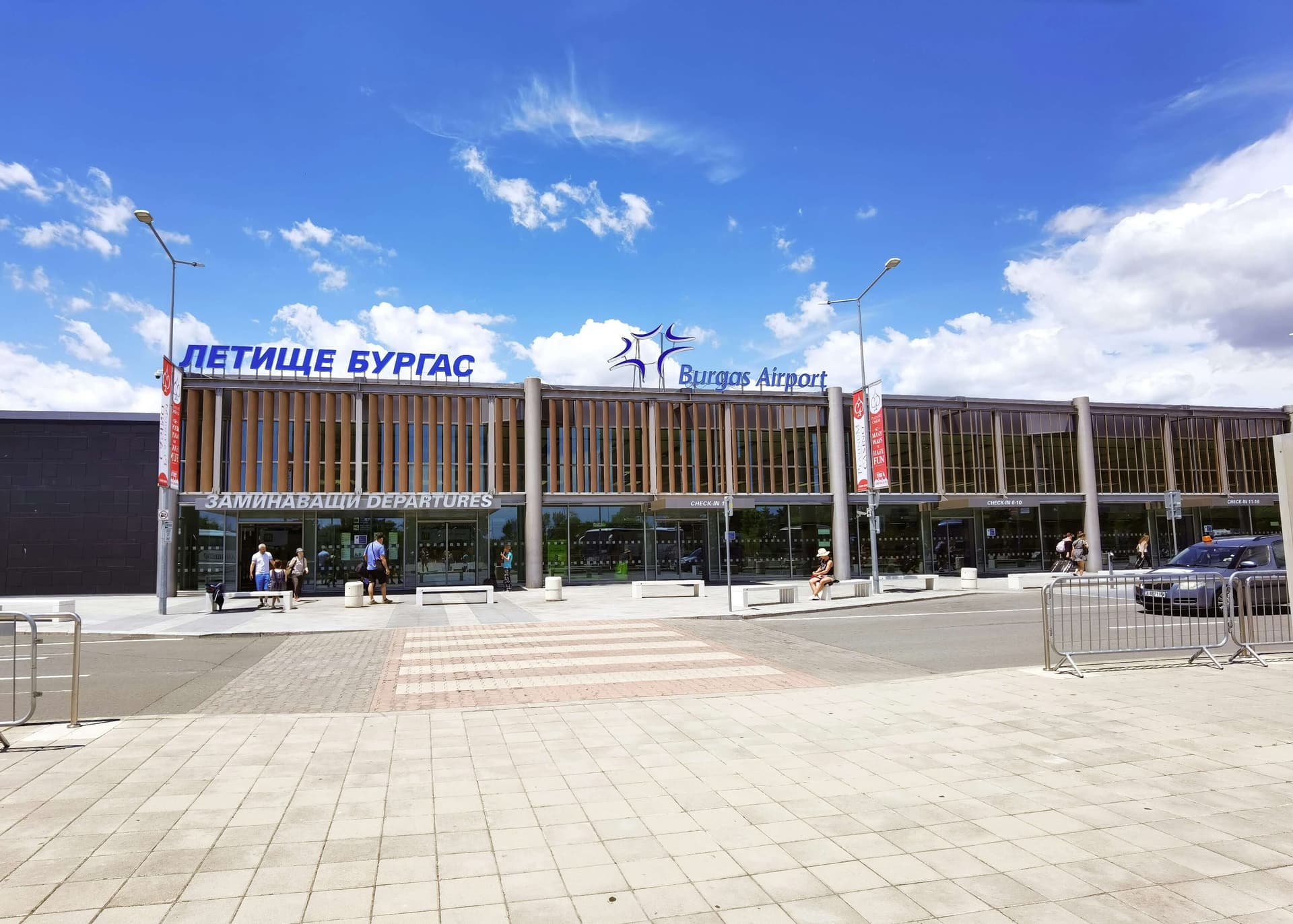
Burgas Airport to Sunny Beach & Nessebar: Bus, Taxi, Time
How to get from Burgas Airport to Sunny Beach, Nessebar and Burgas centre: the direct bus No. 10, bus No. 15, taxi fares, distances and transfer times.