

Pernik and Tran: The Ultimate Day Trip from Sofia (Full Guide)
In this guide▾
I'll be honest — for a long time, I fell for the cliché that Pernik was just a gray, industrial satellite town on the far side of Lyulin Mountain. But when I finally decided to spend a weekend exploring Pernik and heading further west into the Tran countryside, I discovered one of the most rewarding and underrated day trips in Bulgaria.
Just 30 to 40 minutes by car from Sofia, you can walk 630 metres of galleries inside an authentic coal mine, explore medieval fortress ruins above the city, and cross suspended bridges through one of Bulgaria's most dramatic river canyons — the Erma River Gorge.
In this detailed travel guide, I share my personally tested itinerary, ticket prices, parking advice, and practical tips to help you plan the perfect day trip to Pernik and Tran.
📍 Getting to Pernik and the Tran Region
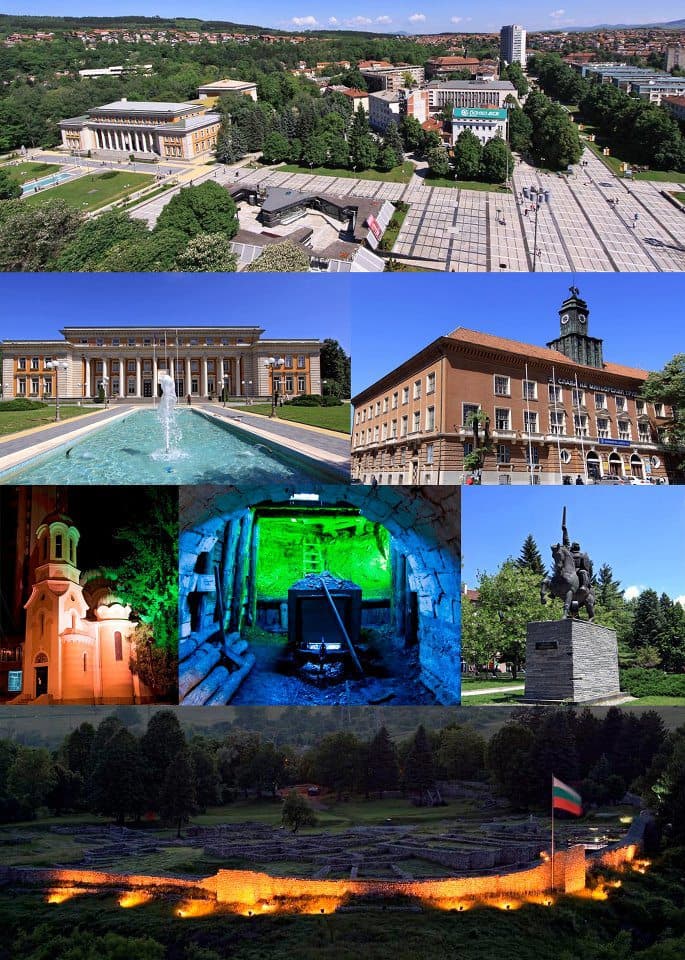
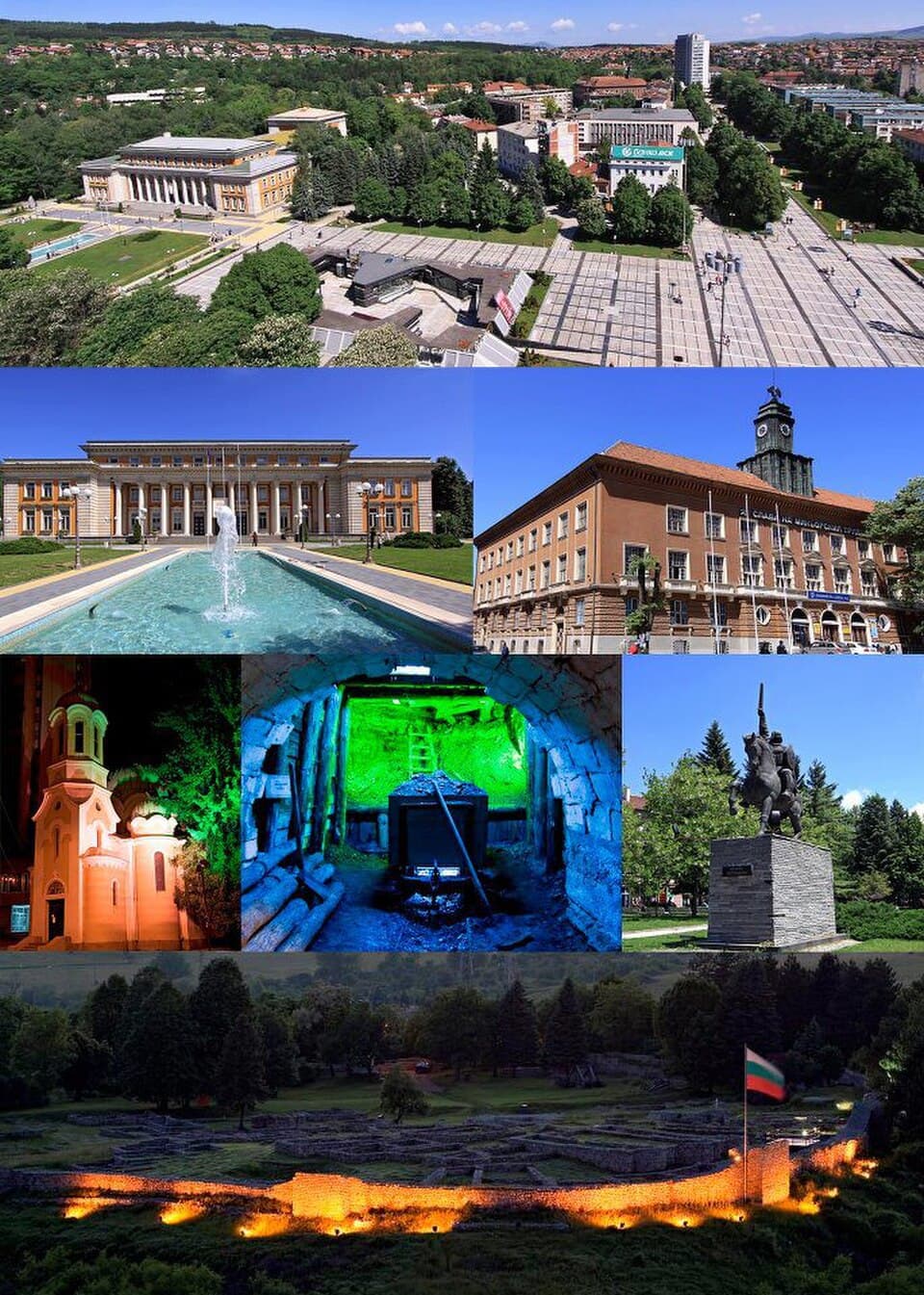
Pernik sits just 30 km southwest of Sofia at an elevation of 710 meters along the Struma River, making it exceptionally fast to reach.
By Car (Recommended):
Driving via the Struma Motorway (A3) takes a mere 30–40 minutes. Traffic heading out of Sofia on this route is significantly lighter in the morning compared to the main highways heading toward Plovdiv or Varna.
- Continuing to Tran: From Pernik, take Route 63 west through Breznik to Tran (around 45 km / 45 minutes). The road is well-paved and winds through scenic rolling hills.
By Public Transport:
- To Pernik: You have great options. Commuter trains depart from Sofia Central Station almost every hour (the ride takes 40–50 minutes). Minibuses and coaches also run regularly from Sofia's West Bus Station (Ovcha Kupel).
- To Tran & Beyond: Public transport connecting Pernik to Tran, Studen Izvor, or Zemen Gorge is sparse and inconvenient for sightseers. If you want to explore the Erma River Gorge or the rural museums, renting a car is essential.
⛏️ Underground Mining Museum in Pernik: What to Expect
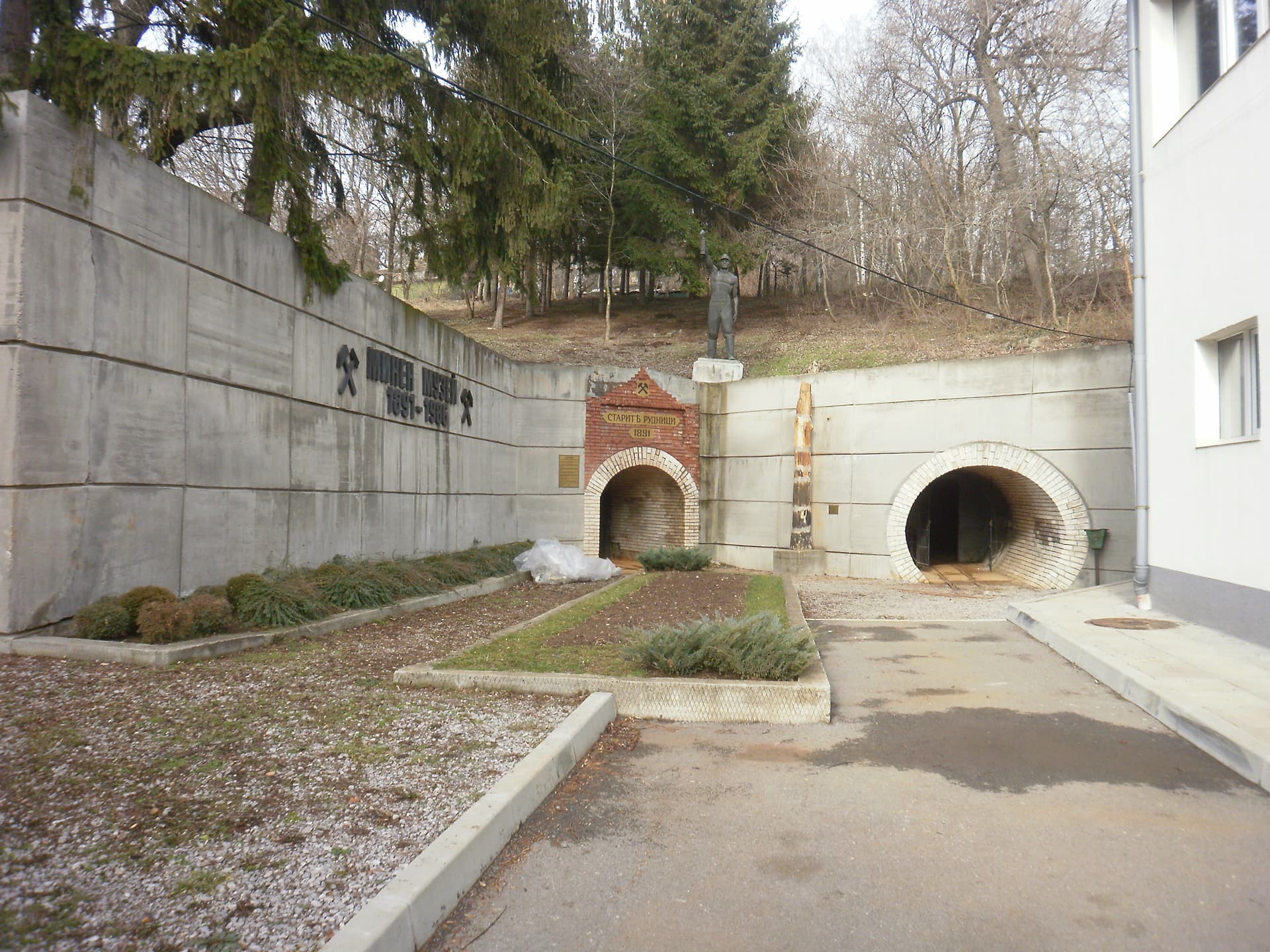
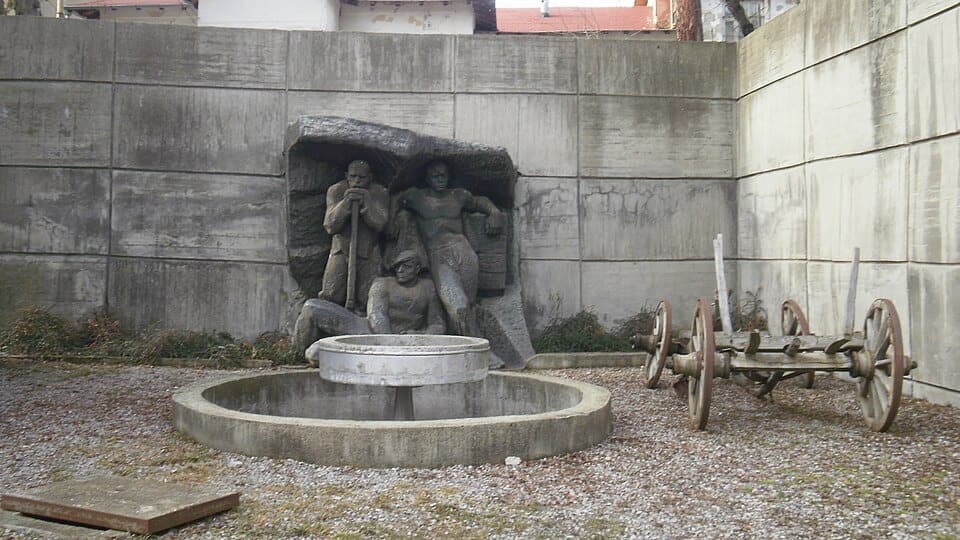
If you only have time to visit one attraction in Pernik town itself, make it the Underground Mining Museum. It is the only museum of its kind in the Balkans because it isn't set inside a standard exhibition hall — it is located inside an authentic subterranean coal mine (the Old Shafts, opened in 1891).
What the Underground Experience Is Like
As you step past the entrance portal into the gallery, natural light fades and the air cools instantly. The guided tour covers 630 metres of authentic underground galleries, supported by original timber and steel beams, holding some 30 displays that trace the development of coal mining in Bulgaria.
Your guide leads you through decades of Bulgarian industrial history — from early manual mining with pickaxes and lanterns to massive drilling rigs and subterranean electric locomotives. The sheer scale and raw atmosphere underground leave a lasting impression.
💡 Practical Visitor Tips:
- Underground temperature — take this seriously. The galleries sit at a little above 0 °C, all year. This is not a cool basement; it is close to freezing. Even arriving on a 35-degree July afternoon, bring a proper coat, not a light jacket, and sturdy closed shoes.
- Opening hours: open every day of the week, with no rest day. 9:00–17:00 in winter (1 October – 30 April) and 9:00–18:00 in summer (1 May – 30 September).
- Entry is with a guide only, in groups of no more than 20 people, and the tour runs about 40 minutes. Helmets are compulsory and are handed out at the entrance. Because group size is capped, calling the Regional Historical Museum in Pernik a day ahead to reserve a slot is worth doing.
- Ticket price: ask when you call to book — the tour is priced per visitor and the museum confirms the current rate on the phone.
- Parking: free parking directly in front of the museum entrance (near the Hungarian Houses park area).
🎯 Three things not to miss underground
- The "tree of happiness". By the entrance stands a petrified tree over 50 million years old. Miners touched it for luck on their way in — and visitors still do.
- The iconostasis of St Ivan Rilski, the patron saint of miners, installed in 2012.
- The multimedia hall, which screens the first documentary film ever made about Pernik.
The museum opened on 26 August 1986, modelled on the Wieliczka Salt Mine in Poland, and since 2013 it has been site No. 39a on the Bulgarian Tourist Union's list of 100 National Tourist Sites — sharing entry 39 with the Erma River Gorge out at Tran.
🏰 Krakra Fortress
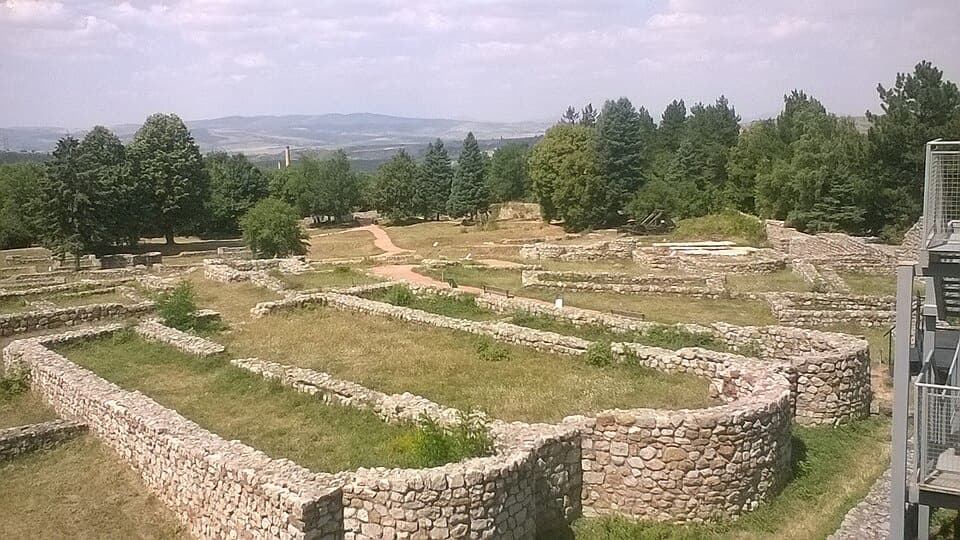
Perched on a small rocky plateau in the south-western part of the city, Krakra Fortress is a short drive from the mining museum. It is tied to Krakra of Pernik, the commander who from 997 held this fortress through the repeated campaigns of the Byzantine emperor Basil II — and who waged his own independent operations against the empire rather than simply defending.
Byzantine chronicles of the period describe him as a prominent boyar and lord of the city under Tsar Samuil, a righteous and honest man who would not tolerate bribery and was always thoroughly prepared for war. He is recorded as controlling a further 35 fortresses across the region.
A very long history for a hilltop
Historians place the fortress's creation after 809, when Khan Krum annexed the lands of present-day Sofia and its surroundings; archaeology shows a small Thracian settlement occupied the site before it. The region was governed by Aron, brother of Samuil, who commanded the defence of Serdica and fought at the Battle of the Gates of Trajan, where Basil II's army was routed.
Krakra finally surrendered after 1018. The fortress then saw the campaigns of Peter Delyan in 1040 pass through, and of Georgi Voyteh and Konstantin Bodin in 1072. It is thought to have still served a defensive role when the Third Crusade came through these lands, before being damaged during Stefan Nemanja's campaign of 1189 — after which it was abandoned and never used again. Excavation continues on the site today.
Is It Worth Visiting?
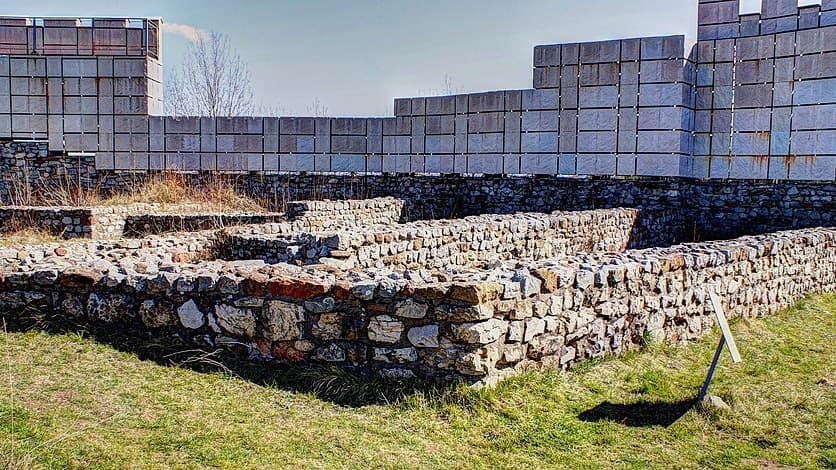
This was one of the large Bulgarian fortresses: the walls enclosed roughly 50 decares, and the circuit itself ran to nearly 800 metres. What you see today is chiefly the preserved stone wall foundations and reconstructed ramparts, with wide panoramic views across Pernik, the Golo Bardo ridge and Vitosha.
- Entrance fee: free — the site is visited without an admission charge. A guided talk costs 5.11 €.
- Opening hours: every day, 8:30–17:00 in winter (1 October – 30 April) and 8:30–18:00 in summer (1 May – 30 September).
- Time needed: 30–40 minutes. Think of it as a pleasant open-air stroll and a scenic viewpoint after your underground mine tour.
🏞️ Tran and the Erma River Gorge: Nature's Masterpiece
Once you've explored Pernik, head west toward the border town of Tran. While the town itself has a quiet, traditional charm, the main draw lies about 3 km north and is signposted: the Erma River Gorge (also called the Tran Gorge or the Lomnitsa Gorge), in the easternmost part of the Ruy mountain.
Hiking the Tran Eco-Trail
Get the scale right, because most write-ups muddle it. The gorge as a whole runs about 2.8 km, from south-east of Lomnitsa village down to Bogoyna. What everyone comes to see is the narrows near its start: a slot roughly 100 metres long and just 5 metres wide, where the river has cut some 120 metres down into Upper Jurassic limestone laid down in a sea about 150 million years ago. Up to the middle section the walls are sheer and never more than 10–15 metres apart. The crags towering above are called Tsarkvishteto and Zhilav Kamak.
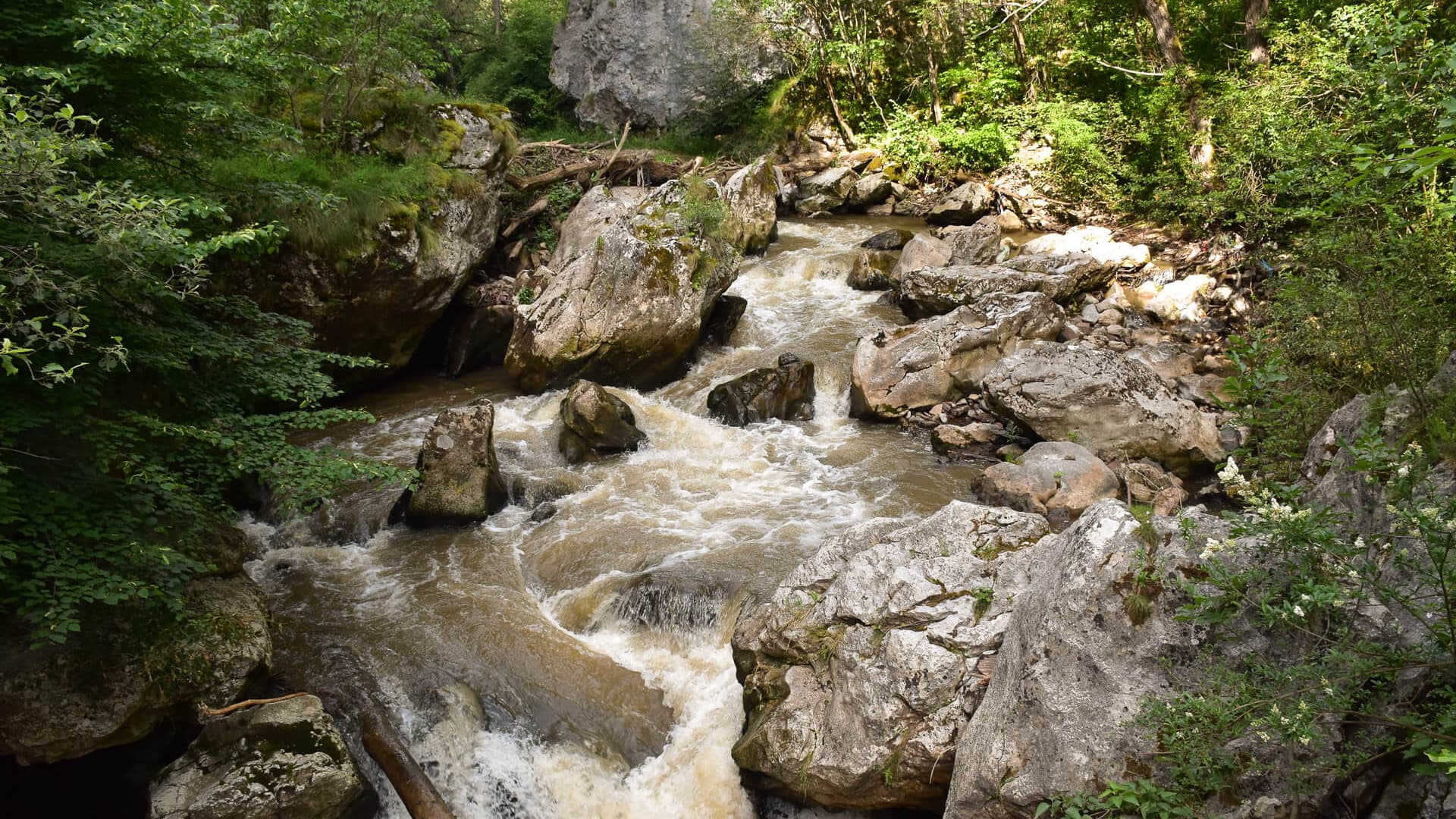
The eco-trail reaches it via wooden and metal footbridges, steps and handrails bolted to the rock above the water, and — unexpectedly — through a tunnel dug by German forces during the Second World War, abandoned unfinished when the course of the fighting changed. The wooden bridges just past it give the best view in the gorge.
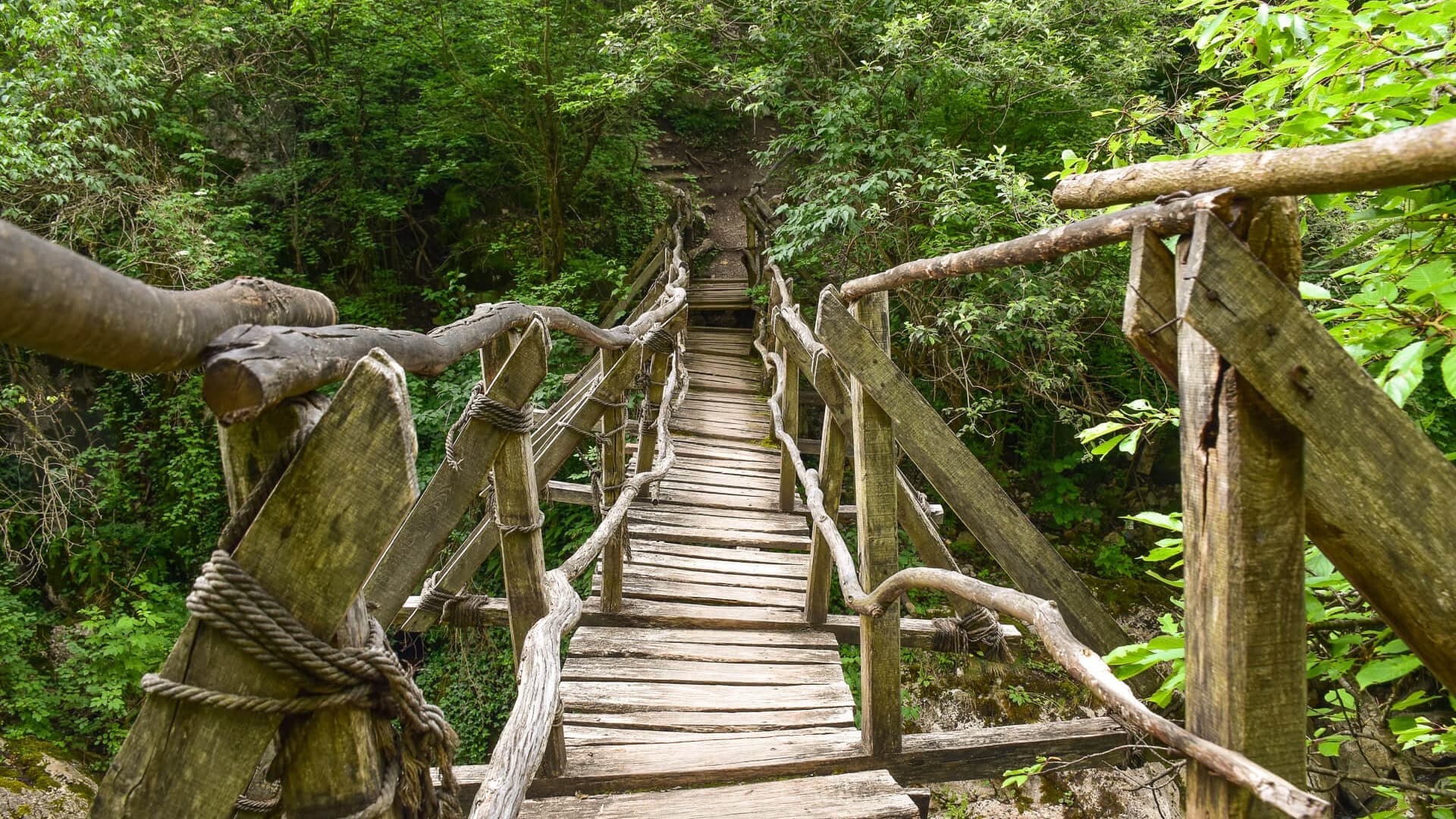
⚠️ How long is this walk, really?
This is where guides mislead people, so be clear which walk you are doing:
| What you're doing | Distance | Time |
|---|---|---|
| The gorge itself — car park, tunnel, narrows, bridge, back | short detour | about 1.5 hours |
| The full Tran eco-trail | 13 km | about 8 hours |
Most visitors want the first. The full trail is a serious day out with steep ascents and descents between the flat riverside stretches, and its other trailhead is the village of Bankya.
Three things the signs won't tell you:
- There is no drinking water anywhere along the eco-trail. Carry what you need.
- Don't come in wet or foggy weather. The limestone is slippery even when dry, so closed, stable shoes are essential rather than advisable.
- The turning down to the gorge is easy to miss — about 20 m past the tunnel exit, a steep, narrow path drops off the main track. The sign is neglected and hard to spot.
Beyond the footbridge you can keep going, up a very steep scramble to the foot of the crags and a viewpoint over the region — but that stretch is no longer maintained and is genuinely hard. Most people should turn back at the bridge.
The gorge was declared a natural landmark in 1961, covering 9 hectares, and is site No. 39 on the 100 National Tourist Sites list — the entry the mining museum shares as 39a. The stamp is held at the Erma tavern a kilometre before the gorge, and at the tourist information centre in Tran, so a stamp-collecting day can pick up both halves of number 39. There is a picnic area at the car park with gazebos, benches and a small playground, though the approach road is poorly maintained — the hut, restaurant and holiday base that once served this place were abandoned in the 1990s.
💚 The local legend. A rich girl and a poor young man fell in love; a mother's curse turned them into two rocks on opposite banks of the Erma, forever close but never together, with the river fed by their tears. Aleko Konstantinov, passing through, put it more briskly in his travelogue: "What, Switzerland?"
🥛 Studen Izvor and the Yoghurt Museum
A few kilometres from Tran sits one of the most unexpected small museums in Bulgaria. The Yoghurt Museum stands in the village of Studen Izvor, close to the birthplace of Dr Stamen Grigorov — the scientist who identified the bacterium Lactobacillus bulgaricus in 1905, and with it the thing Bulgaria is arguably best known for worldwide.
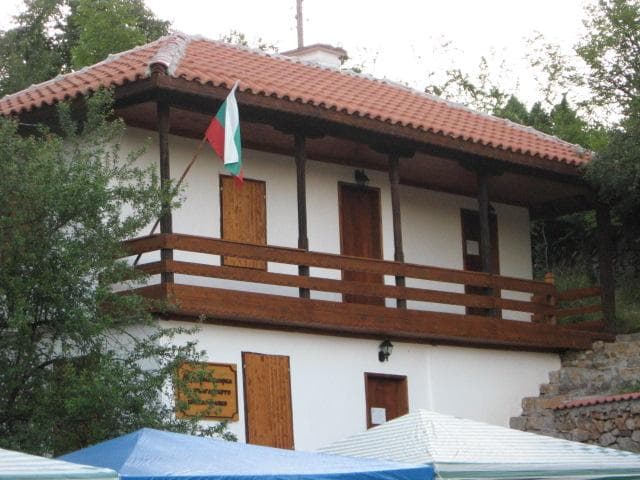
The restored two-storey house is divided sensibly: the ground floor is laid out as an authentic period room with household objects and craft tools, while the upper floor tells the story of the discovery and how it travelled the world. It pairs naturally with the gorge on the same day — you are already out here, and it is a genuinely charming half hour.
🏺 Busintsi and its pottery
In the same direction, by the village of Busintsi, is the museum of Busintsi ceramics — one of Bulgaria's oldest pottery traditions, with a reputation that once reached well beyond the country's borders. The collection traces the craft from its early attempts through to the instantly recognisable style. A short visit, but it adds real depth to the day if traditional crafts interest you.
If the weather turns, the Historical Museum in Tran is the indoor fallback, tracing the border region from prehistory through Roman times to the National Revival.
🌊 Zemen Gorge: the wild card
About 35 km south of Pernik, the Struma River cuts between the Zemen and Konyavska mountains to form the Zemen Gorge — a 22 km canyon linking the Radomir and Kyustendil basins.

Its northern end holds the Zemen earth pyramids, limestone formations with names like Ivanov Kamak, Saraya and Tsarni Dupki, declared a natural landmark back in 1968. The Polska Skakavitsa waterfall lies within the gorge itself.
⚠️ A word of honesty about planning: this does not fit into the same day as Tran. The two lie in opposite directions from Pernik, and trying to force both into one day means rushing both. If you want the gorge as well, make it a weekend.
🏔️ Vitosha from the Pernik side
Here is something very few people realise: Cherni Vrah — the highest point of Vitosha at 2,290 m — falls administratively within Pernik municipality, above the village of Chuypetlovo on the mountain's south-western flank.
The ascent from this side is markedly quieter than the well-trodden Sofia routes, but be realistic: it is a full separate day, not an add-on. The detail is in our Cherni Vrah hiking guide.
From the same flank, near the village of Bosnek, lies Duhlata Cave: over 17,600 metres of passages on several levels, making it the longest cave labyrinth in Bulgaria. Its name comes from the whistling of air currents through the narrow entrance.
🚫 Duhlata is not a show cave. There is no lighting, no walkway and no ticket desk. It is entered only with proper equipment and an experienced guide. Do not treat it as a casual stop.
🎭 Surva — and why it isn't in this route
Internationally, Pernik is known above all for Surva, the International Festival of Masquerade Games held in late January — the largest kukeri gathering in the Balkans, drawing thousands of costumed performers from across Bulgaria and beyond.
It is a wonderful thing to witness, but treat it as a separate trip. During the festival the centre is closed to traffic, parking is genuinely difficult and the town runs on entirely different rules. If the kukeri are your goal, plan the day around the parades rather than the museums — the detail lives in our guide to Bulgarian festivals and traditions.
🛏️ Where to stay
Most visitors don't stay over — Pernik is half an hour from Sofia and the day trip is the sensible default. If you are stretching the route into a weekend, there are two reasonable options:
- In Pernik: the handful of town hotels are aimed at business travellers and come in noticeably below Sofia prices. Practical rather than scenic, but perfectly comfortable.
- Around Tran: a few small guest houses in and near the town. More atmospheric and far closer to the gorge, but capacity is genuinely small — for a spring weekend book 3–4 weeks ahead, and for late January far earlier, because Surva absorbs the beds across the entire area.
🚫 Who Pernik isn't for
Be honest with yourself before setting off:
- Anyone hoping for a picturesque old town. Pernik's industrial past is visible everywhere and the town makes no attempt to hide it. If that is what you want, go to Koprivshtitsa instead.
- Travellers without a car, if the goal is anything beyond Pernik town itself. The train to Pernik is excellent; everything west of it is not.
- Families with very young children. The gorge cannot be done with a pushchair, and the underground museum is dark and cold. Teenagers, on the other hand, usually rate the mine as the highlight of the day.
📍 What's nearby
- Cherni Vrah and Vitosha — from the Pernik side, via Chuypetlovo
- Best day trips from Sofia — where Pernik sits against the alternatives
- Rila Monastery — further south on the same Struma motorway
- Bulgarian festivals and traditions — for Surva and the kukeri customs
Pernik will not impress you from the car park. The impression arrives later — deep in the old coal galleries, or on that footbridge above the Erma where the canyon narrows until the sky is just a strip of light.
This guide covers 10 places
Want more Mestala in your Google results?
Add mestala.com as a preferred source and our guides will show up more often when you search. Requires a Google account.
Frequently Asked Questions
Is Pernik worth a day trip from Sofia?▾
Absolutely! While Pernik isn't a traditional romantic old-town destination, it offers truly unique attractions just 30 minutes from Sofia. You can step inside the Balkan's only underground mining museum set in a real coal mine, explore the historic Krakra Fortress, and hike the dramatic Tran Gorge just down the road. It offers an unbeatable combination of history, industrial heritage, and raw nature.
What is the Underground Mining Museum in Pernik and how do you visit?▾
It is an authentic underground coal mine converted into a museum, set in the preserved galleries of the Old Shafts — the first Bulgarian mine, opened in 1891, which produced brown coal until 1966. Visitors walk 630 metres of galleries holding around 30 displays of original machinery, timber supports and mining trains. Entry is by guided tour only, in groups of up to 20, lasting about 40 minutes, with helmets handed out at the entrance. The galleries sit a little above 0 °C all year, so bring a proper coat even in mid-summer.
How do you get to the Erma River Gorge at Tran?▾
Tran is located about 45 km west of Pernik towards the Serbian border, roughly 70 km from Sofia. Just 3 km past Tran town, a paved road leads directly to the trailhead parking lot. From there, the Tran Eco-Trail leads over suspended bridges and along wooden footpaths attached to the sheer limestone cliffs above the river.
Why is there a Yoghurt Museum near Tran?▾
The museum is located in the peaceful village of Studen Izvor — the birthplace of Dr. Stamen Grigorov. In 1905, at just 27 years old, he isolated Lactobacillus bulgaricus, the bacterium responsible for authentic Bulgarian yoghurt fermentation. The museum is housed in a traditional 2-storey Revival-style house combining ethnographic displays with scientific history.
When is the Surva Festival and what should travelers know?▾
The Surva International Festival of Masquerade Games takes place every year in late January in Pernik. It is the largest gathering of 'kukeri' (masked dancers) in the Balkans. Visiting during Surva is a completely different experience: the town center is closed to traffic, parking is scarce, and hotels book out months ahead. If you want to see the festival, plan specifically for it; for a quiet museum and hiking day trip, pick any other weekend.
What is Zemen Gorge and when should you visit?▾
Zemen Gorge is a scenic 22 km canyon carved by the Struma River between the Zemen and Konyavska mountains. Highlights include the Zemen Earth Pyramids, the 11th-century Zemen Monastery, and the stunning Polska Skakavitsa Waterfall. Located ~35 km south of Pernik, it lies in the opposite direction from Tran, making it ideal as a separate day trip or part of a two-day weekend itinerary.
Can you combine Pernik with Vitosha Mountain and Duhlata Cave?▾
Yes! The southwestern slopes of Vitosha Mountain fall within Pernik municipality. The quietest hiking trail to Cherni Vrah (Vitosha's highest peak) starts from the village of Chuypetlovo. Nearby Bosnek village holds Duhlata Cave — Bulgaria's longest cave system (over 17.6 km of subterranean labyrinths). Note that Duhlata is NOT a show cave and can only be entered with professional caving gear and an authorized guide.
You might be interested in
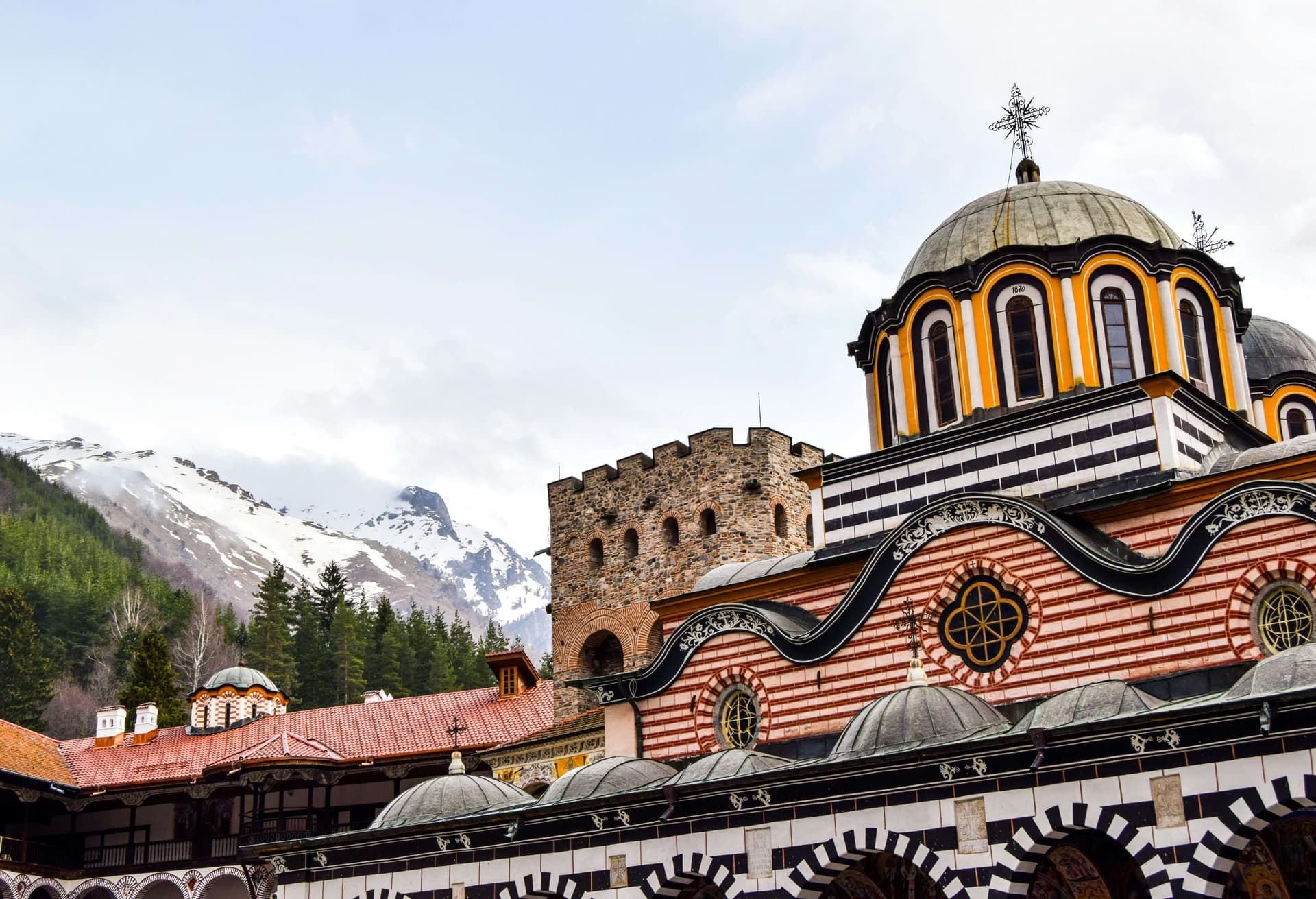
Best Day Trips from Sofia: 9 Great Escapes
The best day trips from Sofia: Rila Monastery, the Seven Rila Lakes, Vitosha, Koprivshtitsa, Plovdiv and more — with distances, travel times and how to go.
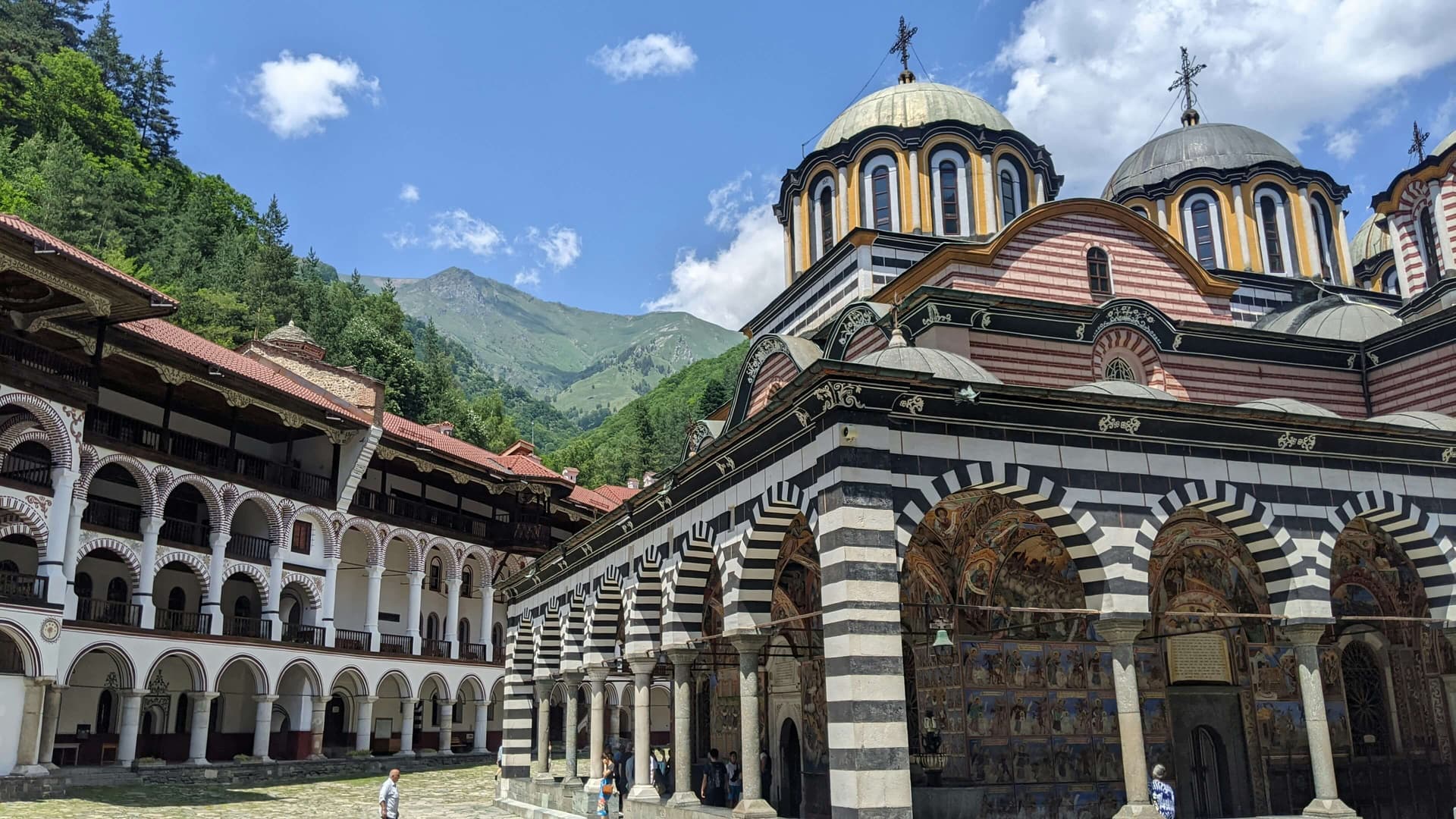
Rila Monastery: The Complete Day-Trip Guide from Sofia
Plan a day trip to Rila Monastery from Sofia: driving distances, parking, how long to spend, family tips, what to see, and where to stay overnight.
Hiking the Seven Rila Lakes: Trail, Lift & Best Time
A complete guide to hiking the Seven Rila Lakes: the trailhead, chairlift, loop trail, parking, family tips, distances from Sofia, and where to stay.
Vitosha Mountain: Sofia's Backyard Escape
Discover Vitosha beyond Cherni Vrah: UNESCO Boyana Church and waterfall, Zlatni Mostove stone river, Dragalevtsi Monastery, transport, parking, and winter skiing.