

Kazanlak & the Rose Valley: Bulgarian Rose Festival Guide
In this guide▾
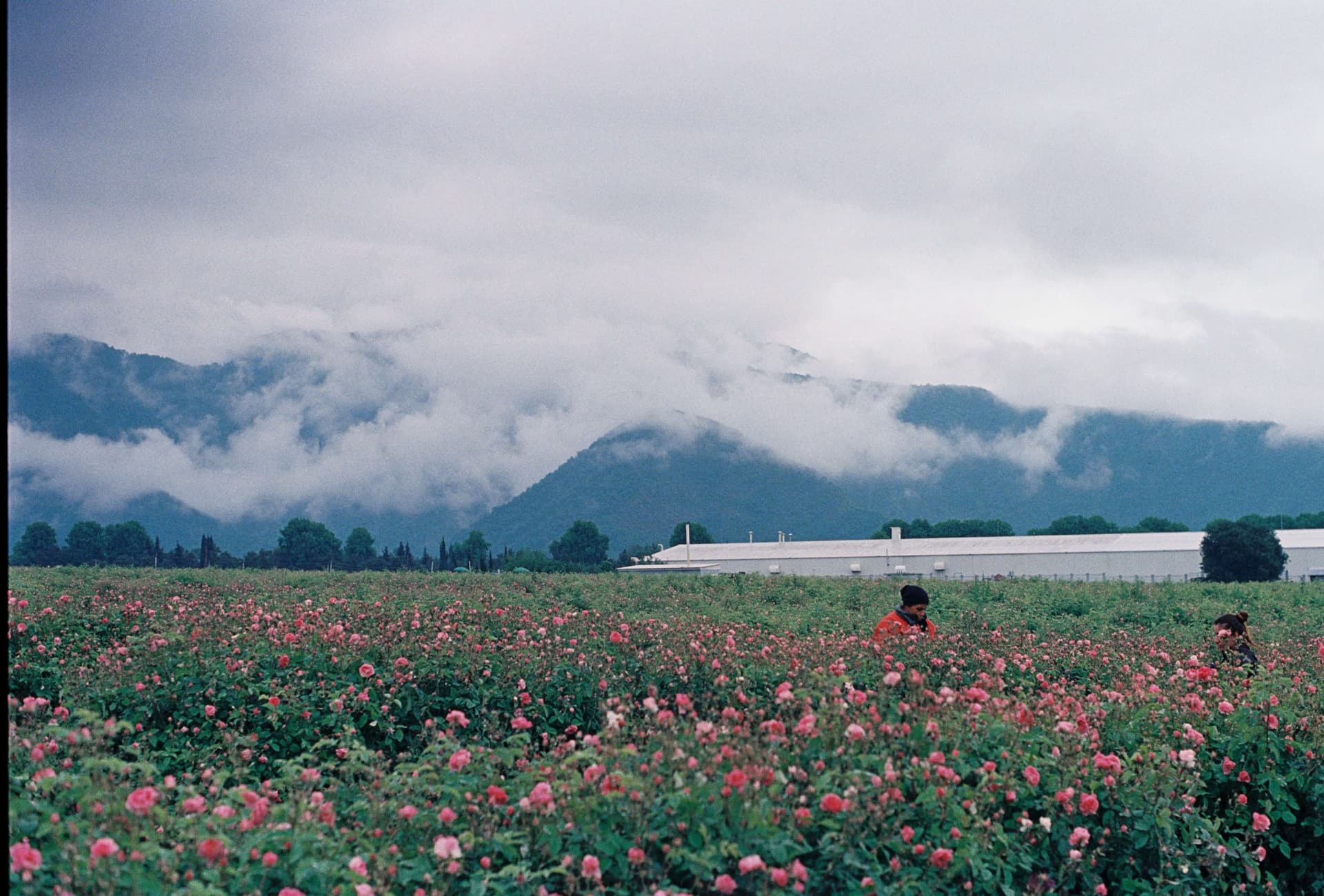
When spring begins to give way to summer, a special valley in the heart of Bulgaria transforms into the most fragrant and colourful destination in Europe. Nestled securely between the majestic Balkan Mountains and the Sredna Gora range, the Rose Valley produces a large share of the world's rose oil. Often referred to as "liquid gold," Bulgarian oil distilled from Rosa damascena is one of the most prized ingredients in fine perfumery.
At the centre of this fairytale region lies the town of Kazanlak—a place that effortlessly weaves together centuries-old traditions, breathtaking nature, and deep history. Here is your ultimate guide to experiencing the magic of the Rose Valley.
🌹 The Iconic Rose Festival: Schedule and Traditions
To capture the true spirit of this region, you must plan your journey around the world-renowned Rose Festival. Celebrated annually since 1903, the festival unfolds over several weeks from mid-May, culminating in spectacular events in early June. It is not just a single holiday, but a rich calendar that brings together ancestral rituals, arts, and traditional crafts.
⚠️ Important Planning Note: The festival does not take place on the exact same dates every year. The schedule is highly flexible because it depends entirely on the agricultural calendar, the blooming period of the roses, and the timing of the harvest. Therefore, the Municipality of Kazanlak follows a golden rule: the grand culmination events always take place during the first full weekend of June (Friday, Saturday, and Sunday).
👑 The "Queen Rose" Coronation
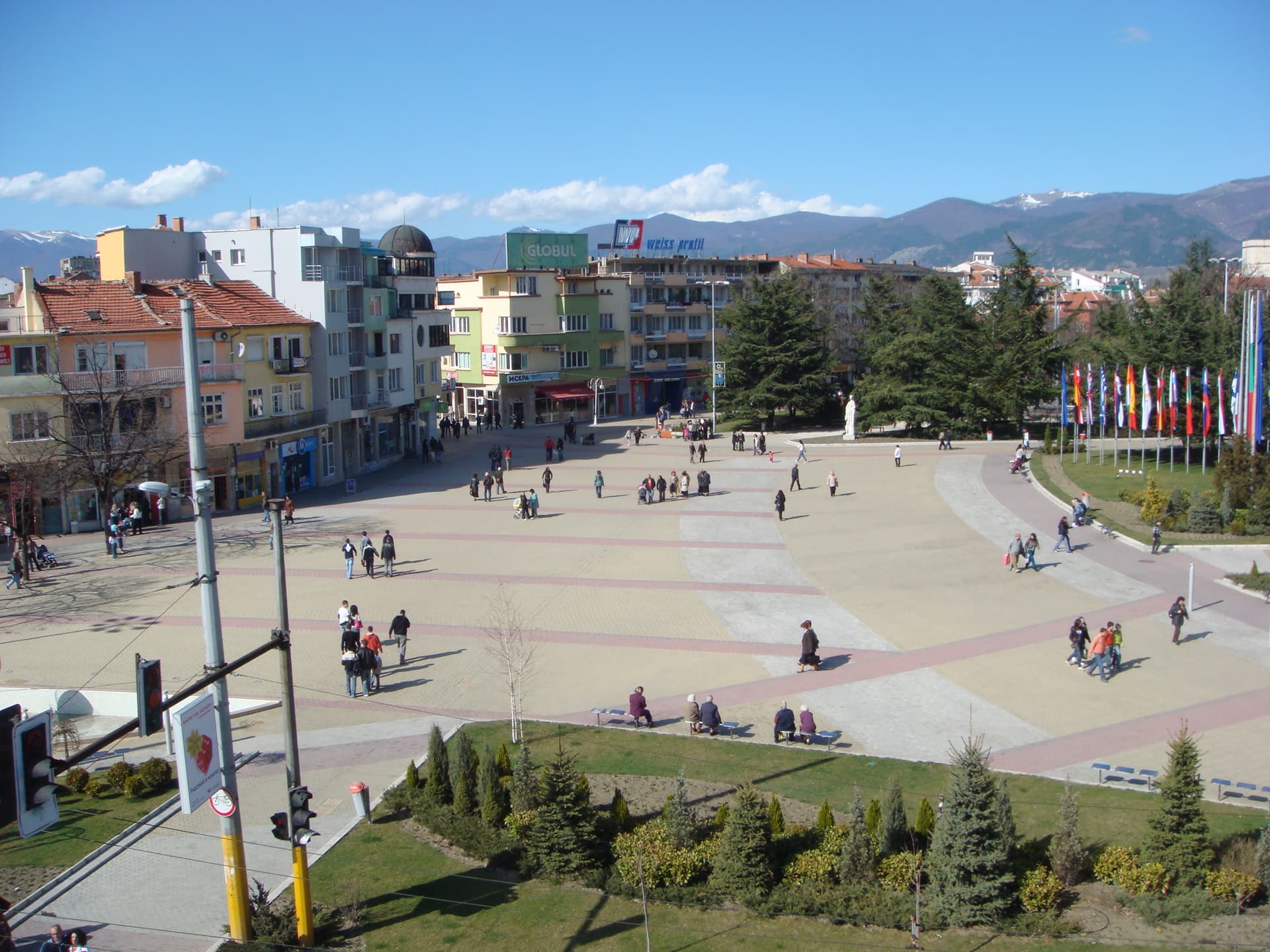
The festival officially kicks off in mid-May with one of the best-known beauty pageants in the country—the selection of Queen Rose, held since 1968. High school graduates from local schools participate, and the winner becomes the living face of the Valley for the entire following year. Her coronation, on the Friday evening of the festival weekend, is a grand open-air spectacle with music, dance and 3D projections on the central square.
🌾 The Rose-Picking and Rose-Distilling Rituals
The Authentic Rose Harvest: This experience requires an early start, but it is worth every second. On weekend mornings from late May until the festival weekend, usually from 9:30, while the petals are still fresh and their oil content high, the rose fields of a different village each day fill with folk ensembles in traditional attire. In 2026 the rituals moved between Ovoshnik, Cherganovo, Kanchevo, Rozovo and Yasenovo before the last one near Kazanlak on the Sunday; check the municipality's programme for the current year. International travellers are welcome to join the harvest, tuck a rose behind their ear, and experience the magic firsthand.
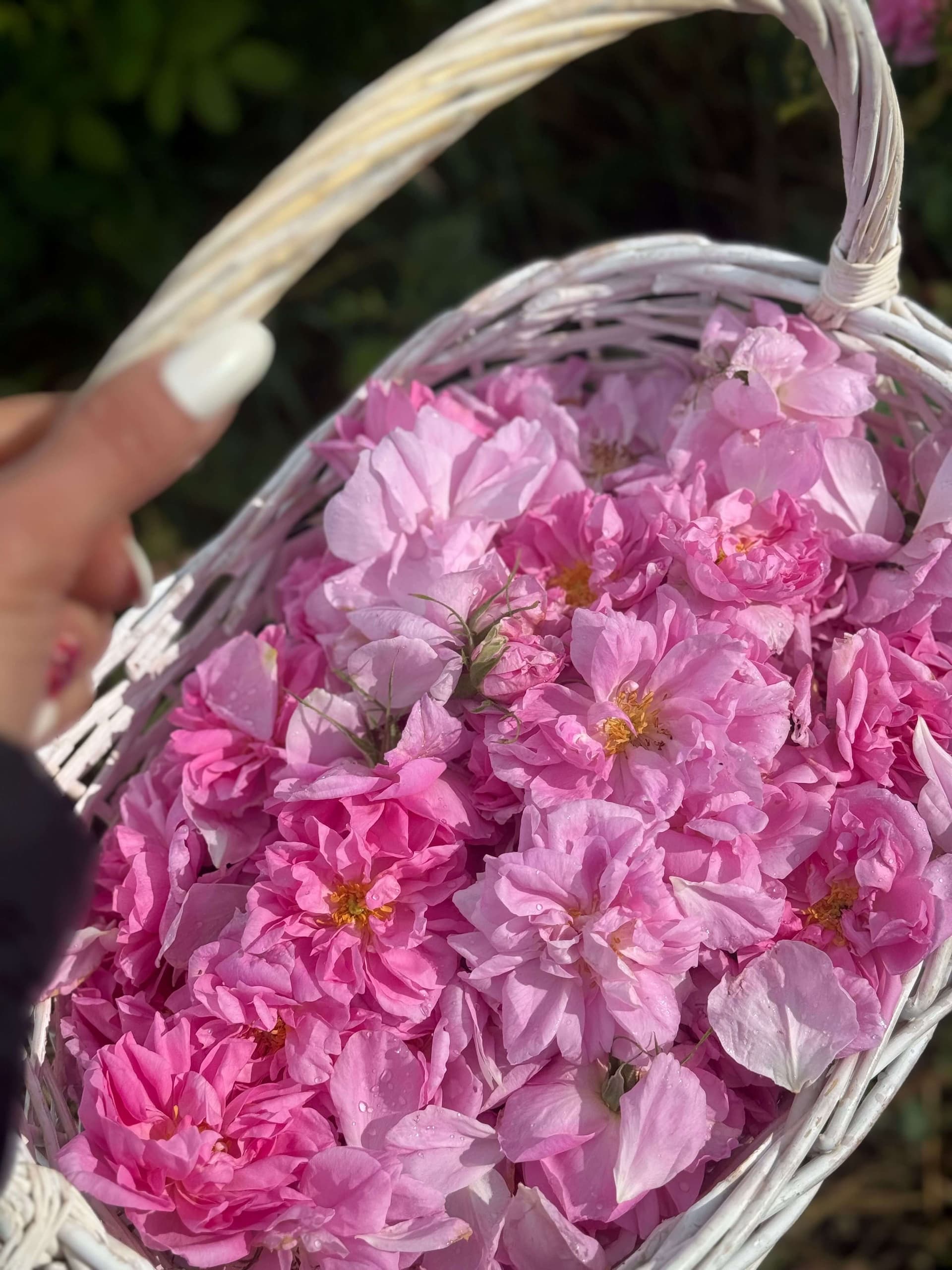
Traditional Rose Distillation: Immediately after the harvest, the celebration moves to the local distilleries and ethnographic complexes. There, the freshly gathered petals are poured into authentic copper stills to demonstrate how precious rose water and oil were extracted in the old days.
🎭 The Grand Parade and the Kukeri
On Sunday, from around noon, the town hosts one of the largest street carnivals in Bulgaria. More than 5,000 participants—including children's groups, folklore ensembles from all over the world, cheerleaders, and golden chariots—march and dance through the centre of Kazanlak, watched by tens of thousands.
The Roar of the Bells: Among the most awe-inspiring participants are the Kukeri (traditional mummers). Their role is essential—wearing fearsome masks made of fur and feathers and carrying massive copper bells (chane) on their belts, they rhythmically dance to drive evil spirits away from the Valley, bringing health and fertility for the upcoming rose crop.
🎟️ Practical Festival Information
Grandstand Seats: Seated grandstands are set up along the route for Sunday's parade, and the best spots go early. Ask the Kazanlak Tourist Information Centre how seats are sold in the current year.
The Street of Crafts: During the festival weekend, the town centre fills with an arts and crafts market. There, you can buy certified rose oil cosmetics, natural rose water, handmade souvenirs, and try unique rose-flavoured ice cream.
🏛️ What to See in Kazanlak: Urban Highlights
The Rose Museum
Set inside the beautiful and lush Rosarium Park, the Rose Museum is billed as the only museum of its kind in the world. Opened in 1969 as part of the Iskra Museum, it holds more than 15,000 items on the history of rose growing and rose-oil making. Look for the ornate flasks used for storing and exporting the oil (kunkumi), 19th-century copper stills, and a reconstruction of the laboratory that chemistry teacher Hristo Yaramov set up in 1912 — the first essential-oil laboratory in Bulgaria.
Visiting: open every day, 09:00–17:30. Entry is €3 for adults, €2 for pensioners and €1 for pupils and students; children under 7 go in free. A guided talk costs €5 in Bulgarian or €10 in a foreign language, and taking photos €2.50.

The "Kulata" Ethnographic Complex
Tucked away in the oldest neighbourhood of the town, the Kulata Ethnographic Complex transports you straight into 19th-century Kazanlak. You can wander through the mid-19th-century Hadzhienov House, built by master builders from Tryavna for a wealthy local merchant, watch rose distilling demonstrations, and sample rose rakia, rose jam, rose liqueur and traditional pastry.
Visiting: in summer Kulata is open every day, 09:00–17:30; in winter only by prior booking. Entry is €3 for adults and €2 for pensioners, including a tasting of rose jam and rose liqueur; pupils and students pay €1 (without the tasting). The full rose-distilling demonstration with rose jam, liqueur, banitsa and rose rakia costs €4 (€2 students, €3 pensioners; no alcohol for under-18s), and testing essential oils €2.50. A guided talk is €2 in Bulgarian or €5 in a foreign language.
The Iskra Historical Museum
The Iskra Historical Museum guards the extraordinary gold and ancient treasures of the region. It is a mandatory stop to gaze upon the genuine artifacts discovered in the surrounding burial mounds.
Visiting: open every day, 09:00–17:30. Entry is €4 for adults, €2.50 for pensioners and €1 for pupils and students; children under 7 go in free, and families with two or more children pay €3 per adult and €1 per child. A guided talk costs €5 in Bulgarian or €10 in a foreign language.
The museum also runs the Rose Museum, Kulata and the Thracian tombs, so if you plan to see several of them, buy a package ticket: three sites including the permanent exhibition and the Vault for €8.50, four for €9, or all of the museum's sites for €20, valid for three days (€5 students, €10 pensioners). Independent visitors go in free on the last Monday of each month at all of them. Prices checked September 2026; they can change. For a deep dive into the ancient heritage of the area, read our dedicated companion guide: The Valley of the Thracian Kings: The Mystical Heart of Ancient Bulgaria.
⛰️ Beyond the Town: The Majestic Mountain Route
The Rose Valley offers a flawless balance between the fragrant, low-lying fields and the jaw-dropping mountain peaks rising sharply right above them.
Mount Shipka (Peak St. Nikola) & the Monument of Freedom
About 25 km north of Kazanlak, at the top of the dramatic Shipka Pass road, you will reach one of the most sacred landmarks in Bulgarian history—Mount Shipka (historically known as Peak St. Nikola). To reach the 31.5-metre stone Monument of Freedom, you climb 890 stone steps. Your effort is rewarded with a staggering, 360-degree panorama over the Rose Valley to the south and Northern Bulgaria to the north. The monument itself is closed for restoration from 3 September 2026 until about the end of August 2029 — the grounds stay open, but not the interior and its museum. See our Shipka Pass guide.


The Shipka Memorial Church
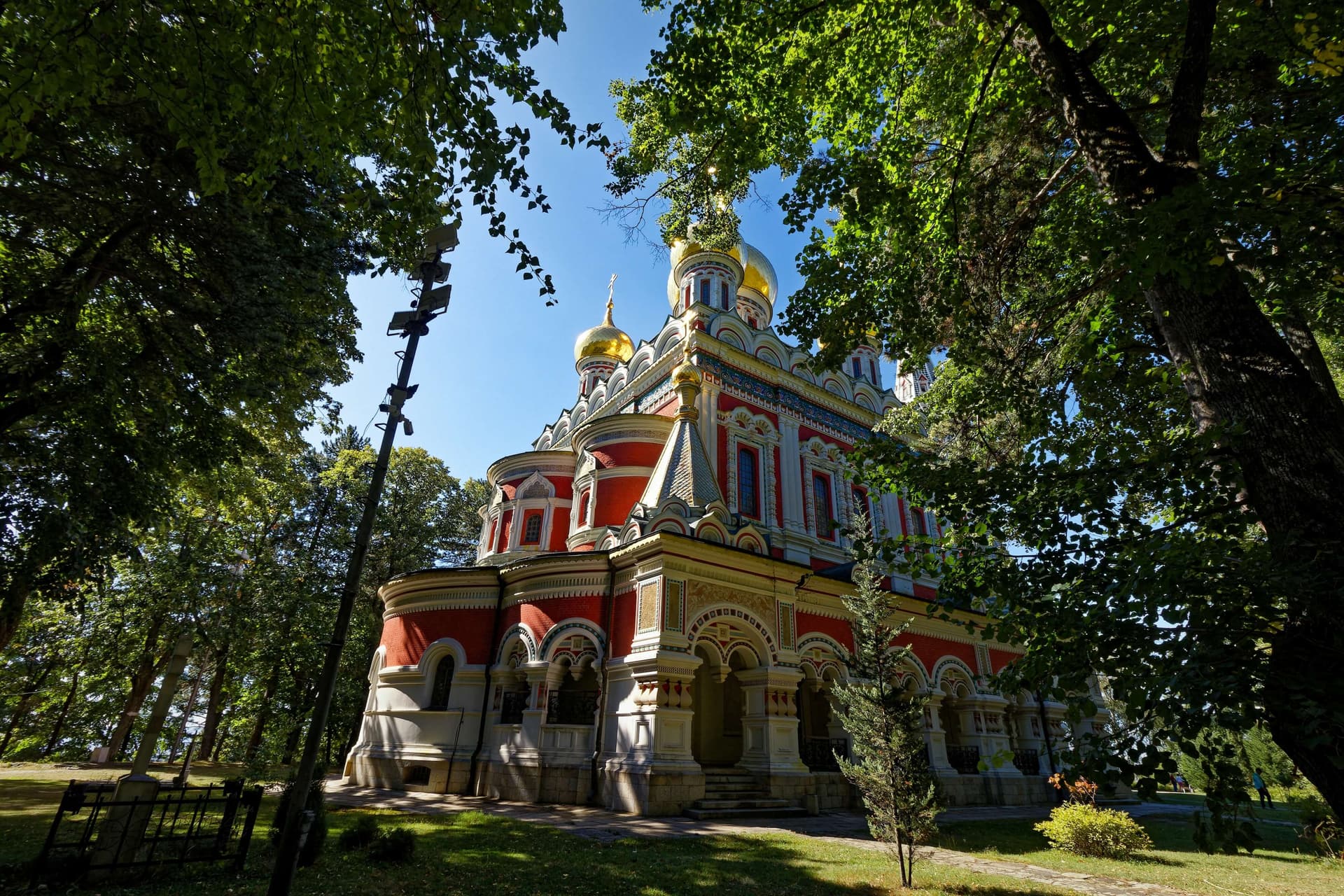
Standing at the foot of the mountain in the town of Shipka, about 12 km from Kazanlak, this architectural jewel is a sight to behold. The church commands your attention from afar with its exquisite, shimmering golden domes and vibrant, intricate patterns that contrast brilliantly against the green forest backdrop. Its 17 bells weigh over 20 tonnes combined — the largest alone is 11.6 tonnes — and the interior is fully adorned with detailed, majestic frescoes. Entry to the church and its crypt is free, and parking by the church costs €1.
The Buzludzha Monument
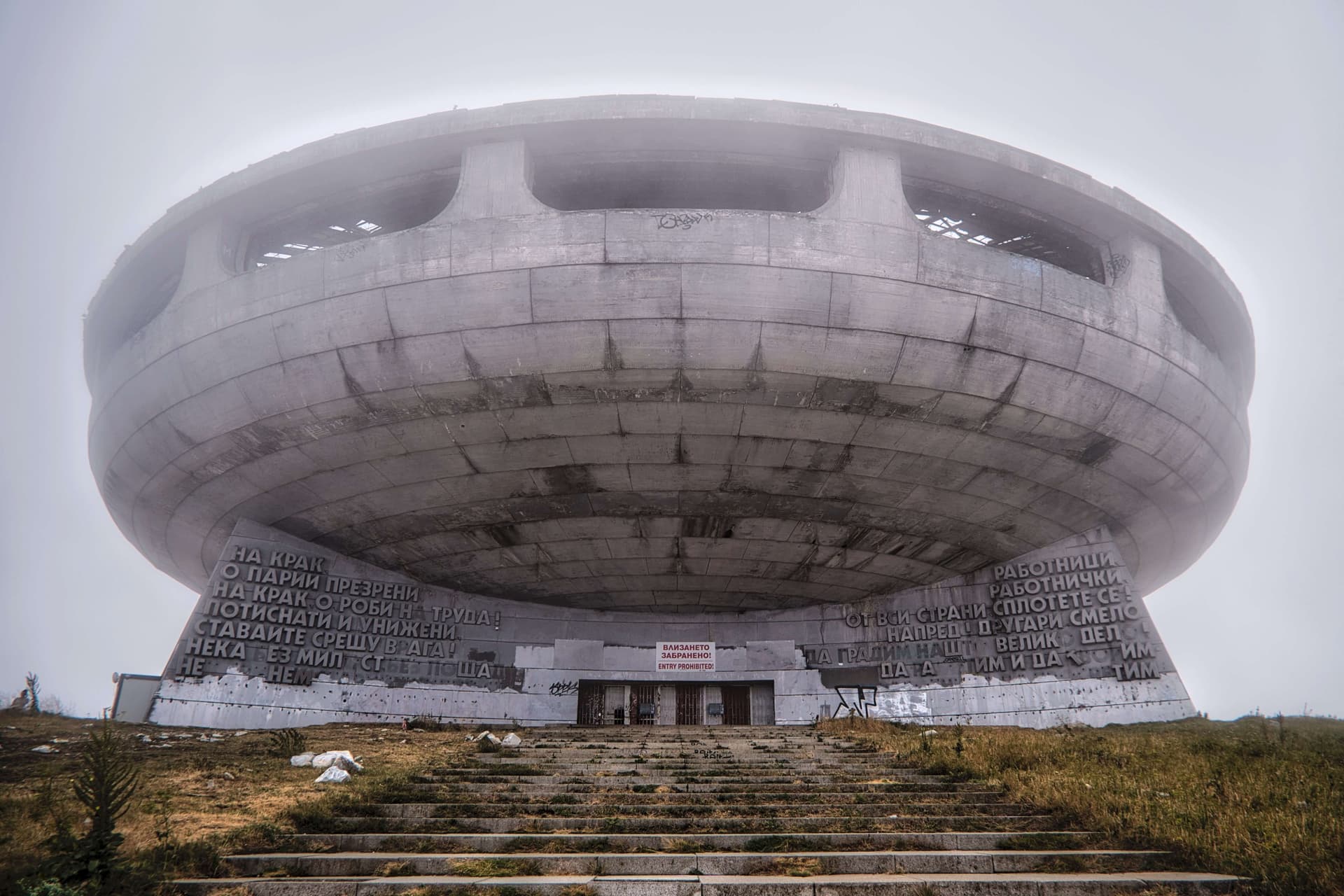
For lovers of alternative, mysterious, and urban exploration (urbex) tourism, Buzludzha Peak (officially Hadzhi Dimitar, 1,441 m), about 25 km from Kazanlak and 12 km east of the Shipka Pass along the ridge, holds the famous Buzludzha Monument. This massive concrete structure, closely resembling a classic sci-fi UFO flying saucer, is a globally recognised architectural icon. The interior is closed for safety reasons, but the sheer scale of the exterior and the sweeping views from the peak are phenomenal.
Koprinka Reservoir
Located just a few kilometres west of Kazanlak, Koprinka Reservoir is an ideal spot for relaxation, kayaking, fishing, or watching a romantic sunset. Beneath its waters lies the sunken ancient Thracian capital city of Seuthopolis—the lost Atlantis of Bulgarian archaeology.
🎒 Practical Planning Tips
- Book Early (Crucial Warning): During the main weekend of the Rose Festival in early June, Kazanlak draws tens of thousands of visitors from across the globe. Accommodation and guesthouses throughout the entire region are booked months or even a year in advance, so make your plans early.
- How Long to Stay: Two days work well — one for the town (the Rose Museum, Kulata, the Iskra Museum and the Kazanlak Tomb) and one for the mountain route to the Shipka Pass, the Memorial Church and Buzludzha.
- Parking: the centre of Kazanlak is a Blue Zone: €0.51 for 30 minutes, €1.02 for an hour, €2.05 for two and €3.07 for three hours. You can pay with the PayPark app.
- The Perfect Season: Late May and early June are the absolute peak for the valley. To find out how to best combine this trip with other seasonal routes across the country, refer to our Complete Season-by-Season Guide to Visiting Bulgaria. Coming from the north, our Central Balkan road trip ends here after crossing the Shipka Pass from Veliko Tarnovo.
- Transportation: Reaching Kazanlak is a straightforward and scenic drive via the Sub-Balkan road from Sofia (~200 km, 3 hours) or from Plovdiv (~105 km, 1 hour 30 minutes). Trains on the Sofia–Karlovo–Burgas line stop in Kazanlak too. To freely explore the rural rose fields, the ancient tombs scattered in the valley, and the high mountain peaks, travelling by car is your best and most efficient option.
- A spa base: Pavel Banya is about 25 minutes west, with five-star spa hotels on mineral water — see our spa weekend guide to Hisarya and Pavel Banya.
Ready to breathe in the scent of "liquid gold"? Keep planning your journey across Bulgaria with Mestala.com!
This guide covers 9 places
Want more Mestala in your Google results?
Add mestala.com as a preferred source and our guides will show up more often when you search. Requires a Google account.
Frequently Asked Questions
When is the Rose Festival in Kazanlak?▾
The Rose Festival has been celebrated since 1903. Events start in mid-May with the election of Queen Rose, rose-picking rituals run on weekend mornings from late May, and the festival culminates on the first weekend of June with the coronation, the last rose-picking rituals and the Sunday parade through Kazanlak. In 2026 the main days were 5–7 June.
What is the rose-picking ritual?▾
The rose-picking ritual (rozober) is a morning performance in the rose fields of a village near Kazanlak, usually starting around 9:30, while the petals are still fresh. Folk ensembles in costume pick the roses, the petals are then distilled the old way, and visitors are welcome to join in. It is held on several days from late May, in a different village each time.
What should I see in Kazanlak?▾
The must-see stops in Kazanlak are the Rose Museum in Rosarium Park — billed as the only one of its kind in the world — the Kulata Ethnographic Complex in the oldest neighbourhood, and the Iskra Historical Museum, which guards the region's golden Thracian treasures.
How many steps lead to the Monument of Freedom on Mount Shipka?▾
It takes 890 stone steps to reach the 31.5-metre Monument of Freedom on Mount Shipka (historically known as Peak St. Nikola). The effort is rewarded with a 360-degree panorama over the Rose Valley to the south and Northern Bulgaria to the north. The monument itself is closed for restoration from September 2026 until about the end of August 2029, but the grounds around it stay open.
Can you go inside the Buzludzha Monument?▾
No — the interior of Buzludzha is closed for safety reasons. However, the massive concrete structure on Buzludzha Peak (officially Hadzhi Dimitar, 1,441 m), about 25 km from Kazanlak — resembling a classic sci-fi UFO — is phenomenal from the outside, and the sweeping views from the peak are among the best in the Balkan Mountains.
How do you get to Kazanlak?▾
Kazanlak is a straightforward, scenic drive via the Sub-Balkan road — about 200 km / 3 hours from Sofia and 105 km / 1 hour 30 minutes from Plovdiv. Trains on the Sofia–Karlovo–Burgas line also stop in Kazanlak. To freely explore the rose fields, the ancient tombs scattered in the valley, and the high mountain peaks, travelling by car is your best and most efficient option.
You might be interested in
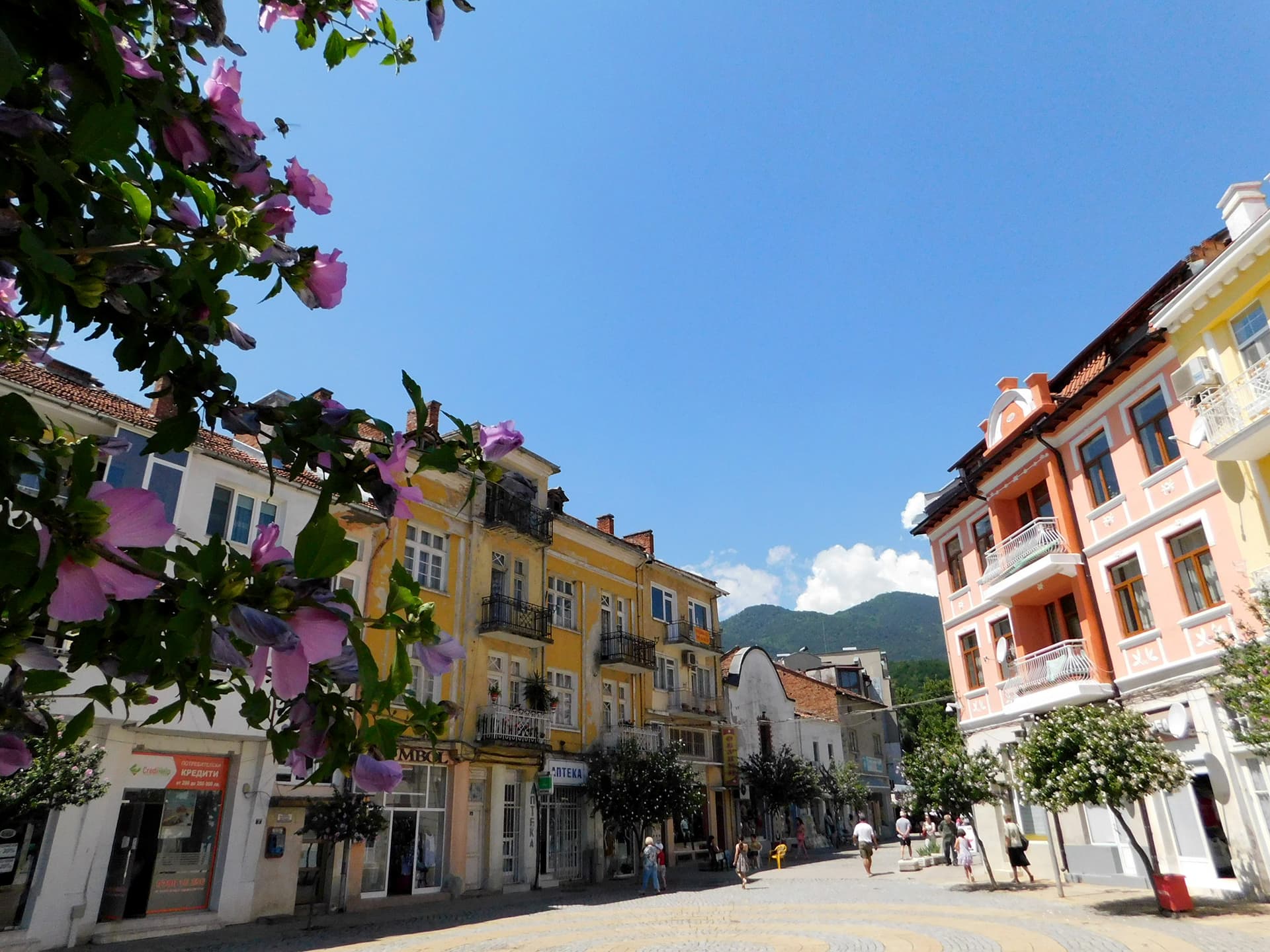
Gotse Delchev: Kovachevitsa, Leshten & the Mesta Valley
Roman ruins at Nicopolis ad Nestum, the stone villages of Kovachevitsa and Leshten, and Ognyanovo's hot springs — what to see around Gotse Delchev.
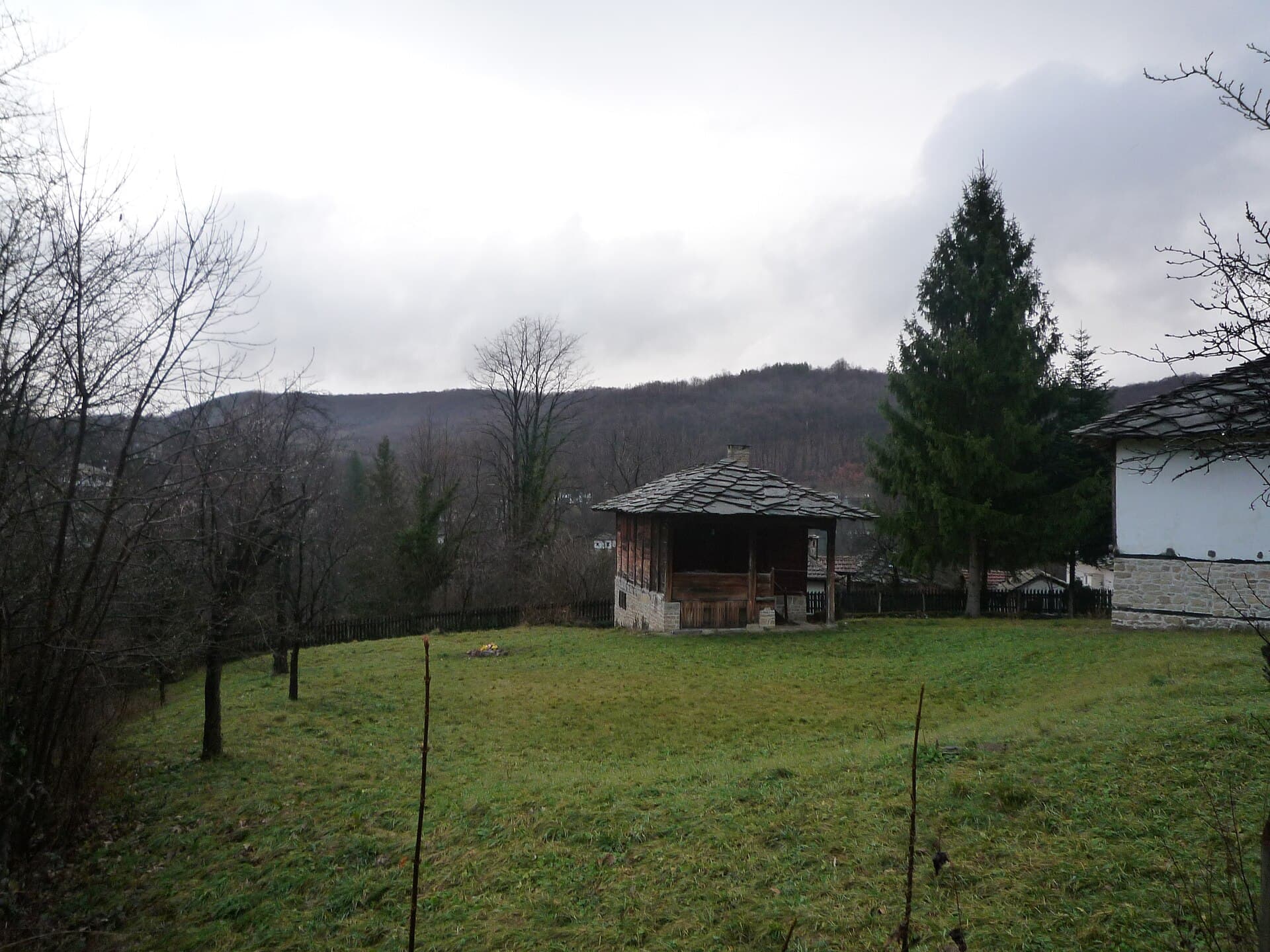
Bozhentsi: The Village That Stopped in 1870
A guide to Bozhentsi, the protected architectural reserve village near Gabrovo: about a hundred stone-roofed Revival houses, the Doncho Popa house-museum, the founding legend, and why it stays quiet when Koprivshtitsa fills up.
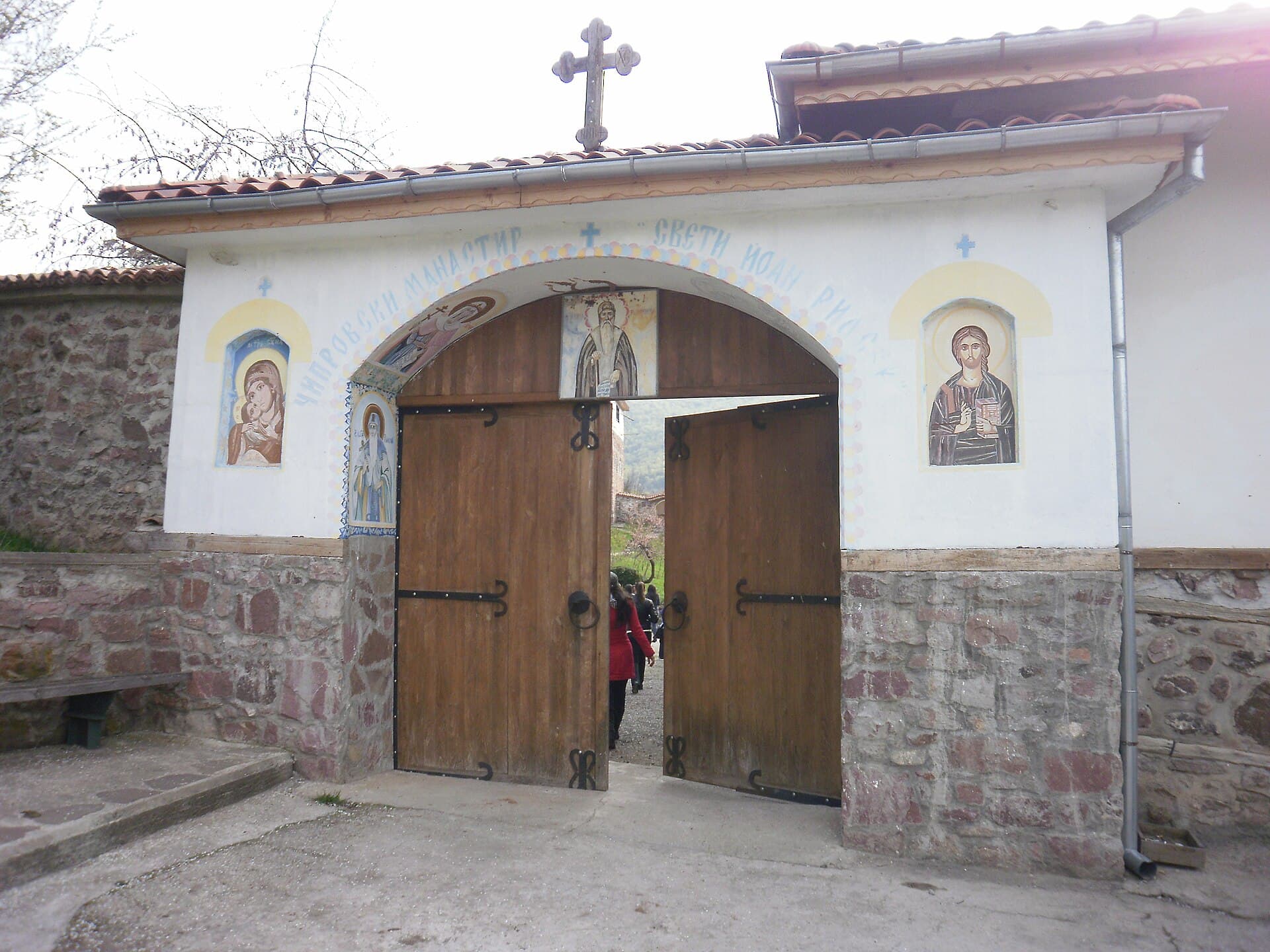
Chiprovtsi: Carpets, a Monastery and a Lost Uprising
A guide to Chiprovtsi in Bulgaria's far north-west: the UNESCO-listed kilim weaving tradition, the 1688 uprising that destroyed the town, the monastery of St John of Rila, and the waterfalls above it.
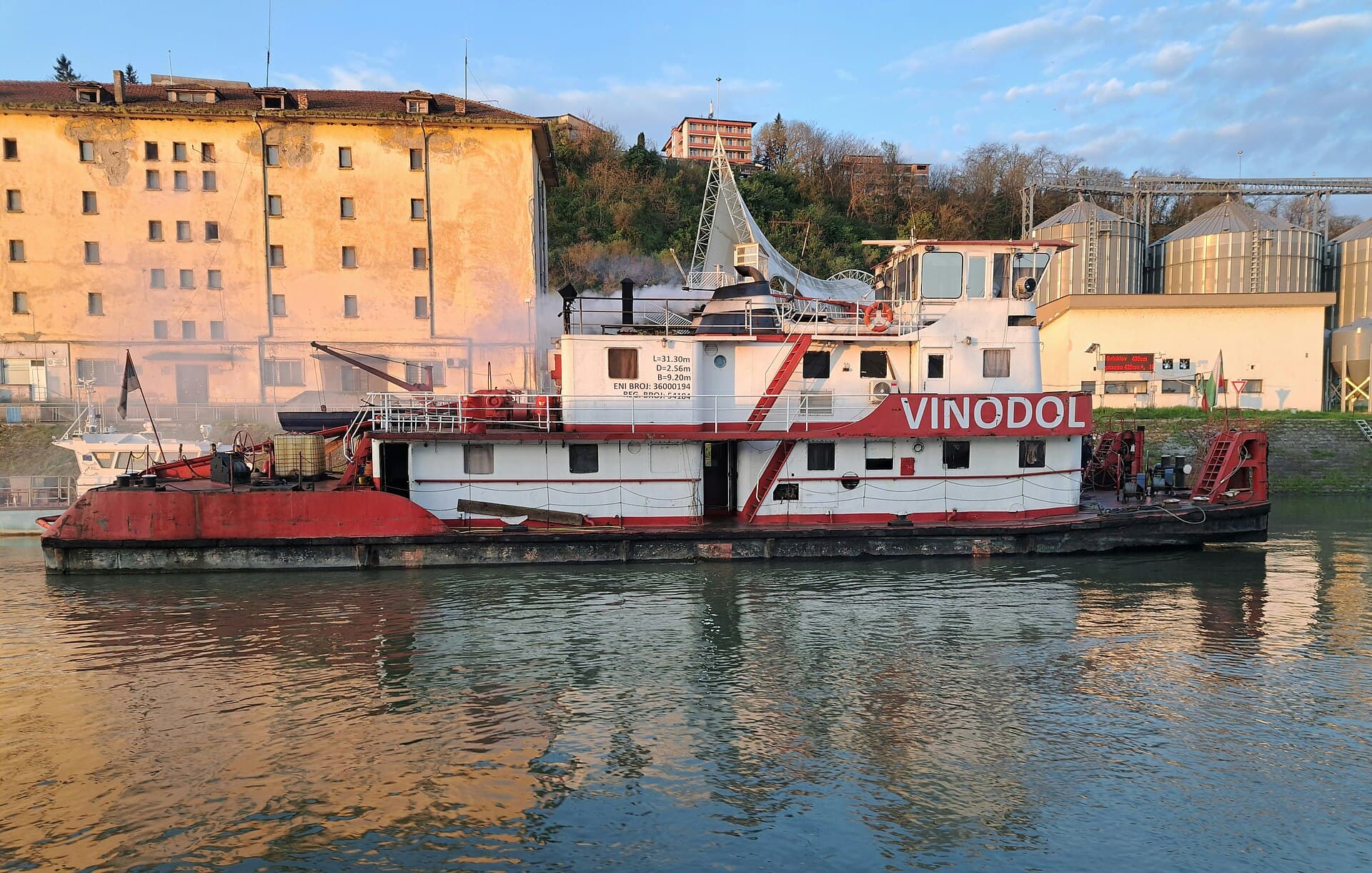
Svishtov, Nikopol & Belene: The Forgotten Danube
A guide to three Danube towns in northern Bulgaria: the 1877 crossing at Svishtov, the 1396 Battle of Nicopolis, the Persina wetlands, and the Belene labour camp that Bulgaria spent decades not discussing.