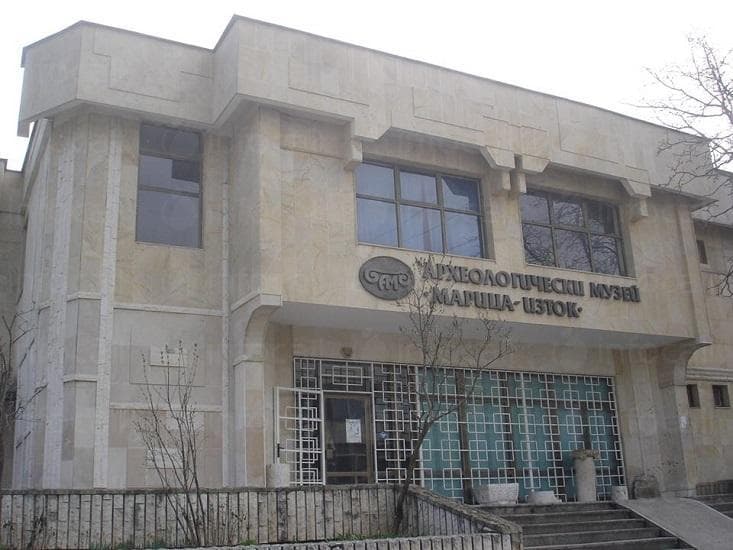
The Museum of the Rose in the town of Kazanlak stands as an exceptionally unique cultural, historical, and scientific center, operating as the only specialized museum institution worldwide dedicated entirely to the history, lifestyle, and extraction technologies of the oil-bearing rose. Rose cultivation alongside the large-scale international trade of pure Bulgarian rose oil constitutes one of the most recognizable calling cards defining the Kazanlak region and the complete Bulgarian national economy over centuries. For nearly a century, historical academic documents have legitimately asserted that the rose culture across Bulgaria, aimed at extracting precious essential oil, operates not merely as the oldest and most attractive industry in the nation, but simultaneously structures as something entirely exclusive and specific to the geographical parameter of the Rose Valley.
To facilitate modern travel logistics and digital mapping, the asset is equipped with the following precise coordinates and access data:
Institutional Status: The museum is housed inside a modern, custom-designed new facility, operating as a specialized branch within the structural framework of the Iskra Historical Museum in Kazanlak.
The initial custom-built exhibition dedicated exclusively to the Kazanlak oil-bearing rose opened officially in 1944 and was reorganized in 1967. Only two years later, in 1969, it rapidly expanded to become the full-fledged Museum of the Rose, acquiring a completely unique status on a global scale. The museum safeguards an exceptionally rich and valuable repository comprising authentic objects, original photographs, and state records that unveil in detail the centuries-old chronology tracking the Bulgarian manufacturing of oil-bearing roses.
Practically all artifacts are systematized and showcased across three major indoor presentation spaces. Inside the halls, visitors can observe:
A true highlight inside the interior exhibition is the comprehensive historical reconstruction representing an original rose oil storage vault alongside the absolute first Bulgarian state laboratory engineered to analyze the purity and physicochemical specifications of rose oil. This laboratory was established in 1907 by the prominent Bulgarian scientist and chemist Hristo Yaramov. Its construction was directly linked to a severe and critical juncture marking the chronology of the Bulgarian rose industry.
Throughout that specific period, a hazardous chemical counterfeit designated as tereshe emerged across international markets, acting as a synthetic imitation of genuine rose oil, frequently mixed with pelargonium distillates. Facing the immediate threat of a complete collapse concerning the global reputation of Bulgarian rose oil as the finest and purest worldwide, the laboratory managed by Hristo Yaramov operated as an exceptionally successful and scientifically grounded countermeasure designed to entirely thwart this damaging commercial practice via the issuance of official state quality certificates.
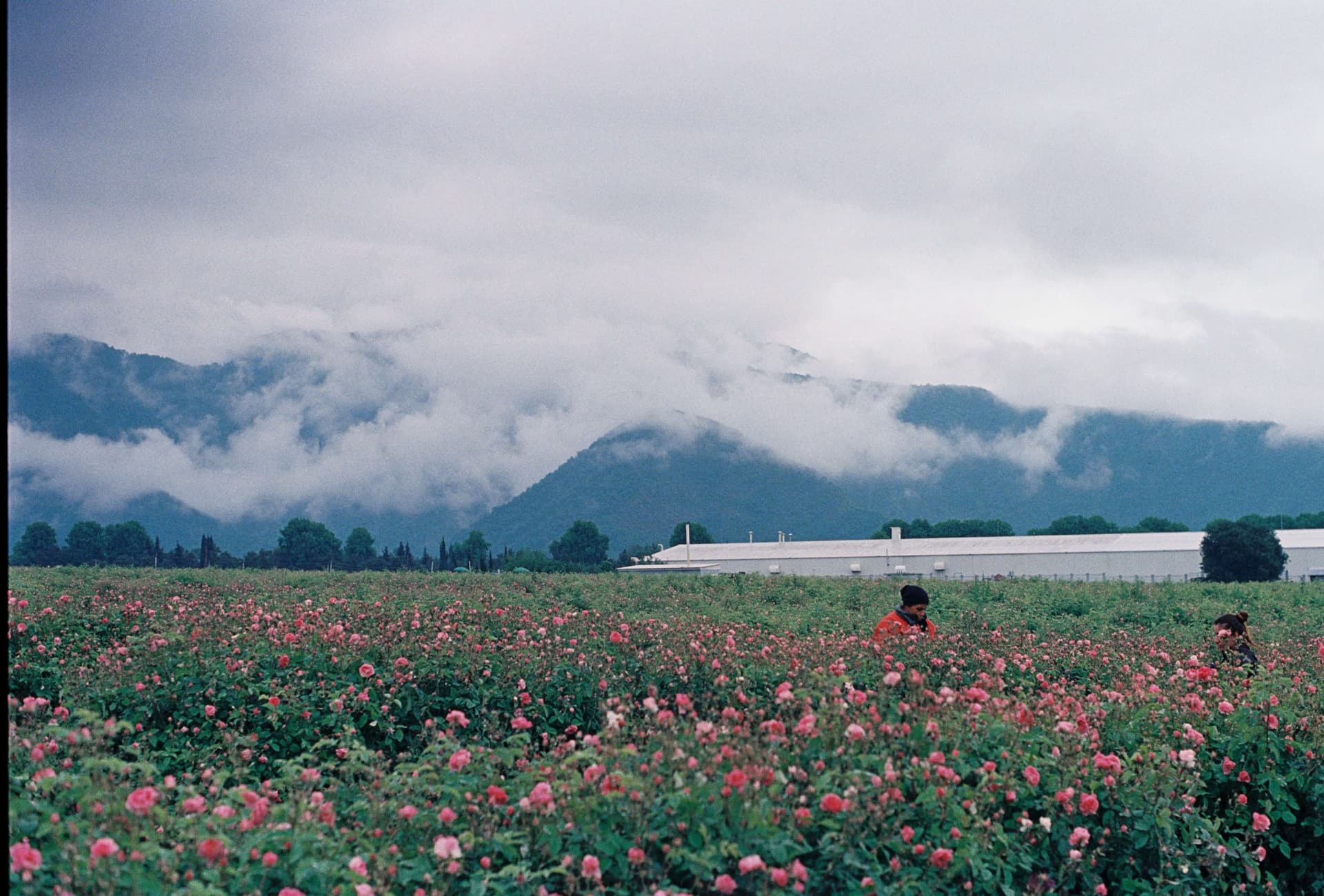
The botanical emblem defining the district structures as the oil-bearing rose belonging to the cultivar Rose damascena (Rose damascena mill. f. trigintipetala). This specialized variety transitioned into the Balkan Peninsula from India, moving sequentially through the borders of Persia, Syria, and Turkey. Within the extensive, sheltered valley stretching between the southern slopes of the Balkan Mountains and the northern foothills of the Sredna Gora range, this delicate flora discovered its secondary homeland, formatting the contemporary title of the Kazanlak Valley - the Rose Valley. Evaluating the spectacular nature of the region, on May 21, 1837, the famous German Field Marshal Helmuth von Moltke wrote in his personal letters: Kazanlak is the European Kashmir, the Turkish Gulistan - the land of roses.
The harvesting process (rozober) remains exceptionally delicate and demanding:
At the absolute baseline of processing the famous Bulgarian rose oil is the technology driving double water distillation inside copper stills. According to the ancient primitive methodology, charging a single distillation still requires exactly 15 kilograms of fresh rose petals and 60 liters of pure water.
The processing cycle is characterized by the following rigid mathematical and economic matrix:
Bulgarian rose oil is universally acclaimed across the globe as the absolute highest quality and is entirely devoid of genuine market competition. Virtually all world-renowned French and international perfume houses systematically integrate it into their elite formulations due to two primary attributes - it acts as a premium natural fixative lending extreme longevity to fragrances, and introduces a highly distinct, sophisticated, and pleasant aromatic profile.
The oil secured its status as an indispensable component for the expanding European perfumery industry as early as the historical year 1720. It was regularly exported via trade vessels routing through the port of Constantinople leading to Marseille, London, and New York, while loaded pack trains crossed through Bucharest to supply markets across Vienna, Paris, and Berlin. In 1820, entrepreneur Doncho Papazov from Kazanlak established the absolute first Bulgarian rose trading house, whose operations were scaled extensively by his capable sons Dimitar and Botyo Papazov. Subsequently, large-scale adjacent trading houses emerged across the district, highlighted by the foundations of Kancho Shipkov in 1840, Hristo Hristov in 1863, and Petko Orozov in 1864. Bulgarian rose oil repeatedly captured prestigious gold medals across grand international expositions, including Vienna in 1873, Paris in 1875, Philadelphia in 1876, and Chicago in 1893.
To accommodate travel demands and preserve living cultural lore, the traditional and globally famous Rose Festival is organized annually inside the town of Kazanlak. The event is celebrated across the duration of the first Saturday and Sunday falling within the month of June. The festival unfolds extensive folklore events, interactive harvesting and distillation re-enactments on-site, vibrant street pageants, and the coronation of the Queen Rose, engraving permanent memories linked to beauty, shared joy, and the classic hospitality characterizing the Bulgarian nation. Inside the museum facility, travelers retain the continuous capacity to purchase certified original rose oil, cosmetics, rose liqueur, rose brandy (gyulova rakiya), and custom souvenirs.
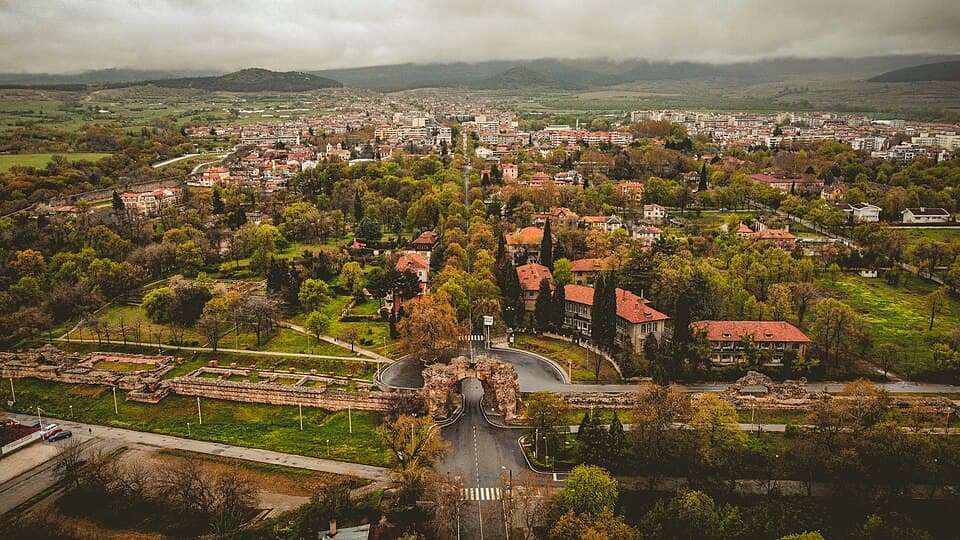
Hisarya or Pavel Banya for a spa weekend: Roman walls and mineral fountains, or a five-star spa base in the Rose Valley — tickets, parking, prices and which to pick.
Plan your trip to Kazanlak and the Rose Valley. Discover the flexible dates for the Rose Festival, the unique Rose Museum, Mount Shipka, and Buzludzha.
Rose Museum is located in Stara Zagora, Bulgaria.
Rose Museum is most easily reached by car. Use the coordinates above to navigate, or open the location in OpenStreetMap or your preferred maps app for turn-by-turn directions. Public transport options vary by region — for remote destinations a rental car gives the most flexibility.
Rose Museum can be visited year-round. Verify current opening hours directly with the museum before your visit, as schedules change seasonally and on public holidays.
Opening hours and admission fees vary, and most Bulgarian museums close one day per week (commonly Monday). Verify current schedules and prices directly with the museum or the local tourist information office before visiting Rose Museum, especially on public holidays.