Epiphany in Kalofer: The Men's Ice Horo in the Tundzha
On 6 January, Kalofer's men dance a horo in the icy Tundzha at about 7:45–8:00. When to arrive, where to stand, parking and getting there from Sofia.
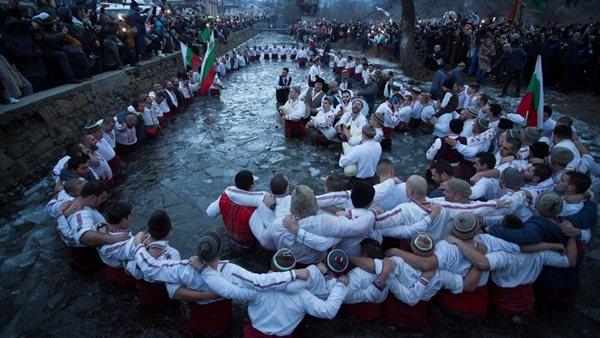
On Epiphany, 6 January (Jordanovden in Bulgarian), the men of Kalofer wade waist-deep into the icy Tundzha River at the Church Bridge and dance a men's horo in folk costume. The procession leaves the church of St Archangel Michael at about 07:20, and the horo in the water starts at about 07:45–08:00. Be on the riverbank by about 7:30 — the good spots go early. Watching is free.
Below: the exact spot, the times, how to get there in time from Sofia or Plovdiv, where to park, how to watch safely with children, and what to see in Kalofer afterwards. For the rest of the year, see our Kalofer travel guide.

This guide covers 6 places
When and where exactly is the horo danced in Kalofer?
The men's ice horo in Kalofer is danced every year on 6 January in the Tundzha River, at the Church Bridge (Cherkovski Most) below the church of St Archangel Michael. This is the traditional spot for the ritual.
- Landmark: the Church Bridge over the Tundzha, close to the church of St Archangel Michael. Older descriptions point to the small bridge by the church of Sts Cosmas and Damian.
- It can move: in recent years the spot is also described as the Sivcha area, where a weir is built in the river beforehand. The exact stretch depends on the water and the preparations, so the safest plan is to follow the procession from the church.
- Day of the week: in 2027, 6 January is a Wednesday. Epiphany is not a public holiday in Bulgaria, so shops and offices work as normal.
What time does it start, and when should you arrive?
The men's horo in the Tundzha in Kalofer starts at about 07:45–08:00, and the best spots on the bank are taken before that. We recommend being there by about 7:30, or a little before 07:20 if you also want to see the procession leave the church.
| Time | What happens |
|---|---|
| 04:30 | Festive liturgy in the church of St Archangel Michael |
| about 07:20 | The participants set off in procession to the river |
| about 07:30 | Our advice: be on the riverbank |
| 07:45–08:00 | The men enter the water and dance the horo |
This is the usual schedule; the times can shift slightly from year to year.
What happens at the horo, and what makes Kalofer different?
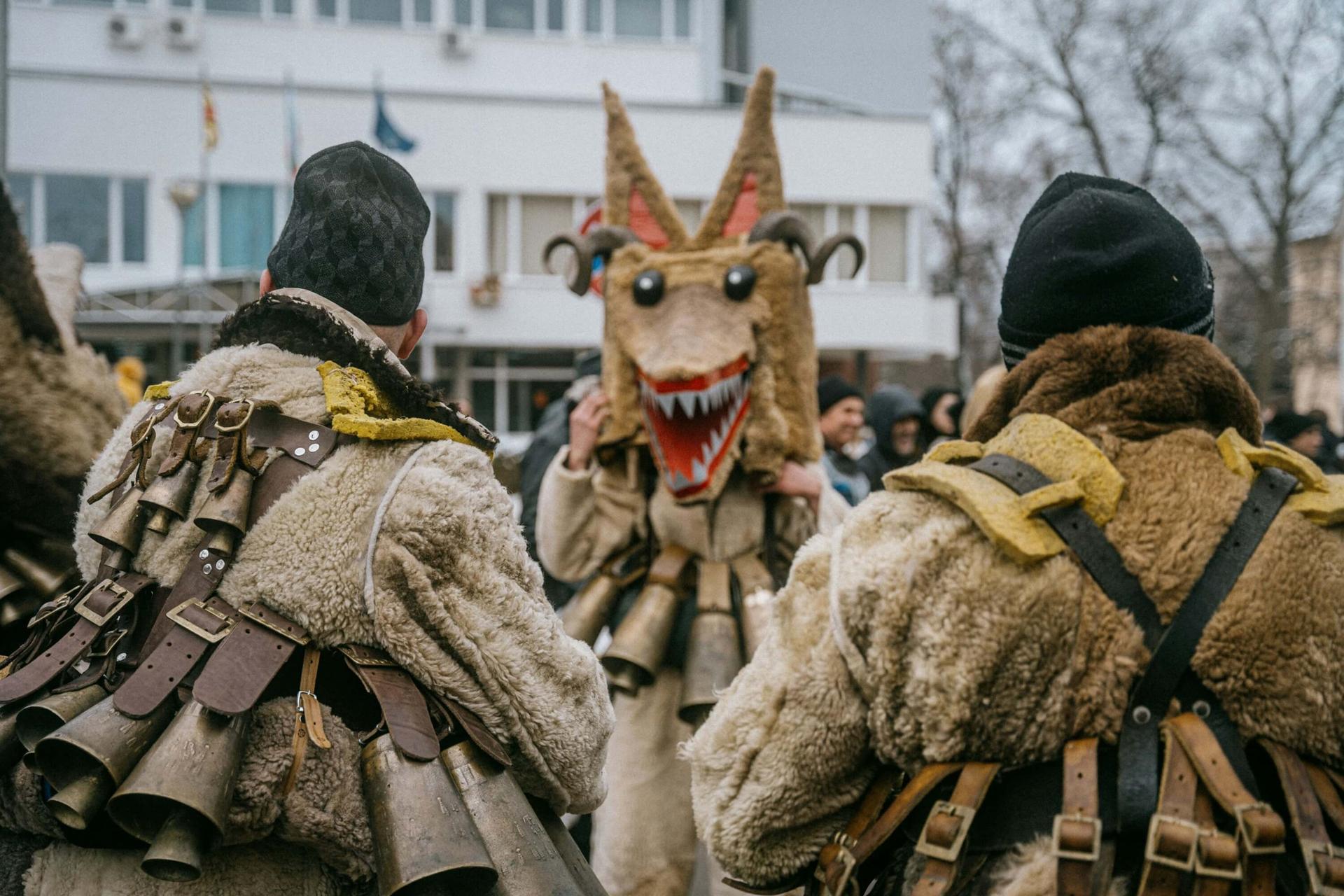
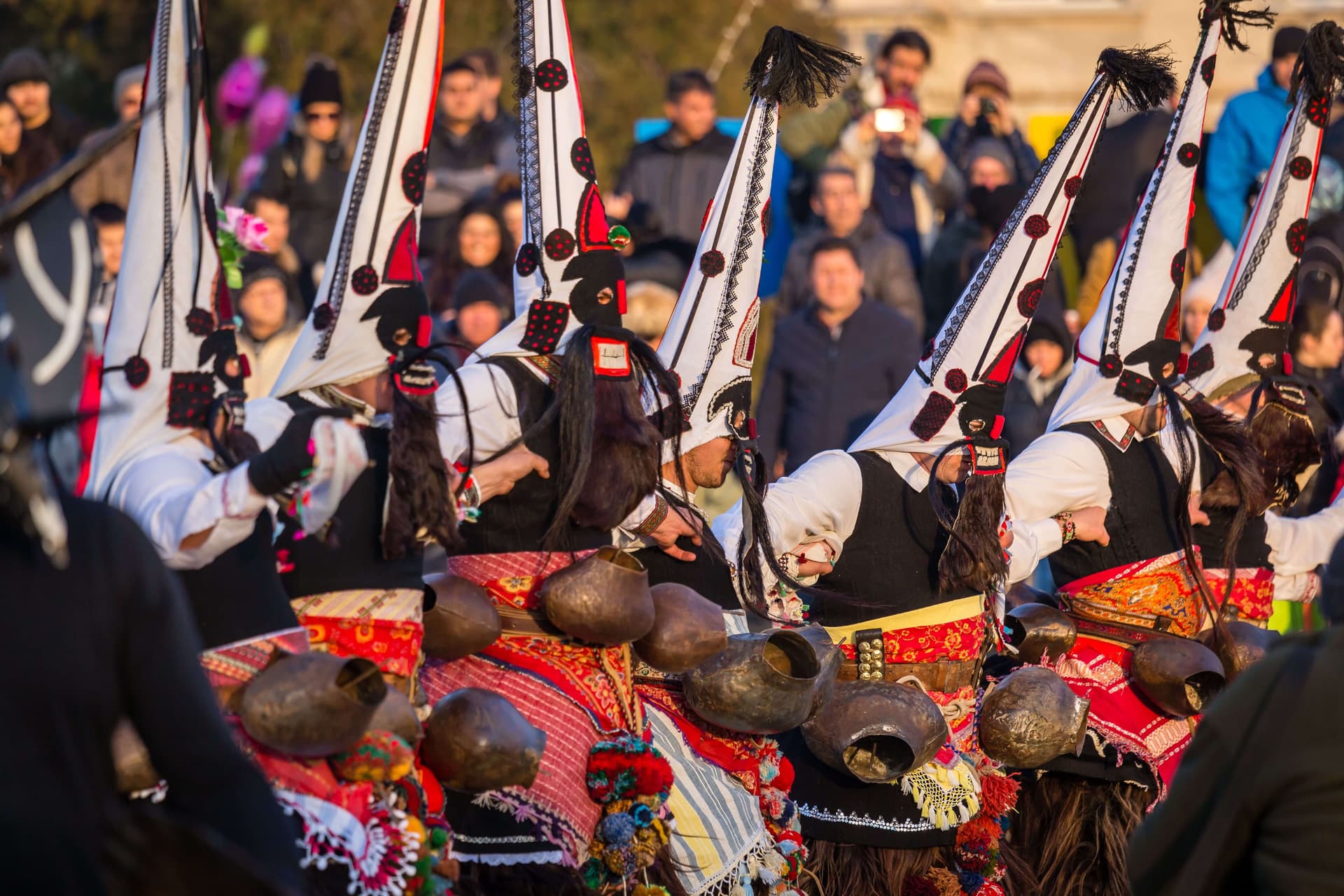
On Epiphany in Kalofer, about 200 local men in folk costume walk down from the church to the Tundzha with bagpipes and drums, wade in up to their waists and link arms in several circles of horo, Bulgaria's line and circle dance. The priest throws the Epiphany cross into the river.
- Nobody fights for the cross. Unlike other Bulgarian towns, Kalofer has no race for it: whoever pulls the cross out hands it to the youngest dancer in the horo.
- Locals go in first. Only Kalofer men in costume enter the icy water first. Visitors may join only after the ritual is over and the locals have left the river.
- For health. Taking part is believed to bring health for the whole year.
- How old is it? The horo and cross ritual in the Tundzha was revived in 1990, at the spot where, locals say, it was held as far back as Ottoman times.
As an onlooker you don't need to do anything special: there is no ticket, and nobody expects you to know the customs. Just keep out of the way of the procession as it walks down to the river.
How do you get to Kalofer in time for 6 January?
Kalofer is about 2 hours by car from Sofia and an hour from Plovdiv, but because of the early start the easiest plan is to arrive on the evening of 5 January and sleep in Kalofer or Karlovo.
| From | Distance | By car |
|---|---|---|
| Karlovo | ~18 km | ~20 minutes |
| Plovdiv | ~70 km | ~1 hour |
| Sofia | ~155 km | ~2 hours |
- Flying in: Sofia Airport is the usual arrival; from there it is about 2 hours' drive, or a train towards Karlovo — see our Sofia Airport to city centre guide for getting into town first. Plovdiv Airport is closer but has far fewer flights.
- By car: along the Sub-Balkan road, paved all the way into town. Early January mornings can be icy, so leave time in hand and use a car that is ready for winter; winter tyres are recommended for mountain roads.
- By train: Kalofer is on the Sofia–Karlovo–Burgas line, but the station is about 3 km from the centre. Check the timetable with BDZ for a train that arrives in time for a 7:45 horo; otherwise take the train the day before and stay overnight.
- By bus: buses run from Plovdiv, Karlovo and Kazanlak a few times a day; timetables change, so check before you travel.
Where do you park on Epiphany?
Parking in Kalofer is free all year, but on 6 January don't count on driving right up to the river. With so many visitors, traffic restrictions and closed streets are possible.
- Park early in town and walk to the church and the bridge.
- If you are staying in Kalofer, leave the car at your guesthouse and walk — the centre is small.
- Set off in good time: traffic jams are possible on the holiday morning.
Can you watch the horo with children?
Children can watch the Kalofer horo, but with care: there is no fence or railing along the river, and it is easy to slip towards the water by accident and get hurt. We don't want to alarm anyone — simply don't push to the front row, especially with children, and stand a little further back, where you can still see well.
- Dress children warmly. All the waiting is outdoors, early in the morning, in the cold and often on wet or icy ground.
- Shoes with good grip for everyone — the bank and the streets by the river can be slippery.
- Leave the pushchair behind — in the crowd and on uneven ground it is easier to carry a small child.
What can you see in Kalofer after the horo?
The Kalofer horo is over early in the morning, and the Botev museum, the lace centre and Kalofer Men's Monastery are all open on 6 January. Hours and prices:
- Hristo Botev National Museum — open daily, in winter 08:30–17:00 (last tickets 16:30). Tickets €3 adults, €2 students and pensioners (prices from September 2026). Botev is Bulgaria's best-known revolutionary poet, and this is his family home, rebuilt.
- Kalofer Lace Creative Centre — free entry; on Wednesdays usually 09:00–18:00, though hours can change. It is inside the museum's memorial complex.
- Kalofer Men's Monastery — about 7 km north, daily 8:00–17:00 in winter, free entry. The road up the valley is narrow and winding and often icy in winter.
More on each place is in our Kalofer travel guide.
Where should you stay?
Accommodation in Kalofer is mostly guesthouses and apartments, around €50 a night for two (October 2026). On Epiphany the town fills up, and guesthouses for 6 January are booked months — often a year — in advance, so book as early as you can. Some guesthouses take cash only, so carry some euros.
If Kalofer is full, Karlovo is 20 minutes away with more choice, around €50–60 a night for two. The trade-off is an even earlier start and hunting for a parking space when the town is already filling up.
We may earn a commission if you book through the links in this guide. It costs you nothing extra. How affiliate links work
Compare places to stay in Kalofer or in Karlovo on Booking.com for your dates.
Search places to stay
This Booking.com box loads only with cookies. It comes through Travelpayouts, our affiliate partner, and turns on Google Analytics, which shows us which guides are useful.
What is nearby?
Karlovo, Sopot and Kazanlak are 20–40 minutes' drive from Kalofer and fit easily into the afternoon after the horo.
- Karlovo (~18 km, ~20 min) — birthplace of Vasil Levski and home of the Suchurum waterfall.
- Sopot (~23 km, ~25 min) — the hometown of the writer Ivan Vazov.
- Kazanlak (~40 km, ~40 min) — the UNESCO-listed Thracian tomb.
What should first-timers know?
We have been to the horo in Kalofer, and this is what we would tell someone going for the first time:
- It is crowded. The good spots on the bank go early — if you turn up at the last minute, you will be watching from behind the crowd.
- The spot is not always the same as last year. If you read about Sivcha or another bridge, don't worry — follow the procession.
- The car is more of a burden than a help. It is easiest when the car is parked from the night before and you walk to the river.
- Don't go into the water before the locals, and don't expect a fight for the cross — in Kalofer the cross goes to the youngest dancer.
Our Tip
Arrive in Kalofer on the evening of 5 January, leave the car at your guesthouse and be on the bank of the Tundzha by about 7:30 the next morning. Don't push to the front row — there is no railing at the river, and the view is good from the second row too. After the horo, warm up with a hot drink and head to the Botev museum, which is open on Epiphany as well.
Frequently Asked Questions
What time is the Epiphany horo in Kalofer?
The men's horo in the Tundzha in Kalofer usually starts at about 07:45–08:00 on 6 January. The liturgy in the church of St Archangel Michael begins at 04:30, and the procession leaves for the river at about 07:20. Times can shift slightly, so be on the riverbank by about 7:30.
Where exactly in Kalofer is the ice horo danced?
The ice horo in Kalofer is danced in the Tundzha River at the Church Bridge (Cherkovski Most), below the church of St Archangel Michael. In recent years the Sivcha area, where a weir is built in the river, is also mentioned, so the exact spot can move a little with the water. The safest plan is to follow the procession from the church.
Can visitors go into the river at Kalofer on Epiphany?
In Kalofer only local men in folk costume go into the icy Tundzha first. Visitors may go in only after the ritual is over, the cross has been retrieved and the Kalofer men have left the river.
Do you need a ticket to watch the Kalofer Epiphany horo?
No. Watching the men's horo in Kalofer on Epiphany is free, with no tickets and no booking. Only accommodation costs money, and Kalofer's guesthouses for 6 January are booked months in advance, so book as early as you can.
Is it safe to watch the Kalofer horo with children?
Yes, if you are careful. There is no fence or railing along the river in Kalofer and it is easy to slip towards the water by accident, so don't push to the front with children. Stand a little further back, where you can still see well, and dress children warmly.
This guide covers 6 places
Like these guides?
Add Mestala as a preferred source in Google