

Bulgarian Wine & Melnik: Top Wineries & Travel Guide
In this guide▾
Winemaking along the lands of modern-day Bulgaria spans more than 6,000 years. The ancient Thracians were renowned masters of viticulture, leaving behind elaborate gold and silver drinking vessels that celebrate early wine culture. By the 1980s, Bulgaria had grown into one of the world's largest commercial wine exporters.
Today, Bulgarian winemaking is experiencing a dynamic renaissance. Dozens of modern boutique wineries offer exceptional wine-tasting experiences, focusing on high-quality production and unique indigenous grape varieties that you won't find anywhere else.
In this guide, we explore Bulgaria's five main viticultural regions, essential native grapes to taste, and Melnik — Bulgaria's smallest town and its most legendary wine-tasting destination.
🍇 The 5 Viticultural Regions of Bulgaria
| Viticultural Region | Climate Profile | Key Grape Varieties |
|---|---|---|
| Thracian Lowlands | Warm Continental | Mavrud, Cabernet Sauvignon, Merlot, Syrah |
| Struma River Valley | Mediterranean | Broad-leaved Melnik, Melnik 55, Rubin |
| Danubian Plain | Moderate Continental | Gamza, Chardonnay, Sauvignon Blanc |
| Black Sea Coast | Maritime | Dimyat, Traminer, Sauvignon Blanc, Riesling |
| Rose Valley | Sheltered, Mild | Red Misket, Muscat Ottonel, Sparkling wines |
The two essential regions for wine travelers are the Thracian Lowlands around Plovdiv (producing roughly a third of the country's wine) and the Struma River Valley in the sunny southwestern corner — a warm, Mediterranean-influenced district home to Bulgaria's most distinctive full-bodied red wines.
🍷 Distinctive Indigenous Bulgarian Grapes
To experience true local flavor, we recommend seeking out wines crafted from native autocthonous grape varieties:
- Mavrud: The flagship red grape of the Thracian Lowlands. It produces deep ruby, full-bodied wines with rich tannins and exceptional aging potential in oak barrels.
- Broad-leaved Melnik (Shiroka Melnishka Loza): Grown exclusively in the Struma Valley. This ancient grape yields complex red wines with elegant aromas of dried fruits, tobacco, leather, and spices. Local legend holds that Winston Churchill ordered barrels of Melnik wine every year.
- Rubin: A unique Bulgarian crossing created in 1944 by pairing Nebbiolo and Syrah. It produces dark, velvety red wines with ripe black fruit flavors.
- Gamza: The traditional light-bodied red grape of Northern Bulgaria (Danubian Plain), yielding fresh, fruit-forward wines similar to Hungarian Kadarka.
For white wine lovers, make sure to taste the aromatic Red Misket (Cherven Misket) or the crisp, refreshing Dimyat.
📍 Melnik: Bulgaria's Smallest Historic Wine Town
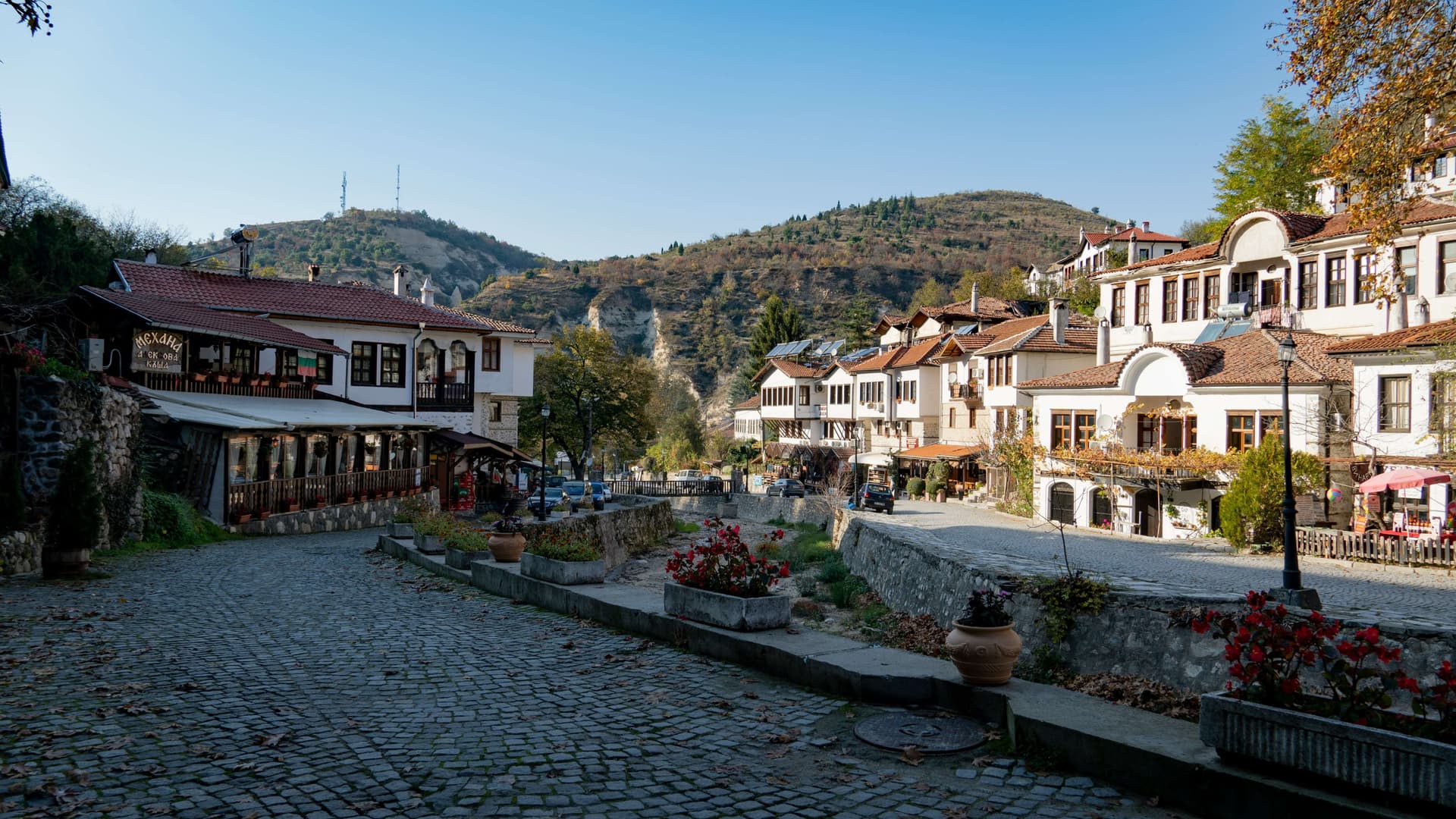
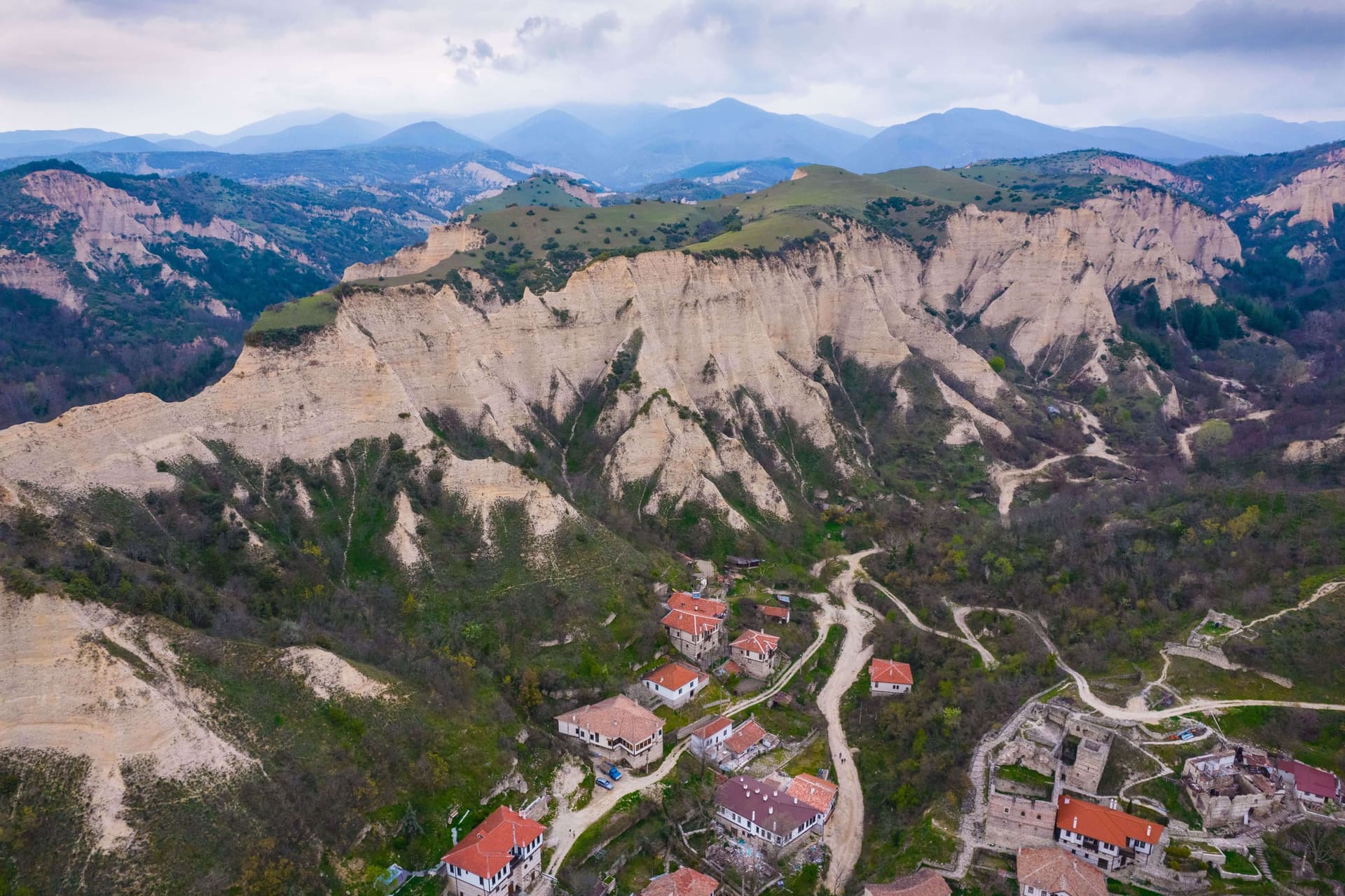
With a permanent population of around 200 residents, Melnik is officially the smallest town in Bulgaria. Tucked at the foot of the Pirin Mountains, the town is enclosed by the stunning Melnik Sandstone Pyramids.
A bustling trade center in medieval times, Melnik's charm today lies in its preserved National Revival architecture, cobbled lanes, ruined hilltop churches, and cool underground cellars carved directly into soft sandstone rock.
🚗 Getting to Melnik: Transport & Parking Tips
| From Location | Driving Distance | Approximate Drive Time |
|---|---|---|
| Sandanski | ~20 km | ~25 minutes |
| Blagoevgrad | ~90 km | ~1 hour 15 minutes |
| Sofia | ~180 km | ~2 hours 15 minutes |
| Plovdiv | ~250 km | ~3 hours |
| Thessaloniki (Greece) | ~150 km | ~2 hours |
The A3 Struma Highway provides a fast, modern drive from Sofia. Renting a car is highly recommended, as public transit connections from Sandanski to Melnik operate infrequently (check our getting around Bulgaria transport guide).
🅿️ Parking Advice:
Cars must be left in the dedicated car park at the entrance to the town. Melnik's main cobbled lane follows the dry riverbed and functions as a pedestrian zone — driving through it is not recommended.
🍇 Top Things to Do in Melnik
1. Explore Kordopulov House & Sandstone Cellars
The Kordopulov House is the largest National Revival period mansion in the Balkans. Built in 1754 for a wealthy Greek wine merchant, it features stained glass windows, carved wooden ceilings, and an extensive underground tunnel network carved into the rock face where thousands of liters of wine were once aged.
- Tickets & Pricing: Entry costs €5 (9.78 lv), and tasting packages start at €14 (27.38 lv).
- Opening Hours: The house is open daily May–September; Wednesday–Sunday in March, April, October, and November; and Thursday–Sunday from December–February.
- Stamps: The house is one of Bulgaria's 100 National Tourist Sites, so bring your stamp book if you collect them.
2. Wine Tasting at Local Boutique Wineries
The countryside surrounding Melnik (including villages like Katuntsi, Harsovo, and Kromidovo) features outstanding family-owned estate wineries (such as Villa Melnik, Orbelus, and Zornitza Estate) offering guided cellar tours and scenic vineyard tastings.
3. Visit Rozhen Monastery
Don't miss Rozhen Monastery. Located just 6 km from Melnik, it is accessible via a 10-minute drive or a scenic 90-minute hiking trail through the sandstone pyramids. It is the largest medieval monastery in the Pirin region, famous for its 16th-century frescoes, woodcarvings, and miraculous icon of the Virgin Mary.


🛏️ Where to Stay: Melnik vs Sandanski
- Melnik (Authentic Charm): Stay in a traditional family-run guesthouse inside a restored Revival mansion to experience the town's quiet evening atmosphere. A 1-night stay is sufficient to explore Melnik and its main sights.
- Sandanski (Wellness & Luxury): Located just 20 minutes away, Sandanski is a major spa resort town featuring luxury hotels and hot mineral pools (see our Bulgarian thermal spa guide).
🗓️ Best Time for a Wine Road Trip
- Autumn (September – October): The absolute peak season for wine travel! The grape harvest is underway, daytime temperatures in the Struma Valley remain warm, and regional estate cellars are filled with activity. Some cellars open the picking itself to visitors — see our Grozdober harvest guide for regional timings and booking details.
- 14 February (Trifon Zarezan): The traditional Vinegrower's Day is celebrated passionately across the region with ceremonial vine pruning, folk music, and open-house wine tastings (see Bulgarian festivals and traditions).
- Spring: Mild, sunny, and lush green — ideal for sightseeing and nature walks.
🧭 Suggested Regional Itineraries
Combine your trip to Melnik with nearby attractions in Southwestern Bulgaria:
- Culture & Nature: Melnik – Rozhen Monastery – Rupite (memorial grounds of Prophet Vanga) – Samuil's Fortress.
- Mountains & Wine: Pair a weekend wine trip in Melnik with mountain hiking in Pirin or skiing in Bansko (located 90 minutes north).
- Bulgaria–Greece Road Trip: Located only 2 hours from Thessaloniki, Melnik is a convenient stop when driving toward northern Greece.
- Stone Villages & Hot Springs: Continue east to Gotse Delchev and the Mesta valley — Roman Nicopolis ad Nestum, the stone villages of Kovachevitsa and Leshten, and Ognyanovo's hot springs.
Explore our 10-day grand tour itinerary and hidden gems guide.
Rich history, unique local grape varieties, and breathtaking landscapes. Plan your wine journey with Mestala.com.
This guide covers 3 places
Want more Mestala in your Google results?
Add mestala.com as a preferred source and our guides will show up more often when you search. Requires a Google account.
Frequently Asked Questions
Is Bulgaria a good destination for wine travel?▾
Yes, absolutely! Winemaking in Bulgaria dates back over 6,000 years to the ancient Thracians. Today, the country features modern boutique wineries across five distinct wine regions, offering high-quality, affordable wines made from international grapes alongside unique native varieties like Mavrud, Broad-leaved Melnik, Rubin, and Gamza.
Where is Melnik and why is it famous for wine?▾
Melnik is Bulgaria's smallest officially recognized town, tucked among the dramatic Melnik Sandstone Pyramids in the sunny Struma Valley near the Greek border. Famous for centuries for its rich, full-bodied red wines made from the Broad-leaved Melnik vine, it features historic wine cellars carved directly into soft sandstone cliffs.
How do you get to Melnik from Sofia?▾
Melnik is located about 180 km (approx. 2.5 hours) south of Sofia via the A3 Struma Highway toward Kulata. Renting a car is the most efficient travel option, as it allows you to explore surrounding boutique estate wineries and nearby historic sights easily.
What is there to do in Melnik besides wine tasting?▾
Beyond cellar tastings, you can explore the historic Kordopulov House (the largest Revival mansion in the Balkans with vast underground wine tunnels), hike to the ruins of Slav's Fortress among the sandstone pyramids, or visit the medieval Rozhen Monastery just 6 km away.
Which are the main wine regions of Bulgaria?▾
Bulgaria is officially divided into five viticultural regions: Thracian Lowlands (famous for Mavrud), Struma River Valley (home of Melnik wines), Danubian Plain (known for Gamza), Black Sea Region (exceptional white wines), and Rose Valley (Red Misket).
You might be interested in
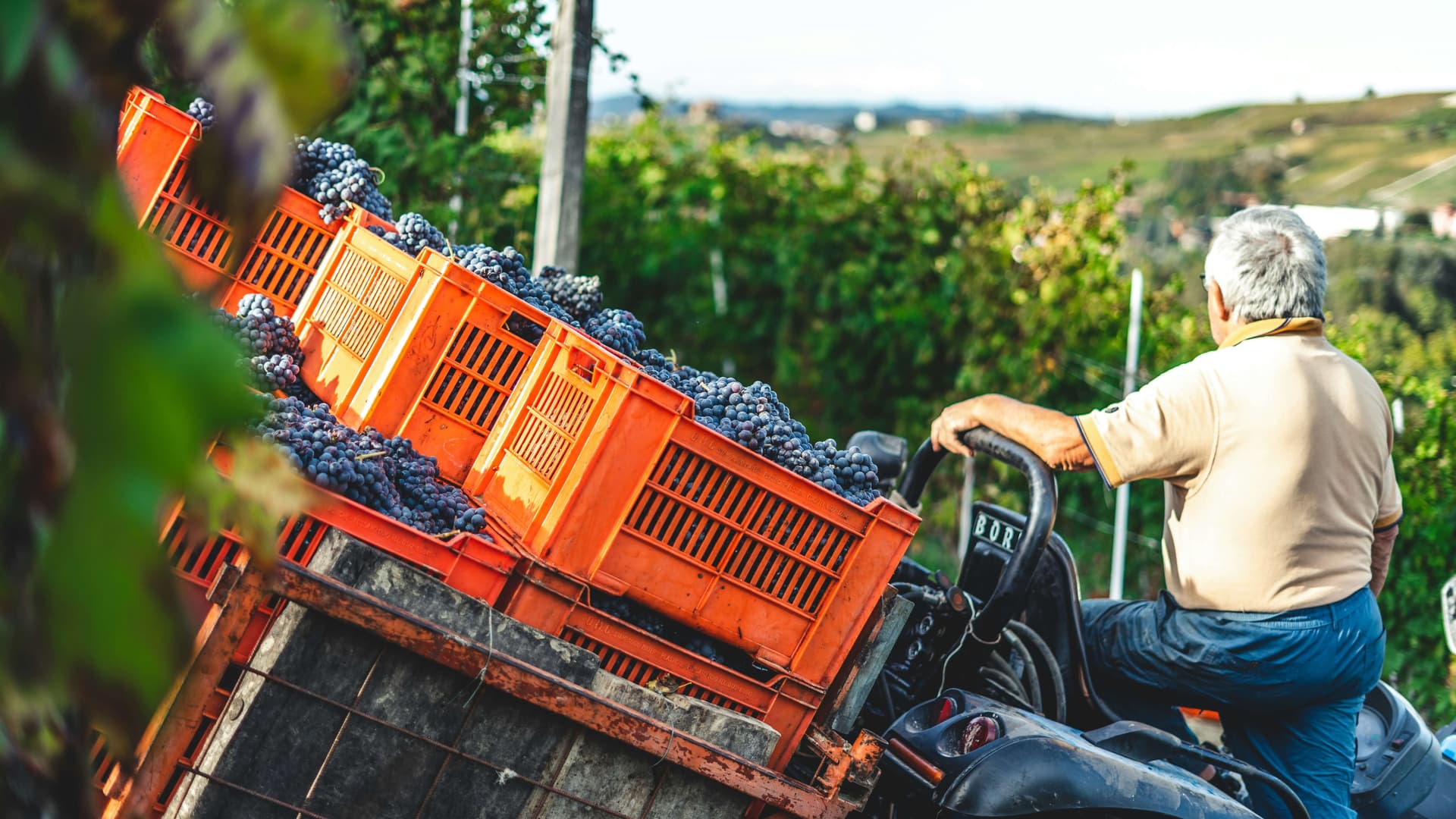
Grozdober: Bulgaria's Grape Harvest Season & How to Join It
When the Bulgarian grape harvest happens, which wine regions to visit in September and October, how a harvest day works and what to book in advance.
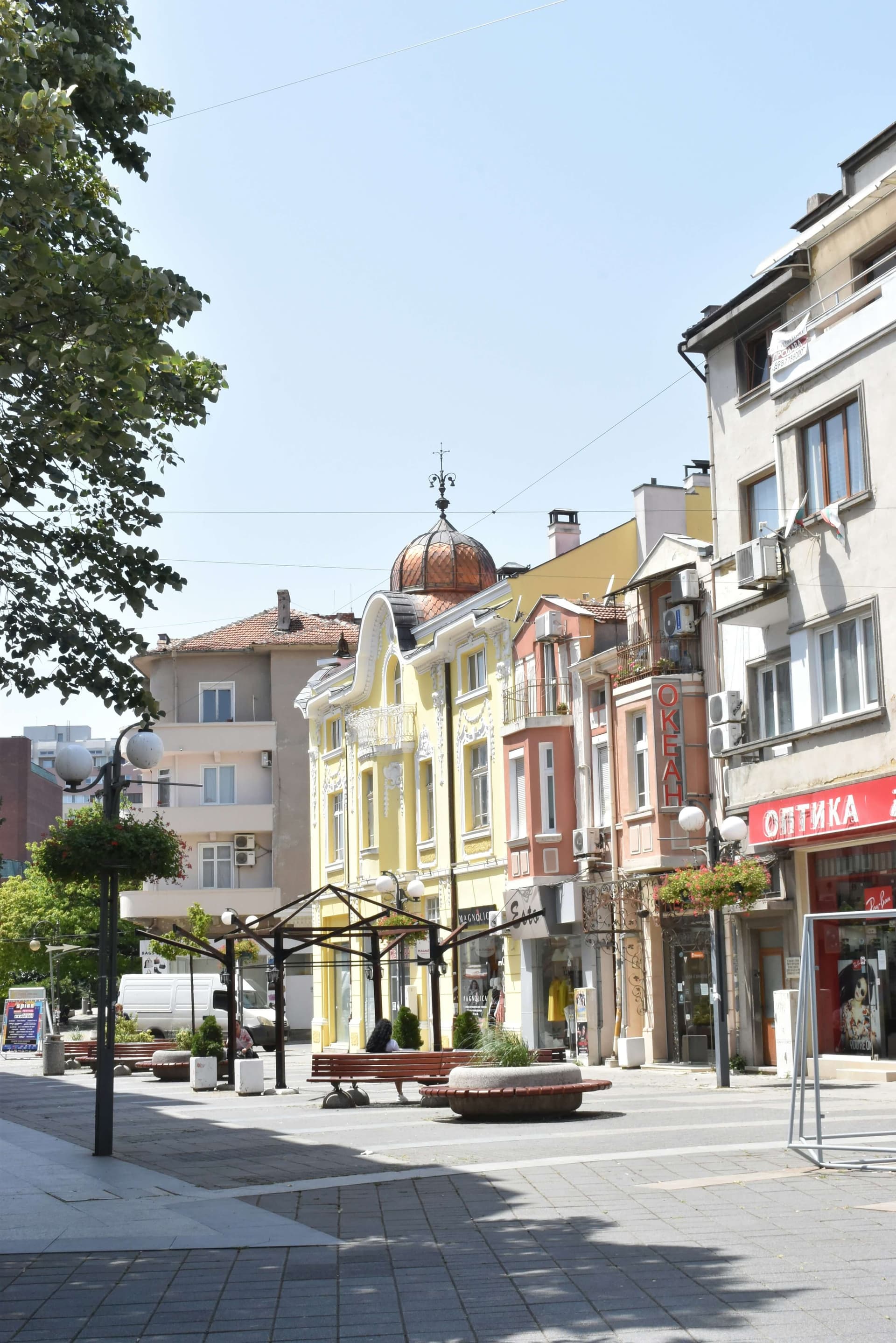
Where to Eat in Burgas: Best Areas, Seafood & Prices
A complete food guide to Burgas by area: the Sea Garden promenade, the pedestrian center, Krasnodar market, authentic Black Sea seafood, prices, and late-night tips.

Top Things to Do in Gabrovo: Bulgaria's Capital of Humour (Travel Guide)
Discover Gabrovo, Bulgaria: Visit the House of Humour and Satire, Sokolski Monastery, Racho the Blacksmith, and Uzana in the geographic centre of Bulgaria.
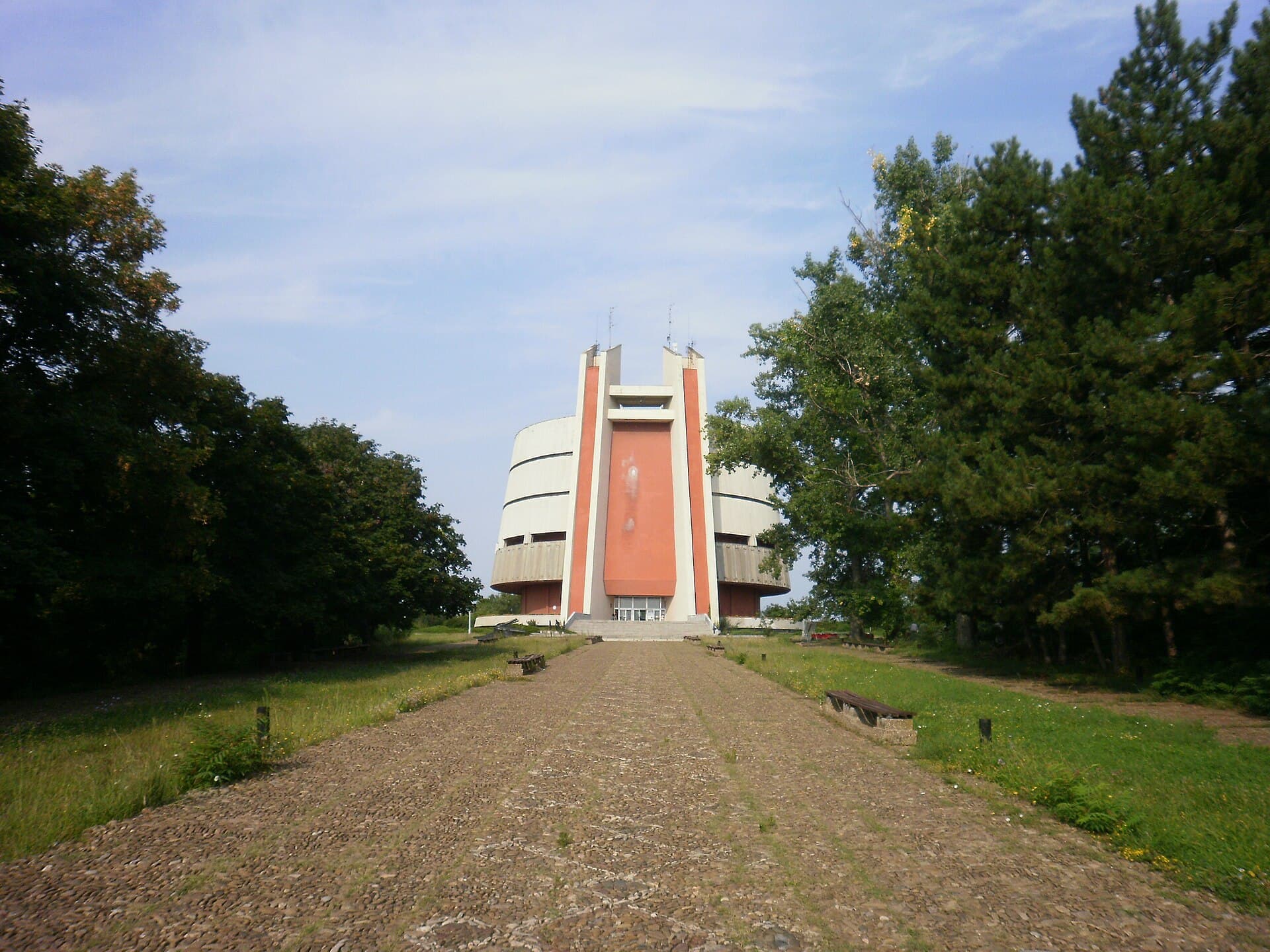
Pleven Panorama & Sights: Visiting Bulgaria's Historic Siege Site
A complete guide to Pleven: Explore the Pleven Panorama, learn about the historic 1877 siege, visit St. George Mausoleum, and relax in Kaylaka Park.