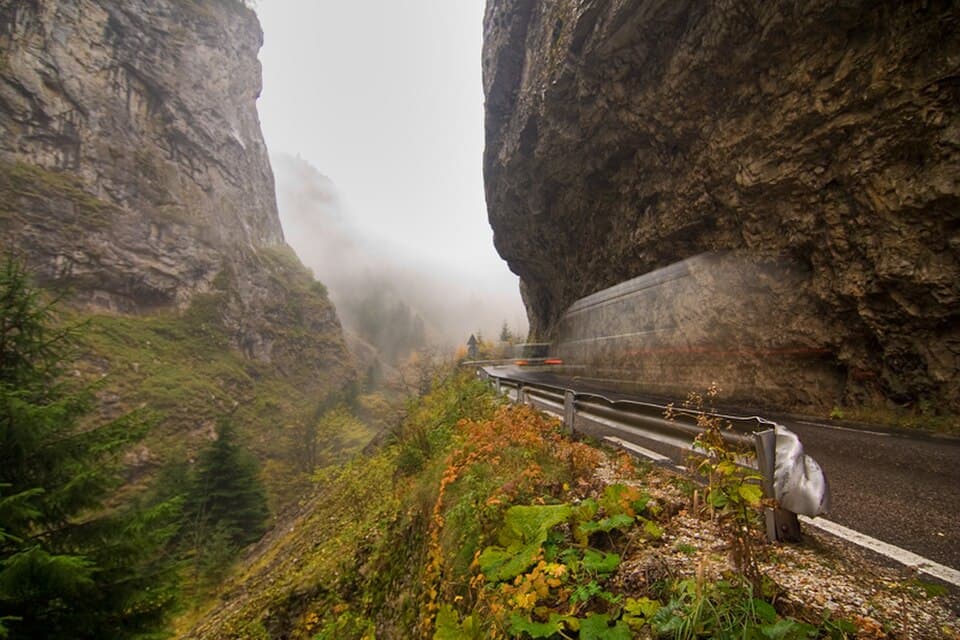
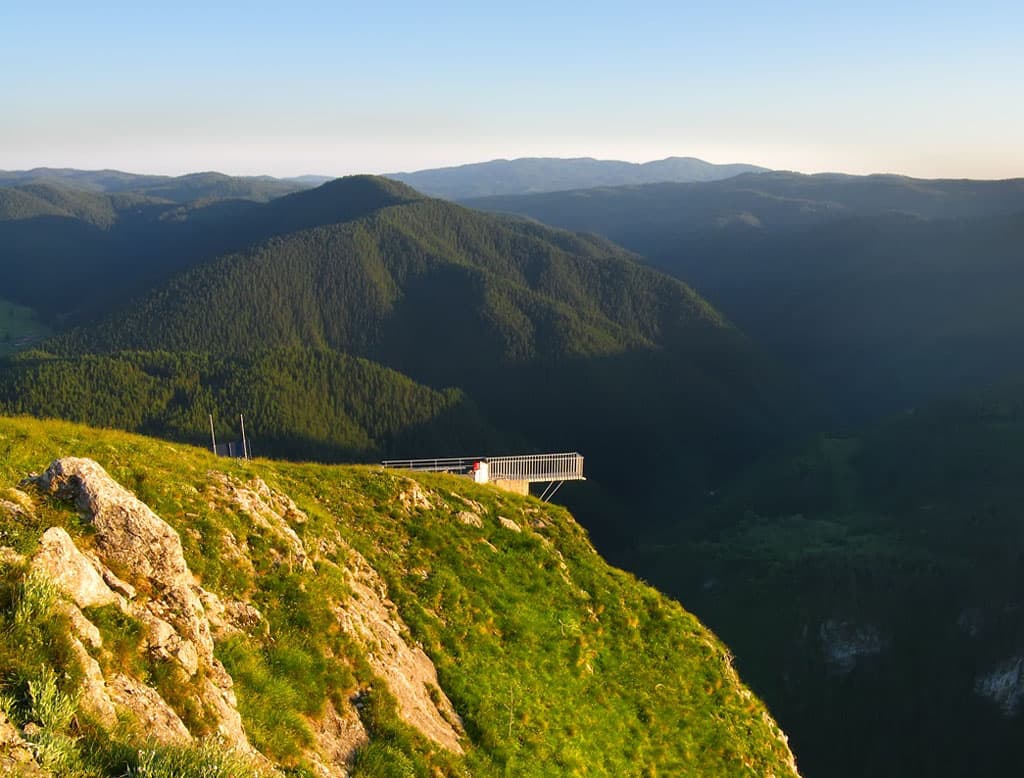
The Wonderful Bridges, frequently designated across geographical literature as the Rock Bridges, and historically known by the Ottoman title Erkyupriya, represent a monumental and spectacular rock phenomenon situated in Southern Bulgaria. This unique natural monument is positioned within the scenic karst valley of the Erkyupriya River in the Western Rhodope Mountains, rising at an altitude of 1450 meters above sea level right at the base of the majestic Great Persenk Peak. Within the official state register of protected territories and conservation zones in Bulgaria, the site is integrated under the denomination THE WONDERFUL BRIDGES - ER KYUPRIYA, holding the strict legal status of a protected natural landmark. The rock complex is listed under a designated honorary position within the prestigious 100 National Tourist Sites compiled by the Bulgarian Tourist Union: position number 85, which covers the Great Perelik Peak and the Wonderful Bridges, hosting the official validation stamp for traveler collection books. Geological Origin and Hydrological System The sculpting of the Wonderful Bridges is a complex and long-term geological transformation. They were forged due to the powerful hydraulic erosion driven by a high-volume mountain river active during ancient historical epochs. The water current systematically dissolved and expanded the structural fissures cutting through the heavy marble strata, shaping a deep subterranean water cave. Over millennia, under the heavy toll of environmental forces, the ceiling of this underground gallery thinned significantly at specific sections and completely collapsed under its own mass. Historians and geologists estimate that the massive stone blocks resulting from this structural failure were subsequently cleared and washed away by the turbulent river currents. As a result of this intensive karst erosion, two iconic marble bridges survive to this day: - The Great Bridge: This is the first and most imposing bridge along the trail. Its structural width measures approximately 15 meters at its widest segments, while its overall length extends close to 100 meters. The monumental profile incorporates three natural arches, with the largest span boasting a vertical height of 45 meters and a horizontal width of 40 meters. - The Small Bridge: Situated 200 meters downstream from the Great Bridge, tracking the natural flow of the mountain river. This bridge remains completely impassable for hikers. Its total length amounts to 60 meters coupled with an impressive height of 50 meters, while the clear height of its individual arch span alone measures 30 meters. -The Third Bridge: Positioning immediately past the Small Bridge is a very small third bridge. It functions as a specialized ponor cave, into whose dark cavern the waters of the Erkyupriya River disappear entirely underground, navigating subterranean channels before returning to daylight 3 kilometers away in the lower plain. Ecological Profile and Tourist Infrastructure The entire mountain territory surrounding both marble bridges is enveloped by thick, ancient coniferous forests, consisting predominantly of tall spruce trees. Both rock arches have been modernized, secured, and fully adapted to meet the demands of commercial ecological tourism. Public passage is freely and safely permitted both across the upper ridges on top of the bridges and down below beneath their colossal vaults. Numerous subterranean caves have been explored within the perimeter of the rock phenomenon, but the vast majority remain unsuitable and unsafe for casual travelers, as they lack interior electrical illumination and protective safety handrails. To accommodate travelers, two major mountain lodges operate nearby: the Wonderful Bridges Hut and the Rock Bridges Hut. Both mountain bases are managed and administered by the Studenets Tourist Society based in the town of Chepelare, providing quality conditions for alpine hiking, recreation, and overnight lodging amidst the wilderness. Vandalism Challenges and Legal Financial Sanctions Regrettably, following the official establishment of the bridges as a popular travel destination, a harmful and primitive custom emerged in the locality. A significant percentage of passing travelers, upon walking beneath the vault of the Great Bridge, illegally engrave or sketch their names utilizing pieces of charcoal directly onto the thick marble walls. Even several prominent public figures have left their marks across the unique rock formations at the base of the Great Bridge, demonstrating poor personal civic behavior. According to active environmental protection legislation within the Republic of Bulgaria, any writing, sketching, damaging, or engraving of inscriptions within the official boundaries of a declared natural landmark is strictly prohibited. The legally mandated financial fine for this administrative violation is set at a very high bracket: from 500 to 5000 leva. Regularly organized groups of volunteers and environmentalists periodically clean the masonry faces to erase the vandalism, and state authorities enforce heavy fines; nevertheless, this destructive habit continues to damage the rock phenomenon. Geographical Location and Highway Accessibility The rock formation is located deep within the Rhodope Mountains, positioned several kilometers from the historic mountain village of Zabardo. An automobile highway links the main regional grid directly to the protected territory. Following the official junction splitting from the primary road leading to Zabardo village, the sector extending to the bridges covers a length of roughly 8 kilometers. It is critical for drivers to note that this final section of the road is in relatively poor technical condition; the asphalt is narrow, resulting in difficult vehicle passing maneuvers, the shoulders are heavily eroded by rainfall at specific intervals, and the driving surface carries serious risks for vehicles featuring very low ground clearance.

Smolyan
0.9 km away
Smolyan
2.2 km away
Smolyan
2.5 km away
Smolyan
2.6 km away
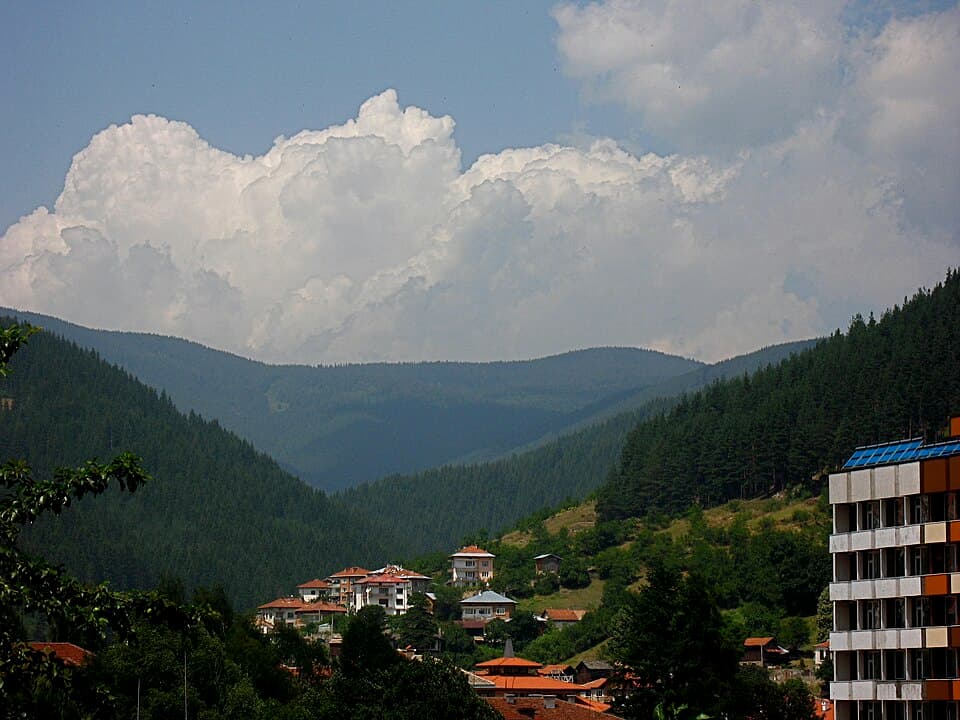
A practical guide to Chepelare: the Mechi Chal ski area, Snezhanka Peak, getting there from Plovdiv, parking, where to stay, and why it beats Pamporovo on price.
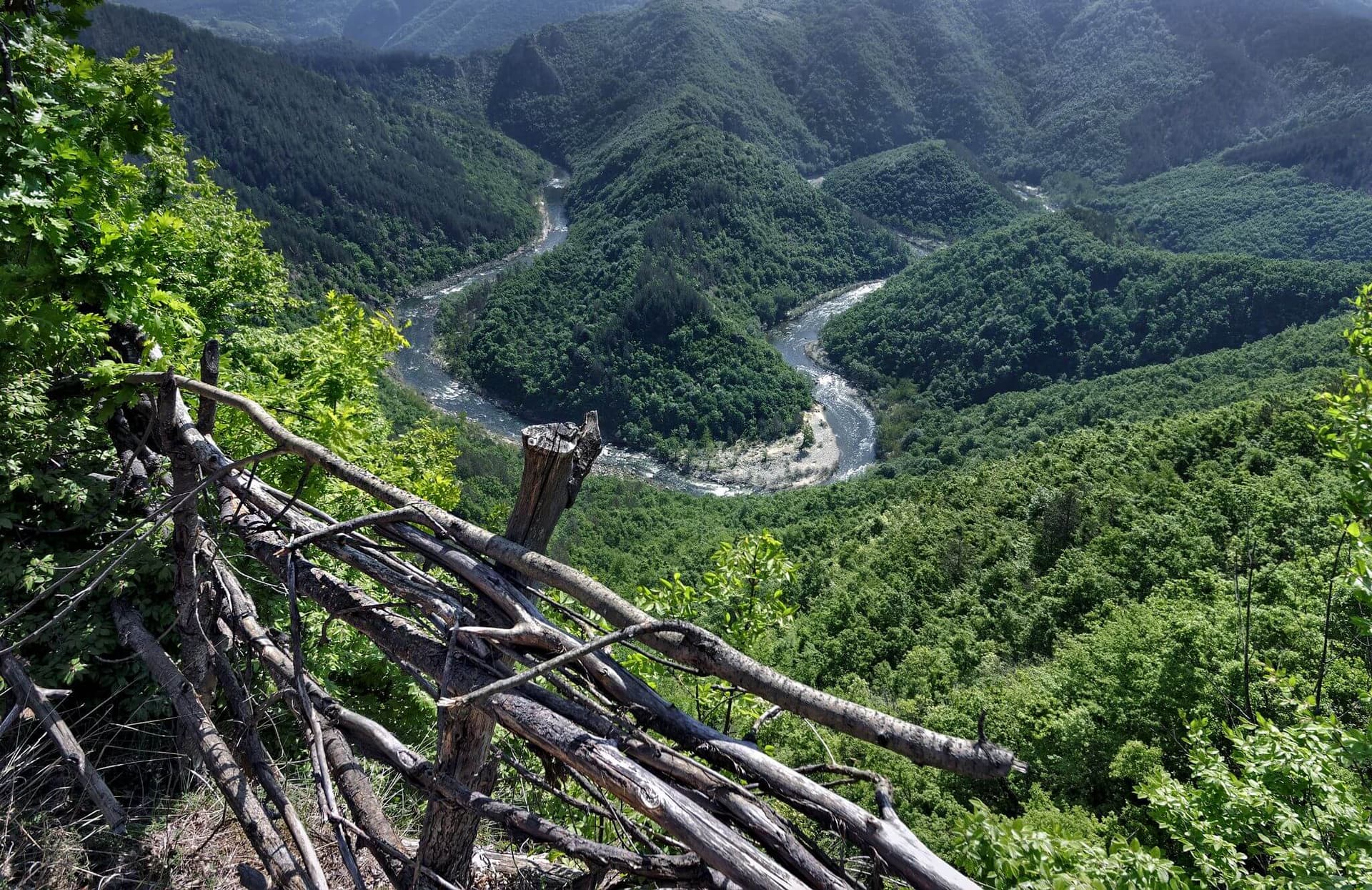
Everything you need to plan a Rhodope Mountains trip: Smolyan, Pamporovo, Trigrad Gorge, Shiroka Laka, Perperikon, caves, spa towns, food, itineraries and when to go.
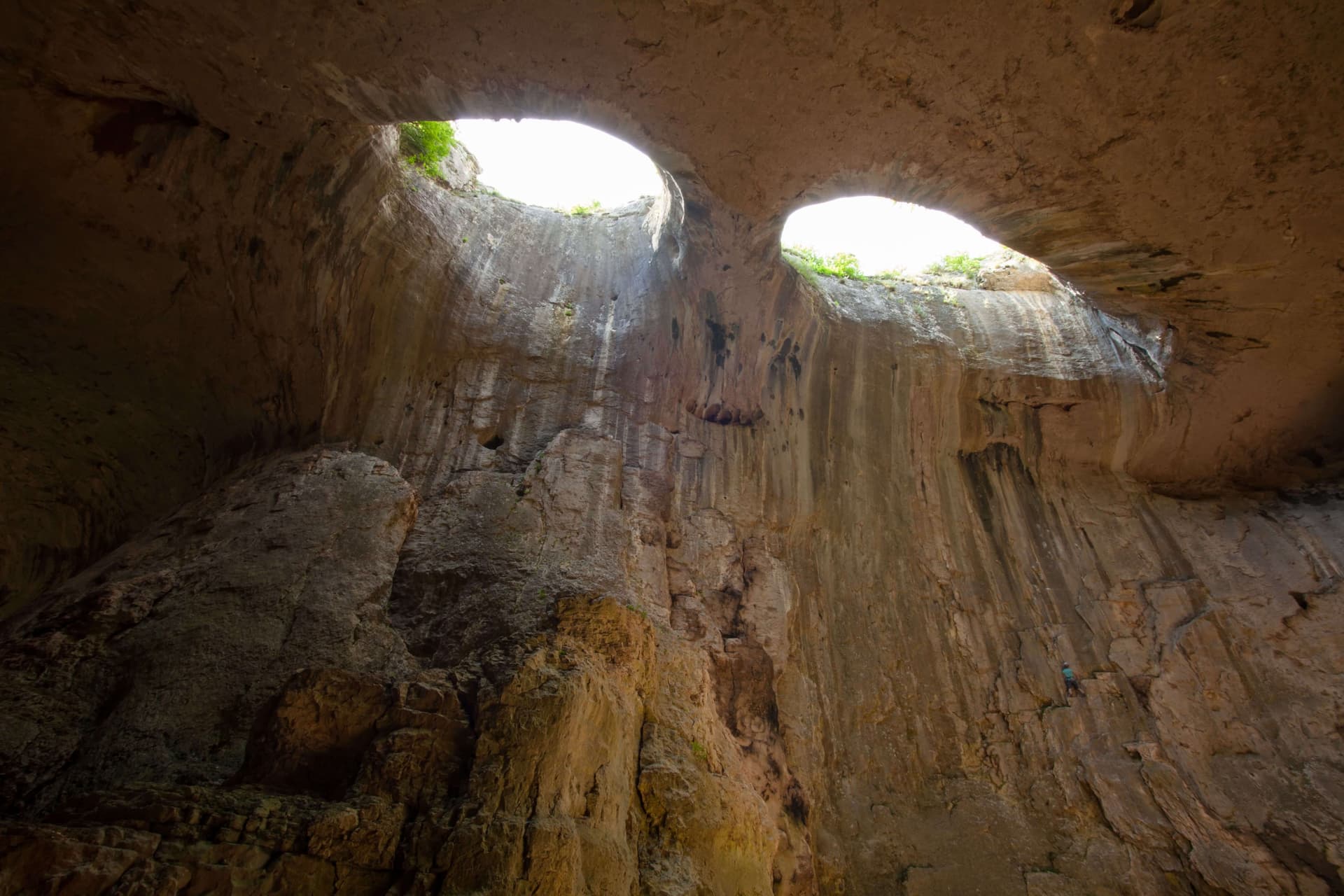
Discover Bulgaria's top natural wonders: Prohodna Cave ('God's Eyes'), Krushuna Waterfalls, Belogradchik Rocks, earth pyramids, and Pobiti Kamani.
Marvelous Bridges is located in Smolyan, Bulgaria.
Marvelous Bridges is most easily reached by car. Use the coordinates above to navigate, or open the location in OpenStreetMap or your preferred maps app for turn-by-turn directions. Public transport options vary by region — for remote destinations a rental car gives the most flexibility.
Marvelous Bridges can be visited year-round. Spring and autumn offer the most pleasant conditions for exploring, with mild temperatures and fewer crowds. Summer is ideal for photography and longer day trips; winter visits are possible but weather can limit access at some sites.
Most natural landmarks in Bulgaria are freely accessible and open year-round, though some sites have entrance fees or require a guide. Wear sturdy footwear and bring water, as the terrain can be uneven. Respect any protective barriers and stay on marked paths to preserve the site.