

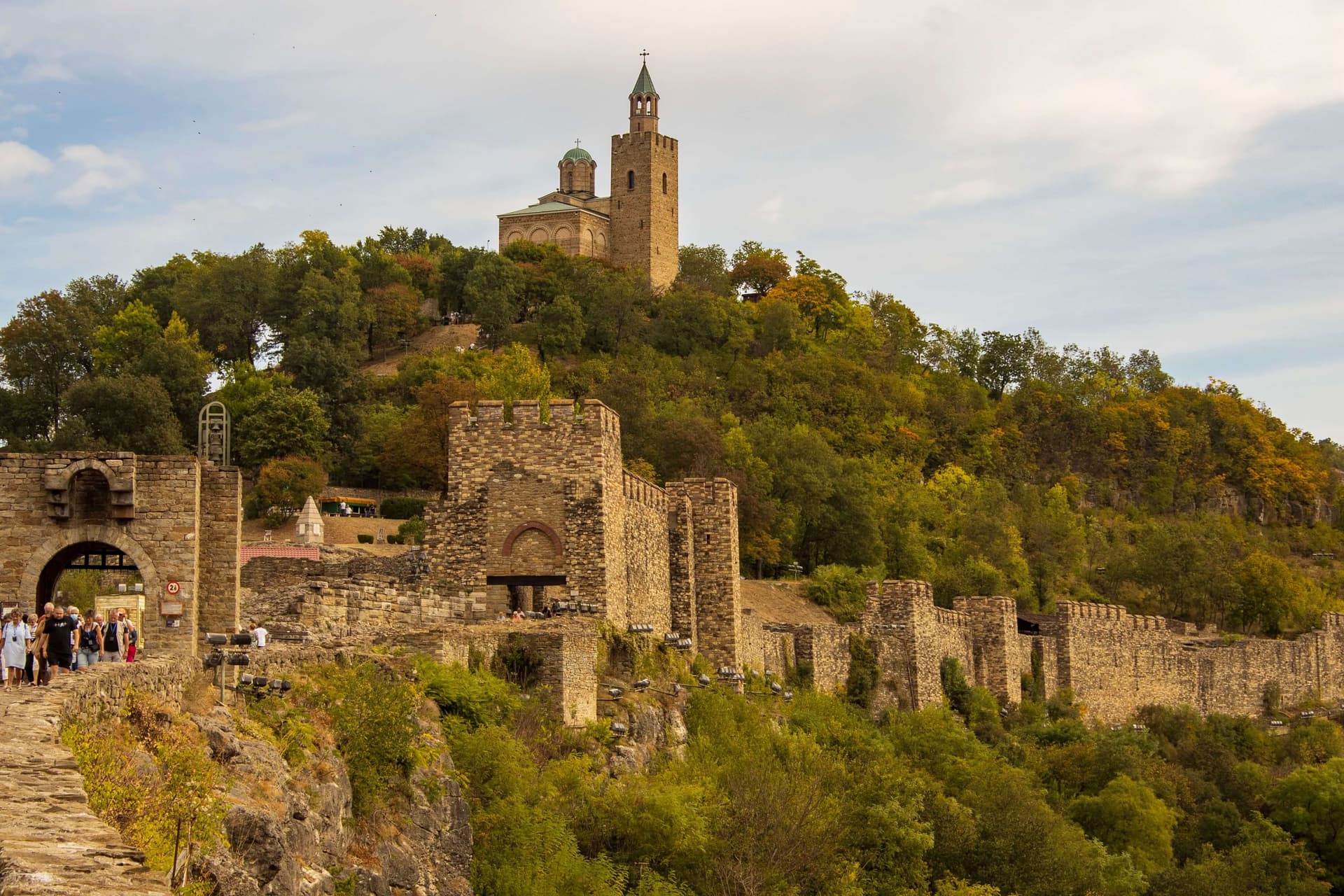
Tsarevets
Tsarevets is a monumental historical hill located in the city of Veliko Tarnovo, as well as an iconic medieval fortress that served as the primary political, administrative, and spiritual center of medieval Tarnovgrad. Situated adjacent to the Old Town, it operated as the main and most powerful Bulgarian stronghold during the Second Bulgarian Kingdom between 1185 and 1396, when Veliko Tarnovo was the official capital of the realm. During the Middle Ages, the entire plateau was densely built up with royal, administrative, ecclesiastical, and residential structures. Today, Tsarevets ranks among the most visited monuments in the country, integrated into the 100 National Tourist Sites compiled by the Bulgarian Tourist Union, with the official stamp readily available for visitors at the site.
History of Archaeological Research
Scientific interest in Tsarevets initiated in 1886, when the first formal archaeological excavations were undertaken by the Czech scholar Karel Skorpil, followed by localized surveys in 1893 and 1900. In 1930, targeted excavations were carried out, preceding the comprehensive reconstruction of the Baldwin Tower. Between 1932 and 1934, the first main gateway was restored, and in 1935, the initial hydrological study of the water supply systems on Tsarevets and Trapezitsa hills was executed. Systematic, large-scale excavations of the Royal Palace commenced in 1946. Between 1958 and 1959, the Regional History Museum initiated a detailed study of the overall fortification system, and in 1974, a dedicated branch of the Archaeological Institute at the Bulgarian Academy of Sciences launched the full exploration of the Inner Fortress.
Chronological Development and Historical Epochs
Prehistory and Thracian Heritage
The earliest traces of organized human life on the hill date back to the Late Eneolithic Era, roughly 4200 BC. The site was actively occupied during the Bronze and Iron Ages. Excavations revealed remnants of buildings and domestic ceramics characteristic of the Hallstatt culture (13th to 5th centuries BC) and the subsequent La Tene culture (5th to 1st centuries BC).
The Thracian settlement discovered beneath the medieval layers existed continuously throughout the entire 1st millennium BC. Intensive construction during the Middle Ages nearly obliterated its remains, with small segments surviving exclusively within two residential horizons dated between the 4th and 2nd centuries BC. The uncovered hearths and vessels are thoroughly Thracian, and the presence of La Tene materials in this context evidences strong cultural and commercial trade influences rather than the physical presence of Celts on the hill. The Thracian settlement ceased to exist toward the beginning of the Christian Era, marked by the complete absence of early Roman pottery and coins from the 1st to the 3rd centuries AD.
Early Byzantine Era
At the close of the 5th century, during the reign of the Eastern Roman Emperor Anastasius I (491 - 518 AD), a powerful Early Byzantine fortress was erected on the hill, which modern science identifies with the fortified city of Zikideva. It became a primary Byzantine stronghold in the Northern Balkans, accommodating the population of the declining Roman city Nicopolis ad Istrum to secure safety from barbarian incursions. The foundations of a large Christian basilica date back to this epoch. The fortress of Zikideva operated until the early 7th century, when it was completely destroyed by fire during massive Avar-Slavic invasions, with the latest discovered Byzantine coins dating to 614 AD, minted under Emperor Heraclius.
The Middle Ages and the Reconstruction of the Stronghold
In the 8th century, an Old Bulgarian settlement emerged over the Byzantine ruins, rapidly expanding across the entire plateau. By the mid-12th century, the parallel construction of the massive outer curtain wall and the independent feudal castle of the ruler initiated. The city achieved its most brilliant splendor following the Uprising of Asen and Peter in 1185, transforming into the capital of the resurrected state. The large-scale architectural restoration of the entire complex commenced in 1930 and was finalized in 1981 in honor of the national celebrations marking the 1300th anniversary of the founding of the Bulgarian state.
The Sophisticated Fortification System
The fortification of medieval Tsarevgrad Tarnov comprised thick curtain walls enclosing the rocky crest of the hill, complemented by transverse walls descending perpendicularly to the bed of the Yantra River. The curtain wall boasts a thickness of 2.4 meters, reaching up to 3.6 meters at strategic sectors, reinforced with battlements and defensive towers. Three primary historical periods are documented in its masonry: Early Byzantine (5th - 6th centuries), pre-capital (first half of the 12th century), and capital era (13th - 14th centuries), marked by frequent expansions and repairs. Excavations in the nearby Asenov quarter around the Holy Forty Martyrs Church revealed an additional riverside wall 2.7 meters thick, equipped with battlements and a secure tower-well.
The Three Official Entrances of Tsarevets:
The Main Western Gate
Situated upon a narrow, elongated rock mass that was intentionally cut by medieval engineers to form a deep protective ditch. The entrance was equipped with five consecutive gates:
- First Gate: Positioned over the Cut Rock (Sechenata Skala), it featured a wooden drawbridge preserved in its authentic form until 1864, and a defensive tower above the archway. The gate was restored between 1932 and 1934 by architect Aleksandar Rashenov.
- Second Gate: Located 32 meters behind the first, secured by two rectangular towers.
- Third Gate: Positioned 29 meters after the second, protected by a rectangular tower to the south and an additional stone northern abutment.
- Fourth Gate: Rose 37 meters after the third, existed until 1889, and was fully restored in 1971 over ancient Roman foundations.
- Fifth Gate: Located 25 meters from the fourth, integrated between a small internal tower to the south and a powerful northern internal fortification with walls up to 3.5 meters thick.
The Little Gate (Asen's Gate)
Situated on the northwestern curtain wall, it secured direct communication between Tsarevets, the neighboring Trapezitsa hill, and the New Town along the riverbanks. A two-story tower rose above it, and the door itself was double-winged, fashioned from oak and reinforced with large iron nails. The gateway was restored in 1975.
The Frenkhisar Gate
Located on the southeastern slope, it served to link the fortress with the quarter of foreign merchants (the Franks), accessed via a 2.5-meter-wide cobbled road. The southeastern corner of the hill was fortified by a grand battle tower guarding the gate and a massive water reservoir next to the Yantra River. This tower is historically linked with the name of Latin Emperor Baldwin of Flanders, who was captured at the Battle of Adrianople in 1205 by the Bulgarian Tsar Kaloyan. Known as the Baldwin Tower, it was fully reconstructed in 1933 based on a design by architect Aleksandar Rashenov, who utilized the perfectly preserved medieval tower from the Cherven fortress near Ruse as an architectural prototype.
The Architectural Complex of the Bulgarian Patriarchate
The Bulgarian Patriarchate represents an independent, heavily fortified architectural complex spanning an area of roughly 30 decares on the absolute summit of the hill. Research proves that the Patriarchate was shaped as an irregular polygon, protected by its own curtain walls, battle towers, and gates. The main entrance was situated on the western wall and reinforced with two consecutive doors guarded by towers to the south and north. Residential, administrative, and utility quarters were built directly against the inner side of the walls.
At the absolute center of the complex rises the Patriarchal Cathedral of the Ascension of the Lord, built over the ruins of an Early Christian three-nave basilica from the late 5th century. The cathedral was erected in two stages: in the early 13th century as a single-nave church with a barrel vault, and during the 14th century when it was expanded into a cross-in-square, three-apsed church featuring two narthexes. Built against its southern wall is a unique bell tower, which is an exceptionally rare feature within Balkan ecclesiastical architecture.
The reconstruction of the Patriarchal Church was finalized by 1981 within the framework of the state program Veliko Tarnovo - 1300, tracking designs by architects Boyan Kuzupov, Ilia Levterov, and Teofil Teofilov based on archaeological data and medieval miniatures. The artistic and decorative design of the interior was executed by the prominent Bulgarian artist Teofan Sokerov and his assistants Ivan Ivanov, Ivan Vasilev, Kolyo Yonchev, and Nayden Naydenov. Since the building is a complete modern reconstruction, the interior was not painted tracking the strict Orthodox canon, but functions as a temple-monument. Utilizing the tools of contemporary monumental art and vast figurative compositions, the height, tragedies, and culture of the Second Bulgarian Kingdom are vividly depicted. The shrine opened for public visits in November 1985, with custom lighting and sound systems enhancing the emotional impact of the frescoes.
The Royal Palace Complex
Situated in the central territory of the hill, immediately north of the Patriarchate. It represents an independent castle shaped as an irregular ellipse measuring 114 by 66 meters, with a total built-up area of roughly 5000 square meters. The palace was fortified by a massive stone wall, towers, and two entrances from the north and south, with the main northern gate protected by three consecutive towers opening onto a spacious palace square.
The internal architecture of the Palace includes:
Throne Hall and Reception Chambers: Situated in the western section, richly decorated with marble cladding and colorful frescoes, sharing a monumental facade. According to historical records, it was within this Throne Hall in 1660 that the grand ecclesiastical and state council against the Jews took place, convened by Tsar Ivan Aleksandar.
- Royal Quarters: Situated along the eastern wall of the castle.
- Dining Hall and Kitchen: A large structure next to the southern wall, with the kitchen unearthed in its western section, equipped with three massive brick ovens.
- Utility Structures: The lower levels functioned as cellars and dungeons; a large palace water reservoir was discovered in the northeastern section of the courtyard, and a complex network of channels managed wastewater and rainwater beneath the structures.
- Palace Church: Positioned in the eastern section of the inner courtyard, it was an elegant cross-in-square church that housed state relics and holy shrines.
The World-Famous Sound and Light Audio-Visual Spectacle
The audio-visual spectacle Tsarevgrad Tarnov - Sound and Light is a unique attraction created by a joint Bulgarian-Czechoslovak team and presented for the first time in 1985 to mark the 800th anniversary of the Uprising of Asen and Peter. The show combines dramatic music, multi-colored light projections, powerful laser beams, and the real resonance of dozens of church bells on the hill, synchronized to narrate the glorious, centuries-old, and tragic history of the medieval Bulgarian state. Hundreds of colored spotlights depict the battles against Ottoman invaders, the fall under Ottoman rule, the National Revival era, the revolutionary movement, and the long-awaited Liberation of Bulgaria. The most popular locations to watch the show are Tsar Asen I Square, situated directly in front of the main entrance to the fortress, and the panoramic terrace next to the Nativity of the Mother of God Cathedral.
7-day forecast
Weather data from MET NorwayNearby Places

More to explore

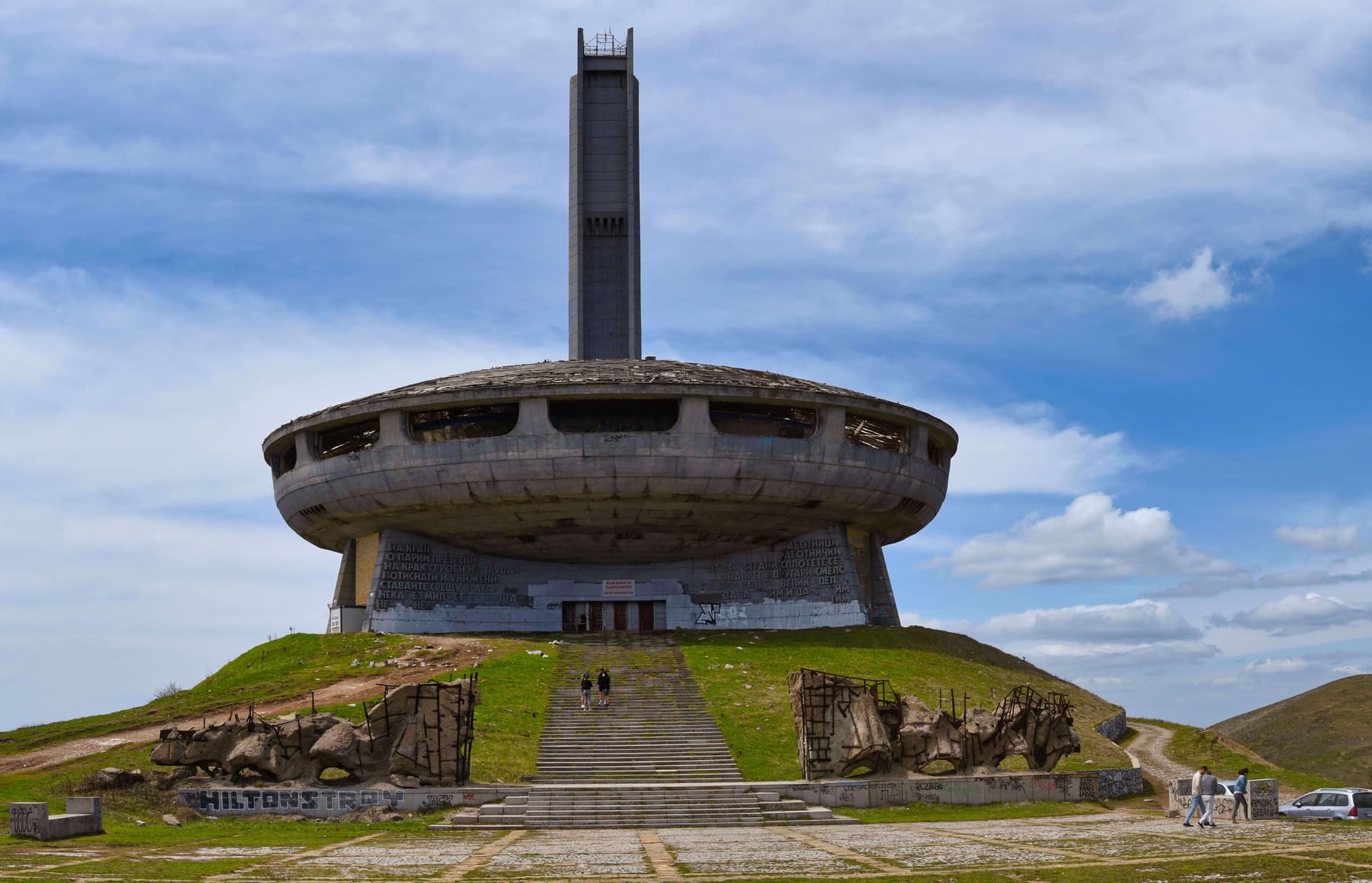
Read more in our travel guides
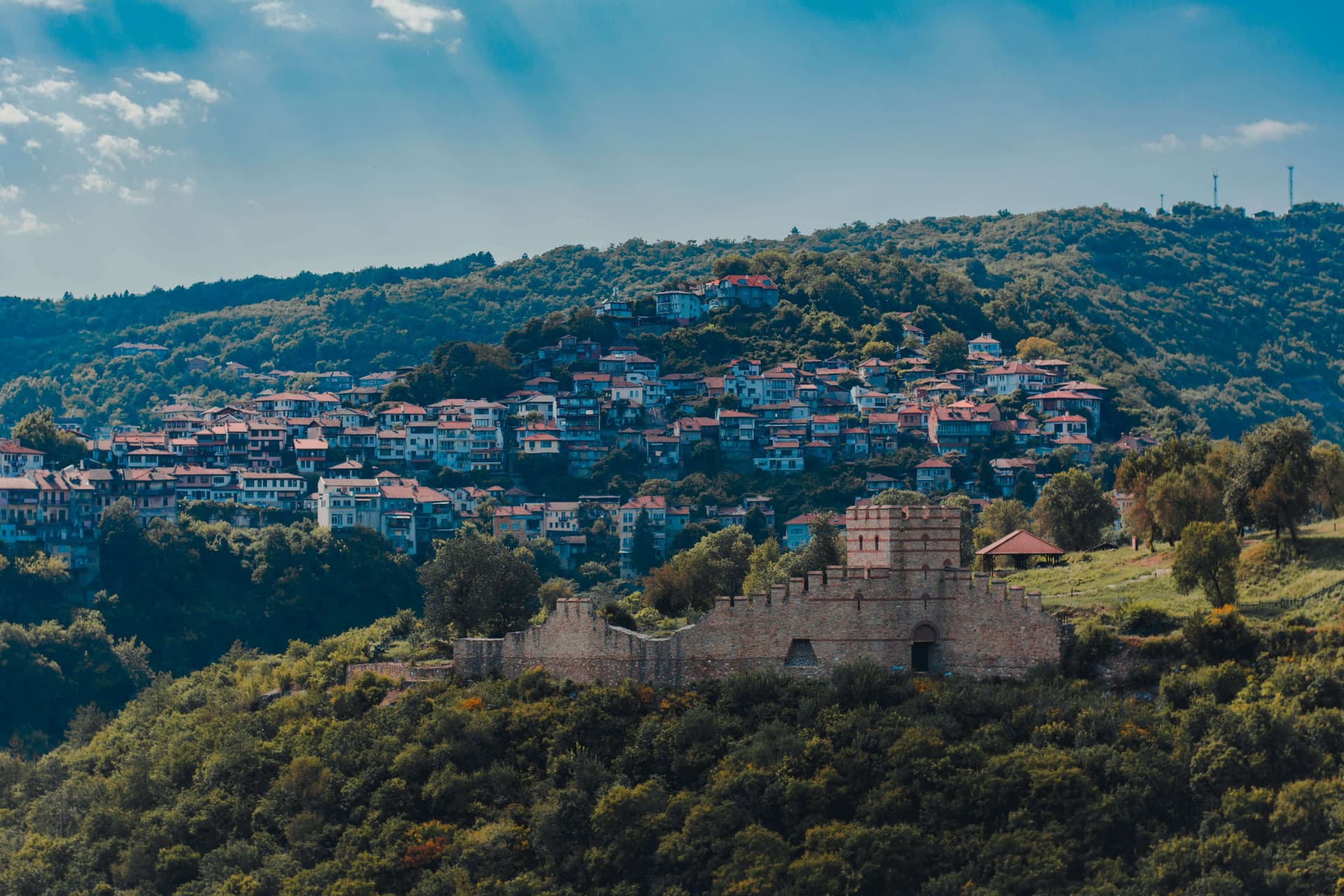
The Central Balkan Road Trip: Veliko Tarnovo to the Rose Valley
A complete 4-day driving itinerary across the Balkan Mountains: Veliko Tarnovo, Dryanovo, Tryavna, Bozhentsi, Etar, Gabrovo, Shipka Pass, and Kazanlak.
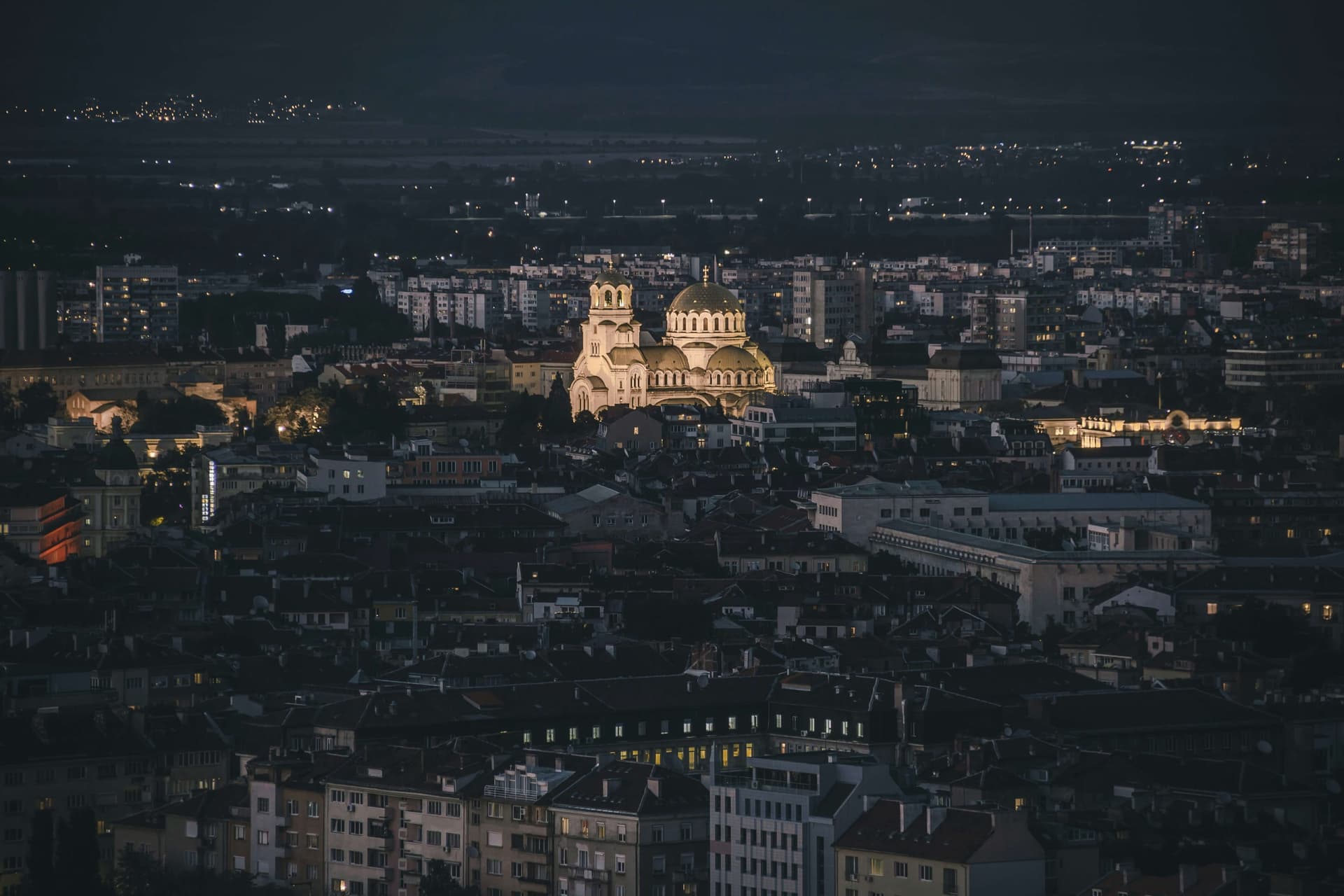
One Week in Bulgaria: The Ultimate 7-Day Travel Itinerary
The complete 7-day Bulgaria travel itinerary: explore Sofia, Rila Monastery, Plovdiv, Veliko Tarnovo, and the Black Sea coast with distances and travel times.
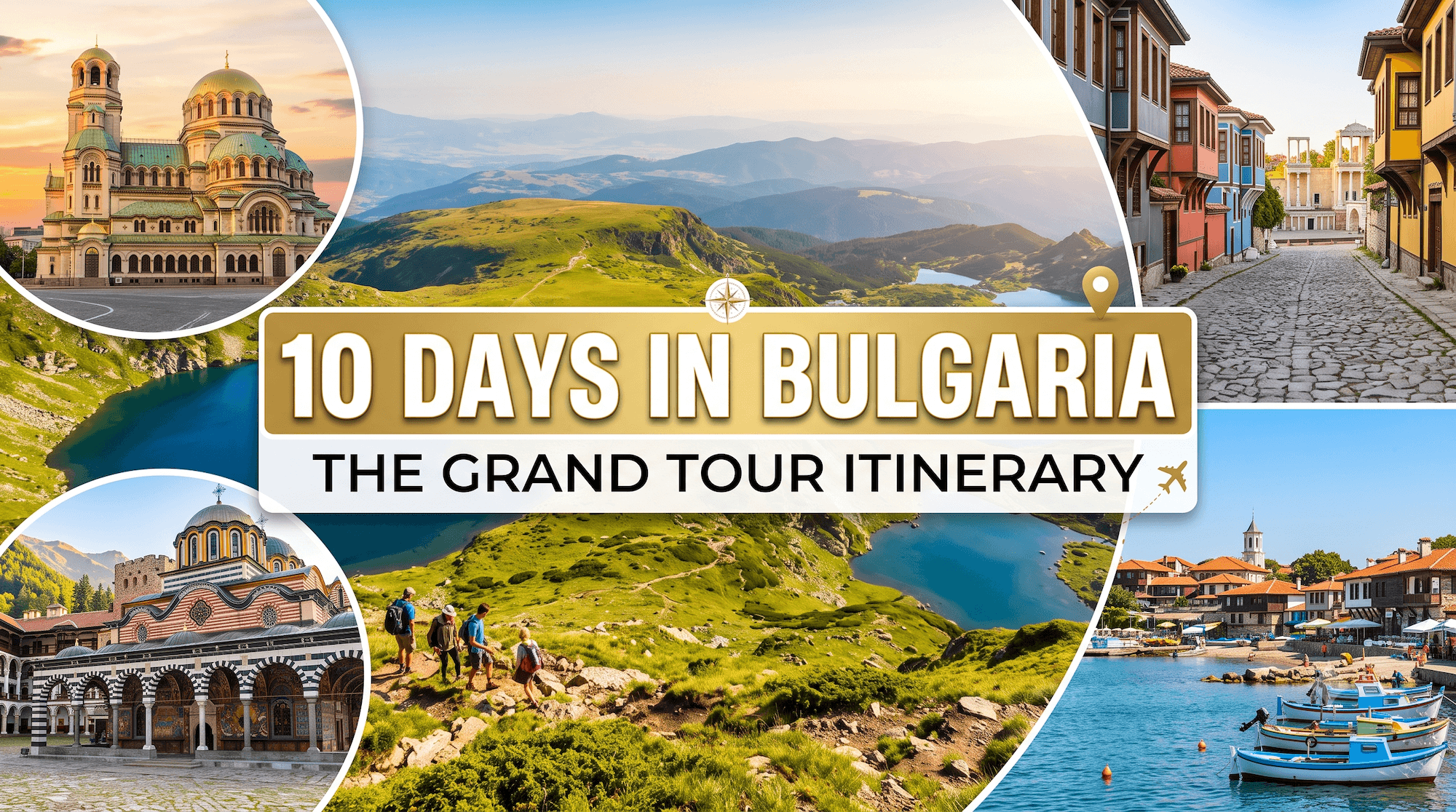
10 Days in Bulgaria: The Ultimate Grand Tour Itinerary
A complete 10-day Bulgaria itinerary: explore Sofia, Rila Monastery, Plovdiv, the Rose Valley, Veliko Tarnovo, and the Black Sea coast.
Frequently asked questions
Where is Tsarevets located?
Tsarevets is located in Veliko Tarnovo, Bulgaria.
How do I get to Tsarevets?
Tsarevets is most easily reached by car. Use the coordinates above to navigate, or open the location in OpenStreetMap or your preferred maps app for turn-by-turn directions. Public transport options vary by region — for remote destinations a rental car gives the most flexibility.
What is the best time to visit Tsarevets?
Tsarevets can be visited year-round. Spring and autumn offer the most pleasant conditions for exploring, with mild temperatures and fewer crowds. Summer is ideal for photography and longer day trips; winter visits are possible but weather can limit access at some sites.
What should I know before visiting Tsarevets?
Most natural landmarks in Bulgaria are freely accessible and open year-round, though some sites have entrance fees or require a guide. Wear sturdy footwear and bring water, as the terrain can be uneven. Respect any protective barriers and stay on marked paths to preserve the site.