

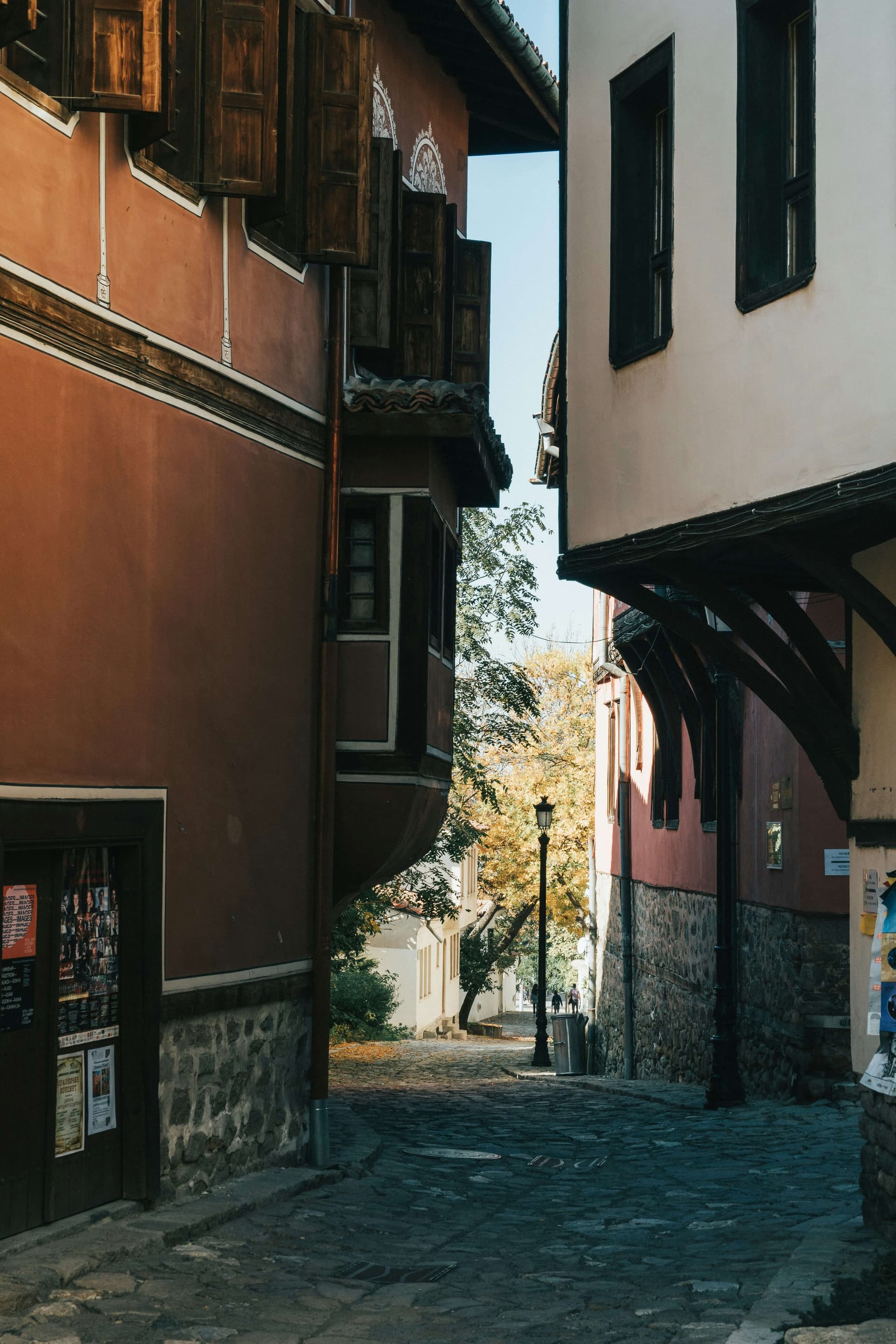
Old Town Plovdiv
The Ancient Plovdiv Architectural and Historical Reserve, globally recognized simply as the Old Town, is an exceptional open-air museum quarter situated across three of the iconic hills of Plovdiv - Nebet Tepe, Dzhambaz Tepe, and Taksim Tepe. Together, these hills form the historic urban core known as the Three Hills (Trihalmie). This cultural reservation extends across a land area of 35 square kilometers. Its emergence is the direct outcome of continuous, organized human settlement within the valley over centuries, spanning a long chronological timeline from Prehistory to modern times. The architectural environment of the reserve beautifully blends the design, traditions, and urban planning of Antiquity, the Middle Ages, and the Bulgarian National Revival into unique ensembles, rendering it the premier tourist destination in Plovdiv.
Antiquity and the Roman Golden Age of the Three Hills
Plovdiv is officially recognized as one of the oldest continuously inhabited cities across Europe, predating Rome and Athens, and tracking as a historical contemporary of legendary Troy and Mycenae. The urban core originated during the 4th millennium BC upon the ridges of the Three Hills, when ancient Thracian tribes established their first fortified settlement on the summit of Nebet Tepe. In the 4th century BC, the region was conquered by the Macedonian King Philip II of Macedon, who reconstructed the citadel and renamed it after himself - Philippopolis. Subsequently, the Thracians managed to temporarily reclaim political control over the acropolis, but following a succession of heavy conflicts, the city fell permanently under the rule of the Roman Empire during the 1st century AD.
Following the formal incorporation of Thracian territories into the imperial borders, Philippopolis was chosen as the primary administrative, judicial, and spiritual capital of the Roman province of Thrace, established in 46 AD. Due to the strategic position of the city acropolis atop the three hills, Roman governors referred to it by the Latin name Trimontium, which translates as the city of three hills. The Roman Era, spanning the 2nd to the 4th centuries AD, is defined as a true golden age in the urban development of the ancient city. Modern archaeological excavations have revealed monumental remnants of brilliant public buildings, most of which are conserved and integrated into the fabric of the Old Town today: a majestic amphitheater, heavy fortress walls, pagan temples, aqueducts, thermae, and aristocratic family estates.
The Medieval Period and the Paldin Fortress
At the close of the 4th century, the city entered the Byzantine historical period. The subsequent migration of Slavic tribes to the Balkans brought a new Slavic nomenclature to the fortress - Paldin. During the official establishment of the First Bulgarian Kingdom in the 7th century, the city of Paldin remained outside its original borders. The Bulgarian Khan Krum was the first ruler to besiege and capture the fortified city in 812 AD. The formal and permanent integration of the city within Bulgarian state borders occurred slightly later, during the reign of Khan Malamir.
Over subsequent medieval centuries, control over the Three Hills shifted with varying success between Bulgarians and Byzantines, and for a brief historical phase, the fortress operated under the rule of the knights of the Fourth Crusade. The city was permanently returned to the boundaries of the Bulgarian State in 1344 by a diplomatic decree of the Byzantine Emperor. From the medieval era, the stone eastern gateway of the fortress walls - the world-famous Hisar Kapia - remains perfectly preserved within the Old Town.
Economic and Cultural Height of the National Revival Era
During the Bulgarian National Revival, Plovdiv established itself as the most important economic, craft, and commercial trade center on the Balkans. A powerful social class of wealthy, proactive, and highly educated Bulgarian merchants emerged in the city, traveling for commercial affairs across Europe and the Middle East. From their distant journeys, they brought back to Plovdiv not only exotic commodities but also modern Western European cultural and architectural trends.
Wealthy Plovdiv families demonstrated their economic prosperity through the large-scale construction of beautiful, vast, and richly ornamented symmetrical houses, custom-painted with fine frescoes and featuring complex woodcarvings. These structures have become the primary visual icon of the reserve today. Elegant Orthodox churches, schoolhouses, and public buildings survive from the same epoch, highlighting the active intellectual and spiritual life of Plovdiv society at that time.
Primary Archaeological and Architectural Landmarks of the Reserve
Nebet Tepe Archaeological Complex
The summit of Nebet Tepe preserves the excavated archaeological remnants of the first prehistoric settlement on the Three Hills, dating back to the Eneolithic Era. In the 12th century BC, this site evolved into the fortified ancient Thracian city of Eumolpias, which ranks among the earliest urban centers in Southeastern Europe. The uncovered massive stone fortress walls, which enclosed a pagan sanctuary and a large aristocratic palace, serve as the primary components defining the Thracian settlement. The oldest segment of the fortification wall was constructed using a specific masonry technique without any binding mortar, utilizing enormous syenite blocks, known in architecture as cyclopean masonry.
The complex also features structures of an urban settlement from the era of Philip II of Macedon (4th century BC), alongside sophisticated fortification engineering, incorporating a bastion, a large subterranean grain granary, and a square defensive tower dated from the period between the 4th and 2nd centuries BC up to the 2nd and 4th centuries AD. As ancient Thracian Eumolpias expanded across the entire plateau of the Three Hills and into its lower foothills, the old settlement and citadel atop Nebet Tepe transformed into the official fortified acropolis of the city.
The Ancient Theatre
The Ancient Theatre of Philippopolis is among the most precious and globally acclaimed monuments of the rich archaeological heritage of the ancient city. Its comprehensive scientific restoration is designated as the finest engineering achievement in the field of conserving classical antiquities in Bulgaria. The theater was constructed in the 90s of the 1st century AD, during the reign of the Roman Emperor Domitian. It is positioned via genius engineering within the natural saddle formed between the ridges of Dzhambaz Tepe and Taksim Tepe.
The spectator gallery, known as the theatron, is divided vertically into two large tiers of 14 rows of marble benches each, separated from one another by a wide horizontal walkway called a diazoma. Historians estimate that the theater accommodated approximately 3500 spectators. Rising along the southern side of the semi-circular central orchestra is the imposing three-story stage structure, known as the scaenae frons, which is richly adorned with marble friezes, cornices, columns, and classical statues. The site was fully excavated archaeologically, conserved, and socialized under the scientific guidance of archaeologists Liliya Botusharova and Vera Kolarova between 1968 and 1984. Today, the theater operates as an active open-air venue hosting prestigious cultural initiatives, including the annual Verdi Festival and the Plovdiv International Folklore Festival.
Hisar Kapia
Hisar Kapia represents a grand, fortified stone gateway cutting through the ancient defensive fortress walls of Philippopolis. In its present visual appearance, the structure dates back to the medieval period between the 11th and 13th centuries, but its structural foundations were deeply laid during the Roman Era in the 2nd century AD. The gate operated as one of the three primary entryways securing access to the fortified Three Hills. During the Ottoman Empire, due to spatial limitations on the hills, the beautiful Revival-era residential houses of Plovdiv merchants were incorporated and built directly on top of the remnants of the thick historical fortress walls surrounding the gate.
The Eastern Gate of Philippopolis
The Eastern Gate of Philippopolis was one of the most critical entry and exit transport arteries of the ancient city. Through its monumental arch passed the primary overland commercial and military highway linking Philippopolis with Byzantium (later Constantinople). Historical consensus indicates that it was initially constructed during the 2nd century AD under the reign of the Roman Emperor Hadrian, and underwent major reconstruction and reinforcement during the 4th century AD. The architectural complex surrounding the gate was discovered, excavated, and researched by Bulgarian archaeologists during the 1970s, its ruins lying in the northeastern foothills of the Old Town.
7-day forecast
Weather data from MET NorwayNearby Places
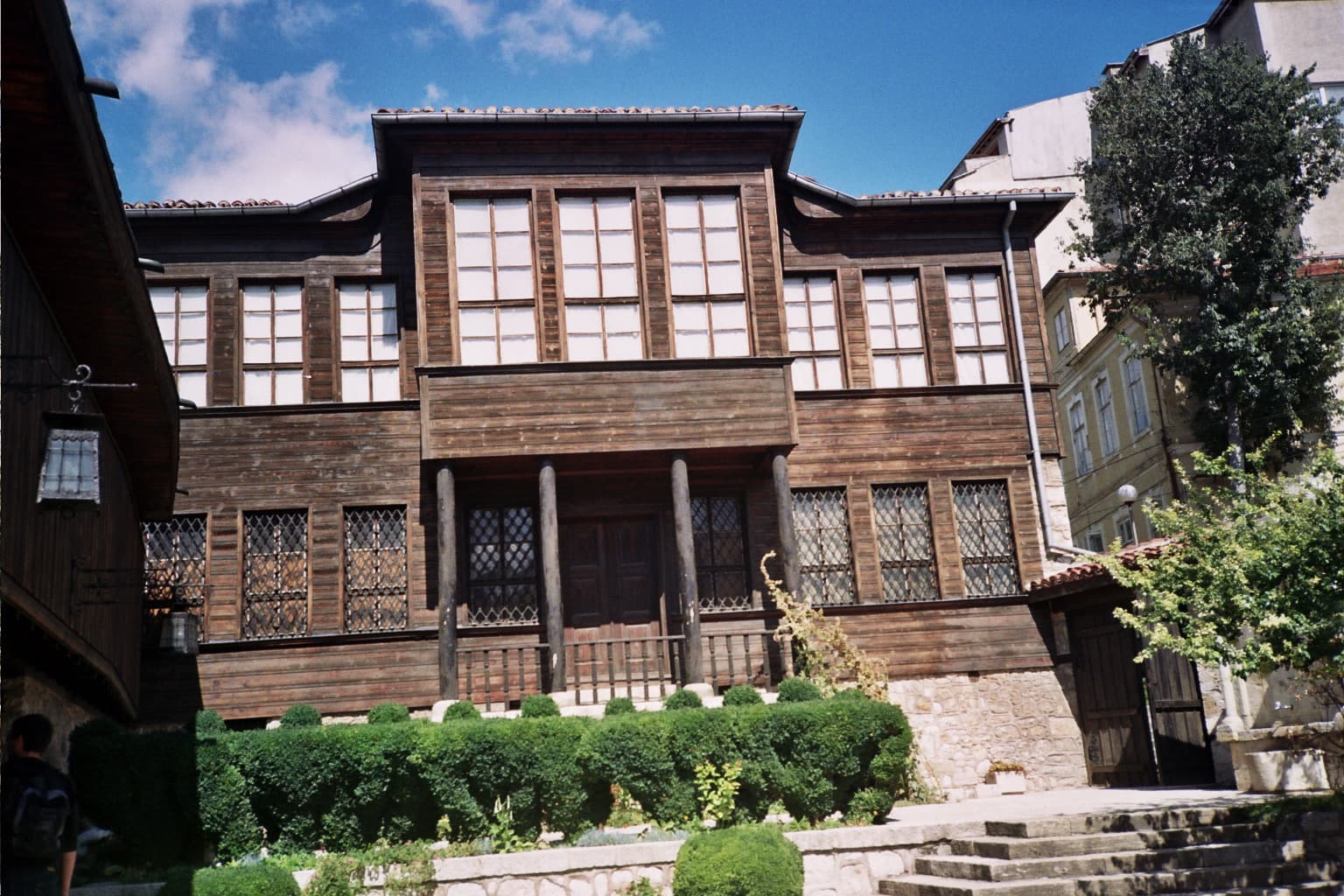

Hipokrat museum
Plovdiv region
0.1 km away
Lamartine House
Plovdiv region
0.3 km away
Djurkovi gallery
Plovdiv region
0.3 km away
More to explore
Read more in our travel guides

Getting to Plovdiv: The Airport, Sofia Transfers & Trains
How to get to Plovdiv: Plovdiv Airport (PDV) routes, train and bus options from Sofia, private transfers, costs, and travel times.
One Week in Bulgaria: The Ultimate 7-Day Travel Itinerary
The complete 7-day Bulgaria travel itinerary: explore Sofia, Rila Monastery, Plovdiv, Veliko Tarnovo, and the Black Sea coast with distances and travel times.
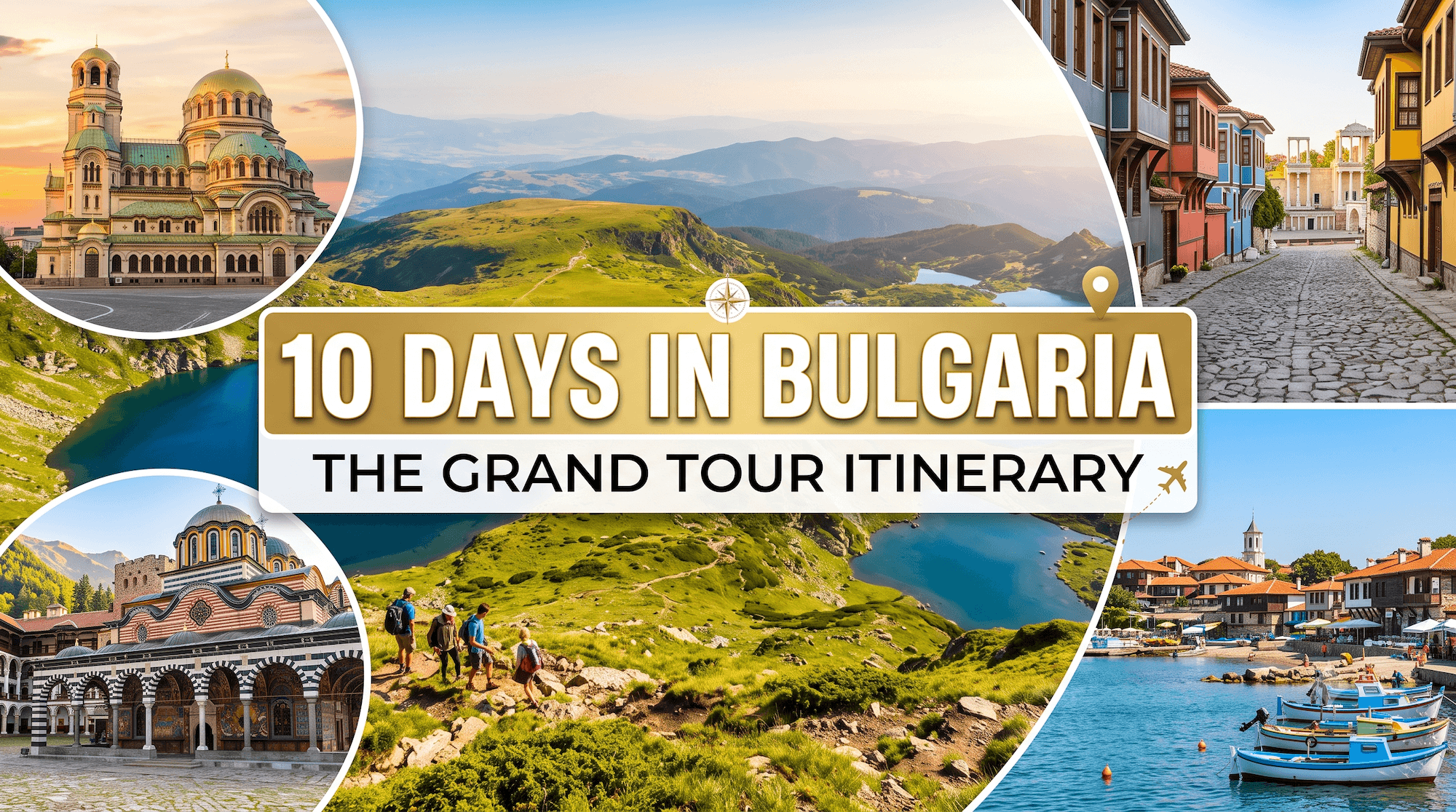
10 Days in Bulgaria: The Ultimate Grand Tour Itinerary
A complete 10-day Bulgaria itinerary: explore Sofia, Rila Monastery, Plovdiv, the Rose Valley, Veliko Tarnovo, and the Black Sea coast.
Frequently asked questions
Where is Old Town Plovdiv located?
Old Town Plovdiv is located in Plovdiv, Bulgaria.
How do I get to Old Town Plovdiv?
Old Town Plovdiv is most easily reached by car. Use the coordinates above to navigate, or open the location in OpenStreetMap or your preferred maps app for turn-by-turn directions. Public transport options vary by region — for remote destinations a rental car gives the most flexibility.
What is the best time to visit Old Town Plovdiv?
Old Town Plovdiv can be visited year-round. Spring and autumn offer the most pleasant conditions for exploring, with mild temperatures and fewer crowds. Summer is ideal for photography and longer day trips; winter visits are possible but weather can limit access at some sites.
What should I know before visiting Old Town Plovdiv?
Most natural landmarks in Bulgaria are freely accessible and open year-round, though some sites have entrance fees or require a guide. Wear sturdy footwear and bring water, as the terrain can be uneven. Respect any protective barriers and stay on marked paths to preserve the site.