The Madara Rider (Madarski Konnik) is a monumental medieval rock-cut bas-relief carved directly onto a vertical sandstone cliff face near the modern village of Madara in Northeastern Bulgaria. The monument stands as a completely unique rock relief across the entire European continent representing the Early Middle Ages. Due to its global cultural, scientific, and historical significance, the bas-relief was officially inscribed on the UNESCO World Heritage List. Geographical Location and the Reserve Complex The Madara Rider operates as the central visual emblem of the Madara National Historical and Archaeological Reserve, which encompasses a vast array of archaeological structures holding prehistoric, Thracian, classical, and medieval religious, cultural, and military designations. The rock-cut monument is located 18.2 kilometers east of the city of Shumen, with the majority of the protected territory positioning within the administrative boundaries of the Kaspichan Municipality. Anchored in immediate geographical proximity to the site are the corresponding archaeological reserves of the earliest medieval Bulgarian capitals, Pliska and Preslav, forming a unified historical landscape. Chronology of Scientific Discoveries and Dimensions For modern historical science, the Madara Rider was discovered and documented for the first time in 1872 by the prominent Austro-Hungarian traveler, archaeologist, and ethnographer Felix Kanitz. Due to the elevated position of the relief, thorough mapping, cleaning, and scientific stabilization have historically required the assembly of massive scaffolding towers, which were erected sequentially in 1895, 1905, and 1954. In 1905, under the direction of Bulgarian scholars, a high-precision full-scale plaster cast of the bas-relief was modeled, currently preserved within state museum funds. Physical Parameters of the Monument: - Elevation: The bas-relief was carved during the 8th century AD onto the vertical cliff face at a majestic height of 23 meters from the baseline of the terrain. Steep stone steps engineered to the left of the relief secure pedestrian access for travelers to the upper Madara Plateau. - Scale: The overall spatial parameters of the composition measure 2.6 meters in vertical height and 3.1 meters in total horizontal width at the base. Architecture and Elements of the Rock Composition The bas-relief depicts a complex symbolic scene incorporating the figures of a horseman, a vanquished lion, a hunting hound, a soaring eagle, and an array of incised inscriptions written in ancient Greek. The central figure of the horseman is displayed moving to the right, executed in a scale closely matching natural human dimensions, and robed in a royal mantle reaching down to the knees. With his left hand, the rider guides the reins of his mount, while with his right hand, he thrusts a short military spear into the body of the lion vanquished beneath the horse's front hooves. Visible behind the ruler's back is the high cantle of a saddle, identified by researchers as an eastern Caucasian type. The rider's right foot is placed securely within a stirrup, and he carries a large bow case (gorytos) slung across his back. A small military banner is distinguishable atop the spear piercing the lion, while a hunting hound with an elongated muzzle runs immediately behind the horse's rear hooves. Positioned to the right of the composition, just above the level of the horse's head, an eagle is depicted flying with outstretched wings. This majestic arrangement symbolizes triumphant military victory over the state adversary, blending the triumphal traditions found within the relief arts of the Persian East alongside local classical traditions of the Thracian Horseman. Historical Origins and the Proto-Bulgarian Hypothesis The rock-cut monument represents a triumphant Bulgarian monarch and is recognized within modern scholarship as the most potent visual symbol of state sovereignty and military might driving the First Bulgarian Empire. Specific parameters of the clothing and weaponry define the exact chronology and validate the leading scientific consensus tracking the Proto-Bulgarian ethnic origin of the relief, linking its creation directly with the reign of Khan Tervel between 701 and 271 AD. Nestled at the base of the cliffs is a large karst cavern known as the Great Cave or the Cave of the Nymphs, where ancient Thracian tribes worshiped their native deities. Excavators working the reserve uncovered prehistoric clay cult figurines and dozens of marble votive stelae dedicated to the Three Nymphs, Zeus, Heracles, Dionysus, Cybele, and the Thracian horseman deity Heros. Consequently, a secondary hypothesis suggests that the Madara Rider may have initiated as a monument of more ancient origin that underwent remodeling and stylistic adaptation for the new political objectives of the Proto-Bulgarians during subsequent eras. This view is supported by thorough petrological studies of the rock face, confirming that the outline of the lion was carved prior to the figure of the hound, and the horse underwent geometric corrections over time. The distinguished scholar Rasho Rashev noted that the image functions as a generalized, defied portrait of a Bulgarian ruler, which in the consciousness of medieval contemporaries merged with the characteristics of an epic hero from early medieval folklore. Sacred Greek Inscriptions and the Cult of Tangra Carved around the silhouette of the horseman and the animal figures are three major textual segments written in ancient Greek, providing priceless primary source data for early Bulgarian history and diplomacy. Professor Veselin Beshevliev suggested in his research that the earliest chronicles framing the relief could be directly linked to the name of the state's founder, Khan Asparuh. These rock inscriptions document critical political, military, and diplomatic events governing relations between Bulgaria and the Eastern Roman Empire (Byzantium) from 705 AD across the span of the 8th and 9th centuries. The texts explicitly mention, or clearly reference, the Bulgarian monarchs Tervel, Kormisosh, and Omurtag, alongside the Byzantine Emperor Justinian II. Of paramount scientific importance is the official state inscription of Khan Omurtag, excavated near the ruins of the Proto-Bulgarian pagan cult complex at the absolute base of the Madara Rider cliff. This extensive sacred complex structured on the terrace below the cliffs incorporated pagan shrines, sacrificial altars, royal halls, priestly quarters, and administrative outbuildings. This text of Khan Omurtag provides the only surviving, documentarily verified direct mention of the name of the supreme Proto-Bulgarian deity - the god Tangra, establishing Madara as the primary spiritual capital of pagan Bulgaria.
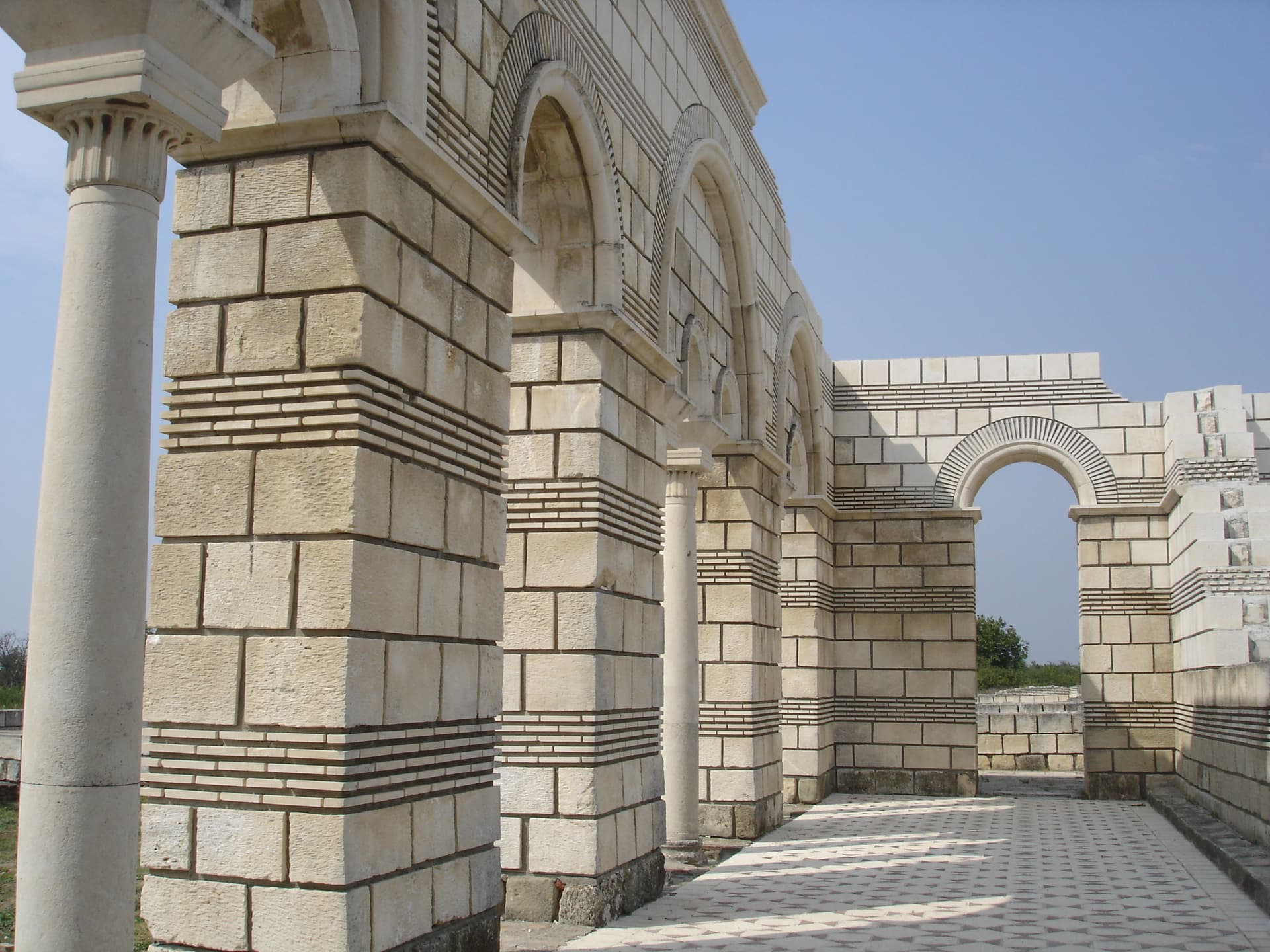
Shumen
9.4 km away

Shumen
15.6 km away
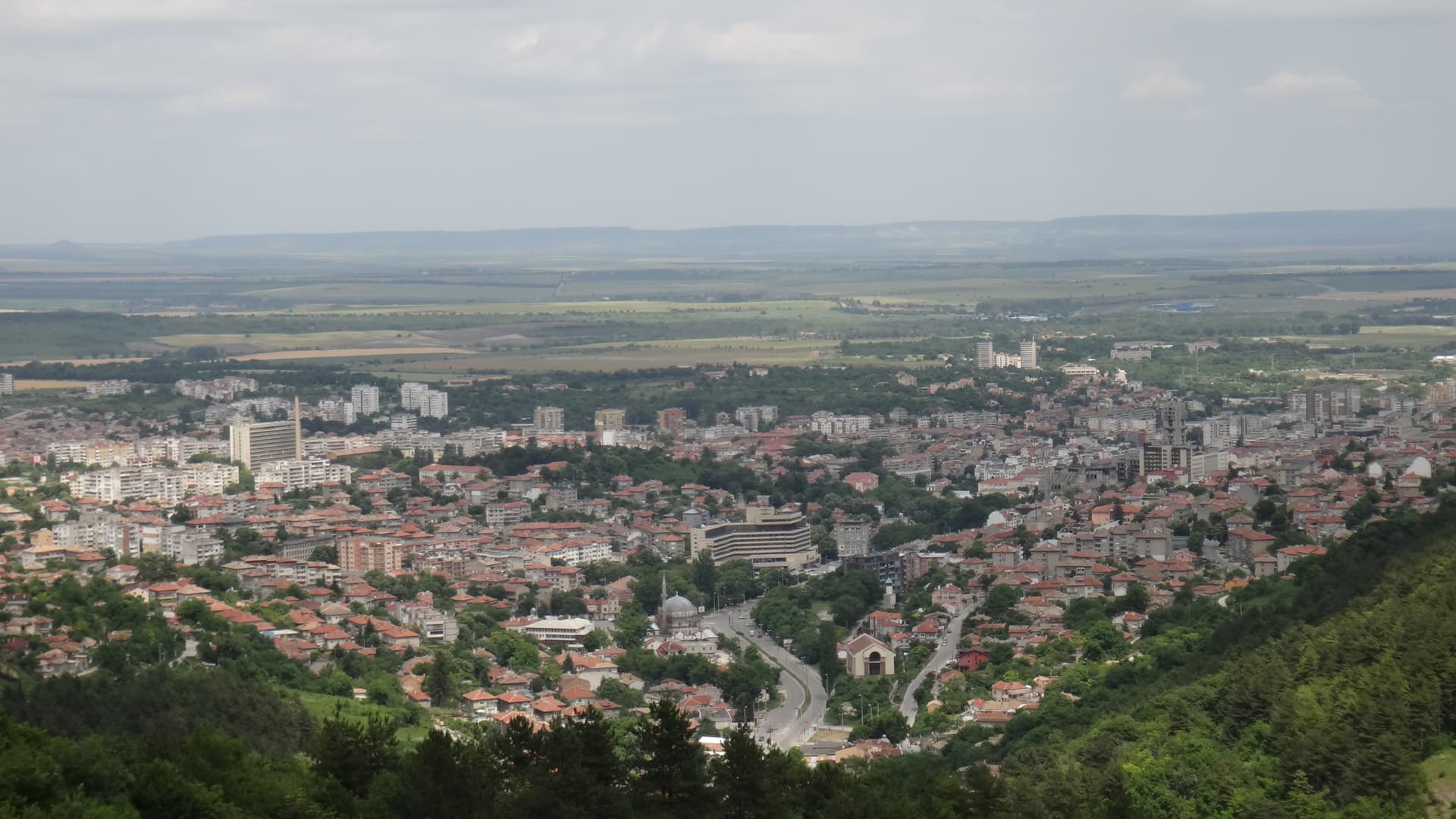
Shumen
15.8 km away
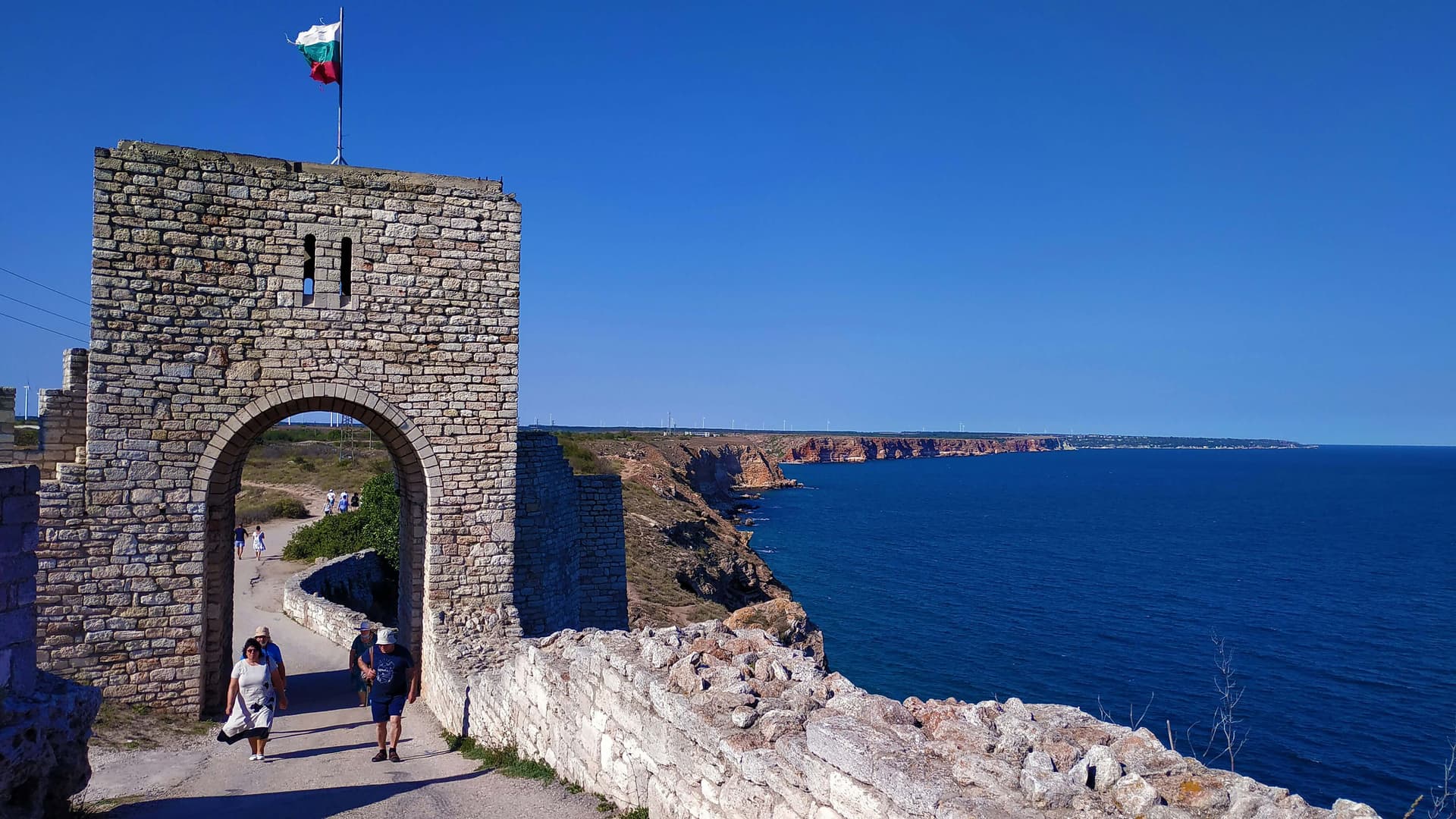
Planning a day trip from Varna? Discover the best itineraries: Balchik Palace, Cape Kaliakra, Aladzha Monastery, the Madara Rider, Pliska, and Pobiti Kamani.
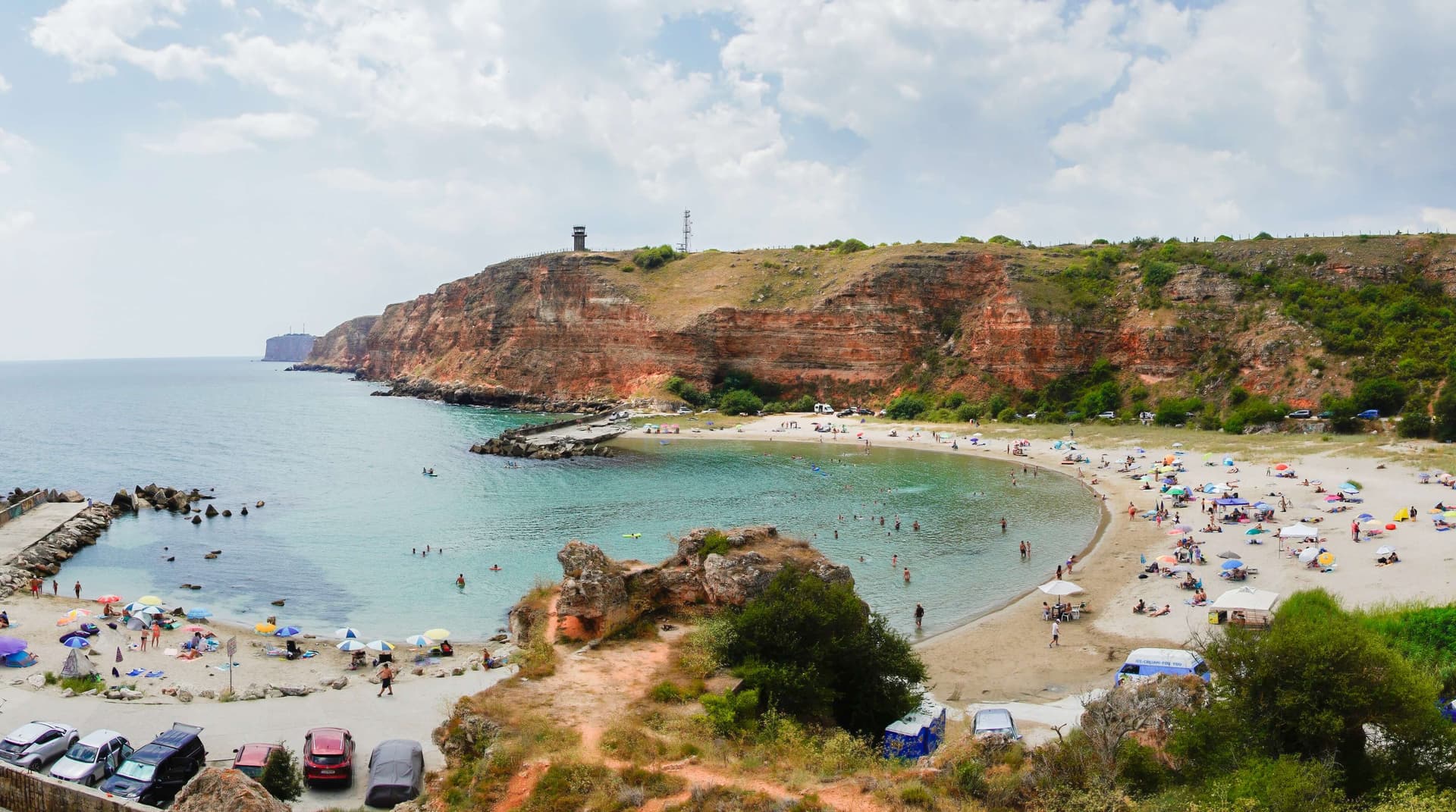
Planning a trip to Bulgaria? Discover the best time to visit for Black Sea beach vacations, skiing in Bansko, wine tours, or hiking high mountain peaks.
Madara Rider is located in Shumen, Bulgaria.
Madara Rider is most easily reached by car. Use the coordinates above to navigate, or open the location in OpenStreetMap or your preferred maps app for turn-by-turn directions. Public transport options vary by region — for remote destinations a rental car gives the most flexibility.
Madara Rider can be visited year-round. Spring and autumn offer the most pleasant conditions for exploring, with mild temperatures and fewer crowds. Summer is ideal for photography and longer day trips; winter visits are possible but weather can limit access at some sites.
Most natural landmarks in Bulgaria are freely accessible and open year-round, though some sites have entrance fees or require a guide. Wear sturdy footwear and bring water, as the terrain can be uneven. Respect any protective barriers and stay on marked paths to preserve the site.