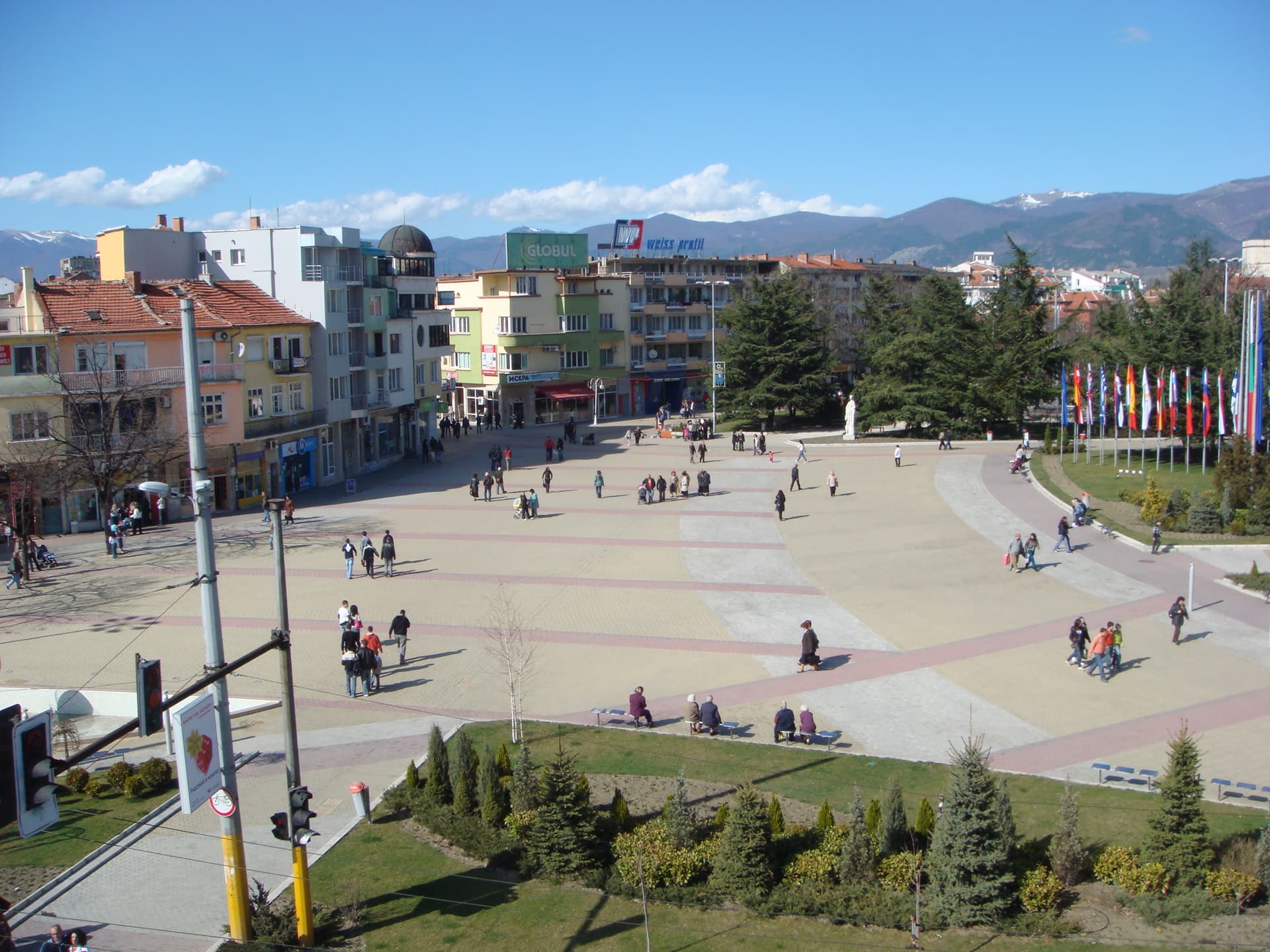
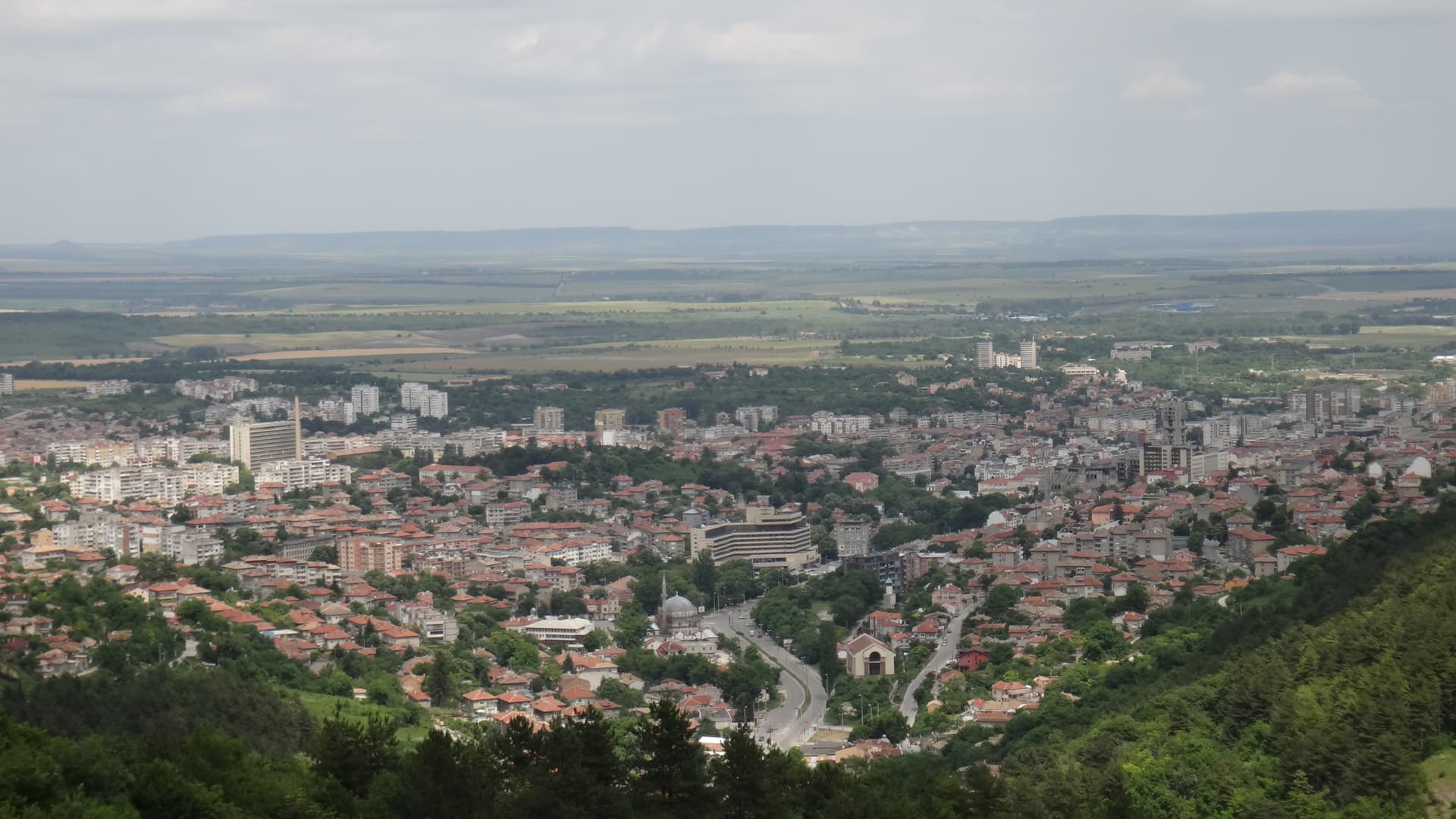
Pliska is a historic town situated in Northeastern Bulgaria, positioned within the administrative boundaries of the Kaspichan Municipality and Shumen Province. The settlement commands an exceptional place within national history, having operated as the first official capital of Danube Bulgaria for more than two consecutive centuries, from 681 to 893 AD. The town enjoys excellent logistical connectivity, located 6.2 kilometers northwest of the town of Novi Pazar and 7.2 kilometers north of the town of Kaspichan, hosting its own station along the historic Varna - Ruse railway. According to official metrics from the National Statistical Institute, by the end of December 2025, the permanent population of Pliska counted 756 residents.
The city emerged within the vast and fertile Shumen Plain, developing over the topography of an earlier, fortified Slavic settlement, as demonstrated by its distinctly Slavic etymological name, Pliska. During the epoch of Ottoman rule, the settlement was recognized among local populations under the nomenclature of Aboba.
Over decades of comprehensive archaeological and linguistic evaluation, the following historical records regarding the city's title have been verified:
The medieval city of Pliska or Plyskov was uncovered for global science between 1899 and 1900 by archaeologists representing the Russian Archaeological Institute in Constantinople, led by Fyodor Uspensky and with the active collaboration of the founding father of Bulgarian archaeology, Karel Skorpil. It was here that the most significant material monuments representing the early Pliska-Preslav culture were excavated, studied, and stabilized.
Vital written records concerning the initial establishment of the capital by the state's founder, Khan Asparuh, who ruled from 681 to 701 AD, are preserved within the legendary Bulgarian Apocryphal Chronicle, stating that King Ispor founded a city in Plyuska. This source, however, is of a later historical timeline, composed no earlier than the 11th century, and bears an apocryphal-legendary character.
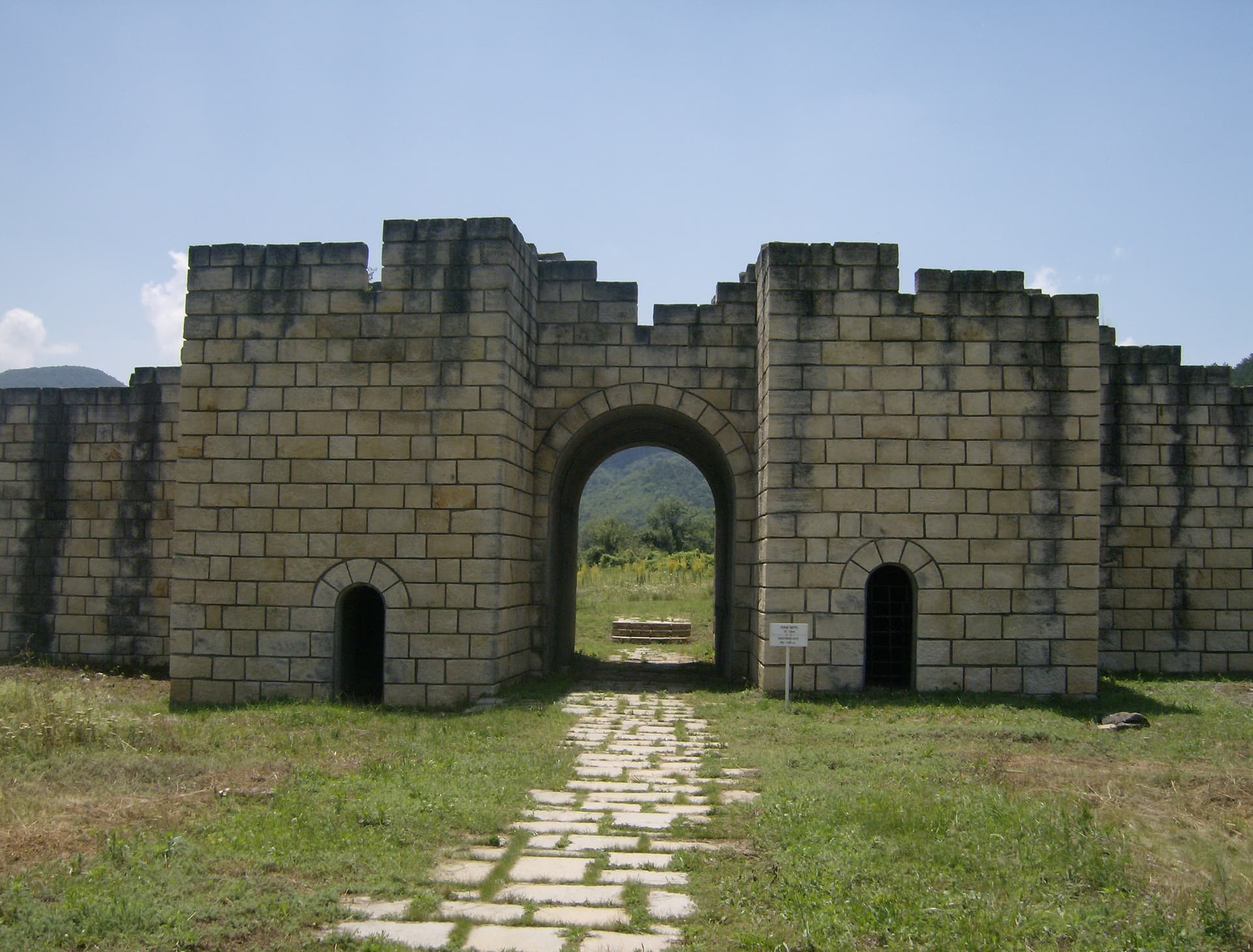
The primary reconstructed structures of the first Bulgarian capital are situated approximately 3 kilometers north of the contemporary town of Pliska. The remnants of the sprawling medieval city occupy an impressive total area of roughly 23 square kilometers. Pliska was fortified via a complex engineering network including three concentric defense rings:
The archaeological strata within the perimeter of the Citadel reveal the gradual evolution of Bulgarian royal architecture:
The Wooden Palace: The initial royal residence in Pliska was constructed entirely of timber, as evidenced by regular postholes from massive logs driven deeply into the ground layers, exposed during deep excavations.
The Stone Palace of Khan Krum: During the reign of Khan Krum, the first massive stone palace was erected. Its architecture is documented by Byzantine chroniclers who described in detail the capture, plundering, and burning of Pliska by the forces of Byzantine Emperor Nicephorus I Genicus in 811 AD. The Krum Palace boasted impressive spatial dimensions exceeding 70 by 60 meters, structured across two stories with a total height of roughly 10 meters including its defensive towers. A precise, full-scale model reconstruction of this palace is displayed inside the local museum.
The Palace of Khan Omurtag: Built over the ruins of Krum's residence, Khan Omurtag engineered a new, magnificent palace. It featured smaller dimensions but its foundations and a large portion of its stone ground floor remain perfectly preserved today. The layout of the building accommodated comfortable living suites for the Khan and private chambers for his honored foreign dignitaries. The vast and brilliant Throne Hall was positioned on the second floor. The palace operated its own internal clay pipeline system for clean water, which is partially functional to this day. Situated in immediate proximity to Omurtag's Palace was the central pagan cult shrine of the Proto-Bulgarian capital.
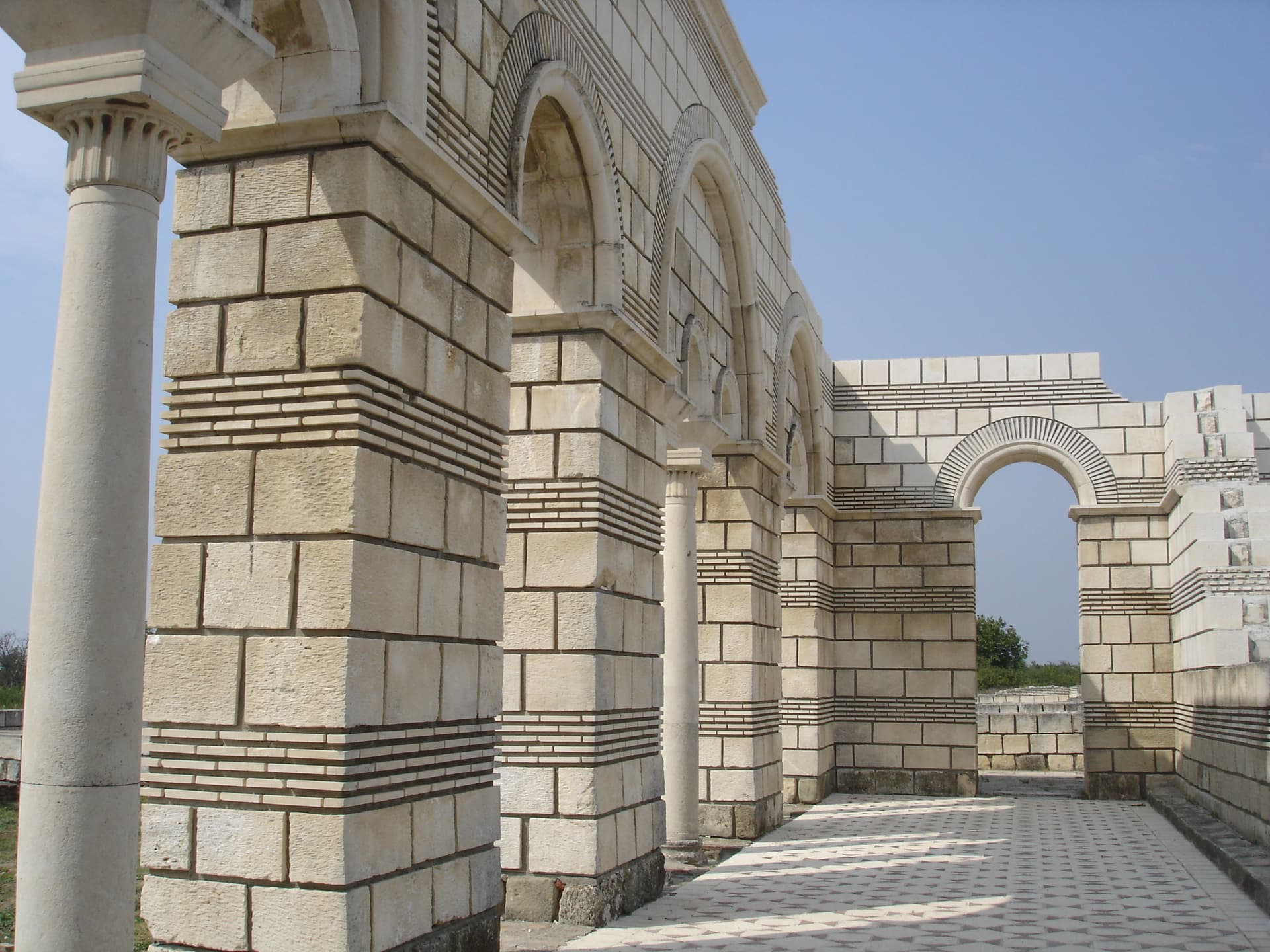
Standing at a distance of roughly 1.5 kilometers from the Inner City is the Great Basilica of Pliska - one of the largest Christian temples in all of medieval Europe and a symbol of the Christianization of the Bulgarian people. An exceptionally vital scientific fact confirms that beneath the foundations of this grand medieval basilica, archaeologists exposed the remnants of a much older Late Antiquity church displaying a distinct cruciform plan. Researchers identify this early temple as a martyrium, proving that the structure was erected over a sacred site linked to the death, suffering, or burial of an early Christian hieromartyr.
It was precisely in Pliska, in the year 864 AD, that the great Bulgarian monarch, Holy Prince Boris I Mikhail, accepted Christianity and officially baptized the entire Bulgarian nation, executing a fundamental cultural and political reformation. Another event of immense pan-Slavic significance was the official and solemn welcoming of the disciples of the creators of the Slavic alphabet, the Holy Brothers Cyril and Methodius, into the first Bulgarian capital, where they were provided with state patronage to develop their literary and educational work.
Today, the town of Pliska is a premier travel destination, incorporating the following prominent assets from the 100 National Tourist Sites compiled by the Bulgarian Tourist Union:

Shumen region
9.4 km away

Shumen region
19.0 km away
Shumen region
19.2 km away
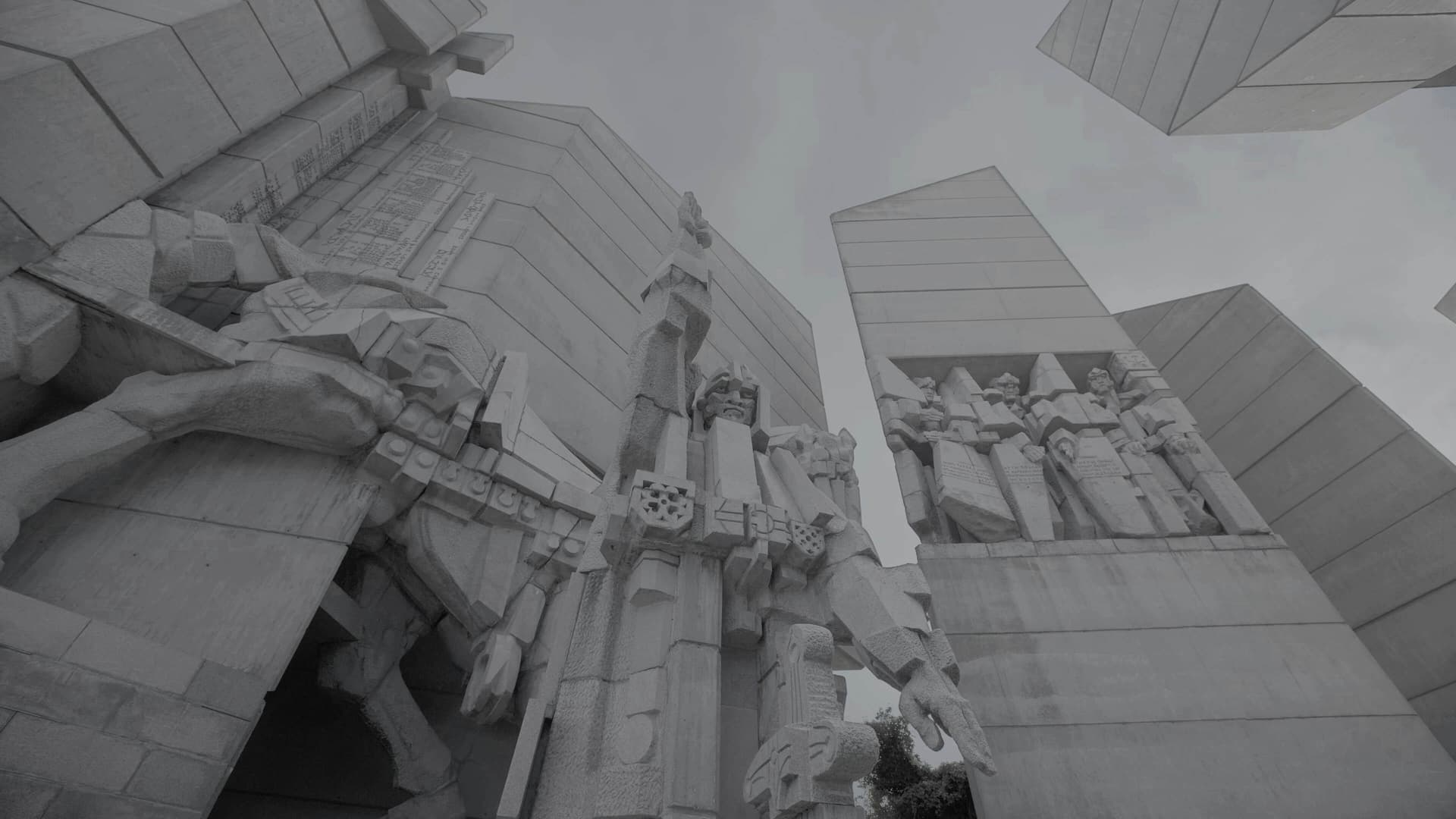
A weekend based in Shumen: the Madara Rider, Pliska, Veliki Preslav, Shumen fortress and the plateau monument — tickets, winter opening hours and a two-day route.
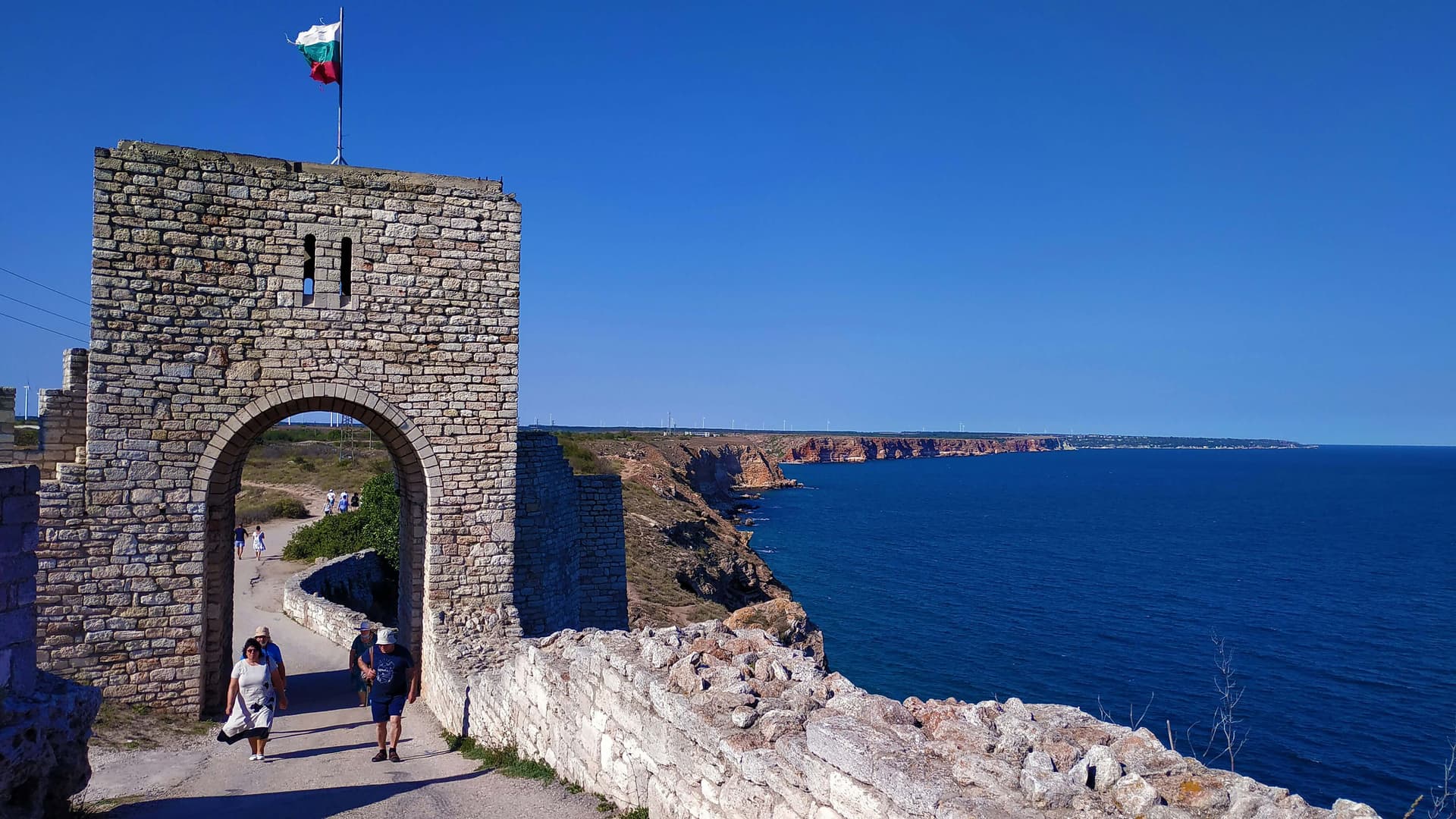
Planning a day trip from Varna? Discover the best itineraries: Balchik Palace, Cape Kaliakra, Aladzha Monastery, the Madara Rider, Pliska, and Pobiti Kamani.
Pliska is located in Shumen, Bulgaria.
Pliska is most easily reached by car. Use the coordinates above to navigate, or open the location in OpenStreetMap or your preferred maps app for turn-by-turn directions. Public transport options vary by region — for remote destinations a rental car gives the most flexibility.
Pliska can be visited year-round, but late spring (May–June) and early autumn (September–October) offer the most pleasant weather and fewer tourists. Summer is the busiest season; winter is the quietest, with shorter daylight and possible cold weather.
Bulgarian settlements typically reward unhurried walking — historic centres, churches and monasteries, local markets, and family-run restaurants serving regional dishes. Larger towns often have museums and seasonal cultural events. The local tourist information centre is a good first stop for current opening hours and what's on.