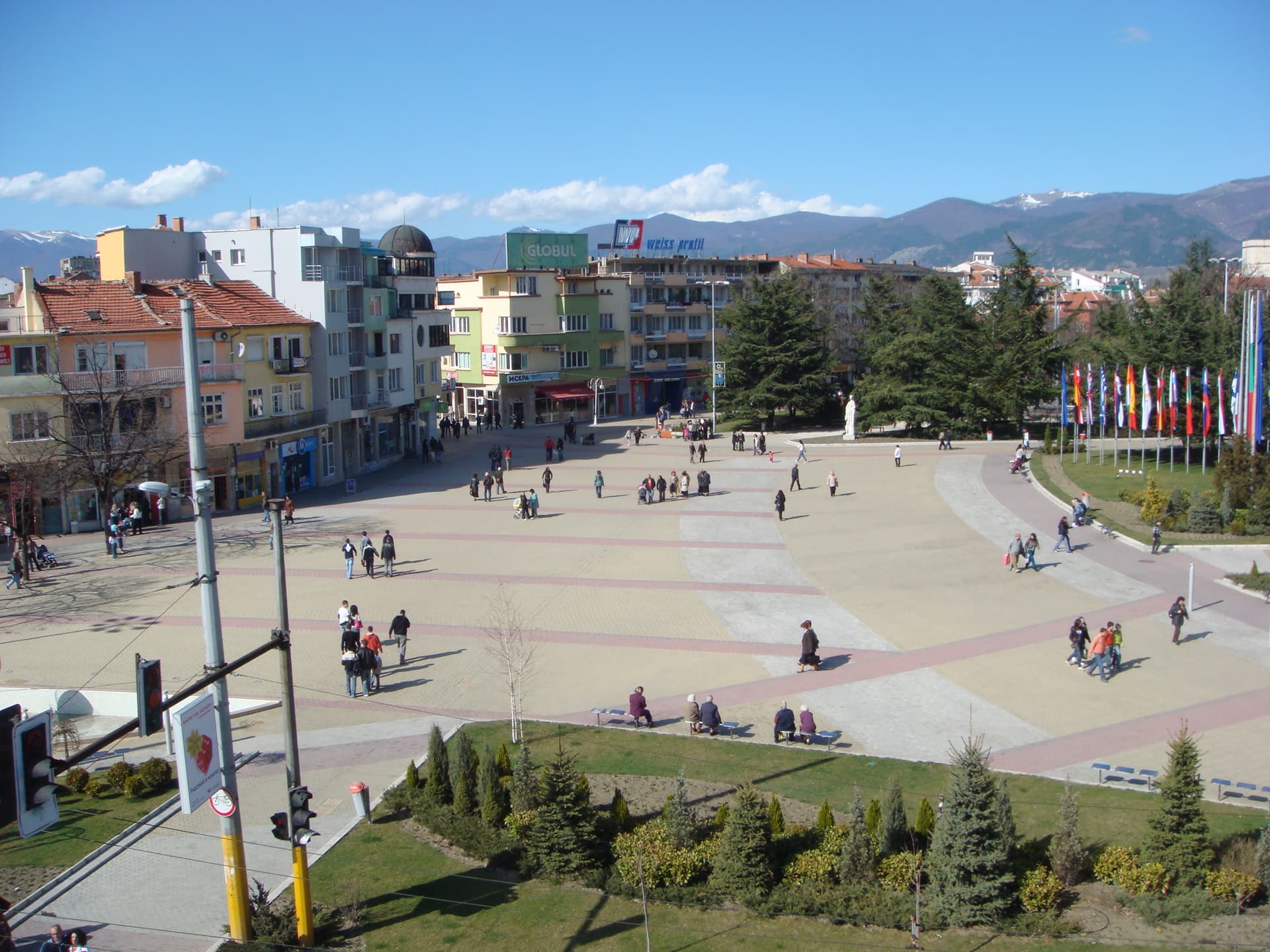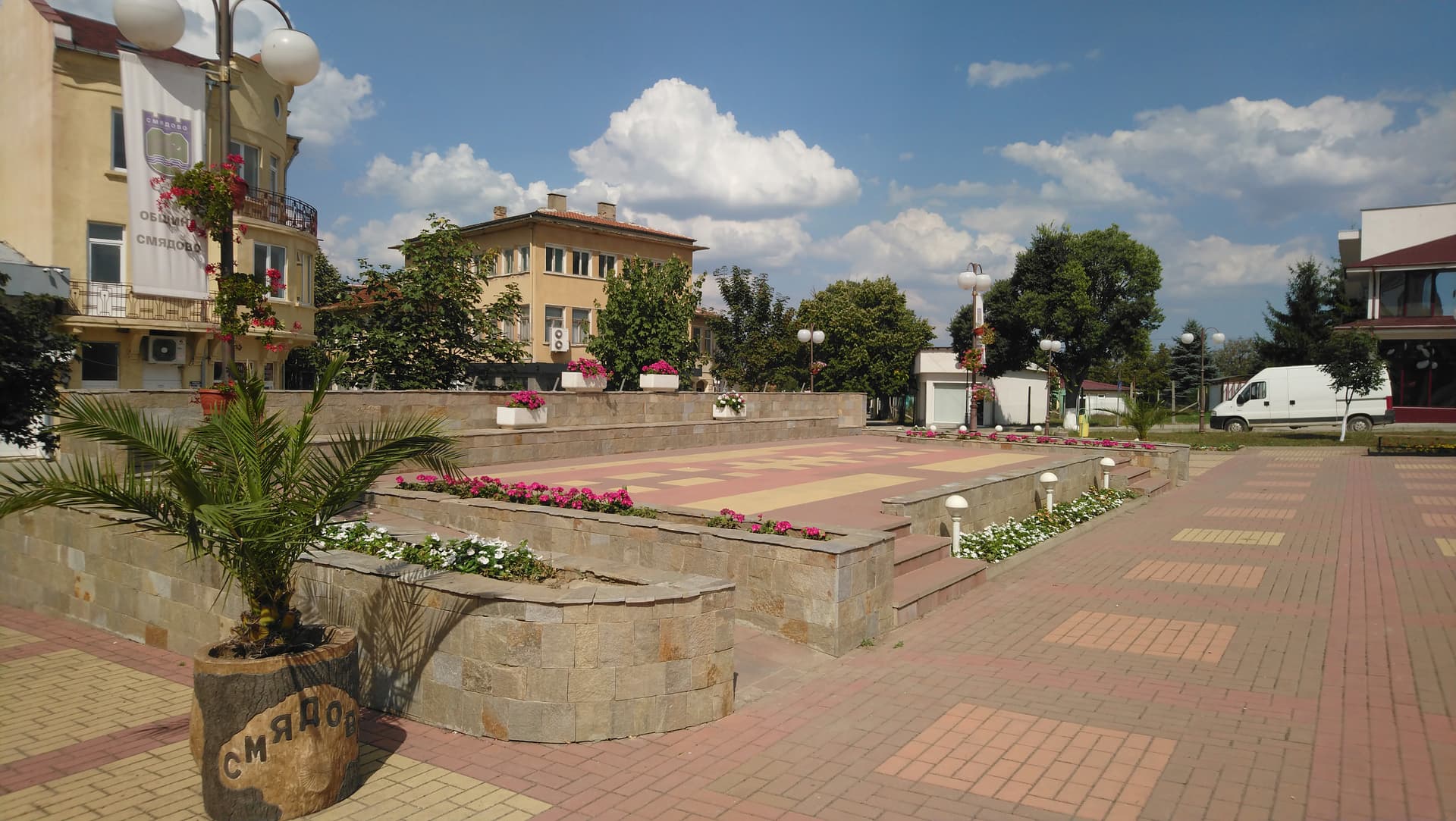
Smyadovo is a town in the south-east of Shumen province and the centre of the municipality of the same name. It lies on the northern foothills of the Eastern Balkan range, 28 km south of Shumen and 25 km south-east of Veliki Preslav. Main road 73 runs through the town from Shumen southwards and, just past Smyadovo, enters the Rish pass, the area's main link with southern Bulgaria. Smyadovo has a station on the Shumen–Komunari railway.
The best-known find is a Thracian tomb from the 4th century BC, discovered in 2000. It has two chambers built of well-dressed limestone blocks and a facade with two half-columns. A stone beam above the entrance carries a two-line inscription naming the woman buried there: Gonimasedze, wife of Seuthes. It is the only known tomb of this period in Bulgaria with an inscription.
Some 2.5 km west of town, in the Golyam Yurdan area, is the Nazlamova (Dyado Zlateva) tell: 70 by 90 m, 7 m high, with seven layers of Late Chalcolithic settlements. A cemetery of 34 graves has been excavated next to it.
Smyadovo is also known for its lukanka sausage, and the municipality's coat of arms shows the East Balkan pig. The town fair is held on the second-to-last Sunday of November, and the market fair on the last Sunday of August.
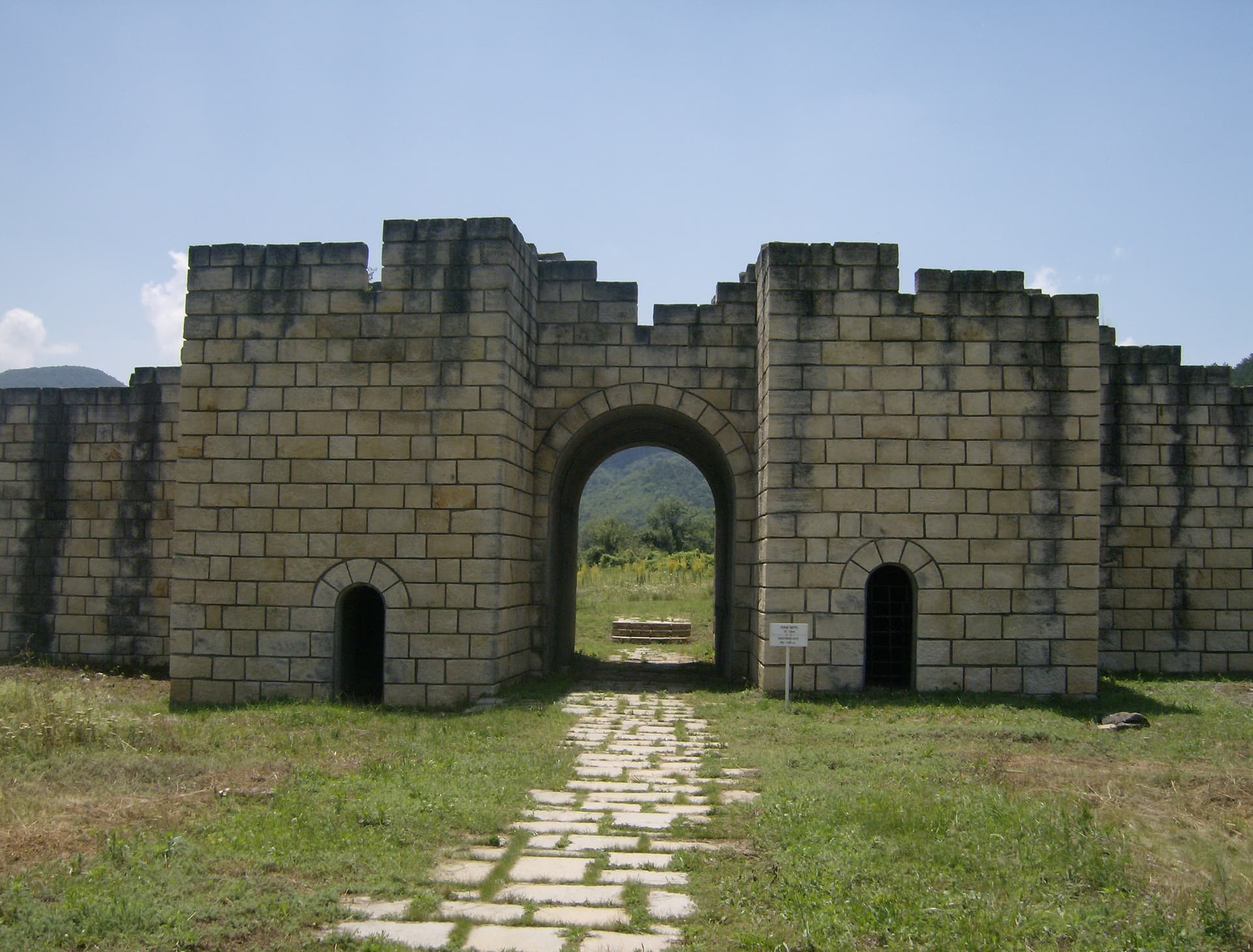
Shumen region
19.9 km away

Shumen region
20.8 km away
Shumen region
23.9 km away
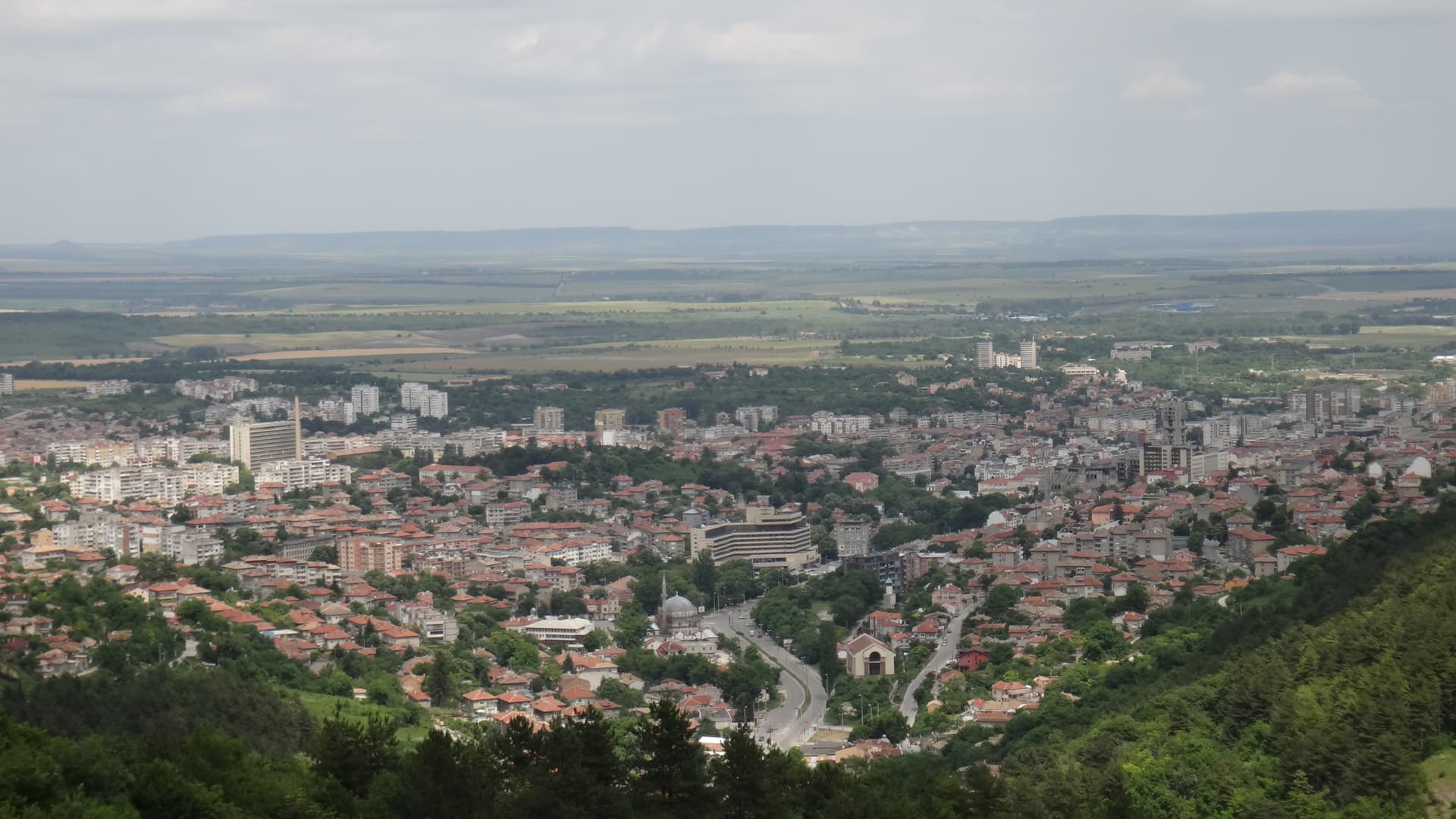
Shumen region
24.0 km away
Smyadovo is located in Shumen, Bulgaria.
Smyadovo is most easily reached by car. Use the coordinates above to navigate, or open the location in OpenStreetMap or your preferred maps app for turn-by-turn directions. Public transport options vary by region — for remote destinations a rental car gives the most flexibility.
Smyadovo can be visited year-round, but late spring (May–June) and early autumn (September–October) offer the most pleasant weather and fewer tourists. Summer is the busiest season; winter is the quietest, with shorter daylight and possible cold weather.
Bulgarian settlements typically reward unhurried walking — historic centres, churches and monasteries, local markets, and family-run restaurants serving regional dishes. Larger towns often have museums and seasonal cultural events. The local tourist information centre is a good first stop for current opening hours and what's on.