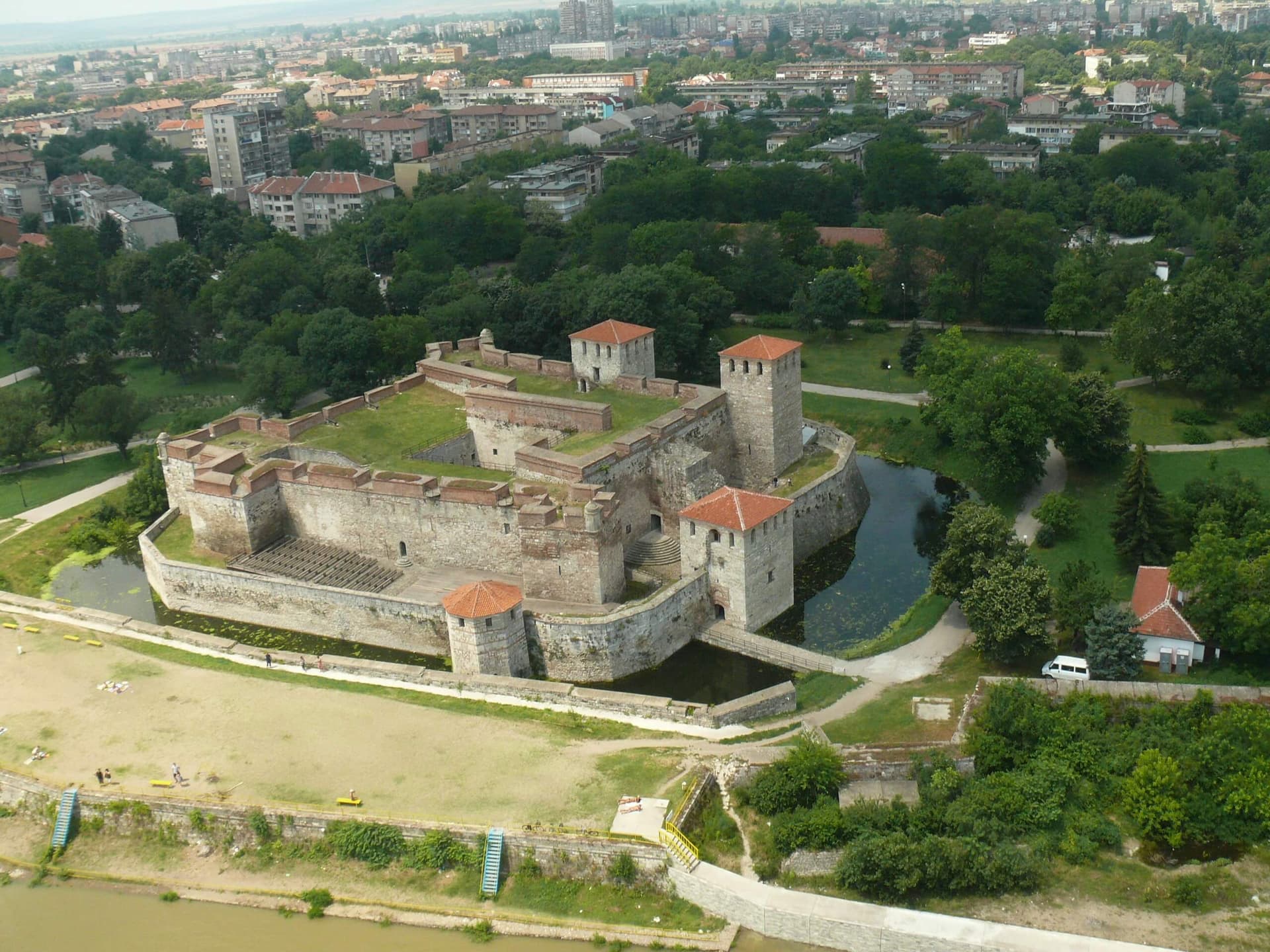
Baba Vida, also called Babini Vidini kuli, is Vidin's medieval castle on the Danube bank. It is the only fully preserved medieval castle in Bulgaria, and the citadel of the later Vidin city fortress. The history, the legend, tickets, opening hours and parking are covered in our guide below; this page is about the castle itself.
The castle is shaped like a tall trapezoid. It has two rings of walls, 4 towers, 4 bastions, turrets for watching and shooting, and embrasures for guns and archers. The oldest part is the bastion in the southern corner, from the 10th century. The best-preserved tower is the 16 m Sratsimir Tower in the northern corner of the inner walls. The Soldiers' Tower stands in the middle of the northwest wall. The Entrance Tower and the eight-sided Austrian Tower are on the outer walls. A moat 12 m wide and 6 m deep surrounds the outer walls, crossed by a stone bridge where a wooden drawbridge once stood.
The castle has been a museum since 1958, a cultural monument of national importance since 1964, and it is one of the Hundred National Tourist Sites. It has appeared in more than 50 Bulgarian and foreign films; the first was shot in 1928, and the best known is Michel Strogoff (1935).
Vidin region
0.5 km away
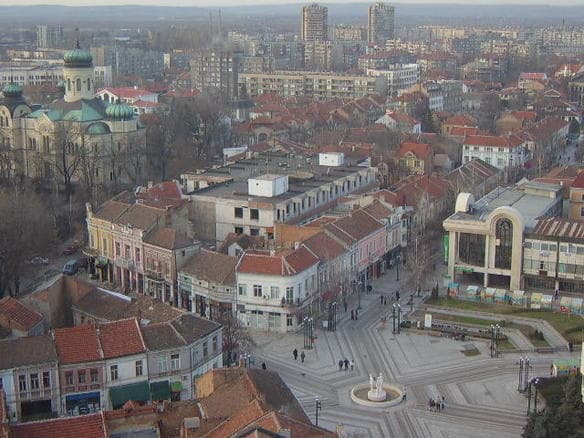
Vidin region
1.1 km away
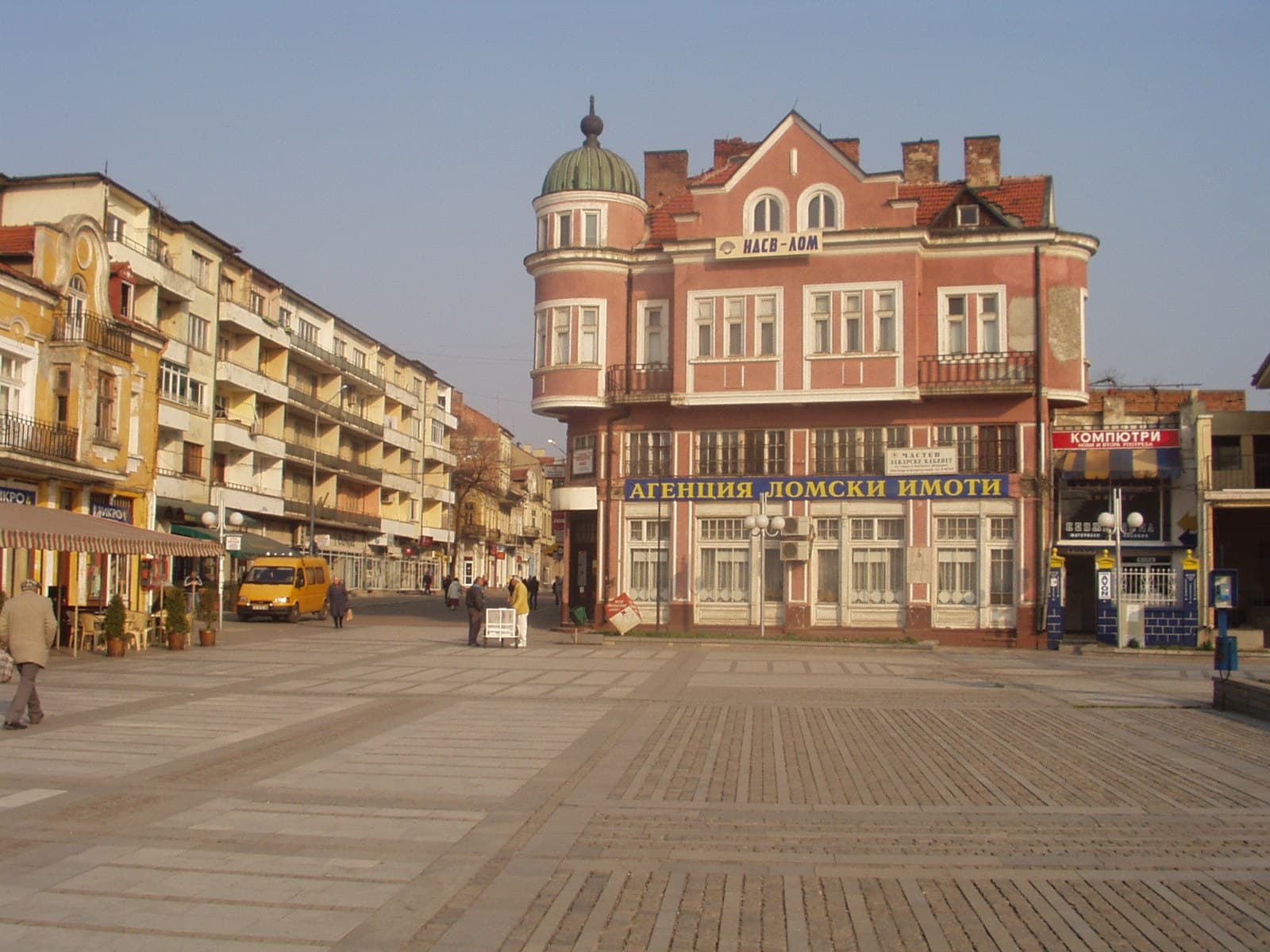
Montana region
34.2 km away
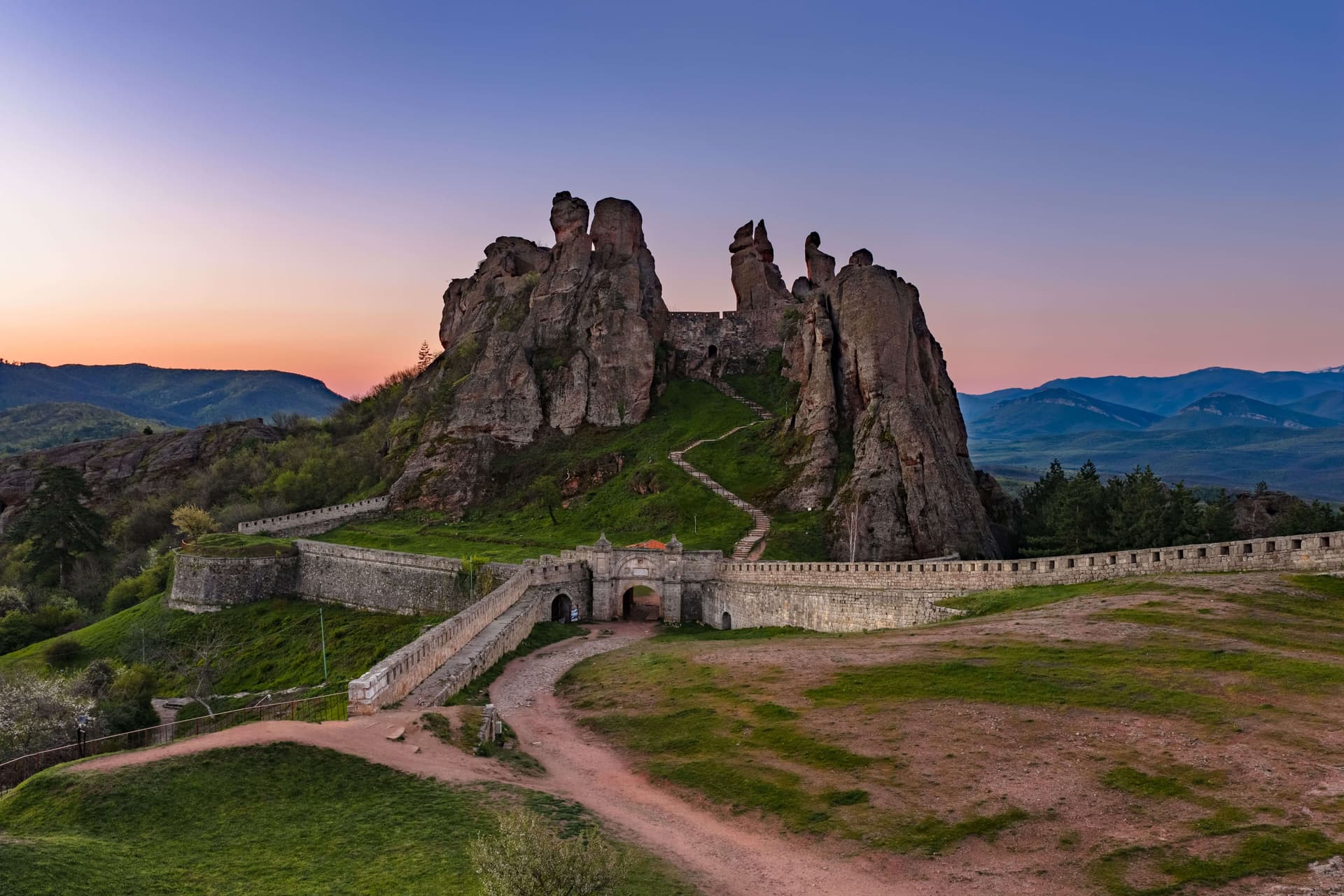
A complete 4-day road trip itinerary through Bulgaria's least-visited region: Iskar Gorge, Vratsa, God's Bridge, Chiprovtsi, Belogradchik Rocks, Magura Cave, and Vidin.
A complete travel guide to Vidin on the Danube: Explore Baba Vida castle, visit the restored Synagogue (Jules Pascin Centre), and pair it with Belogradchik and Magura Cave.
Baba Vida Fortress is located in Vidin, Bulgaria.
Baba Vida Fortress is most easily reached by car. Use the coordinates above to navigate, or open the location in OpenStreetMap or your preferred maps app for turn-by-turn directions. Public transport options vary by region — for remote destinations a rental car gives the most flexibility.
Baba Vida Fortress can be visited year-round. Spring and autumn offer the most pleasant conditions for exploring, with mild temperatures and fewer crowds. Summer is ideal for photography and longer day trips; winter visits are possible but weather can limit access at some sites.
Most natural landmarks in Bulgaria are freely accessible and open year-round, though some sites have entrance fees or require a guide. Wear sturdy footwear and bring water, as the terrain can be uneven. Respect any protective barriers and stay on marked paths to preserve the site.