- Coordinates
- 41.90344, 25.23273
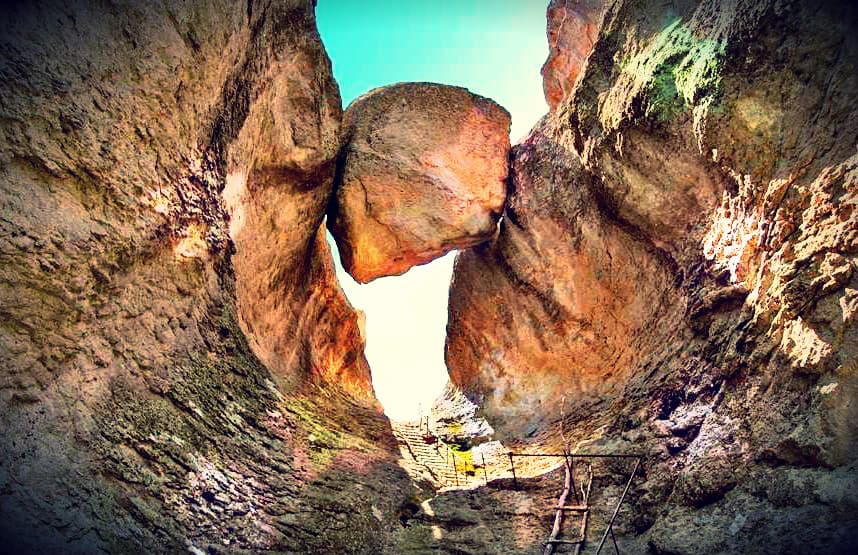
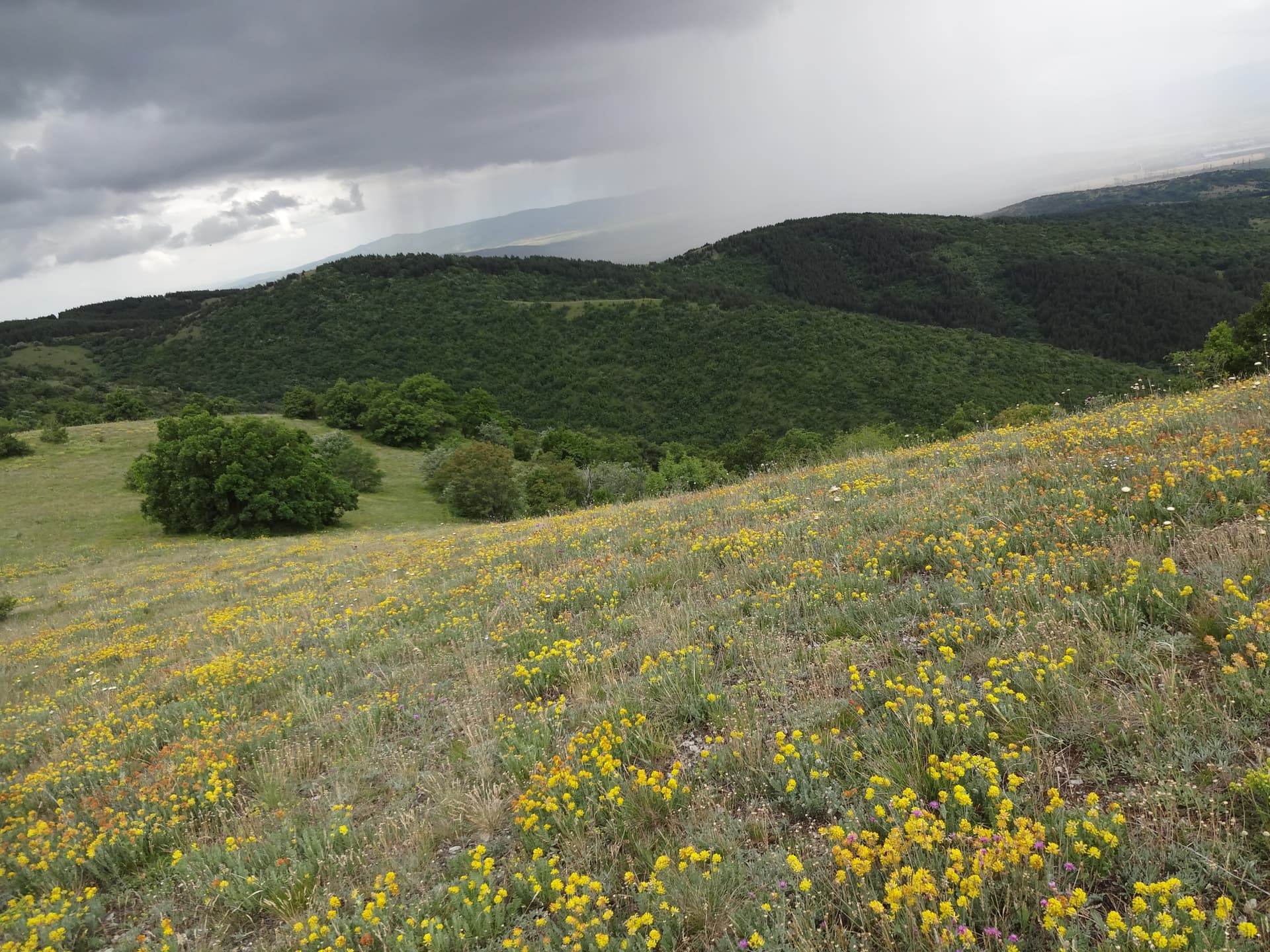
Tucked away within the dense, uninhabited forests south of the village of Bukovo, the Yellow Cave (Zhaltata Peshtera) stands as one of the largest yet least explored rock formations in the Eastern Rhodopes. This area remains entirely isolated from civilization, preserving vast territories where humans have rarely set foot. The massive site is renowned for its impressive scale and the distinct yellowish hue of its rocks, which gives the cave its name.
The "Womb" Sanctuary and Sun Worship
- Cave Architecture: The cave itself is a small part of a grander complex, measuring 13 meters in length with a vertical displacement of just 2 meters.
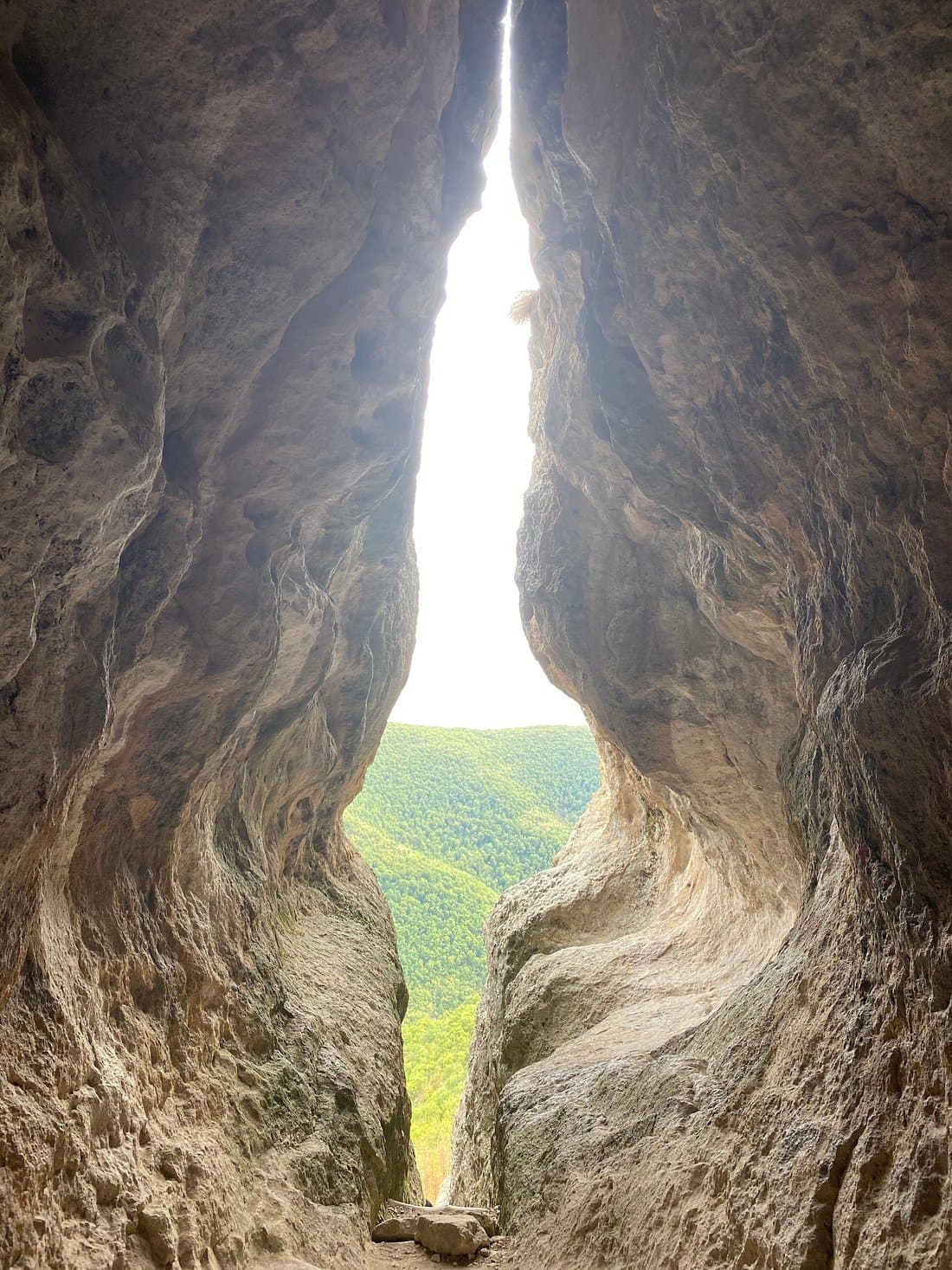
- The "Womb" Type: It is a rare "womb-type" cave, a characteristic feature of ancient sanctuaries in the Eastern Rhodopes. Its entrance is precisely oriented to the south, facing the sun.
- The Solar Ritual: Due to this orientation, a sunbeam penetrates deep into the "womb" at a specific time of day, symbolizing the conception and birth of new life.
- Interior Features: Inside, a stone bed has been carved into the rock. Access to the elevated entrance is provided by a specially fitted ladder.
Mysterious Niches and the Stone Calendar
- Trapezoidal Niches: The massif is covered with numerous rock-cut niches. Many are only visible from the air, as they are carved into vertical cliffs with a "reverse slope," angled downwards toward the abyss.
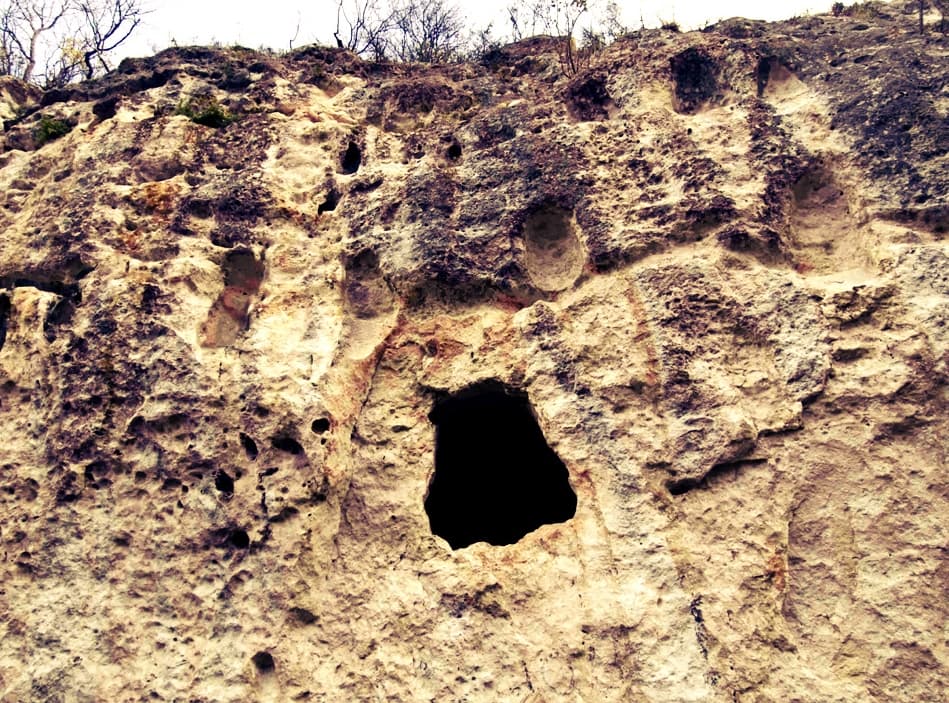
- The Rock Face: An intriguing human-like face with a distinct nose, mouth, and chin can be observed naturally formed or carved into the rocks.
- Ancient Calendar: Archaeological theories suggest the presence of a stone calendar device featuring six openings. In four of these, shadows fall precisely on the solstices and equinoxes—March 21, June 21, September 21, and December 21.