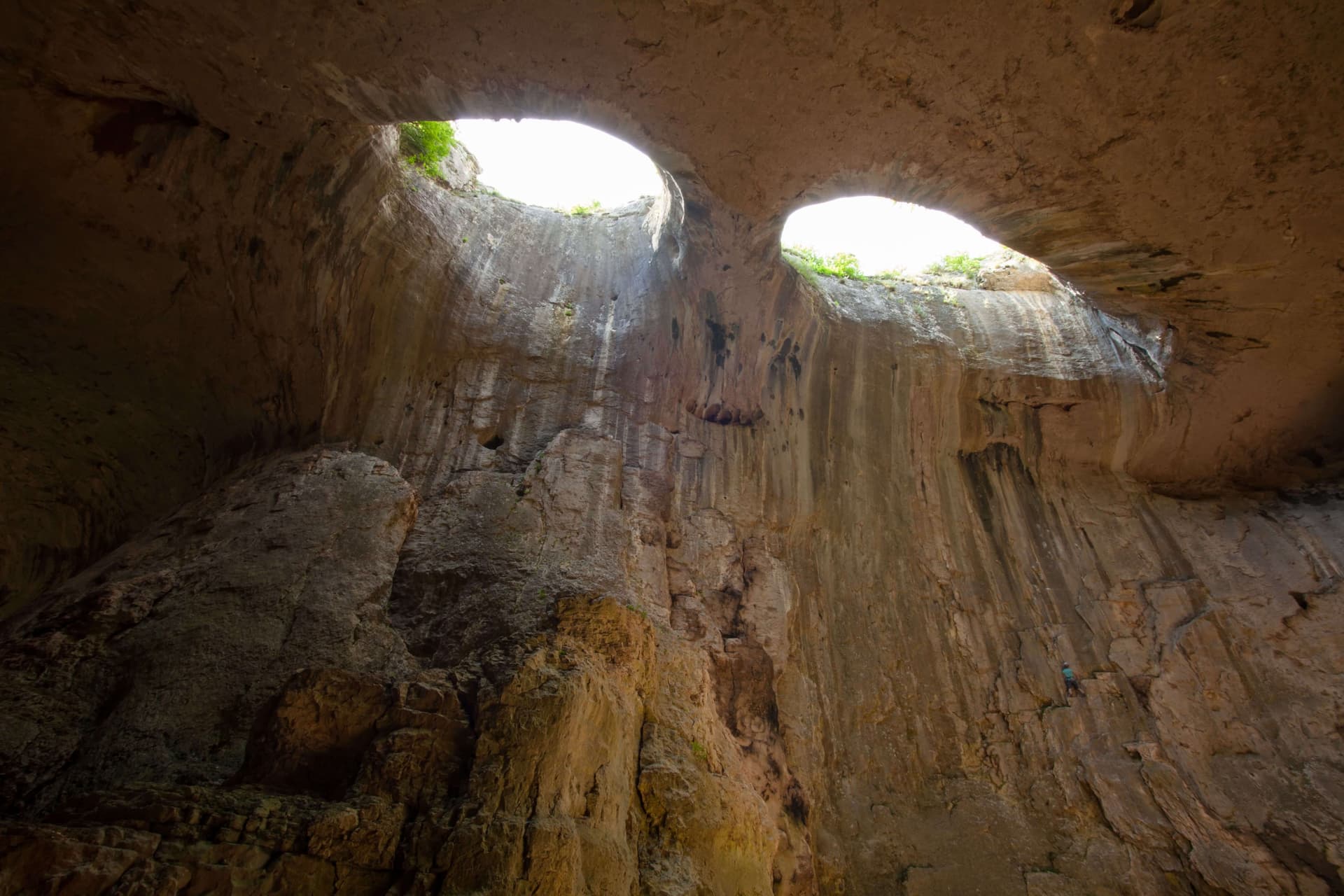
Yubileyna Cave (Jubilee Cave) is one of the remarkable and highly intriguing underground sites in Bulgaria, located within the karst-rich territory of the Peshtera municipality. Discovered in the mid-1970s, it features a complex two-story cave system that seamlessly combines dry chambers, narrow rock fissures, and active water-bearing galleries. The cave was developed and adapted for exploration thanks to the dedicated work of F. Filchev, turning it into a valuable site for both speleology enthusiasts and the Bulgarian scientific community.
Unique Subterranean Fauna
Yubileyna Cave stands out for its highly specialized troglobitic ecosystem. Its unique fauna was meticulously documented by the world-renowned Bulgarian biospeleologist Petar Beron during research expeditions in 1973 and 2005. Inside the dark, humid galleries, rare invertebrate species have been isolated and identified, including:

Pazardzhik region
0.1 km away

Pazardzhik region
1.7 km away
Pazardzhik region
3.6 km away
Pazardzhik region
7.4 km away
Yubileyna is located in Pazardzhik, Bulgaria.
Yubileyna is most easily reached by car. Use the coordinates above to navigate, or open the location in OpenStreetMap or your preferred maps app for turn-by-turn directions. Public transport options vary by region — for remote destinations a rental car gives the most flexibility.
Caves can be visited year-round — the temperature inside stays roughly 10–12°C regardless of season. Spring and autumn are quieter than peak summer. Bring a warm layer and sturdy footwear; some caves close in winter when access roads become impassable.
Access to caves varies. Show caves typically run guided tours during posted opening hours; wild caves require proper equipment and experience. Inside, the temperature stays cool year-round (~10–12°C) — bring a warm layer, sturdy non-slip footwear, and a torch even on guided tours.