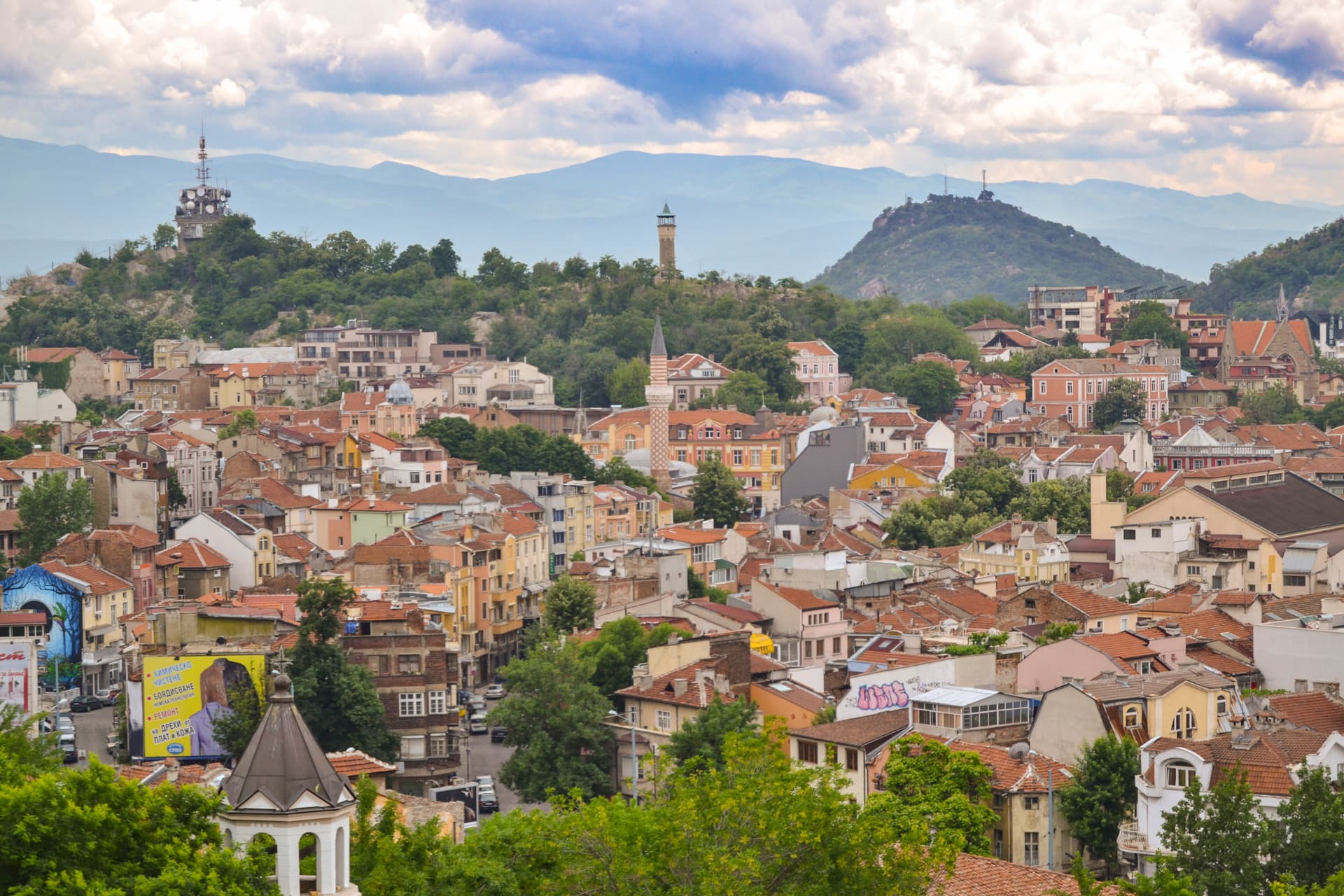
Plovdiv is the second-largest city in the Republic of Bulgaria and operates as the primary economic, cultural, and educational core of the South Central region. The urban territory spans a total area of 102 square kilometers. According to official demographics from the National Statistical Institute, by the end of December 2025, the permanent population of Plovdiv counted 333 994 residents, positioning it second nationwide, immediately following the capital city of Sofia.
Plovdiv serves as the administrative center for the Plovdiv Province, Plovdiv Municipality, Maritsa Municipality, and Rodopi Municipality. The official motto of the city is Ancient and Eternal.
The city occupies a highly scenic and strategic geographical position in the western territory of the Upper Thracian Plain, developed harmoniously across both banks of the large Maritsa River. Plovdiv is located 15 km north of the forested slopes of the Rhodope Mountains and 50 km south of the Balkan Mountain range. The urban space is built directly at the base of six iconic syenite hills, which has earned Plovdiv the widespread nationwide nickname The City Under the Hills (Gradat pod tepetata).
Plovdiv is a city with a history spanning over 8000 years, its past comprehensively traced from Prehistory to modern times. The initial organized Neolithic settlements within the boundaries of the modern city emerged during the 6th millennium BC. Historical research proves that since the Eneolithic Era, spanning the 4th and 3rd millennia BC, continuous urban life in the city has never been interrupted. This fact establishes Plovdiv among the oldest continuously inhabited cities across the globe.
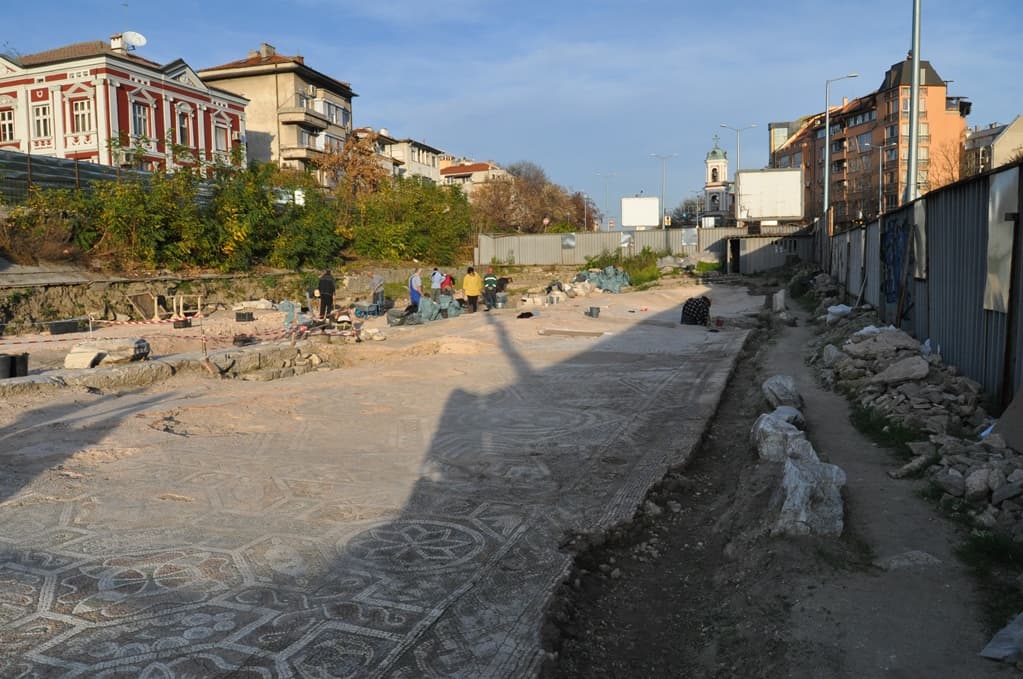
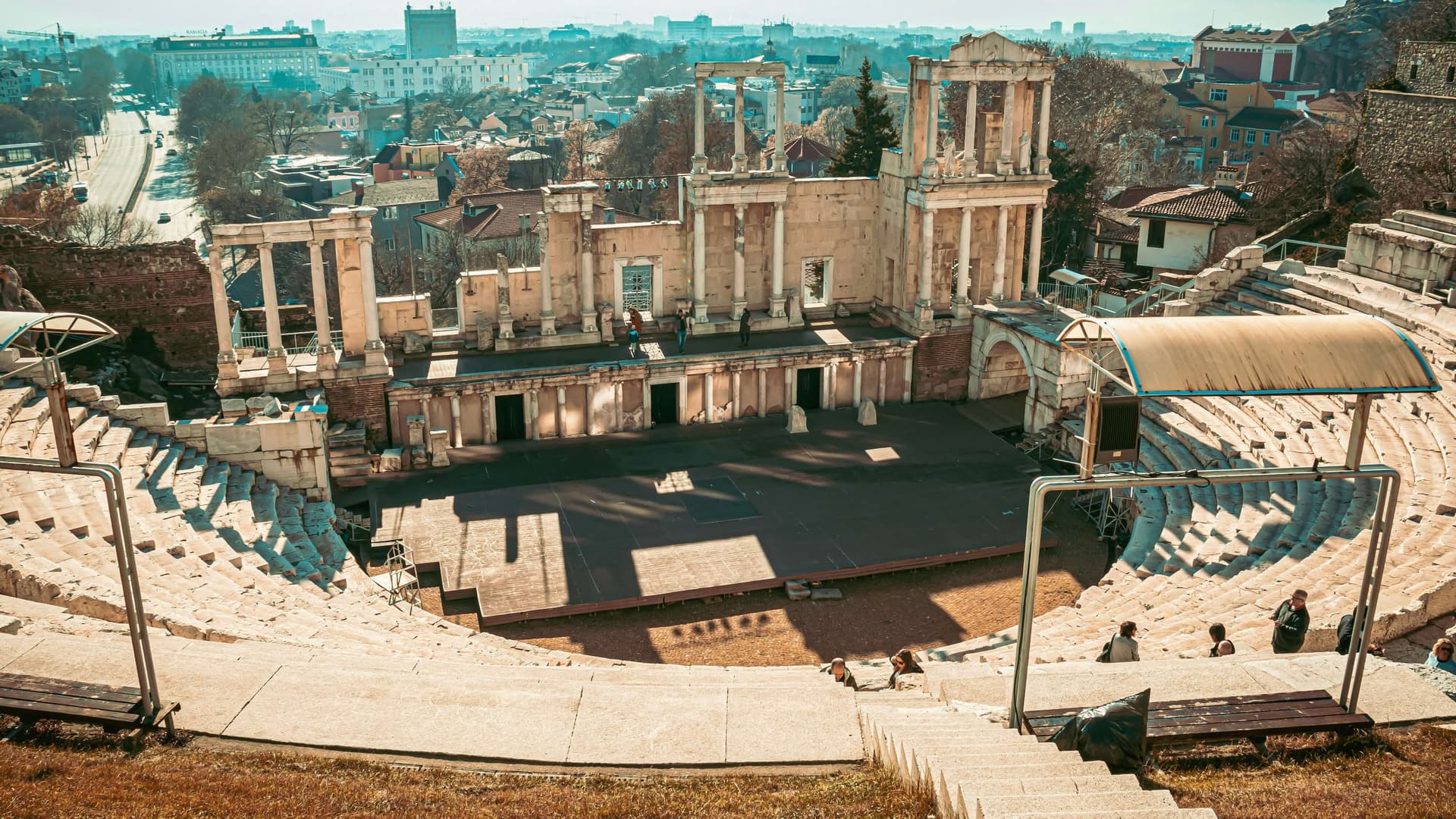
In the modern city center, unique ancient cultural monuments have been excavated, conserved, and socialized, drawing millions of travelers annually:
Plovdiv stands out as the fastest-growing industrial hub in Southern Bulgaria. Its stable economy is anchored by a well-developed multi-profile manufacturing industry, international commerce, services, mass cultural tourism, and a thriving high-tech information technology sector.
The city regularly hosts numerous prestigious international and national cultural events:
Plovdiv was officially selected and successfully executed the title of European Capital of Culture for 2019, sharing the honor with the historic Italian city of Matera. In February 2022, Plovdiv secured the prestigious fourth position in the global rankings of the travel website European Best Destinations as a top European travel destination, tracking immediately behind Amiens, Marbella, and Ljubljana. The prominent business magazine Forbes declared Plovdiv the absolute best destination for cultural tourism across all of Europe.
The Evolution of the City Names Through the Epochs
Although the city has existed continuously since the 6th millennium BC, its precise nomenclature prior to the middle of the 4th century BC remains a subject of ongoing historical research. According to multiple scholars, the oldest known name of the settlement is Eumolpias. This hypothesis relies on a written record by the 4th-century Roman historian Ammianus Marcellinus, who linked the city to the name of the mythical Thracian ruler and singer Eumolpus.
In 342 BC, the city was conquered by King Philip II of Macedon, who recognized its strategic value and erected massive defensive fortress walls around the Three Hills. In subsequent ancient written records, the city began carrying his name, Philippopolis, which literally translates as the city of Philip. Over the following centuries, the name was adapted across various regional languages.
Within the local Thracian environment, the specific Thracian linguistic form Pulpudeva or Pulpudava was used, where the component word dava is the classic Thracian term for a city or fortified settlement, and Pulpu is the local modified pronunciation of Philip's name. Following extensive large-scale construction and modernization during the reign of the Roman Flavian Dynasty, the city was officially designated Flavia Philippopolis for a brief historical period.
In Old Bulgarian medieval manuscripts, the city is recorded under the variants Plavdiv and Plapdiv, alongside the names Papaldin, Paldin, and Pladin. Historical linguistics proves that all these medieval Bulgarian variants derive their direct linguistic origin from the ancient Thracian form Pulpudeva. It is from these Old Bulgarian forms that the modern name Plovdiv stems, which until the official spelling reform of 1945 was written with a traditional hard sign at the end as Пловдивъ.
According to the medieval Chepino Chronicle, the city's name was recorded as plodn grad, which historians interpret as fruitful city, describing the exceptional natural fertility of the Thracian Plain surrounding the Maritsa River valley. From the official Greek form Philippopolis derives the Turkish name of the city used during the Ottoman Era and up to the present day - Filibe.
During specific historical periods, alternative titles were temporarily utilized, though they lacked a lasting character. Some ancient Greek authors referred to the city by the derogatory name Poneropolis, which literally translates as the city of villains or city of rogues. This title was likely a political slight targeted against the Macedonian garrisons ruling the city.
During the glorious Roman Era, the Latin name Trimontium, meaning Three Hills, became widely established and used. The name describes the topography of the urban core, which during Antiquity was located entirely across the three primary hills - Nebet Tepe, Dzhambaz Tepe, and Taksim Tepe. Some contemporary researchers also identify Plovdiv with the mystical ancient city of Odryza, from whose historical existence only separate bronze coins have been fully preserved down to our time.
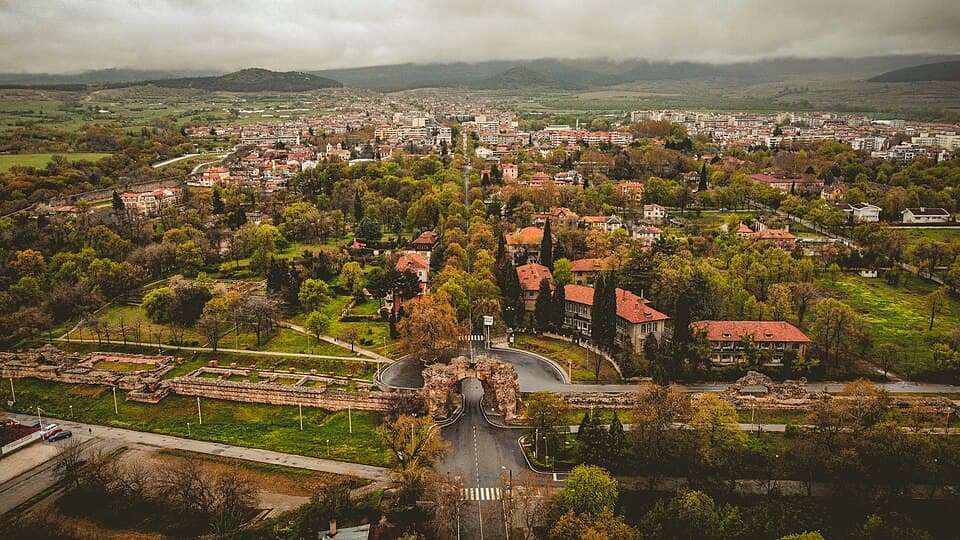
Hisarya or Pavel Banya for a spa weekend: Roman walls and mineral fountains, or a five-star spa base in the Rose Valley — tickets, parking, prices and which to pick.

When the Bulgarian grape harvest happens, which wine regions to visit in September and October, how a harvest day works and what to book in advance.
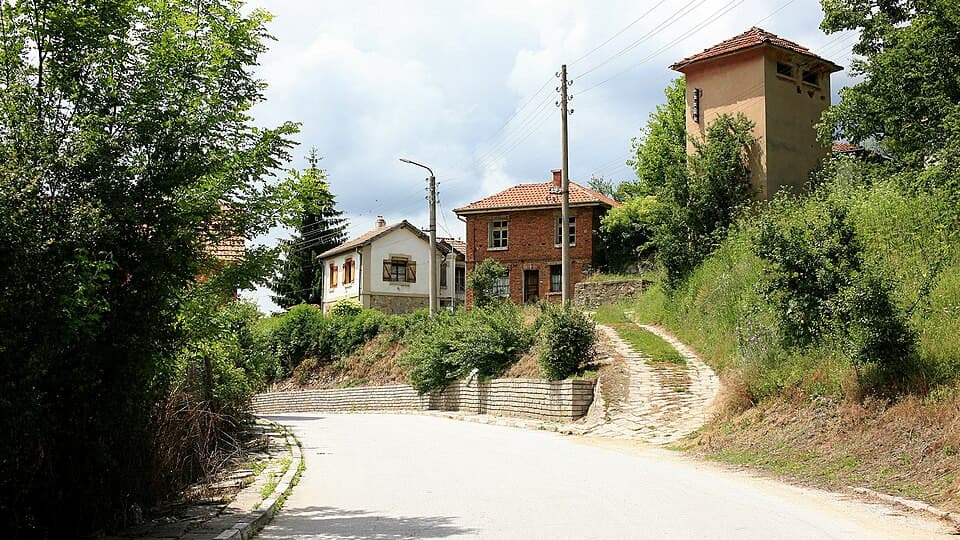
A guide to Svezhen — the architectural reserve above Brezovo: how to get there, the road, the museums and their opening hours, the hut, autumn hiking and where to stay.
Plovdiv is located in Plovdiv, Bulgaria.
Plovdiv is most easily reached by car. Use the coordinates above to navigate, or open the location in OpenStreetMap or your preferred maps app for turn-by-turn directions. Public transport options vary by region — for remote destinations a rental car gives the most flexibility.
Plovdiv can be visited year-round, but late spring (May–June) and early autumn (September–October) offer the most pleasant weather and fewer tourists. Summer is the busiest season; winter is the quietest, with shorter daylight and possible cold weather.
Bulgarian settlements typically reward unhurried walking — historic centres, churches and monasteries, local markets, and family-run restaurants serving regional dishes. Larger towns often have museums and seasonal cultural events. The local tourist information centre is a good first stop for current opening hours and what's on.