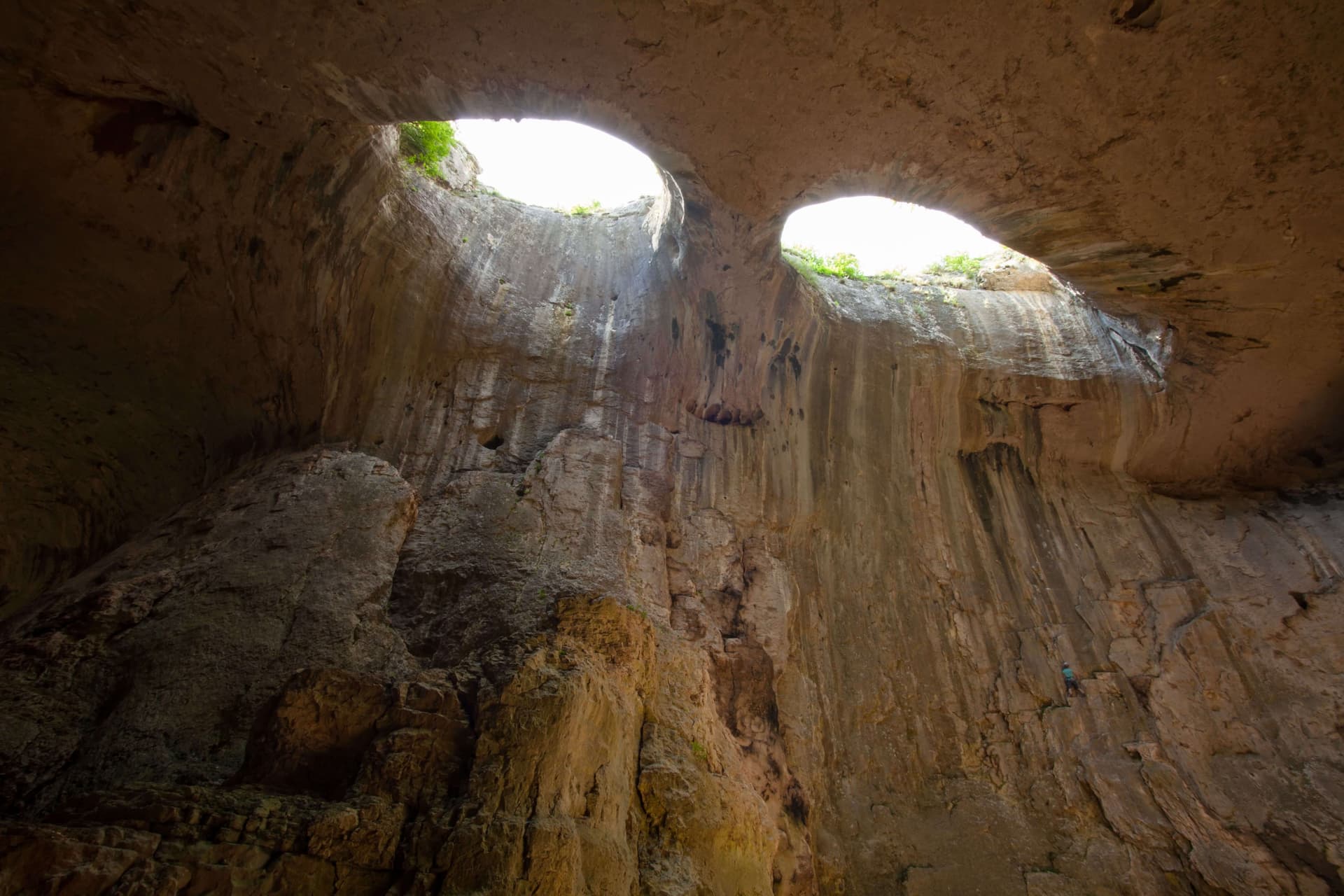
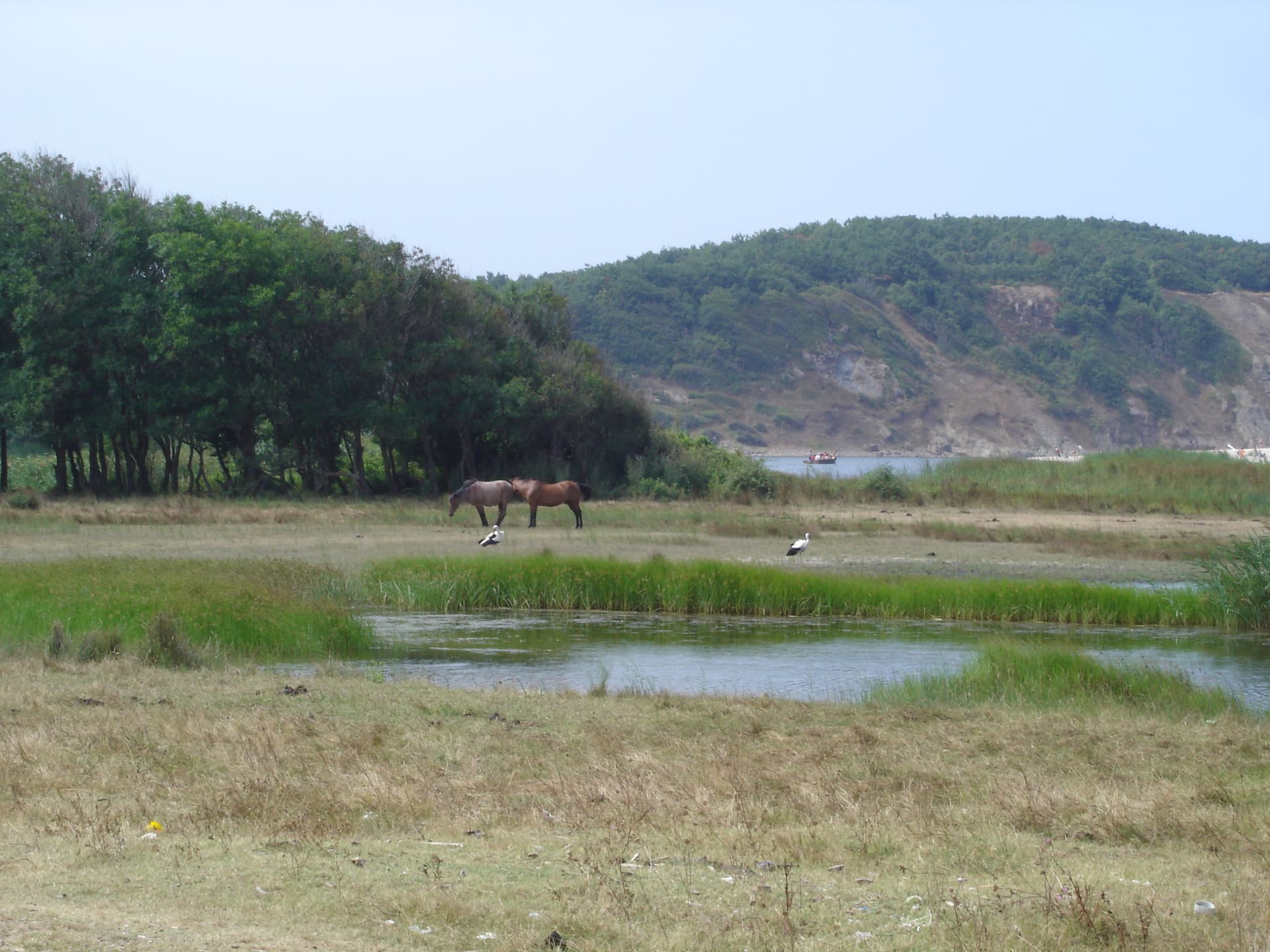
Kosti is a mountainous and historic village situated in Southeastern Bulgaria, positioned within the administrative boundaries of the Tsarevo Municipality, Burgas Province. Nestled within the scenic valley of the Veleka River amidst the dense, ancient forests of the Strandzha Nature Park, the village attracts visitors with its profound cultural traditions, mystical Nestinar fire-walking customs, and perfectly preserved authentic wooden architecture. Ancient Heritage and Medieval Records The territory of Kosti safeguards material traces of human civilization dating back to deep antiquity. Within the close vicinity of the settlement, archaeologists have discovered and mapped clear remnants of developed ancient metallurgical activities and mining operations. South of the village, an extensive burial mound necropolis comprising 15 separate tumuli has been scientifically documented and studied, alongside several individual Thracian burial mounds registered across the district. The earliest written and official documentary evidence confirming the existence of the village is preserved inside an Ottoman tax registry dating back to the historical year 1488. The settlement further appears within a later tax registry of the Anchialo kaza (the contemporary town of Pomorie) during the 17th century, recorded at that time as one of the twelve primary villages forming the large Agathopolis nahiye. Demographic Shifts, Warfare, and Refugee Waves Throughout the National Revival era and subsequent military conflicts, the demographic profile of Kosti underwent massive and dynamic transformations: - Russo-Turkish War (1828 - 1829): Within historical documents from this epoch, the locality is explicitly designated as an entirely Greek village, whose residents were ethnic Greeks, highly renowned throughout the region for their authentic Nestinar fire-walking rituals. - Berlin Treaty (1878): Following the Liberation, by virtue of the Treaty of Berlin, the village remained within the borders of the Ottoman Empire, assigned to the newly established Malko Tarnovo kaza. During the Ilinden - Preobrazhenie Uprising in 1903, the settlement numbered approximately 100 residential houses. - Integration into Bulgaria: Kosti was definitively liberated and incorporated into the territory of Bulgaria following the Balkan Wars under the Treaty of Constantinople in 1913, subsequently adjusted by the Bulgaro-Turkish Convention of 1915. - Refugee Resettlement: The Greek population of Kosti emigrated entirely to Greece following the Second Balkan War and during the 1920s, with a segment of them resettled in the Serres village of Kakarasca. In their stead, Bulgarian refugees from Eastern Thrace arrived in Kosti, predominantly encompassing around a hundred families from the village of Pirogoplovo, Meglavit village, the town of Malak Samokov, and other regional hubs. The excellent geographical and climatic parameters within the fertile valley of the Veleka River enabled the settlers from the Lozengrad district to quickly prosper and develop agriculture. The legendary fertility of the land has been preserved in local folklore through tales of the massive and numerous walnut forests growing along the riverbanks. In 1926, statistics show that the village already numbered 304 houses and 1328 residents, of whom 856 individuals were registered as refugees from Eastern Thrace. Transportation History and School Closure In the mid-20th century, the village acquired a vital transport-logistical function. During the late 1940s and early 1950s, Kosti operated as the terminal station of the mountain narrow-gauge railway, a decauville line possessing a narrow 600-millimeter gauge along the Akhtopol - Brodilovo - Kosti route. This railway line was completely dismantled during the 1950s due to economic inefficiency, having previously served the primary needs of the Kosti State Forestry Enterprise, to which it transitioned as a wood-processing facility toward the end of its operations. Due to demographic decline, the local Saint Cyril and Methodius Primary School was officially closed by state decree in 2004. Unique Strandzha Architecture and the Fire-Walking Fair Today, some of the authentic old wooden houses of the former residents can still be observed and photographed in the village. This specific and unique style of residential architecture was historically distributed and known exclusively across three large Greek Strandzha villages, namely Kosti, Brodilovo, and Kalandzha (the contemporary village of Sinemorets). The structures are distinguished by the following architectural traits: - Dimensions and Tiers: The houses are exceptionally spacious in their proportions and are engineered across two floors (two-tiered). - Spatial Layout: The ground floor functioned as a stable for livestock, while the upper tier was designed for living quarters, with the exterior walls entirely clad in thick, roughly processed oak planks. - Illumination: The rooms feature wide wooden platforms (odars) but are completely devoid of windows, rendering the interior dark. Scarce daylight was provided in an original manner directly from the roof via a single adjustable roof tile, which was shifted to allow light and ventilation. Every year during the summer season, a traditional village fair is organized and celebrated. During the festivities, the mandatory, authentic, and highly characteristic Nestinar fire-walking dances over embers are performed, which the local population has preserved in a completely pure format from deep, ancient pagan antiquity to the present day.

Burgas
3.3 km away
Burgas
6.2 km away
Burgas
8.5 km away
Burgas
9.2 km away
Kosti is located in Burgas, Bulgaria.
Kosti is most easily reached by car. Use the coordinates above to navigate, or open the location in OpenStreetMap or your preferred maps app for turn-by-turn directions. Public transport options vary by region — for remote destinations a rental car gives the most flexibility.
Kosti can be visited year-round, but late spring (May–June) and early autumn (September–October) offer the most pleasant weather and fewer tourists. Summer is the busiest season; winter is the quietest, with shorter daylight and possible cold weather.
Bulgarian settlements typically reward unhurried walking — historic centres, churches and monasteries, local markets, and family-run restaurants serving regional dishes. Larger towns often have museums and seasonal cultural events. The local tourist information centre is a good first stop for current opening hours and what's on.