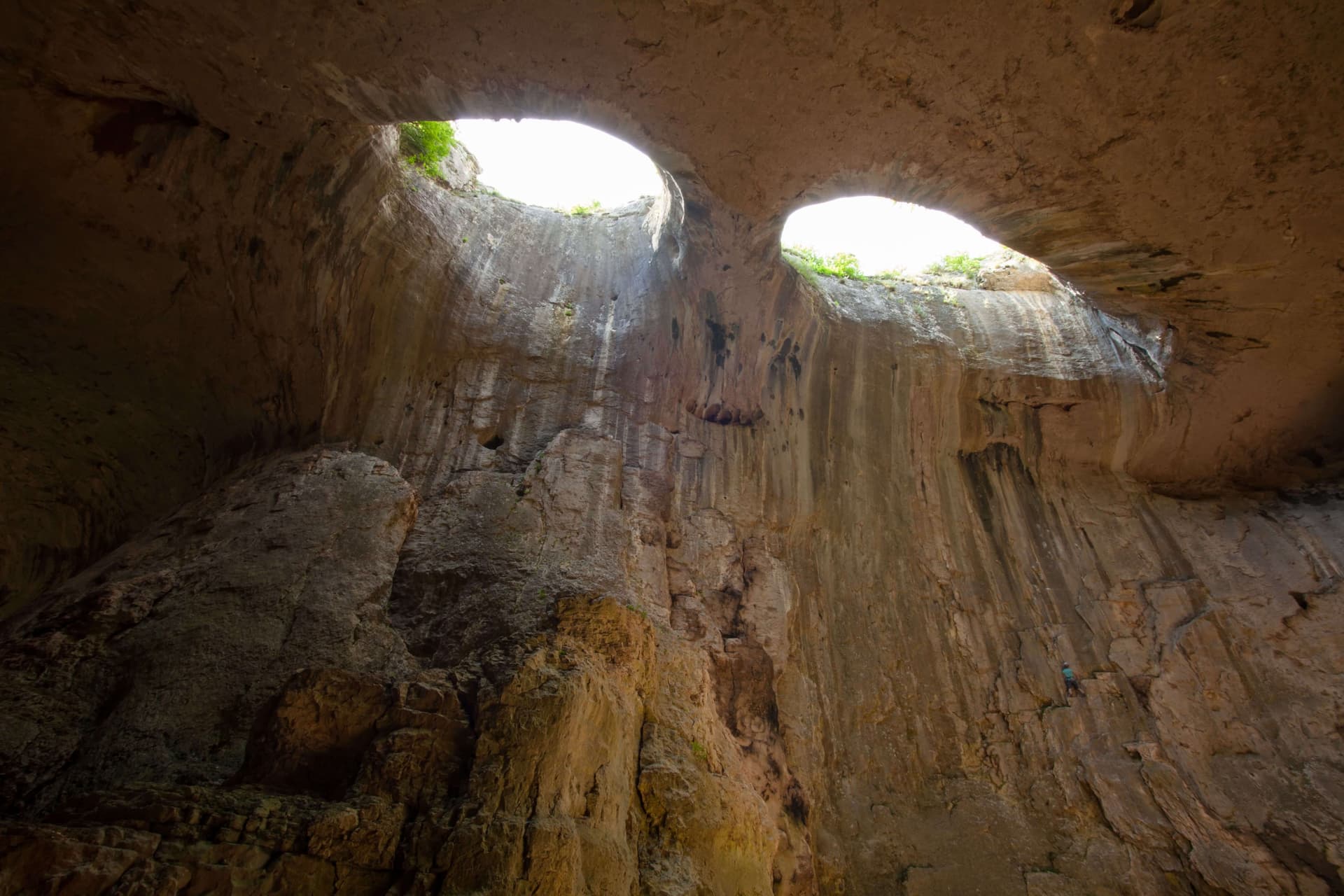
Lepenitsa is a cave in the Western Rhodopes, at the foot of Syutkya peak, about 17 km south-east of Rakitovo and about 9 km south of Velingrad. It is 1,525 m long, of which 1,356 m have been explored and mapped, and has been a protected natural landmark since 1962. How to get in, when it is open and what it costs are covered in our Velingrad guide below; this page is about the cave itself.
The cave has three levels. The Lepenitsa river runs along the lowest. The middle level is dry, with two lakes that become four in wet weather, and has the richest formations — stalactites, stalagmites and more. The upper level has many small pools. Seven cave pearls found in Lepenitsa are now in the National Museum of Natural History in Sofia.
The cave fauna is rich: 24 animal species are known, six of which live only in caves. Seven bat species also roost here, among them the greater and lesser horseshoe bats and the barbastelle. Six are priority species for conservation across Europe, and the cave is an important winter roost.
Academician Ivan Buresh studied its fauna in 1925 and 1927. To explore Lepenitsa and the caves around it, the people of Rakitovo founded the first branch of the Bulgarian Caving Society on 27 July 1930. About 400 m were mapped in 1931 and the full survey came in 1973. Locals dug a second entrance because the natural one was flooded. For more than 50 years the cave was closed to visitors.
Lepenitsa is not developed. You enter only with a guide and special gear (boots, helmet, headlamp), in groups of up to 10, and only along set routes.
With children: the guides set the minimum age — ask in advance.

Pazardzhik region
3.2 km away
Pazardzhik region
6.5 km away
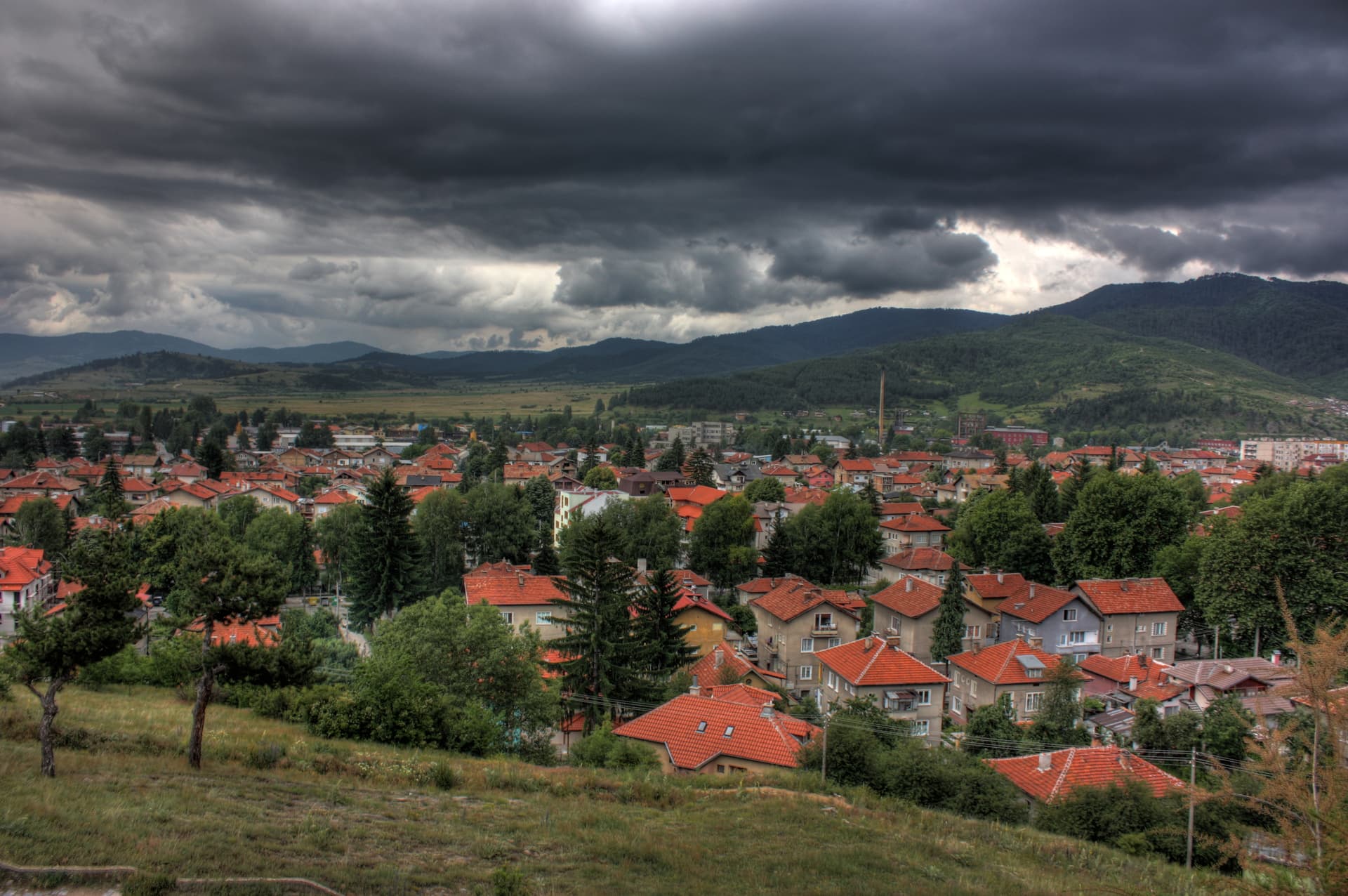
Pazardzhik region
8.4 km away
Pazardzhik region
8.6 km away
Lepenitsa Cave is located in Pazardzhik, Bulgaria.
Lepenitsa Cave is most easily reached by car. Use the coordinates above to navigate, or open the location in OpenStreetMap or your preferred maps app for turn-by-turn directions. Public transport options vary by region — for remote destinations a rental car gives the most flexibility.
Caves can be visited year-round — the temperature inside stays roughly 10–12°C regardless of season. Spring and autumn are quieter than peak summer. Bring a warm layer and sturdy footwear; some caves close in winter when access roads become impassable.
Access to caves varies. Show caves typically run guided tours during posted opening hours; wild caves require proper equipment and experience. Inside, the temperature stays cool year-round (~10–12°C) — bring a warm layer, sturdy non-slip footwear, and a torch even on guided tours.