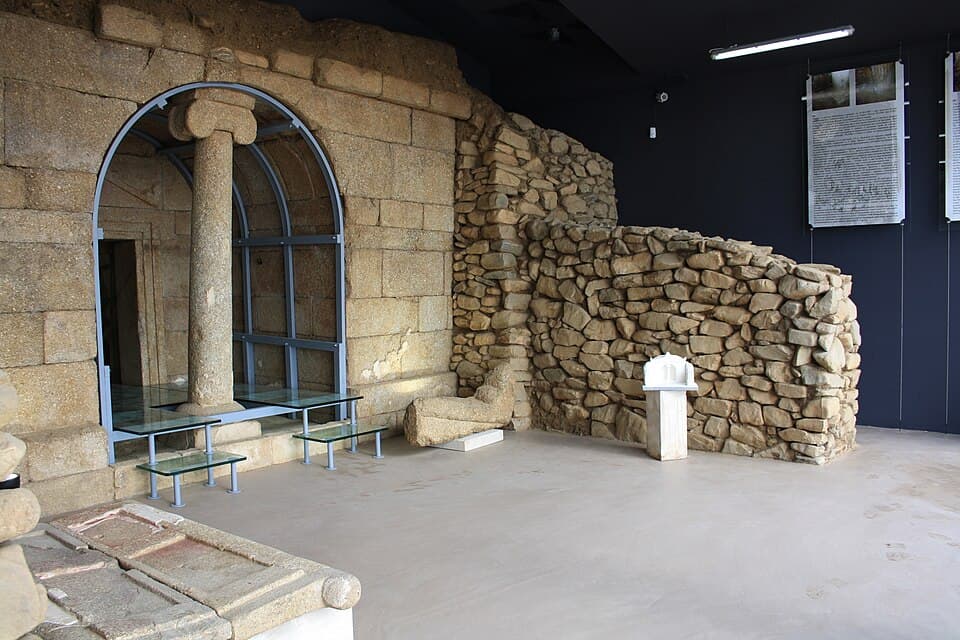
Karasura is a late Roman fortress and archaeological site about 3 km east-south-east of the village of Rupkite and about 6 km north-east of Chirpan, on the southern slopes of Sredna Gora. The Trakia motorway runs close by.
The site covers the Kaleto settlement mound and its surroundings, and the Kayryaka hill to the south. Excavations uncovered three gates, ten towers, church and residential buildings — inside the fortress and outside it — two early Christian basilicas and three churches from the Middle Ages onward.
The finds include architectural elements, inscribed columns, sculptures and cult monuments, coins, jewellery and more than 250 restored pottery vessels. They are kept in the Chirpan History Museum.
The first traces of life here date from the 5th millennium BC and continue, with breaks, to the 13th century. Under the name Carassura the place appears in the 4th-century Bordeaux Itinerary as a roadside station. Temples of Asclepius, Pluto and Apollo from Roman times have been identified. In the 11th century the settlement grew to about 100 hectares. The Bulgarian-German excavations began in 1981 and have since ended; the results are published mainly in German, in the "KARASURA" volumes.
According to published information, the site does not take visitors at present. The finds from the excavations can be seen in the Chirpan History Museum.
Karasura Archaeological Site is located in Stara Zagora, Bulgaria.
Karasura Archaeological Site is most easily reached by car. Use the coordinates above to navigate, or open the location in OpenStreetMap or your preferred maps app for turn-by-turn directions. Public transport options vary by region — for remote destinations a rental car gives the most flexibility.
Karasura Archaeological Site can be visited year-round. Spring and autumn offer the most pleasant conditions for exploring, with mild temperatures and fewer crowds. Summer is ideal for photography and longer day trips; winter visits are possible but weather can limit access at some sites.
Most natural landmarks in Bulgaria are freely accessible and open year-round, though some sites have entrance fees or require a guide. Wear sturdy footwear and bring water, as the terrain can be uneven. Respect any protective barriers and stay on marked paths to preserve the site.