

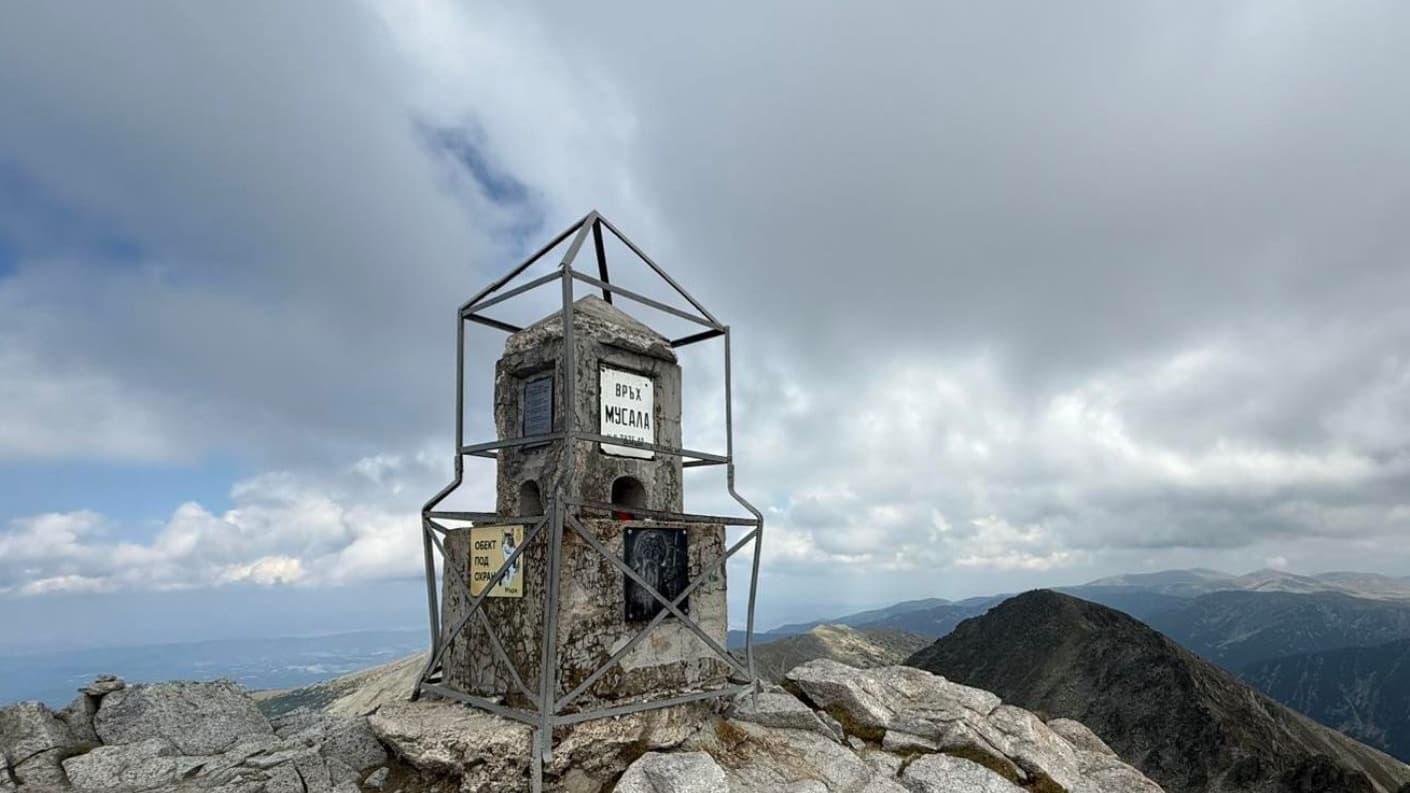
Climbing Musala: Bulgaria's & the Balkans' Highest Peak
In this guide▾
At 2,925 meters, Musala is the highest peak in Bulgaria — and the highest on the entire Balkan Peninsula, edging out Greece's Mount Olympus and standing taller than anything else between the Alps and the Caucasus. Its name, often traced to the Arabic and Turkish for "close to God," suits a summit that on a clear day looks out over Rila, Pirin and the distant Rhodopes.
The best part? For such a lofty peak, Musala is remarkably attainable. A gondola from the Borovets resort does much of the climbing for you, turning what would be a two-day expedition into a long but achievable day hike. This guide covers exactly how to do it — the gondola, the route, the huts, timing, and what to pack.
📍 Where Is Musala?
Musala rises in the Rila Mountains of southwestern Bulgaria, inside Rila National Park — the same massif that holds Malyovitsa, the Seven Rila Lakes and, on its western flank, the great Rila Monastery. The launching point for the climb is Borovets, Bulgaria's oldest mountain resort, on Rila's northern slopes near the town of Samokov.
🚗 Distances & Getting to Borovets
Everything starts at Borovets, where the Yastrebets gondola base sits. Approximate driving times by car:
| From | Distance | Driving time |
|---|---|---|
| Sofia | ~73 km | ~1 h 15 min |
| Plovdiv | ~130 km | ~2 hours |
| Burgas | ~365 km | ~3 h 45 min |
| Varna | ~470 km | ~5 h 30 min |
By car (easiest): From Sofia, head south to Samokov and follow signs to Borovets.
Parking: there are paid municipal and private car parks by the gondola base and near the big hotels. There is no official price — the fee is set on site. On sunny summer weekends, arrive early — the gondola has queues too.
By public transport: buses run from Sofia to Samokov, with an onward bus or taxi up to Borovets. Because Musala pairs so naturally with a night or two in the capital, many hikers base themselves in Sofia — see our 72 Hours in Sofia guide.
🚡 The Yastrebets Gondola
The Yastrebets gondola is what makes Musala a day hike rather than an expedition. It runs 4,827 m from Borovets, with a mid-station on the way, and climbs 1,054 m to roughly 2,369 meters by the Yastrebets hut, saving 3–4 hours of steep forest ascent.
- Ride time: about 25 minutes each way.
- Price: a return ticket is €19 for ages 14–64 and €11 for children aged 7–13 (checked September 2026).
- Last rides: the last ride up leaves the bottom and middle stations at 17:30; the last ride down leaves the top and middle stations at 18:00.
- Closed days: the gondola is closed on Mondays and Tuesdays — plan your climb for Wednesday to Sunday.
- Queues: on summer weekends there can be long queues at the bottom — another reason to start early.
- Mind the last descent — missing it means a very long walk back down to Borovets.
You can skip the gondola and hike up from Borovets, but that turns the day into almost 1,500 m of ascent and adds several hours.
🥾 The Route: Gondola to Summit
From the top of the gondola, a clear, red-marked trail leads to the summit in three stages:
- Yastrebets to Musala hut: about 1 hour. A wide, almost level path of about 4 km contours along the valley to Musala hut (around 2,390 m), by the first of the Musala lakes.
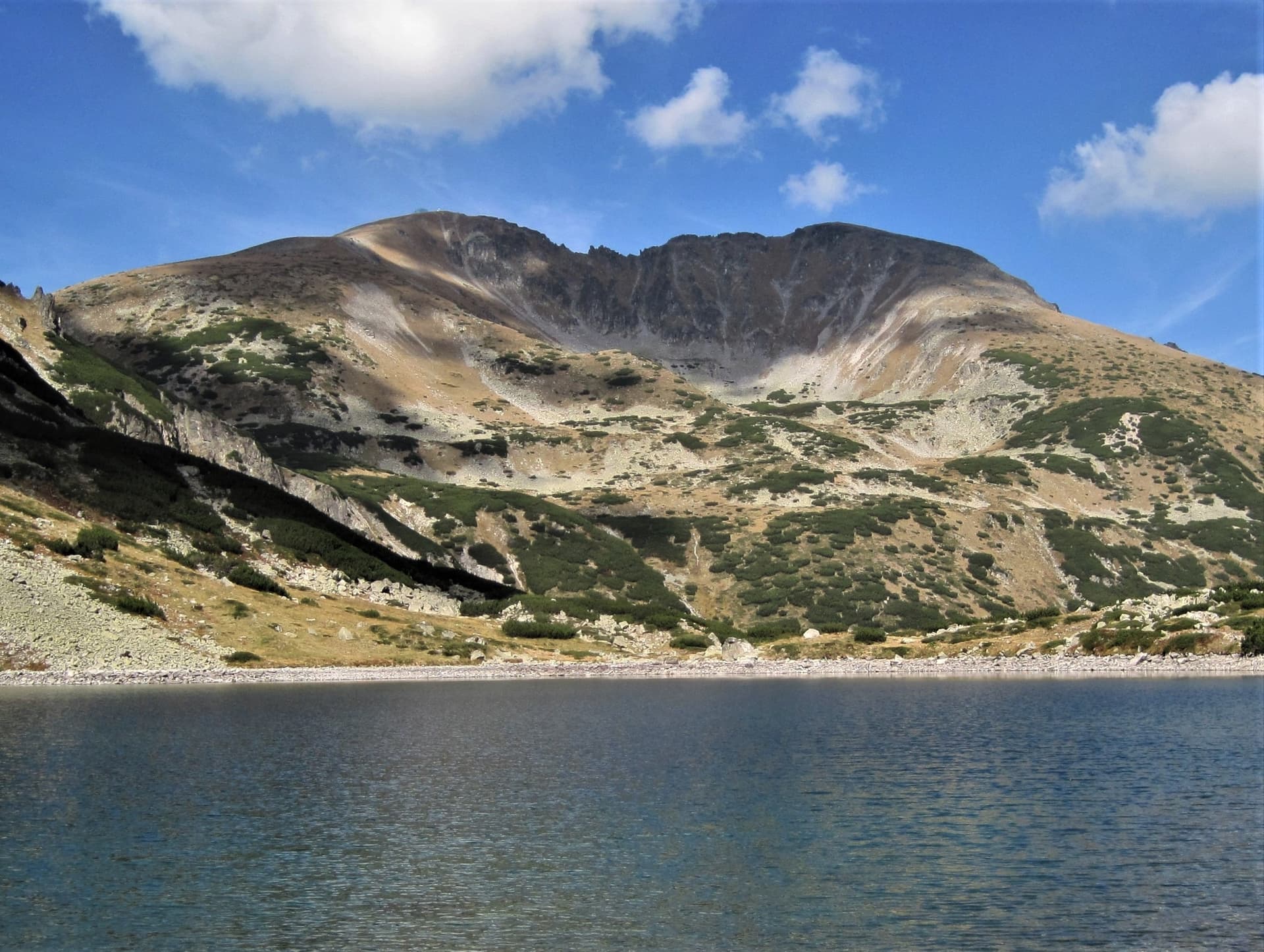
- Musala hut to Everest shelter: 1–1.5 hours. The trail climbs over moraines past the chain of Musala lakes to Everest shelter (Zaslon Everest) beside Ledeno Lake ("Icy Lake"), at around 2,700 m.
- Everest shelter to the summit: 30–45 minutes. The last pull is steep and rocky. The summer path zigzags up; the steeper winter route is secured with a steel cable.
- Totals: about 7 km and 570 m of ascent one way; 3–3.5 hours up and 2.5–3 hours down.
- Difficulty: strenuous but non-technical. No climbing skill is required — just fitness, sturdy boots and stamina for altitude.
- Water: fill up at Musala hut; above it you rely on what you carry.
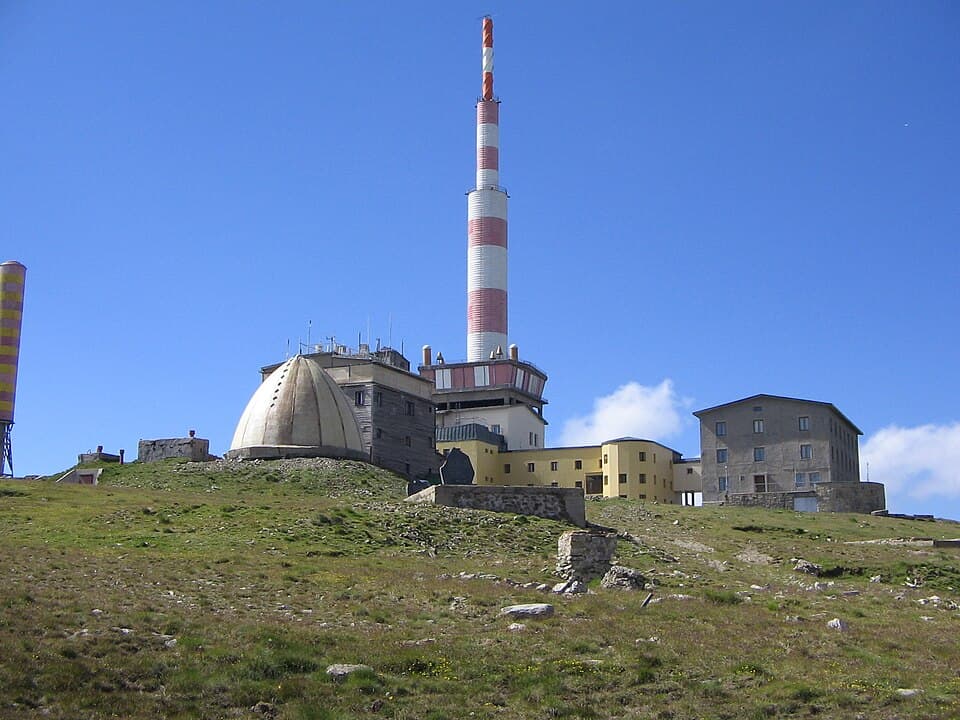
The summit carries a meteorological station with a small shelter where you can usually get a hot tea, and, on a clear morning, one of the widest panoramas in the Balkans. Along the ridge nearby lies Malka Musala, the "Little Musala" secondary summit.
🏨 Huts & Splitting the Climb
For a more relaxed ascent — and the best chance of a cloud-free summit — split the hike over two days:
- Musala Hut (Hizha Musala): by the Musala lakes, about an hour from the gondola. A new, larger hut building opened in 2018 next to the old one, and the hut is the standard overnight base. A night costs about €20 per person; ask ahead about available beds and meals.
- Everest Shelter (Zaslon Everest): a small pyramid-shaped refuge by Ledeno Lake, about 30–45 minutes below the summit and open year-round — the highest shelter in the Balkans, for a dawn start. A night also costs about €20 per person; ask ahead about available beds and food.
Sleeping high lets you reach the top soon after dawn, before the afternoon cloud and storms that so often swallow the peak from midday on.
🗓️ Season, Weather & What to Bring
- Mid-July to late September is the safe hiking window — mostly snow-free trail and the gondola on its summer schedule.
- June can still hold hard snow near the summit; check conditions first.
- October to June is full winter mountaineering: crampons, ice axe, avalanche awareness and experience required. This is not a summer hike with a bit of snow on it.
Even in high summer, pack for fast-changing alpine weather: warm and windproof layers, a rain shell, sun protection (the UV is fierce at altitude), at least 1.5–2 liters of water, food, and boots with grip. Mornings are clearest; afternoons often bring cloud and thunder.
👨👩👧👦 Is It Suitable for Children?
Fit older children used to full-day walks can manage the summit via the gondola in good summer weather, with an early start and plenty of breaks. For younger children, ride the gondola up and walk the almost flat hour to Musala hut and the first lakes, then turn back — it's a real high-mountain outing without the steep final climb. Nothing above the gondola is suitable for pushchairs.
🛏️ Where to Stay
- Borovets: hotels, lodges and apartments at the gondola base — the most convenient place to sleep before an early start. See our Borovets guide.
- On the mountain: Musala hut or Everest shelter, for a two-day ascent and a sunrise summit.
- Samokov: a nearby town with cheaper lodging a short drive down the valley.
🧭 What Is Nearby
- Malyovitsa (~45 min by car) — Rila's most iconic day hike and the cradle of Bulgarian mountaineering.
- Beli Iskar eco-trail (~30 min) — an easy, family-friendly riverside walk below Samokov.
- The Seven Rila Lakes (~1 h by car to Panichishte) — Rila's most famous lake walk. See our Seven Rila Lakes guide.
Musala also makes a superb centrepiece for a wider Rila trip — combine it with the Seven Rila Lakes and Rila Monastery over a few days, and see where it sits among the country's highest peaks.
Standing on the roof of the Balkans is closer than you think. Plan your ascent, pair it with the rest of Rila, and keep exploring Bulgaria's mountains with Mestala.com.
This guide covers 3 places
Want more Mestala in your Google results?
Add mestala.com as a preferred source and our guides will show up more often when you search. Requires a Google account.
Frequently Asked Questions
How high is Musala and where is it?▾
Musala is 2,925 meters high — the highest peak in Bulgaria and on the entire Balkan Peninsula, higher than Greece's Mount Olympus. It stands in the Rila Mountains in southwestern Bulgaria, inside Rila National Park, and is most easily reached from the Borovets resort near Samokov, about 73 km south of Sofia.
How do you climb Musala from Borovets?▾
Take the Yastrebets gondola from Borovets up to about 2,369 meters. A red-marked, almost level path of about 4 km leads to Musala hut in around an hour. From the hut, the trail climbs past the Musala lakes to Everest shelter by Ledeno Lake in 1 to 1.5 hours, then steeply to the summit in another 30 to 45 minutes. In total it's about 7 km and 3 to 3.5 hours up from the gondola. Without the gondola, the climb from Borovets adds almost 1,000 m of ascent.
Is climbing Musala hard?▾
With the gondola it's a strenuous but non-technical hike — no ropes or climbing skills needed, just good fitness, sturdy boots and stamina for a long day at altitude. The first hour to Musala hut is almost flat; the effort comes above the hut, and the final section above Everest shelter is steep and rocky. The winter route there is steeper and secured with a steel cable, and in snow the climb becomes a serious mountaineering objective.
How long does the Musala hike take?▾
Allow about 6 to 7 hours of walking round trip from the top of the gondola, plus the 25-minute gondola ride each way and breaks — realistically a full mountain day. Watch the last gondola down, at 18:00 in summer. Many hikers split the climb by staying overnight at Musala hut or at Everest shelter higher up, and summit early the next morning before the clouds build.
How much is the Borovets gondola to Musala?▾
A return ticket on the Yastrebets gondola costs €19 for ages 14–64 and €11 for children aged 7–13 (checked September 2026). The gondola is closed on Mondays and Tuesdays; the last ride up leaves the bottom and middle stations at 17:30, and the last ride down leaves the top and middle stations at 18:00. Check prices before you go, as they change between seasons.
Is there anything on the summit of Musala?▾
Yes. The summit carries a meteorological station with a small shelter where you can usually get a hot tea. Just below, Everest shelter by Ledeno Lake, at around 2,700 m the highest shelter in the Balkans, is open year-round.
When is the best time to climb Musala?▾
Mid-July to late September is the safe window, when the trail is mostly snow-free and the gondola runs its summer schedule. Snow can linger near the summit into July and returns in autumn. From roughly October to June, Musala is a serious winter climb requiring crampons, an ice axe and avalanche awareness.
Can beginners or children climb Musala?▾
Fit beginners and older children used to full-day walking can reach the summit via the gondola in good summer weather, at a steady pace with an early start. It is not a casual family stroll — the altitude, distance and fast-changing weather are real. With younger children, the near-flat walk from the gondola top to Musala hut and the lower Musala lakes is a good alternative.
You might be interested in
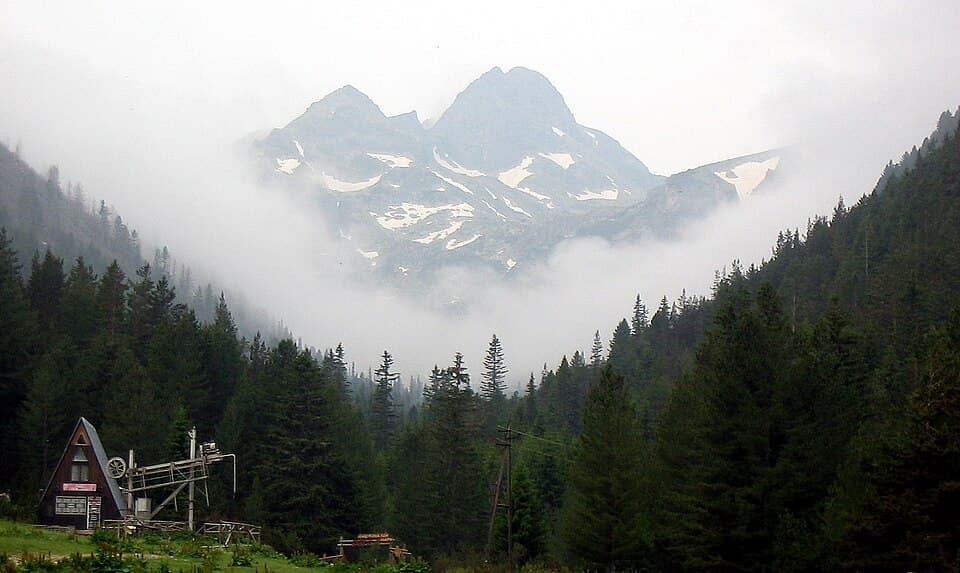
Malyovitsa: Rila's Most Iconic Day Hike
How to hike Malyovitsa (2,729 m), the cradle of Bulgarian mountaineering in northern Rila — the route from the resort and hut, parking, difficulty and season.
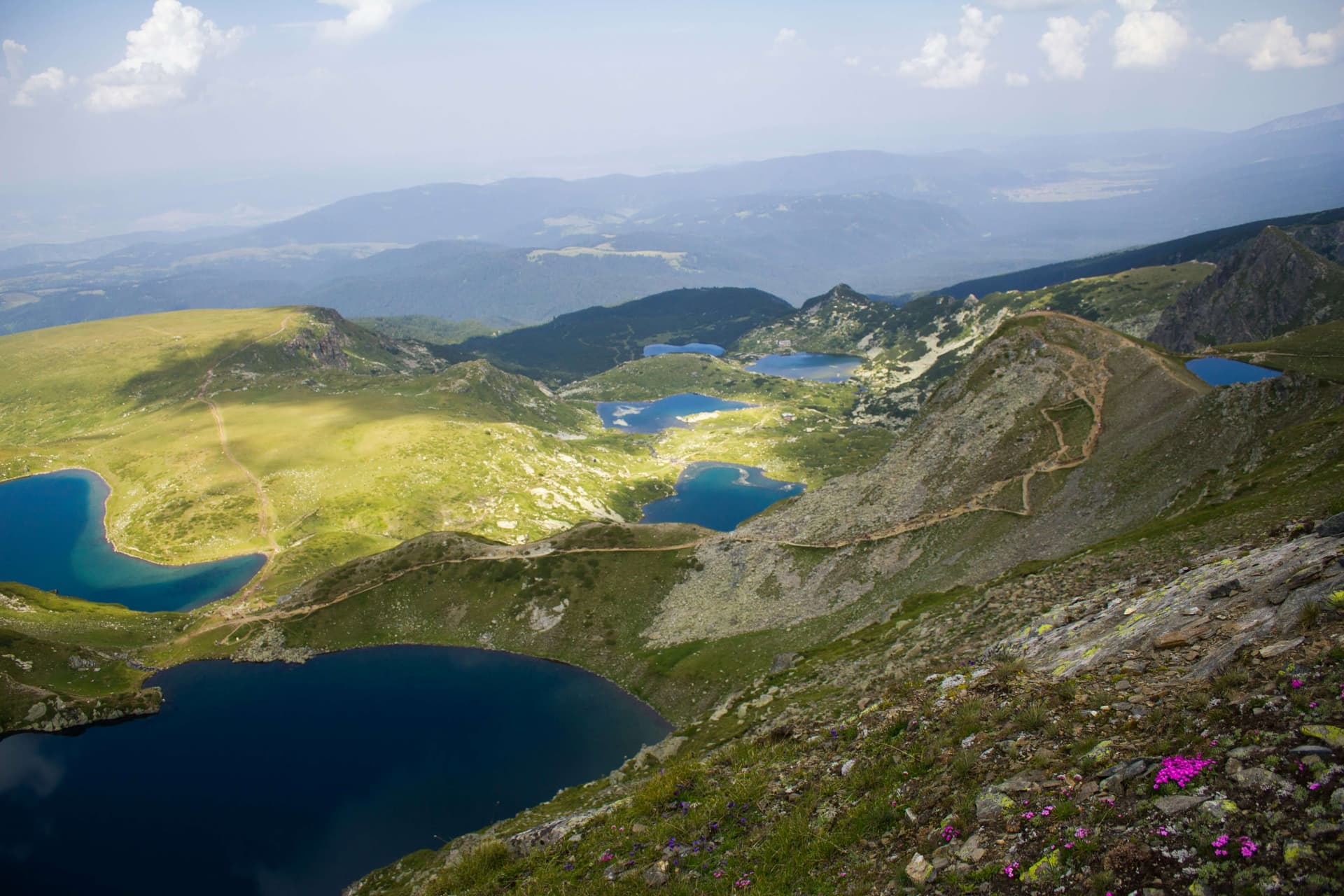
Hiking the Seven Rila Lakes: Trail, Lift & Best Time
A complete guide to hiking the Seven Rila Lakes: the trailhead, chairlift prices and hours, the loop trail, parking, family tips, distances from Sofia, and where to stay.
Botev Peak & Raysko Praskalo: Hiking the Central Balkan
How to hike Botev Peak (2,376 m), the highest summit of the Balkan Mountains, from Kalofer — past Raysko Praskalo, the highest waterfall in the Balkans.

Cherni Vrah: Hiking Vitosha's Summit from Sofia
How to hike Cherni Vrah (2,290 m), the summit of Vitosha above Sofia — the route from Aleko, bus 66, the lifts that still run, difficulty, and season.