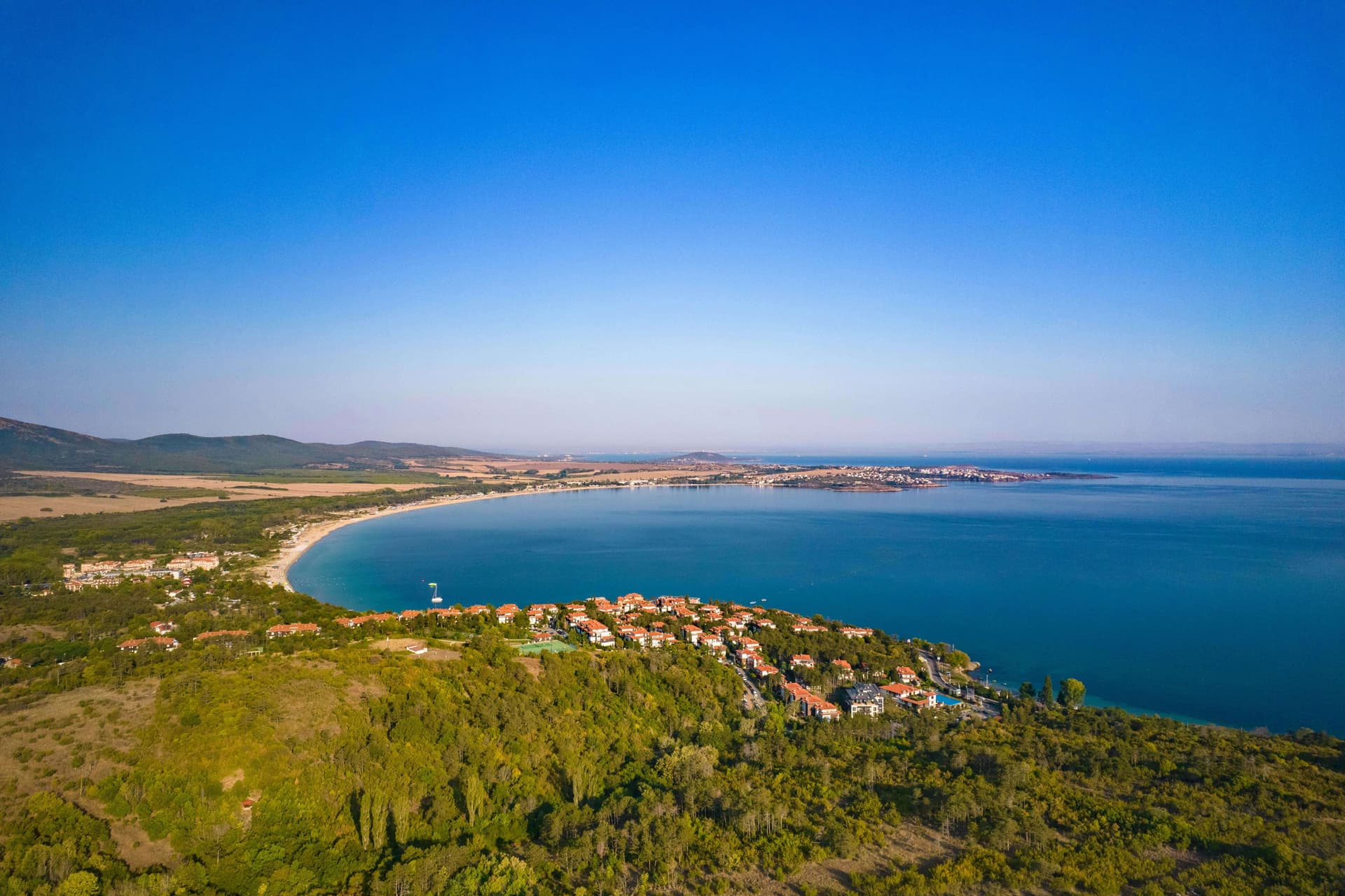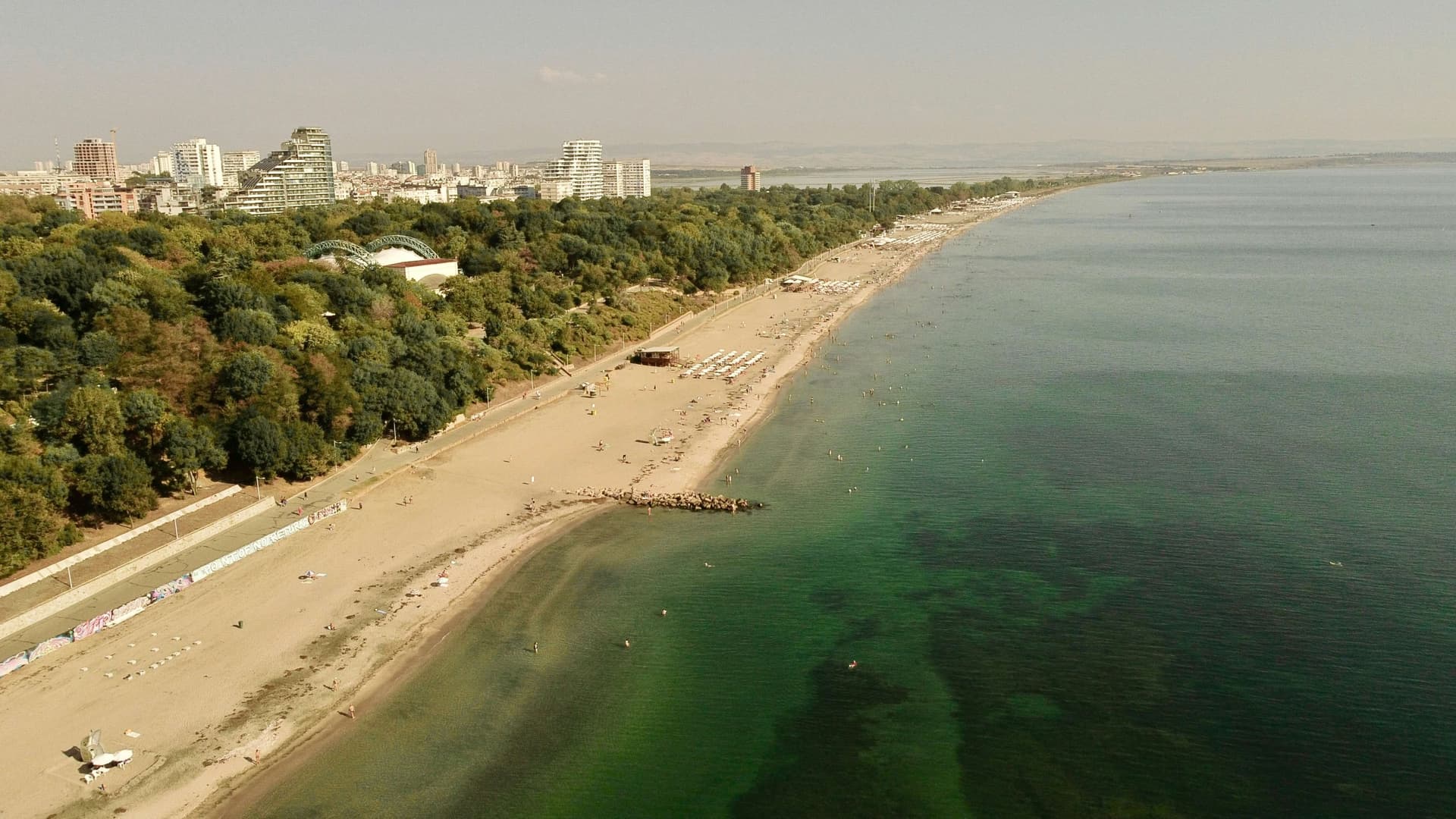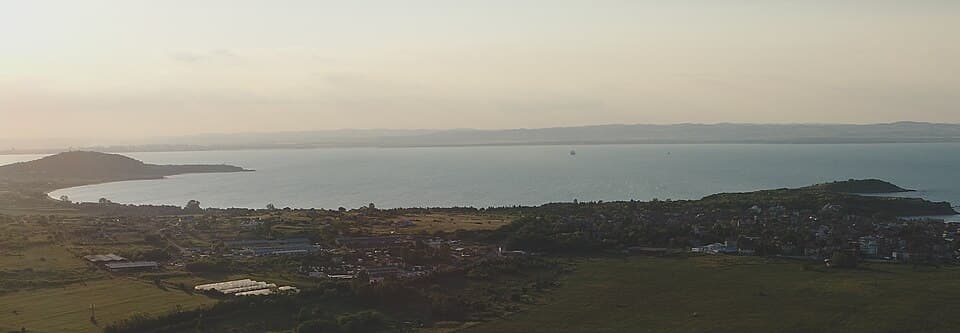
Vromos is a Black Sea bay, 3.5 km wide, in the south-east of Burgas Bay, between Chernomorets to the east and the village of Atiya to the west. It holds one of the last undeveloped stretches of the southern coast: a wild sandy beach with no lifeguards.
The bay lies between Burgas and Sozopol, just west of Chernomorets. There is a car park at the east end, on the Chernomorets side. Leave the car behind the beach: parking on the sand is banned, and in 2021 police fined drivers for it.
The name comes from Greek and means "smelly". Prof. Bozhidar Dimitrov links it to the battle of Akra in 513, after which thousands of dead were left unburied, or to a livestock loading point. A third theory points to the sand oat ("vromos") on the dunes.
The beach was once polluted by waste from the copper mine near Rosen; raised radiation was first measured in 1970. In 1998 a new tailings pond was built and the shore was covered with clean sand. In 2010 the water met the standards, but the radiation background over the beach was twice the permitted level.
Access is free. The beach is not guarded and has no bars on the sand; a campsite beside it has showers and toilets. Because of the pollution, our guide below does not recommend it for swimming.
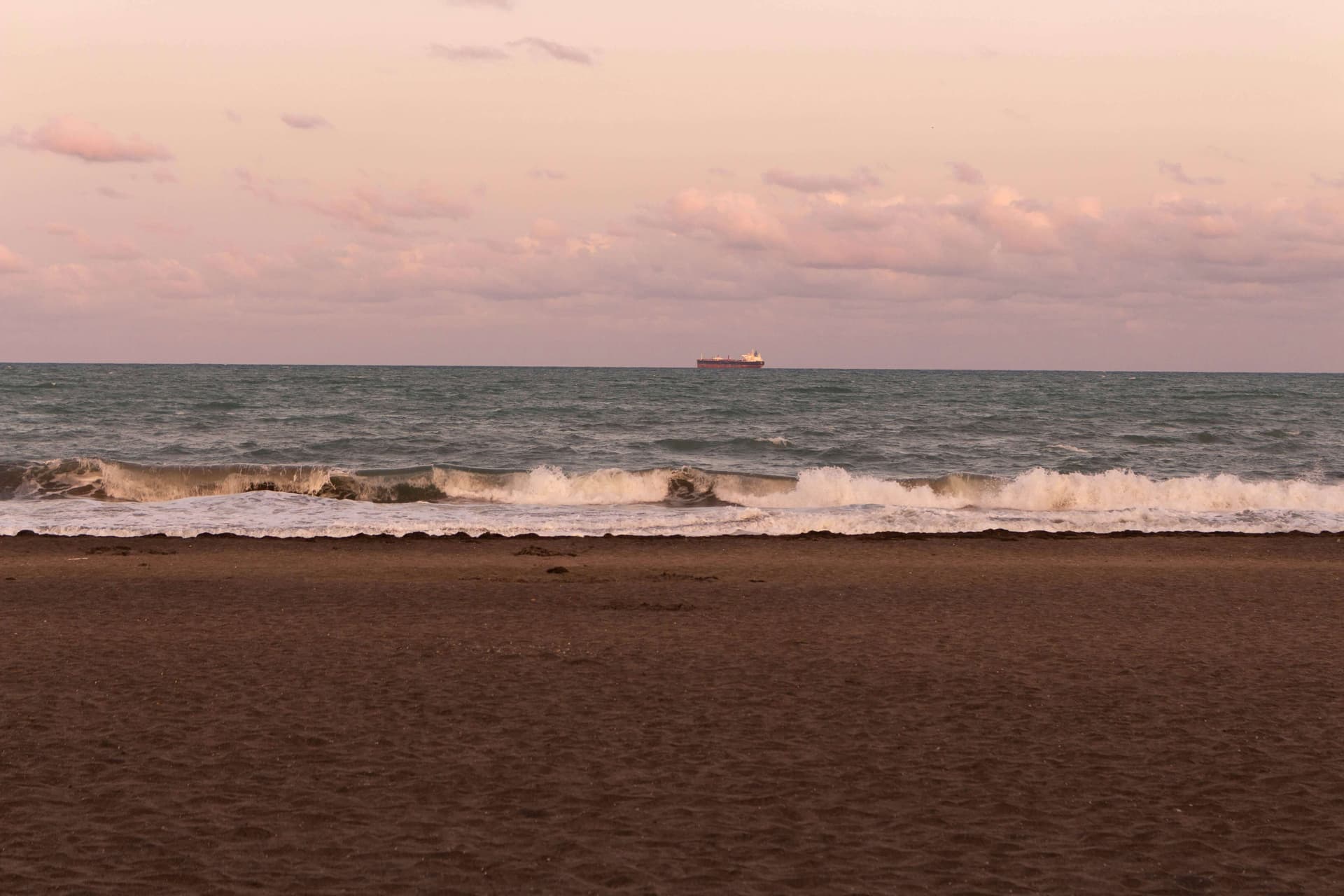
Summer. Wind in the bay is frequent and strong, which draws kitesurfers.
Vromos Bay is located in Burgas, Bulgaria.
Vromos Bay is most easily reached by car. Use the coordinates above to navigate, or open the location in OpenStreetMap or your preferred maps app for turn-by-turn directions. Public transport options vary by region — for remote destinations a rental car gives the most flexibility.
Vromos Bay can be visited year-round. Spring and autumn offer the most pleasant conditions for exploring, with mild temperatures and fewer crowds. Summer is ideal for photography and longer day trips; winter visits are possible but weather can limit access at some sites.
Most natural landmarks in Bulgaria are freely accessible and open year-round, though some sites have entrance fees or require a guide. Wear sturdy footwear and bring water, as the terrain can be uneven. Respect any protective barriers and stay on marked paths to preserve the site.