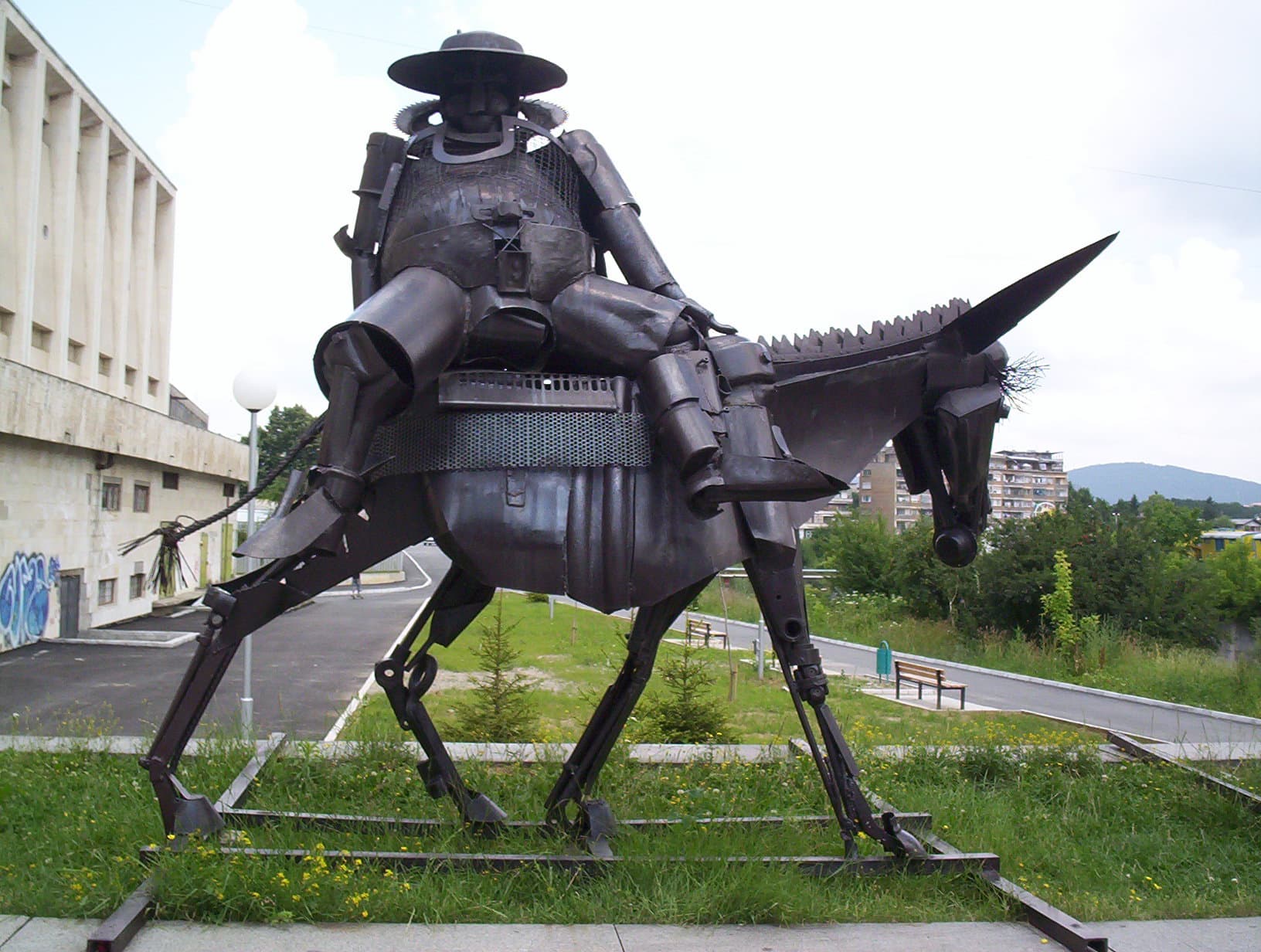
Perched dramatically atop the "Gramadata" rock formation in the middle of the Yantra River, the Monument of Racho the Blacksmith stands as the ultimate symbol of Gabrovo. It holds the unique distinction of being the only monument in Bulgaria built directly inside a riverbed, anchoring the identity and heritage of the country's capital of humor.
According to local lore, Racho the Blacksmith was the legendary founder of Gabrovo. Originally from the nearby village of Bozhentsi, he set up a blacksmith shop near the crossing of the Yantra River, shoeing horses and repairing wagons for passing trade caravans. Over time, other artisans settled around his forge, giving birth to the city's celebrated crafting and industrial heritage.
Famed for their dry wit and legendary frugality, the people of Gabrovo joke that they placed the statue of their founder on a rock in the river for two very practical reasons: to save valuable real estate in town and to avoid spending money buying flowers for the monument!
Crafted from bronze by the acclaimed Bulgarian sculptor Lyubomir Dalchev, the statue depicts a powerful, muscular man holding a blacksmith's hammer in one hand and tongs gripping a piece of iron over an anvil in the other—a homage to the hard work and craftsmanship that built the town.
Gabrovo region
0.4 km away

Gabrovo region
8.3 km away
Racho the Blacksmith Monument is located in Gabrovo, Bulgaria.
Racho the Blacksmith Monument is most easily reached by car. Use the coordinates above to navigate, or open the location in OpenStreetMap or your preferred maps app for turn-by-turn directions. Public transport options vary by region — for remote destinations a rental car gives the most flexibility.
Racho the Blacksmith Monument can be visited year-round. Spring and autumn offer the most pleasant conditions for exploring, with mild temperatures and fewer crowds. Summer is ideal for photography and longer day trips; winter visits are possible but weather can limit access at some sites.
Most natural landmarks in Bulgaria are freely accessible and open year-round, though some sites have entrance fees or require a guide. Wear sturdy footwear and bring water, as the terrain can be uneven. Respect any protective barriers and stay on marked paths to preserve the site.