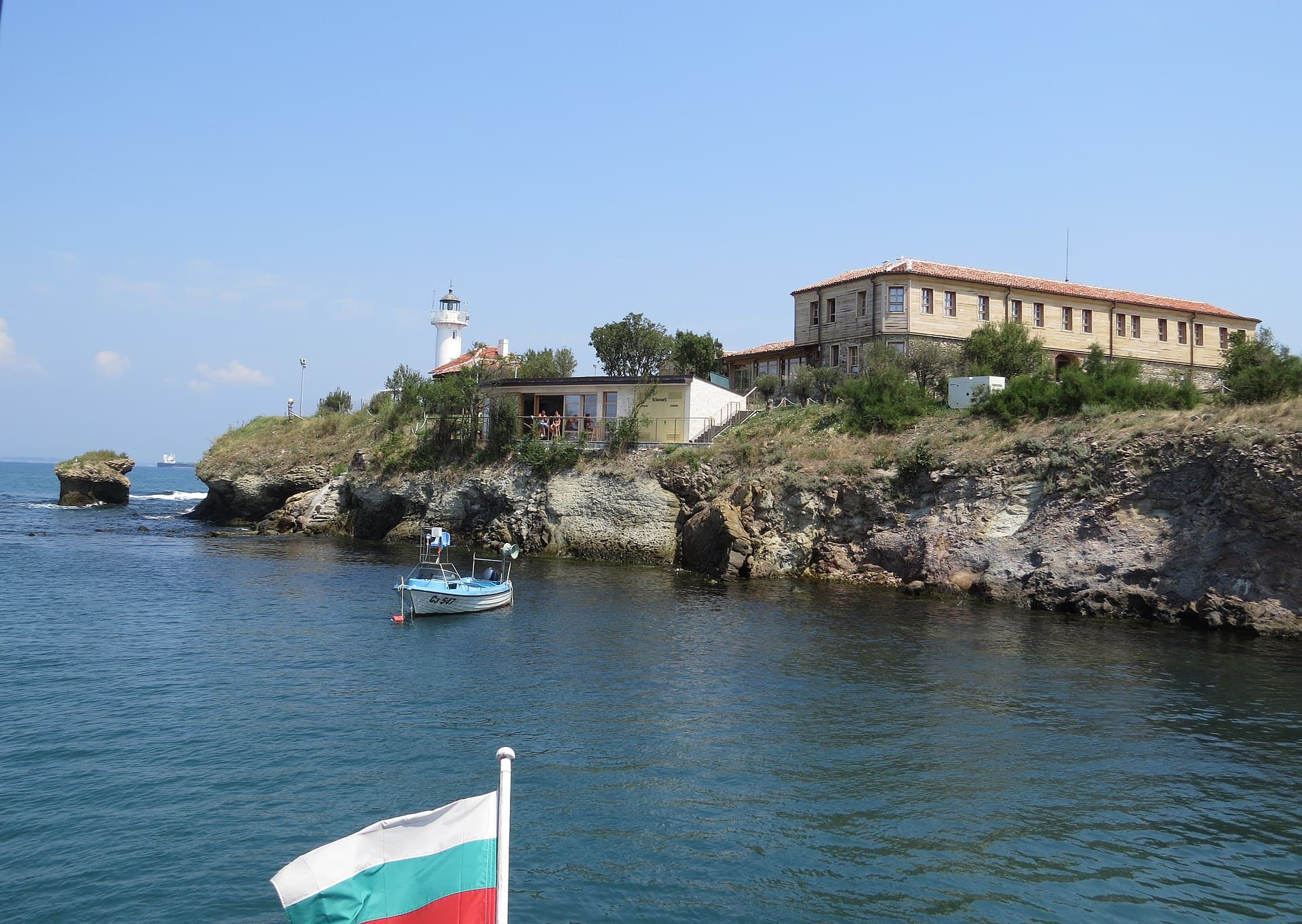
Saint Anastasia Island is one of the most intriguing, romantic, and historically saturated Bulgarian islands in the Black Sea. Beautifully situated within the Burgas Bay, it stands out as a unique destination hosting a medieval monastery complex. In the historical period between 1945 and 1991, the island bore the official name Bolshevik. Despite its modest territory, this piece of land boasts an exceptionally rich and dramatic history, having changed its name, status, and primary purpose several times over the centuries. Geographical Parameters, Location, and Rock Formations The island is located 6.5 km southeast of the city of Burgas, positioned between the coastal capes of Saint Anastasia and Atiya. - Area and Scale: The island covers an area of approximately 9 decares. This ranks it as the third-largest Bulgarian island in the Black Sea, following Saint Ivan and Saint Kirik islands near Sozopol. - Geological Structure: The entire island is composed of solid volcanic rock layers. - Rock Phenomenons: Due to the coastal climate, powerful marine winter storms, and water wave erosion, unique rock formations have taken shape along the cliffs. Based on their distinctive profiles, they are named The Dragon, The Petrified Ship, The Sun Gate, and The Mushroom. Ancient Roots and Medieval Monastery Heritage The earliest signs of human activity on Saint Anastasia Island date back to the period between the 4th and 6th centuries AD. Definitive evidence was unearthed during advanced underwater archaeological research in 1973, when a rich collection of ancient pottery was recovered from the seabed, including a perfectly preserved antique amphora produced in Constantinople. In the 17th century, the island was formally mapped for the first time on a chart of the Black Sea by the prominent Dutch scholar Nicolaes Witsen. The Monastery of Saint Anastasia the Healer The core of the islands heritage is the medieval monastery complex dedicated to Saint Anastasia Pharmakolitria (translated from Greek as The Healer). At the center of the estate stands the monastery church of Saint Kliment Ohridski, whose conservation and historical restoration projects remain ongoing. Throughout the Middle Ages, the monastery was attacked, pillaged, and burned down by pirates dozens of times. The Earliest Written Record: This is an official charter issued by the Ecumenical Patriarch Jeremias II in June 1575, discovered and published by the Greek historian Lambros Kamperidis. The document records the structural reinforcement of the monastery, which was served by two monks at the time, and notes the heavy political influence of Michael Kantakouzenos Sheytanoglu, a prominent resident from Anchialo (modern-day Pomorie). Connection to Sozopol: Years later, the island monastery passed under the management of the St. John the Baptist Stavropegial Monastery located on St. Ivan Island near Sozopol. This arrangement lasted until 1623, when the Sozopol monastery was occupied by Cossacks and subsequently destroyed by the Ottomans. The surviving monks relocated to Saint Anastasia. In 1656, the famous Ottoman traveler Evliya Celebi visited the island, describing a wealthy, flourishing monastery that hosted grand annual festivals. The Haven of the Burgas Intellectuals in the 20th Century During the 20th century, the architectural complex underwent several waves of preservation. In the 1960s, work focused on the main monastic buildings, while a team led by artist Damyan Zaberski successfully detached and preserved sections of the surviving authentic medieval frescoes. The large southern building was converted into a hotel, and a local museum exhibition was established. During this era, the island turned into a bohemian sanctuary for the Burgas cultural elite and intelligentsia. Numerous legendary Bulgarian artists drew creative inspiration from this setting. Among them was the great poet Hristo Fotev, who spent so much time on the cliffs that he earned the affectionate nickname Governor of the Island. The island was also a favorite summer retreat for prominent theater director Professor Nikolay Lyutskanov, alongside celebrated actors Aleksandar Pritup, Todor Todorov, and actress Polina Dorostolska. In 1975, the island was fully supplied with electricity and running water, alongside the opening of an expanded historical museum display. Modern Tourism Infrastructure and Visitor Info Today, Saint Anastasia Island is fully socialized and ranks as one of the top tourist attractions along the Bulgarian Black Sea coast. It is easily accessible via regular passenger boats operating from the Marine Station at the Port of Burgas. The island features: - A modern panoramic restaurant serving authentic Black Sea cuisine and fresh seafood. - Monastic rooms authentically restored to offer unique overnight accommodation surrounded by the sea. - A functional small pier for boats and yachts, alongside a fully operational lighthouse. Rich Avian Life, Fishing, and Marine Biodiversity The strategic position of the island within Burgas Bay provides exceptional opportunities for ornithological tourism and birdwatching along the famous Via Pontica migratory route. Every spring and autumn, massive flocks of white and black storks, common buzzards, honey buzzards, and lesser spotted eagles soar over the volcanic cliffs. Visitors can also spot regional resident species in flight, including the Mediterranean yellow-legged gull, rock dove, western jackdaw, common shelduck, and great cormorant. Additionally, the island serves as a vital resting station for small migratory songbirds. The surrounding waters boast a rich marine biodiversity supported by an abundance of plankton, black mussels, rapa whelks, and jellyfish. Schools of Black Sea horse mackerel and bluefish are frequently found in the coastal currents, while during the autumn season, local fishermen harvest Atlantic bonito, red mullet, and various goby species.
Burgas
5.4 km away

Burgas
5.6 km away
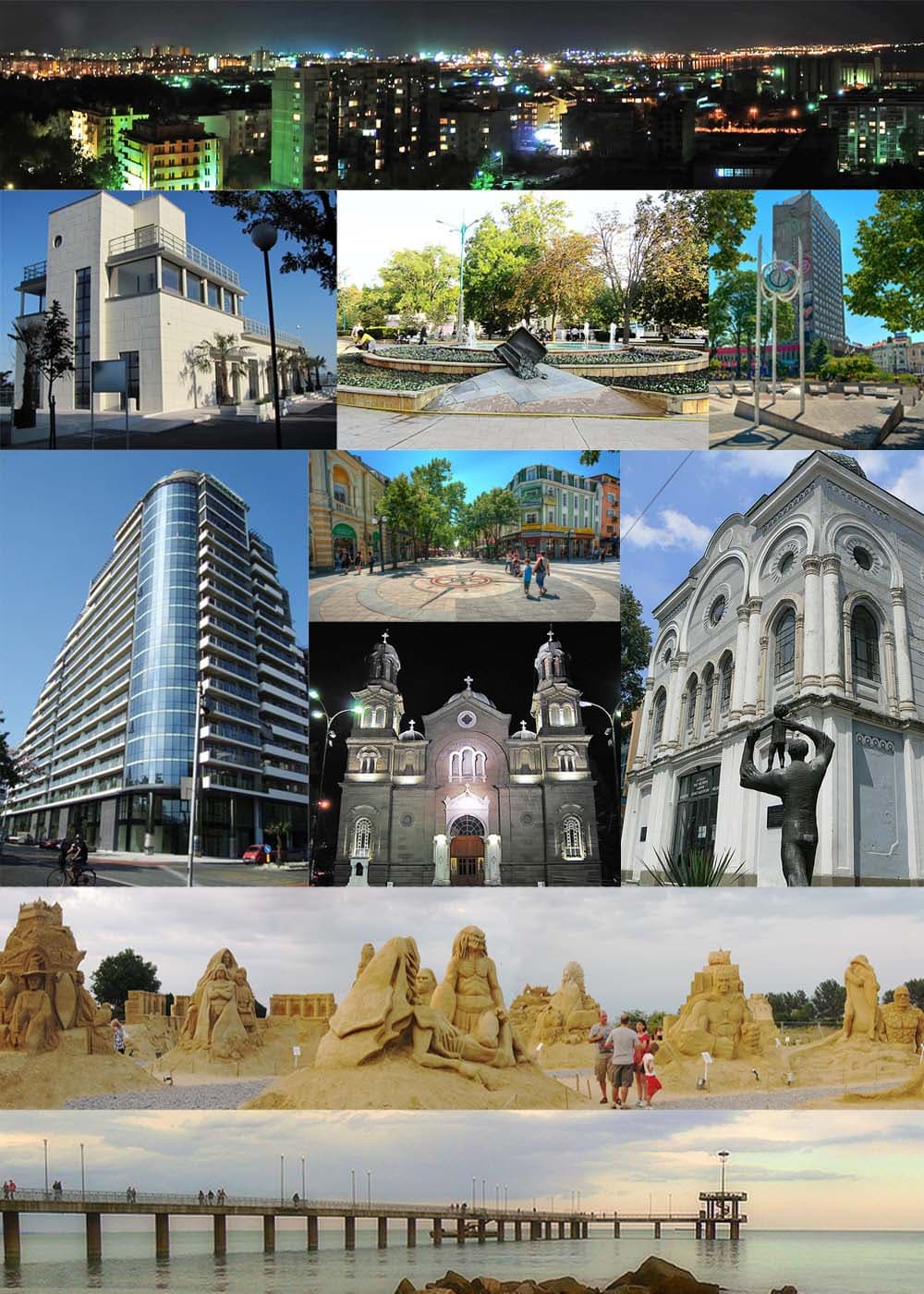
Burgas
7.2 km away
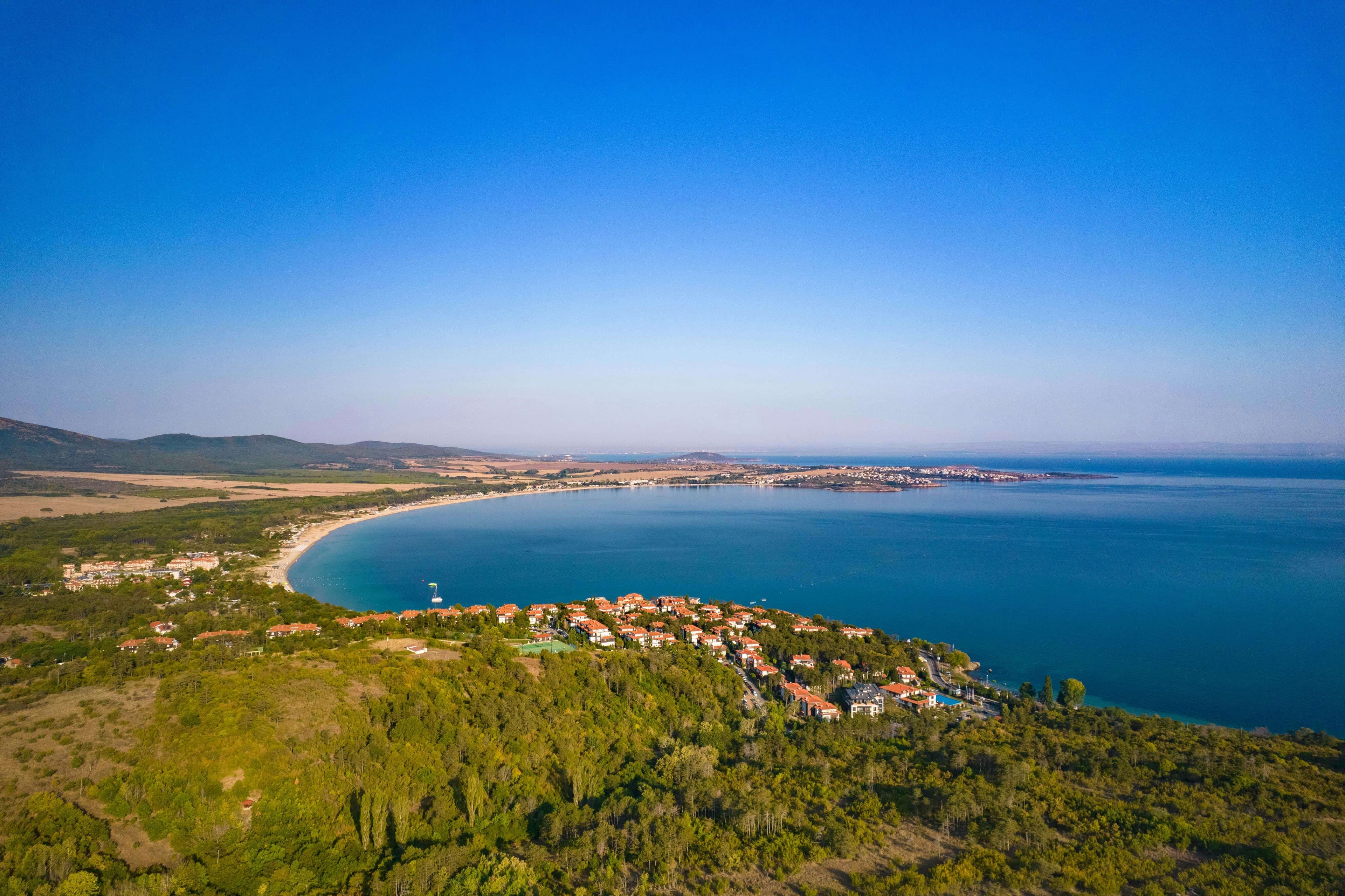
Burgas
7.5 km away
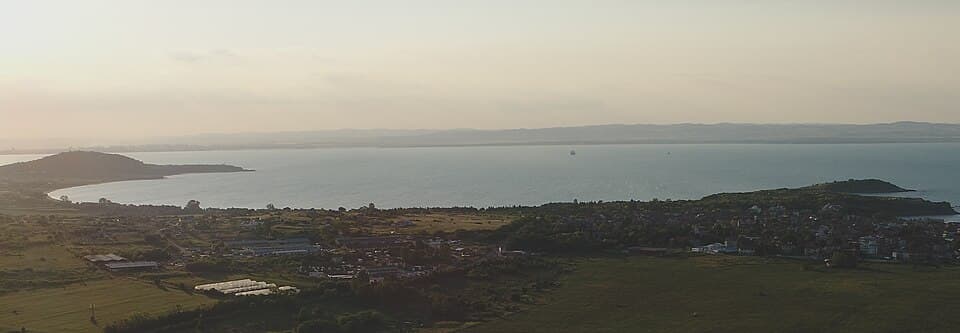
St. Anastasia Island is located in Burgas, Bulgaria.
St. Anastasia Island is most easily reached by car. Use the coordinates above to navigate, or open the location in OpenStreetMap or your preferred maps app for turn-by-turn directions. Public transport options vary by region — for remote destinations a rental car gives the most flexibility.
St. Anastasia Island can be visited year-round. Spring and autumn offer the most pleasant conditions for exploring, with mild temperatures and fewer crowds. Summer is ideal for photography and longer day trips; winter visits are possible but weather can limit access at some sites.
Most natural landmarks in Bulgaria are freely accessible and open year-round, though some sites have entrance fees or require a guide. Wear sturdy footwear and bring water, as the terrain can be uneven. Respect any protective barriers and stay on marked paths to preserve the site.