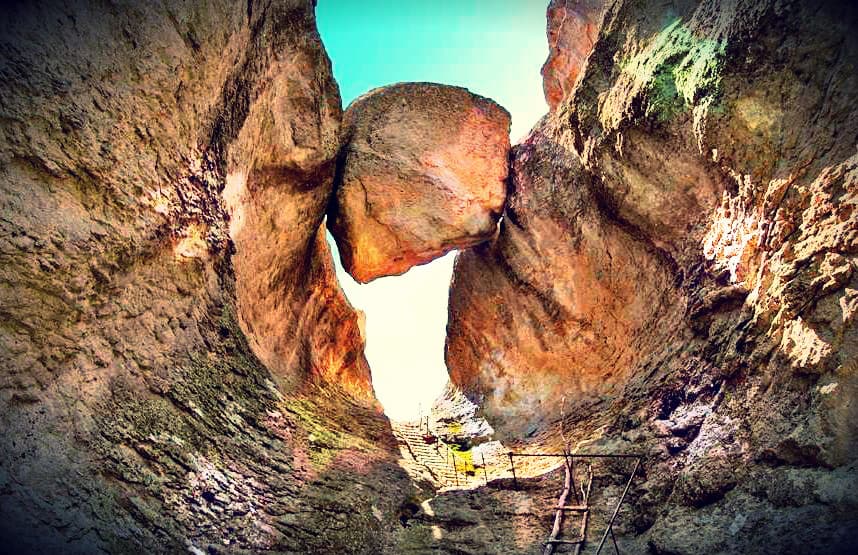
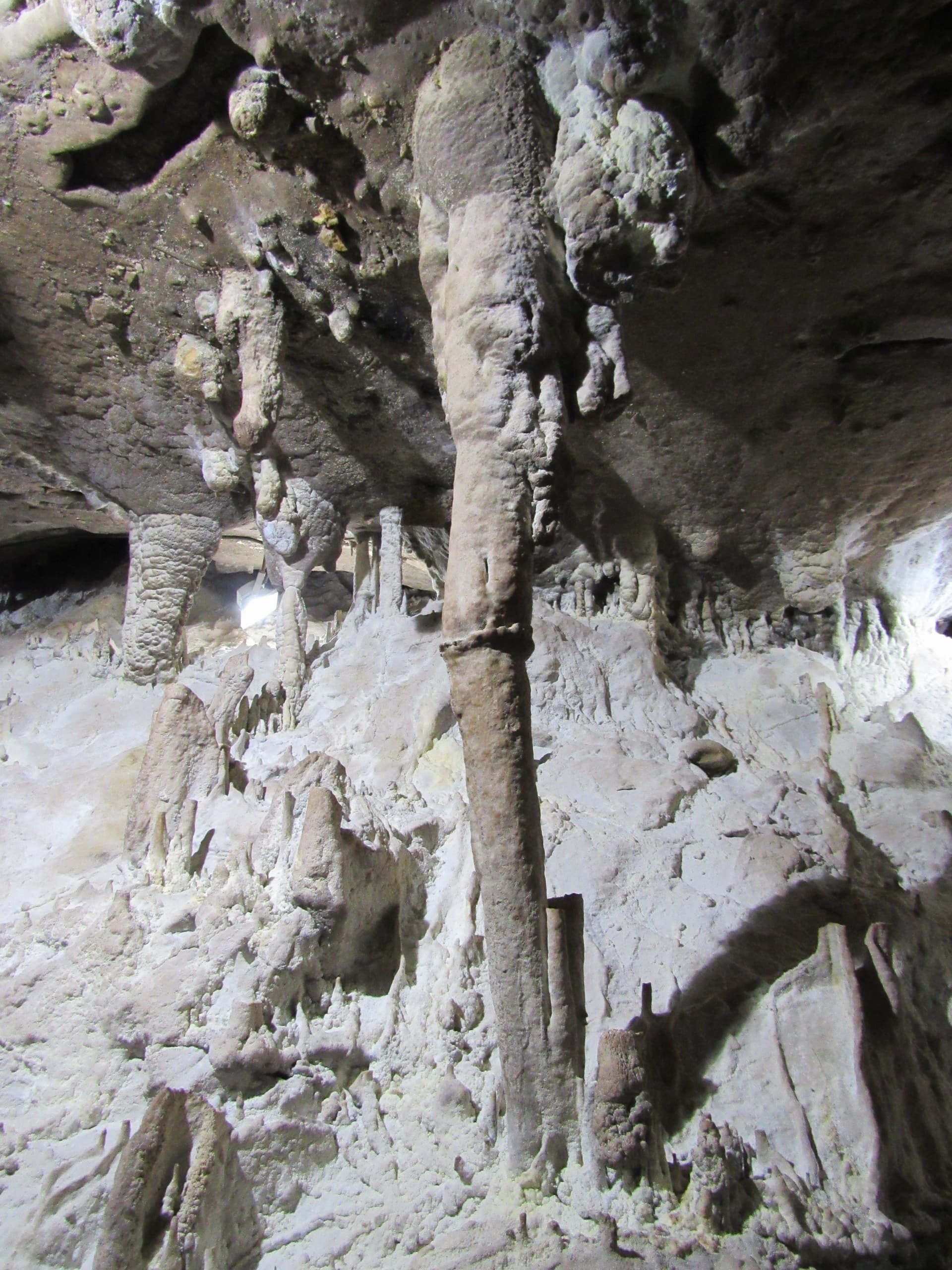
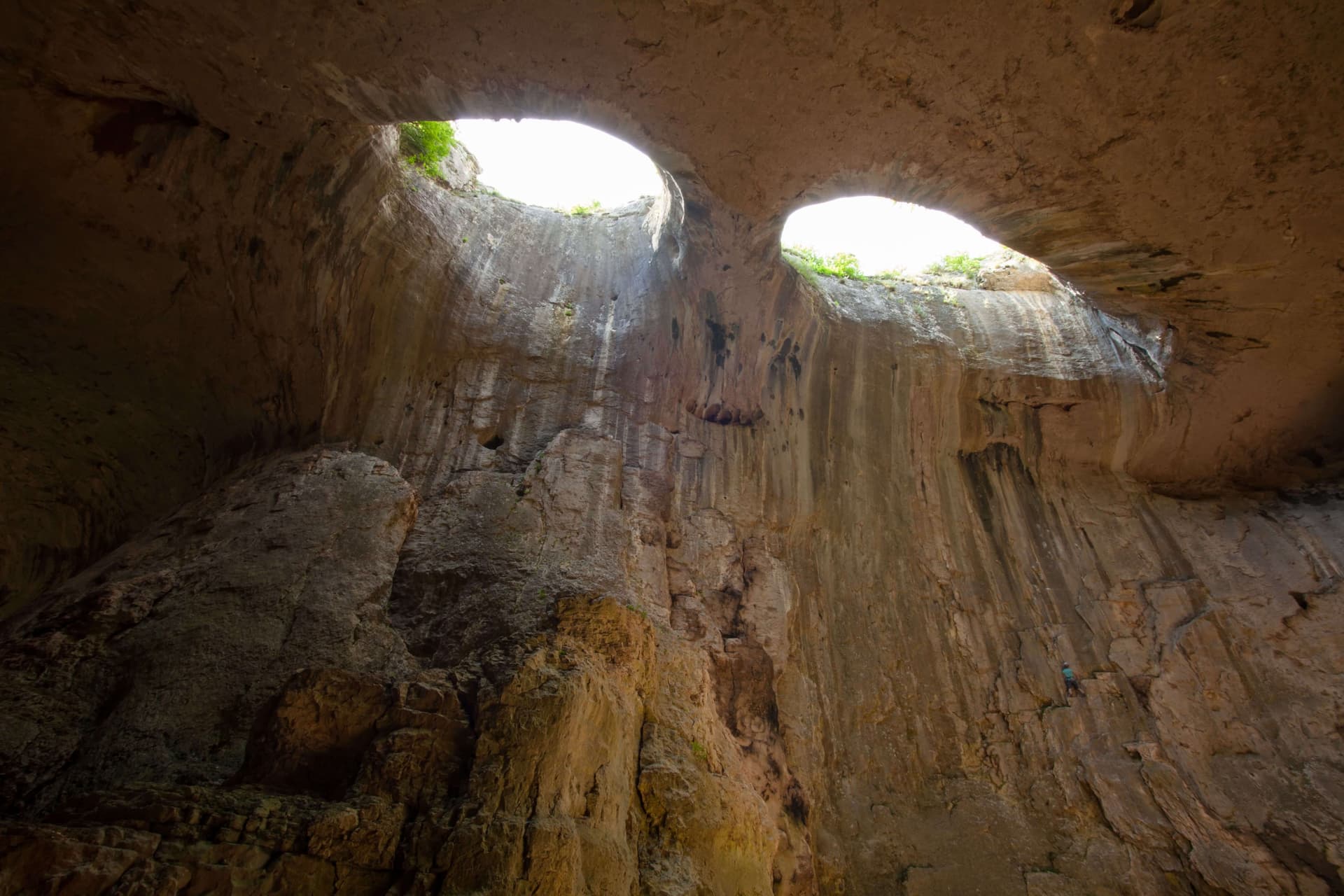
Tucked away within the dense, uninhabited forests south of the village of Bukovo, the Yellow Cave (Zhaltata Peshtera) stands as one of the largest yet least explored rock formations in the Eastern Rhodopes. This area remains entirely isolated from civilization, preserving vast territories where humans have rarely set foot. The massive site is renowned for its impressive scale and the distinct yellowish hue of its rocks, which gives the cave its name.
The "Womb" Sanctuary and Sun Worship
Mysterious Niches and the Stone Calendar
Plovdiv region
7.8 km away

Plovdiv region
13.3 km away
Zhaltata Cave is located in Plovdiv, Bulgaria.
Zhaltata Cave is most easily reached by car. Use the coordinates above to navigate, or open the location in OpenStreetMap or your preferred maps app for turn-by-turn directions. Public transport options vary by region — for remote destinations a rental car gives the most flexibility.
Caves can be visited year-round — the temperature inside stays roughly 10–12°C regardless of season. Spring and autumn are quieter than peak summer. Bring a warm layer and sturdy footwear; some caves close in winter when access roads become impassable.
Access to caves varies. Show caves typically run guided tours during posted opening hours; wild caves require proper equipment and experience. Inside, the temperature stays cool year-round (~10–12°C) — bring a warm layer, sturdy non-slip footwear, and a torch even on guided tours.