Stalbitsata is a shaft cave in the north-western part of the Devetashko Plateau, about 2 km south-west of the village of Karpachevo, Letnitsa municipality, Lovech Province. The entrance is at about 406–420 m. The cave is about 150 m long, with a drop of about 50 m.
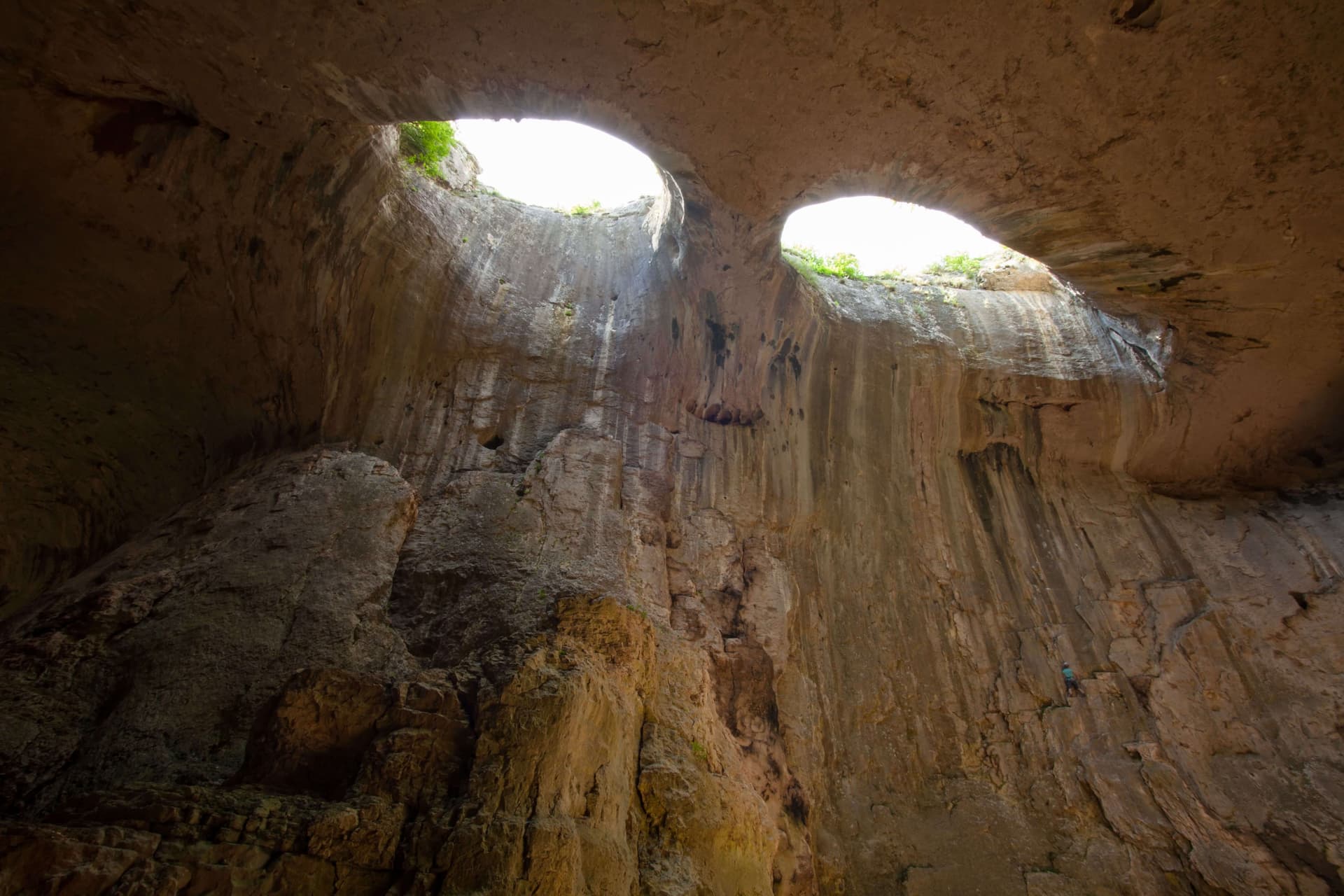
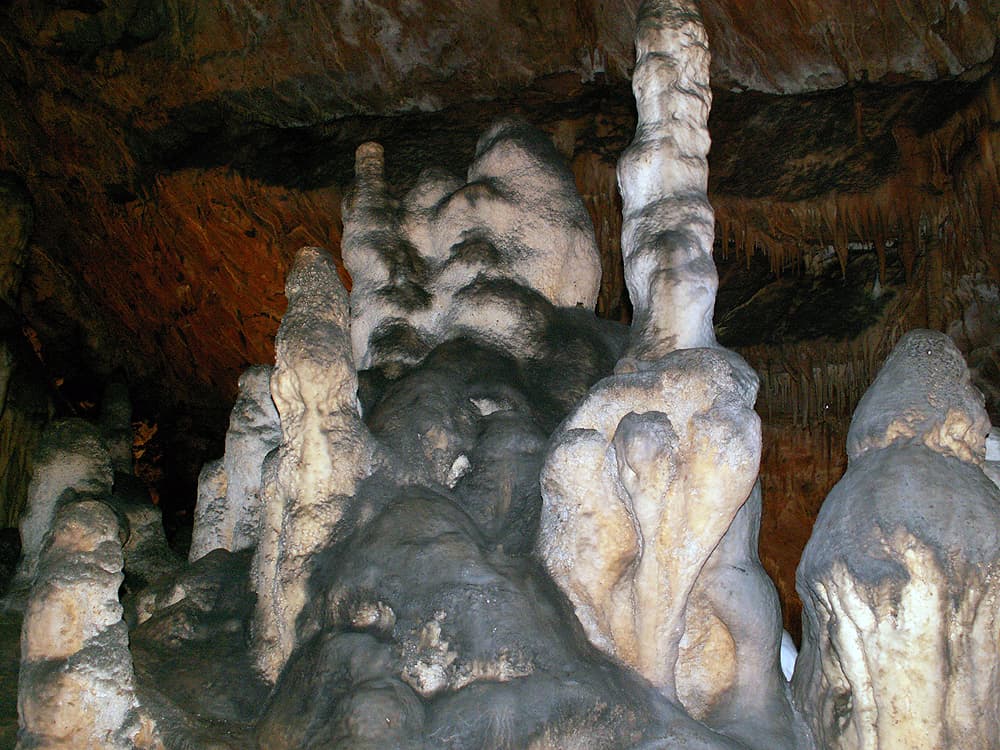
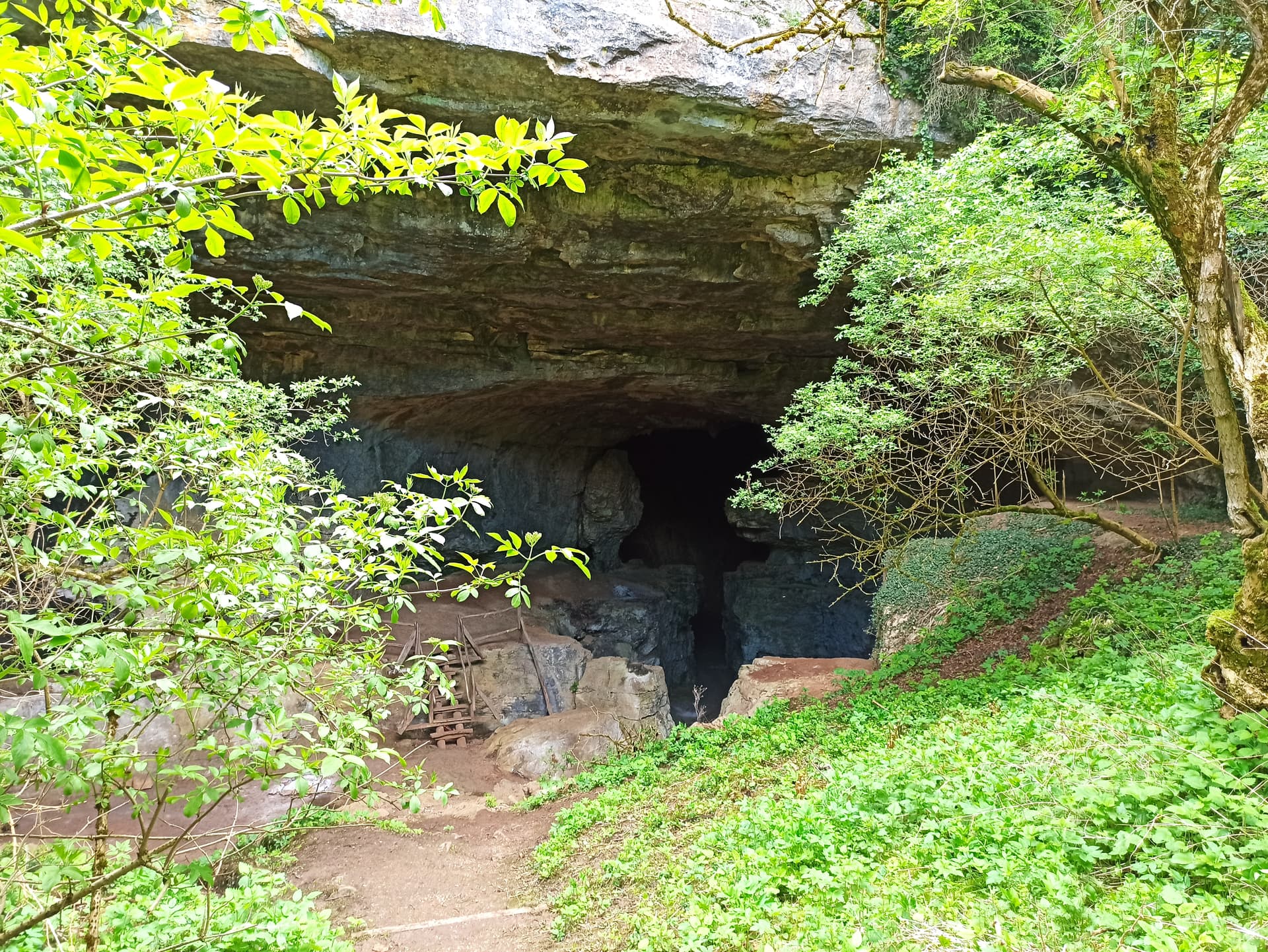
The entrance is large, 5 by 7 m. Below it is a 7.5 m vertical shaft that lands on top of a great sloping heap of fallen rock. Beneath it opens a semicircular hall 62 m across — a typical corrosion-collapse cave formed in Lower Cretaceous limestone, with domed stalagmites and rimstone pools. Sunbeams fall into the hall through the opening in its roof, the best-known sight here.
The first known exploration was in September 1926, by Nenko Radev. Engineer Pavel Petrov described and sketched it in 1933, and a team under Petar Tranteev mapped it in detail in 1965. The name — "the little staircase" — comes from the stepped profile of the cave and above all from the ladder locals placed in the entrance shaft: first wooden, and since 2010 metal.
The cave is free to visit, without a guide. You go down a steep metal staircase protected by mesh against falling stones. It is usually wet and slippery. Inside it is dark and cold all year — bring a headlamp, a warm layer and shoes with good grip. At the entrance there are benches, tables, a shelter, an information board and a toilet.
With children: suitable for older children who are confident on a ladder. Keep small children right beside you; it cannot be reached with a pushchair.
Karpachevo is about 14 km from Letnitsa. From the village square, head south-west on a narrow road, paved only at first and then a dirt track — about 3 km, close to 40 minutes on foot. After rain and in winter the dirt section is muddy and hard for an ordinary car. The cave is on the right of the track, just after a bend past a large pear tree with a lookout.

Lovech region
1.6 km away
Lovech region
5.5 km away
Lovech region
5.6 km away
Lovech region
5.7 km away
Stalbitsata Cave is located in Lovech, Bulgaria.
Stalbitsata Cave is most easily reached by car. Use the coordinates above to navigate, or open the location in OpenStreetMap or your preferred maps app for turn-by-turn directions. Public transport options vary by region — for remote destinations a rental car gives the most flexibility.
Caves can be visited year-round — the temperature inside stays roughly 10–12°C regardless of season. Spring and autumn are quieter than peak summer. Bring a warm layer and sturdy footwear; some caves close in winter when access roads become impassable.
Access to caves varies. Show caves typically run guided tours during posted opening hours; wild caves require proper equipment and experience. Inside, the temperature stays cool year-round (~10–12°C) — bring a warm layer, sturdy non-slip footwear, and a torch even on guided tours.