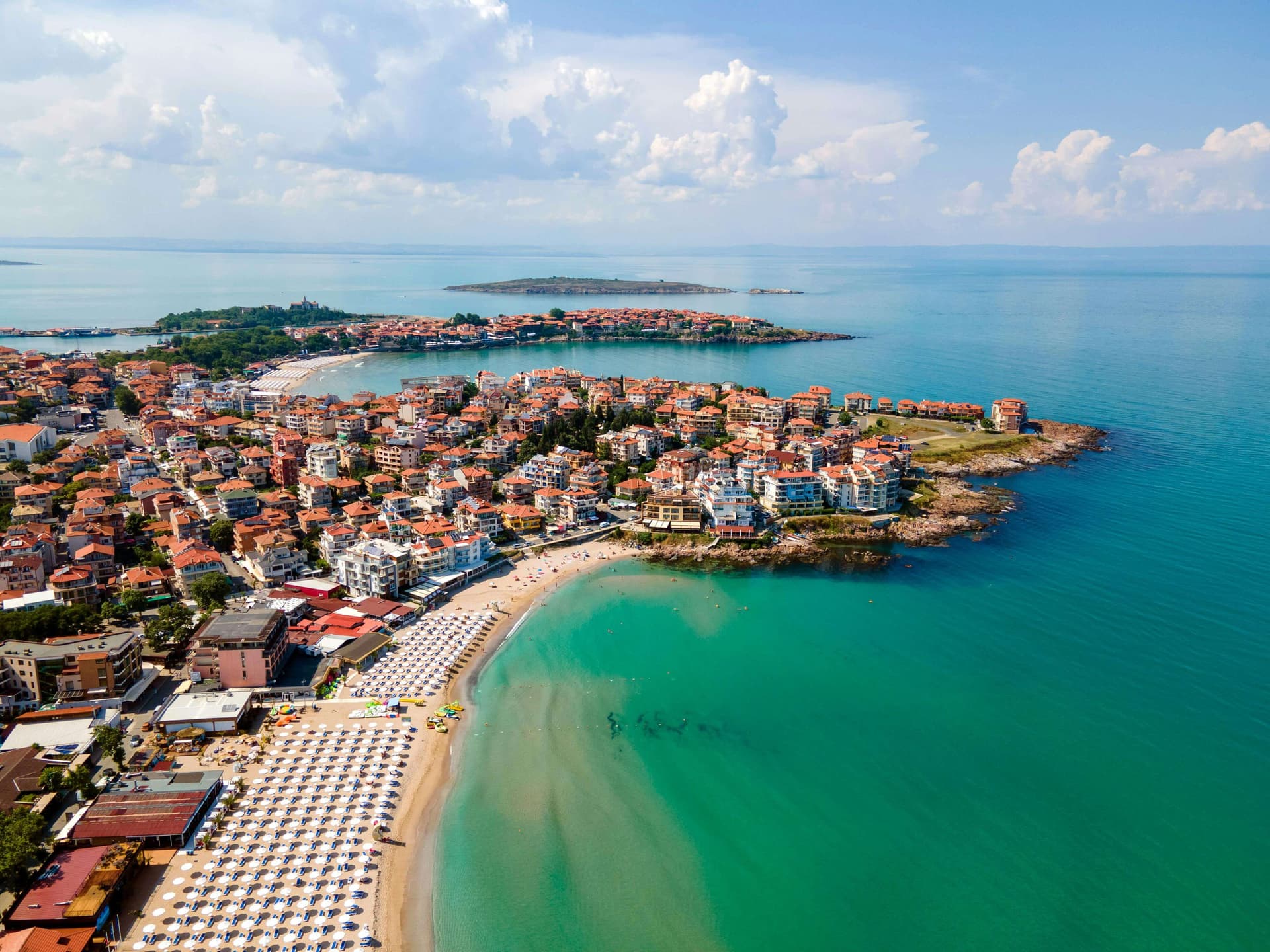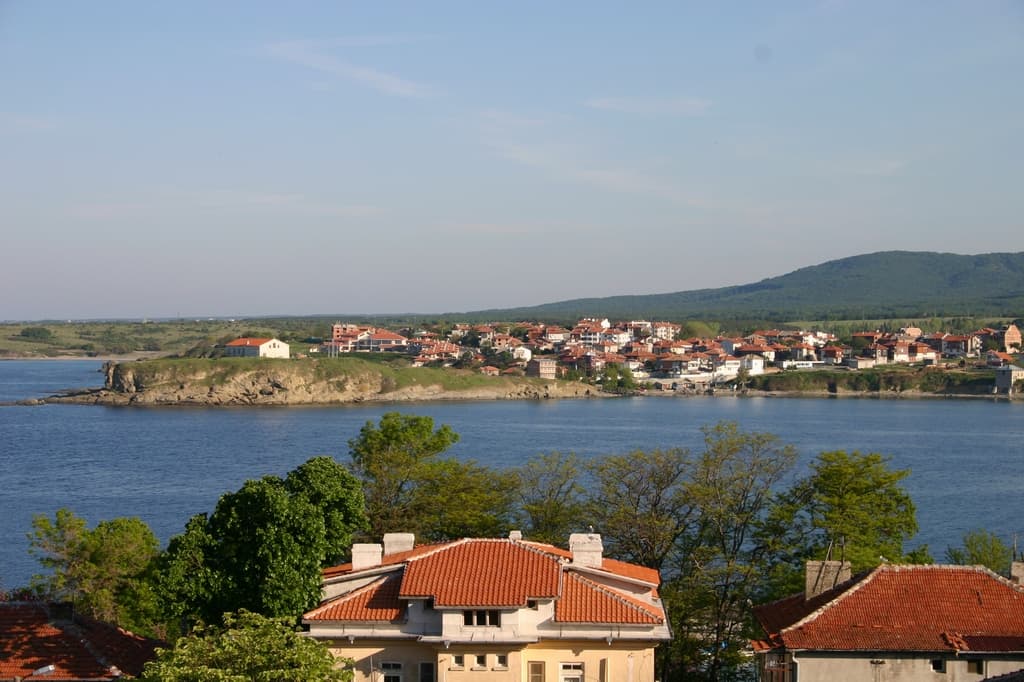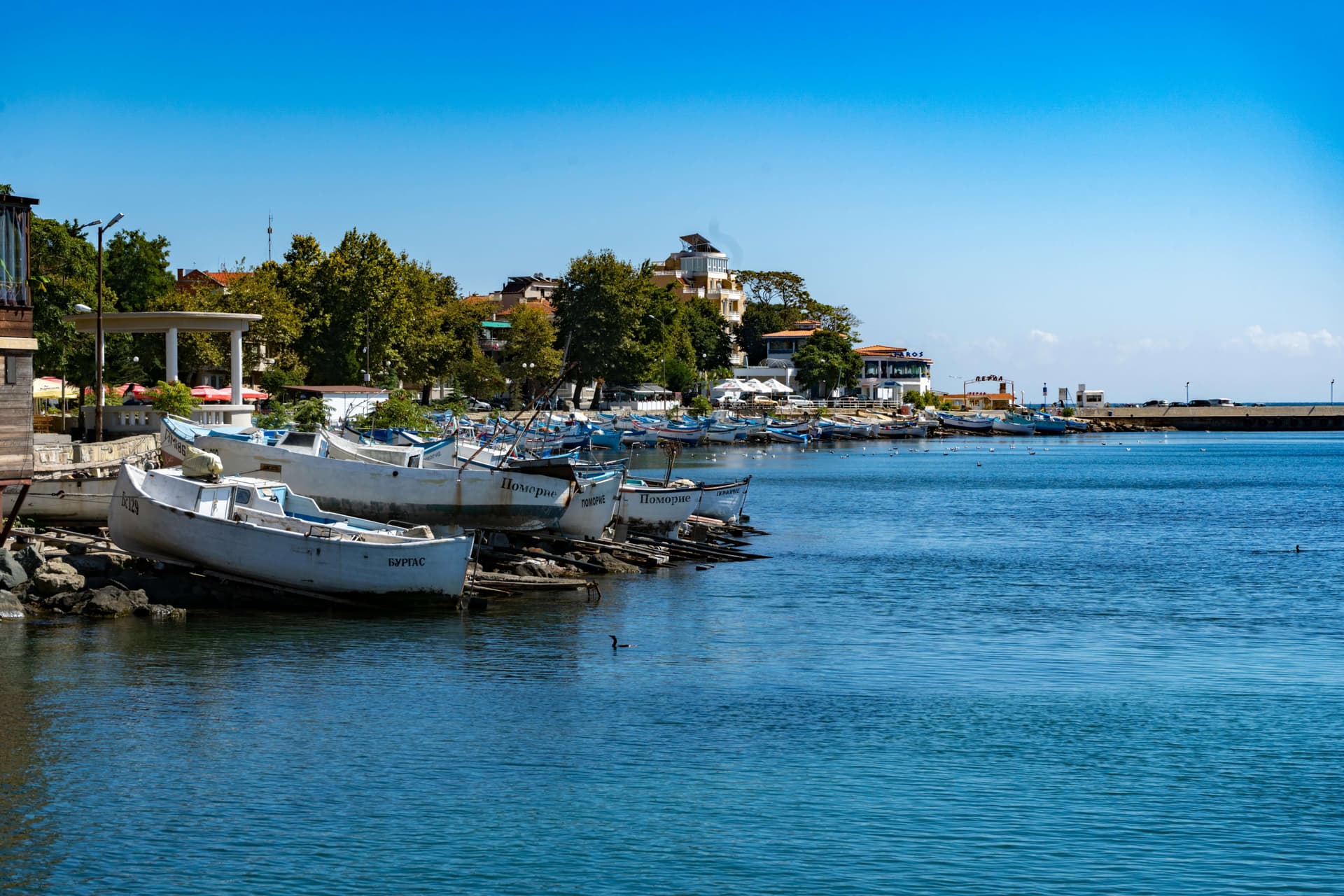
Pomorie is one of the sunniest, most picturesque, and historically saturated resort cities in Southeastern Bulgaria, situated within the Burgas Province. The city serves as the administrative center of the Pomorie Municipality, with its permanent population counting 14 195 residents according to official demographics.
Distances and Logistics:
The modern city of Pomorie occupies a unique geographical position, developed across a narrow, rocky peninsula that cuts 3.5 km deep into the Black Sea waters. The city is surrounded by the sea from the south, east, and northeast, while its northern border faces the hypersaline lagoon of Lake Pomorie. Connection to the mainland fields of the Burgas lowlands is maintained via a narrow tombolo strip to the northwest.
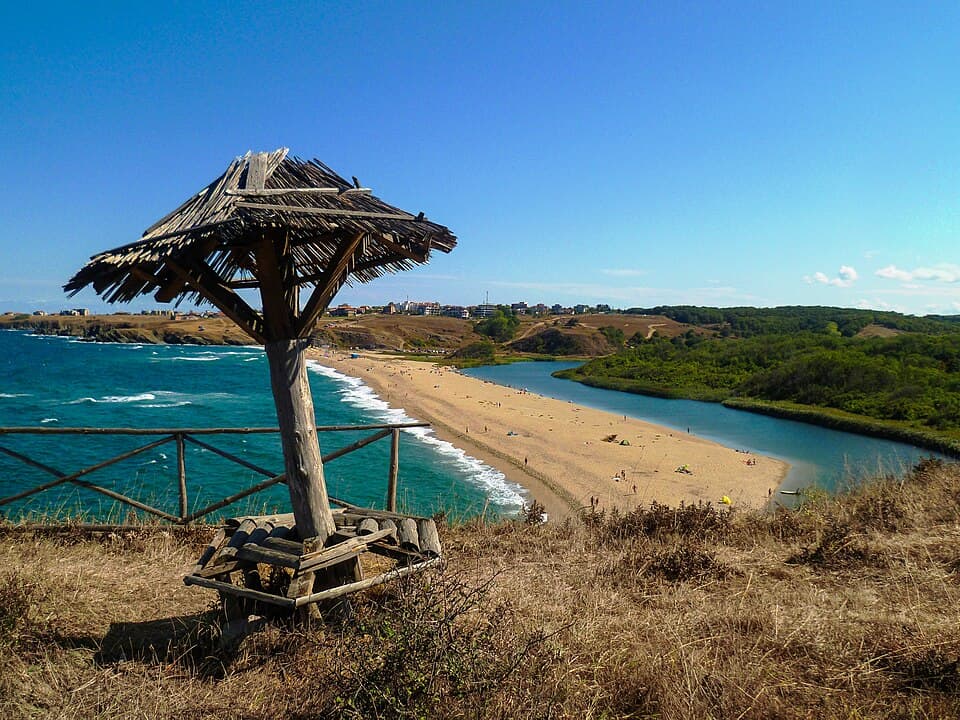
The coastline is low and sandy, boasting an open horizon protected to the north by the ridges of the Balkan Mountains. The Pomorie Bay features an expansive sandy beach zone. The seabed is flat, shallow, and gently sloping, completely free of underwater reefs and dangerous cold currents, rendering it highly safe for swimming and a favorite for family vacations.
Vibrant Cultural Life, Theaters, and Festivals
The town takes pride in its strong theatrical traditions and community centers:
Museums and Historical Heritage Landmarks
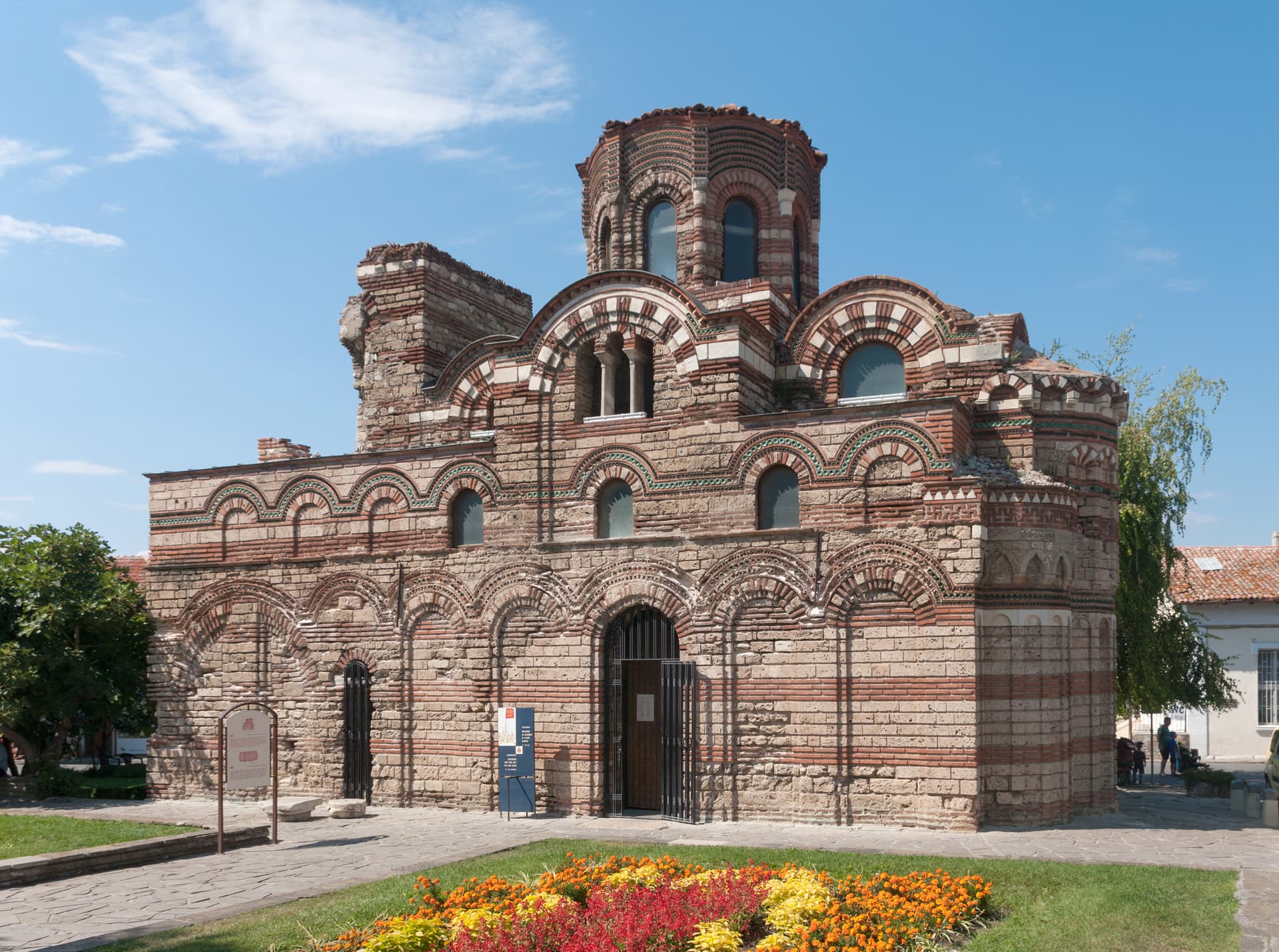
Pomorie carries over 2500 years of continuous history, brilliantly presented across various local cultural assets:
The city boasts a modern professional football club named OFK Pomorie, playing in the Second Professional League, with up-to-date facilities and a stadium located next to the Grand Hotel Pomorie. The team historically reached the final of the Bulgarian National Cup during the 2009/2010 season under the name Chernomorets-Pomorie.
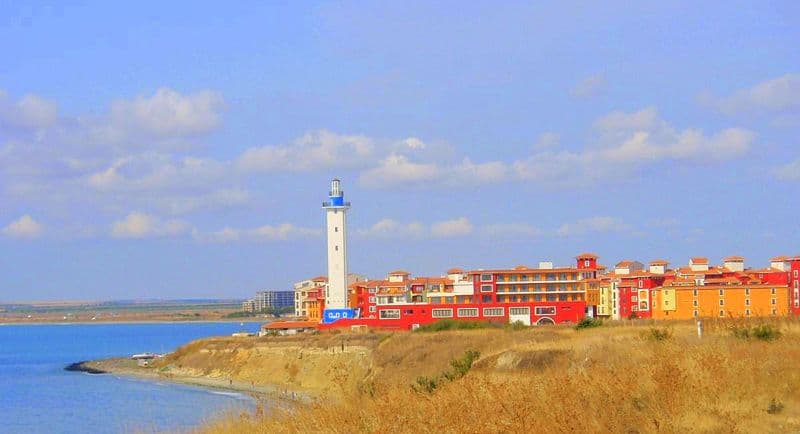
Burgas region
9.3 km away
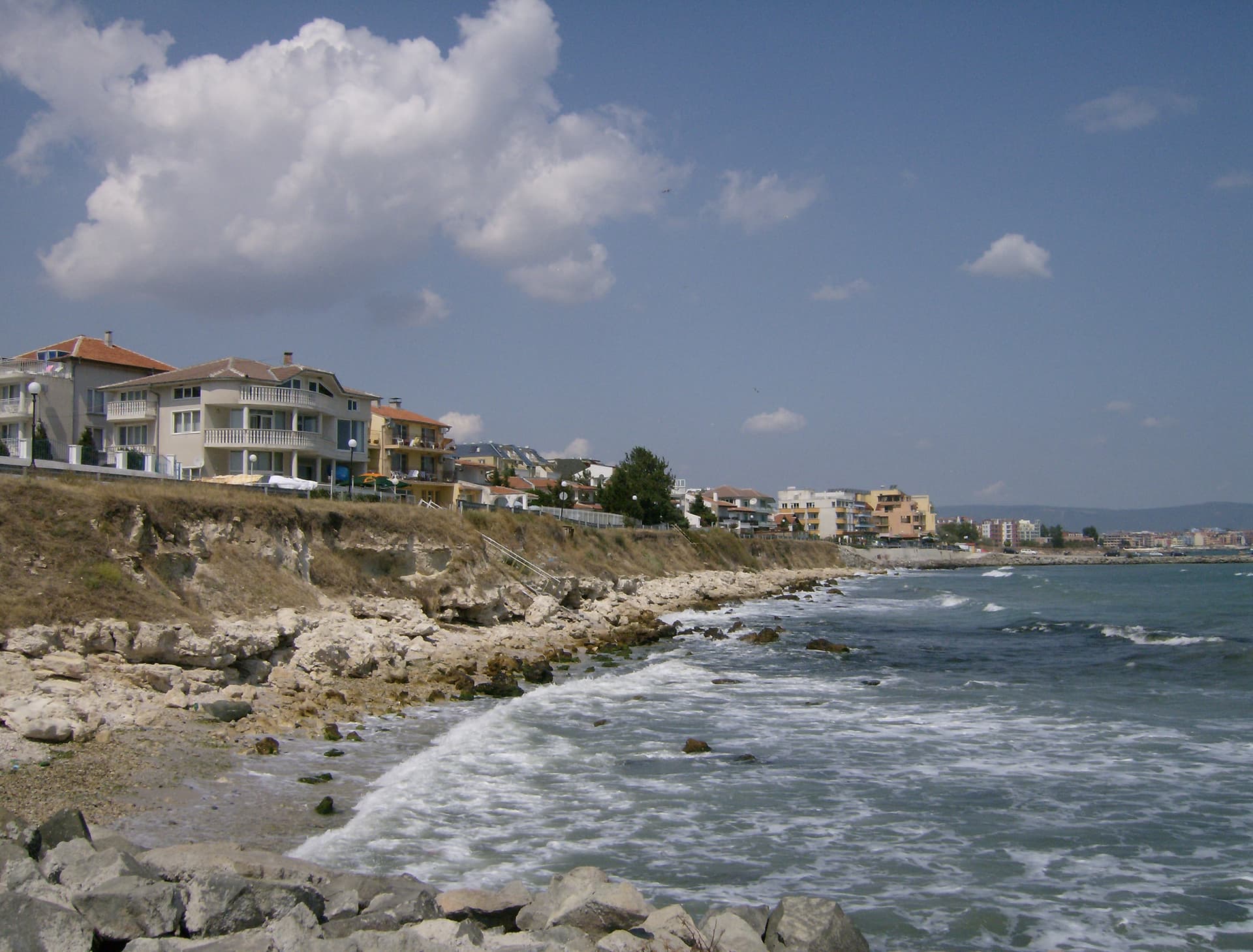
Burgas region
9.8 km away

Burgas region
12.1 km away
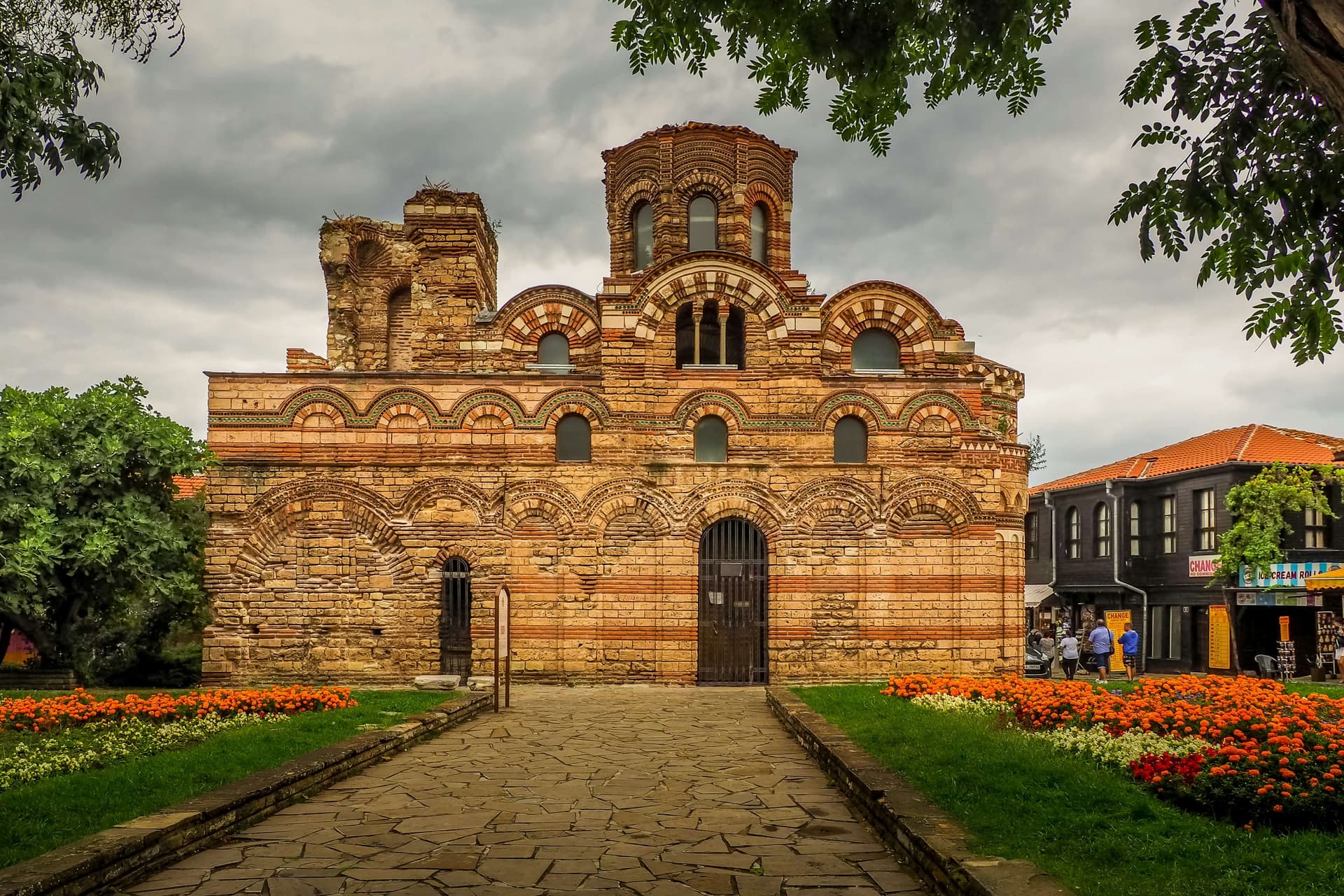
The best day trips from Burgas: Nessebar and Sozopol old towns, the Pomorie salt pans, Ropotamo reserve and Strandzha, with bus and driving tips.

Planning to attend Eurovision 2027 in Burgas (10–15 May)? Discover the official dates, Arena Burgas capacity, ticket release timeline, and expert travel tips.
An expert day-by-day plan for Eurovision 2027 week in Burgas: semi-final dates, free-day coastal trips to Nessebar and Sozopol, fan zones, and late-night tips.
Pomorie is located in Burgas, Bulgaria.
Pomorie is most easily reached by car. Use the coordinates above to navigate, or open the location in OpenStreetMap or your preferred maps app for turn-by-turn directions. Public transport options vary by region — for remote destinations a rental car gives the most flexibility.
Pomorie can be visited year-round, but late spring (May–June) and early autumn (September–October) offer the most pleasant weather and fewer tourists. Summer is the busiest season; winter is the quietest, with shorter daylight and possible cold weather.
Bulgarian settlements typically reward unhurried walking — historic centres, churches and monasteries, local markets, and family-run restaurants serving regional dishes. Larger towns often have museums and seasonal cultural events. The local tourist information centre is a good first stop for current opening hours and what's on.