

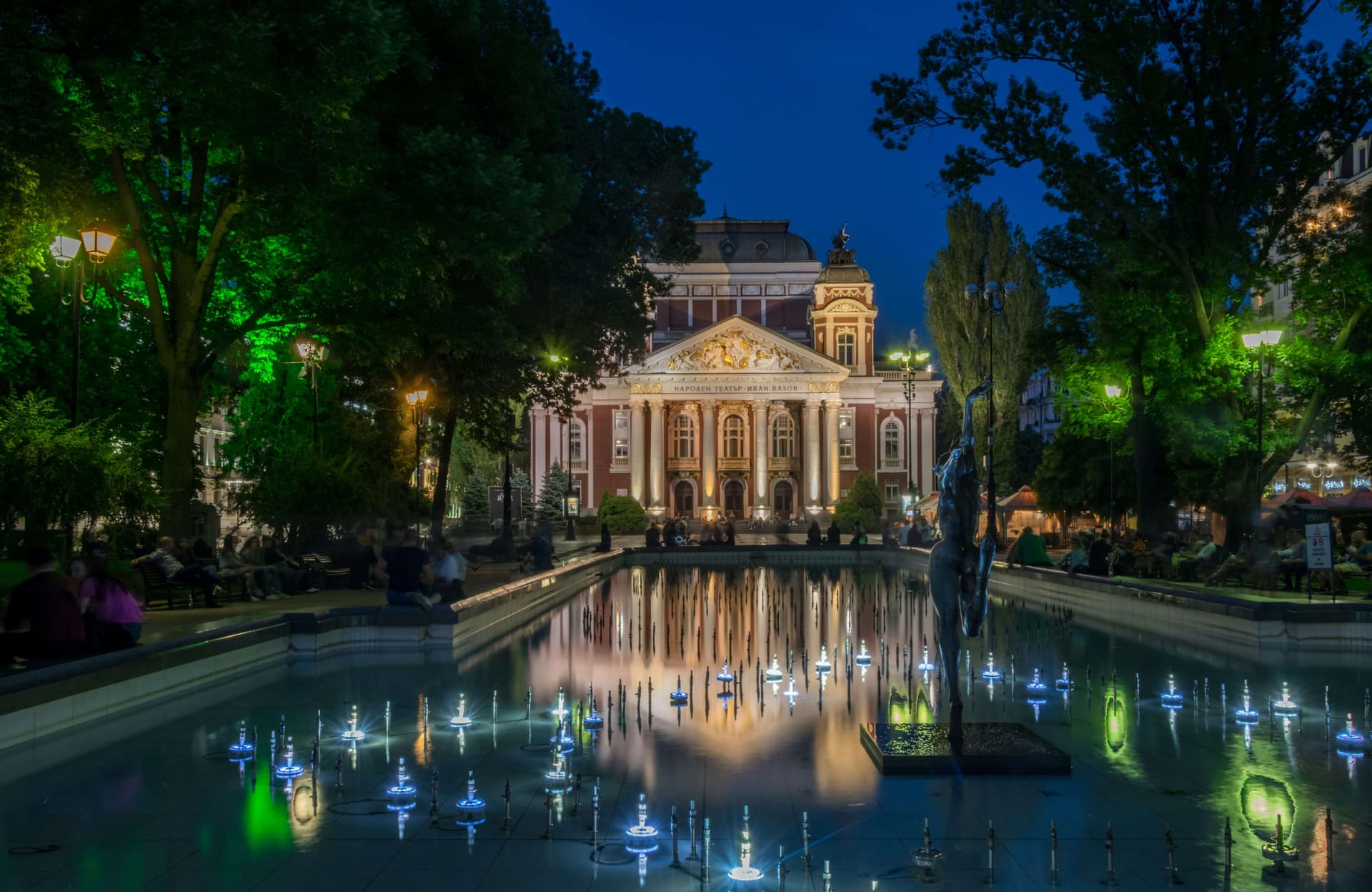
Ivan Vazov National Theatre
The Ivan Vazov National Theatre is the oldest national theatre in Bulgaria. Its building stands in the City Garden in central Sofia, at 5 Dyakon Ignatiy Street.
What to see
The building was designed by the Viennese architects Ferdinand Fellner and Hermann Helmer. The main auditorium has 848 seats, and its ceiling and walls were painted by the Viennese artist Rudolf Fuchs. Besides the Main Stage the theatre has a Chamber Stage. The interior decoration is the work of Dechko Uzunov, Georgi Chapkanov and Ivan Kirkov, and Kirkov also designed the curtain with the Phoenix. The stage machinery, supplied by the German firms Krupp and MAN, has run since 1929 and is used in every performance on the Main Stage.
History
The theatre dates its start to the order by which, from 1 January 1904, Ilia Milarov, manager of the Salza i Smyah company, was appointed intendant; from the spring of that year the company was called the Bulgarian National Theatre. From 1906 it was the National Theatre, from 1951 the Krastyo Sarafov National Theatre, and from 1962 the Ivan Vazov.
Construction began in June 1904 on the site of the wooden Osnova theatre. The theatre opened on 3 January 1907; before the ceremony students booed Prince Ferdinand, who closed Sofia University for six months.
On 10 February 1923 a fire during an anniversary performance destroyed the building. It was rebuilt in 1924–1928 to a design by the German architect Martin Dülfer and the engineer Kiril Chaparov, with a new reinforced-concrete structure. In the Second World War the bombing of Sofia destroyed the south wing; the theatre reopened in April 1945. The last major renovation took place in 1972–1975, led by Prof. Venelin Venkov, when the Chamber Stage was built.
Visiting
You can see the façade at any time from the City Garden. The halls are seen with a ticket for a performance; the programme and tickets are on the theatre's website and at its box office.
Nearby
- Ivan Vazov House Museum (Sofia) — about 200 m.
- National Art Gallery — about 300 m.
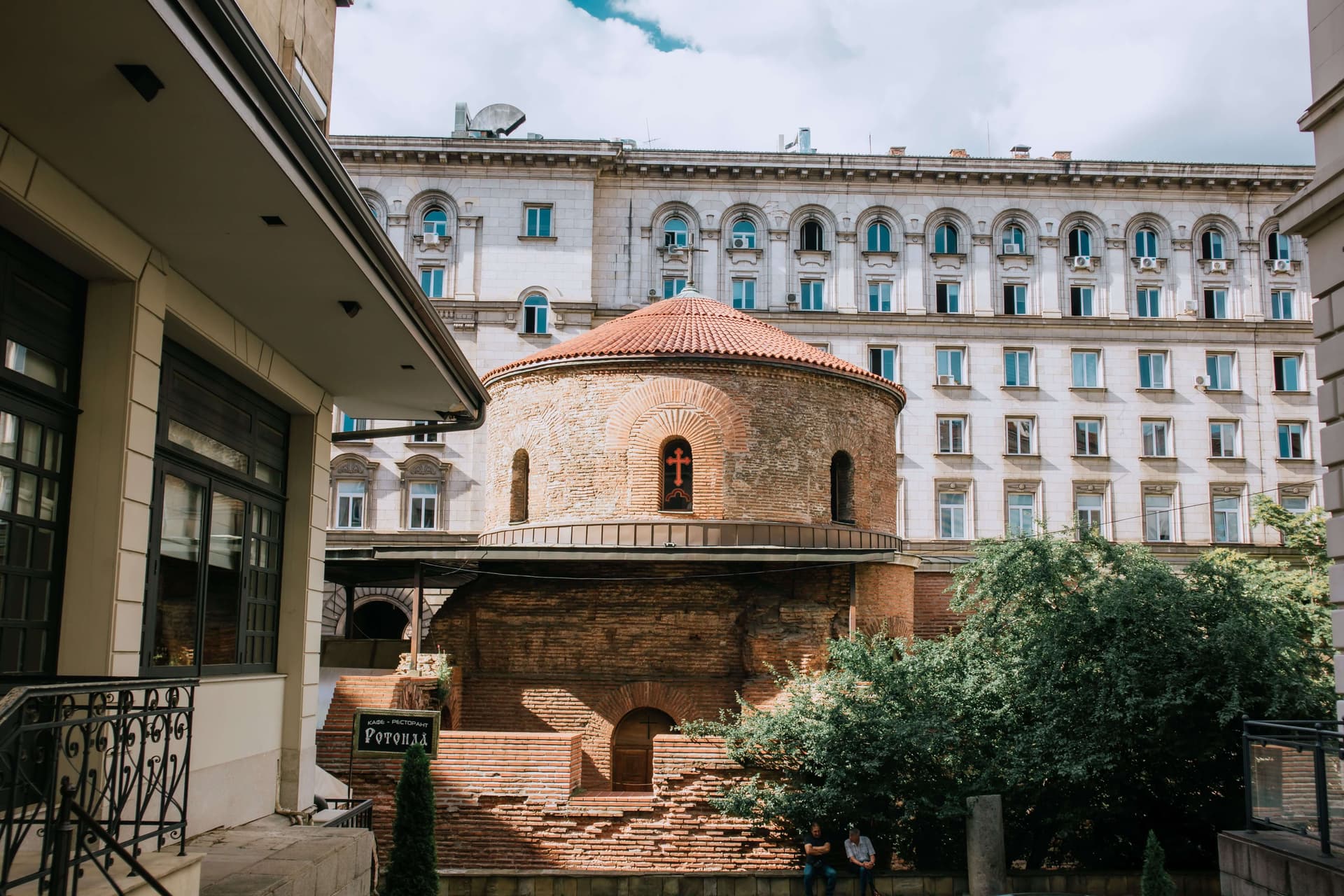
- Saint George Rotunda — about 400 m.
7-day forecast
Weather data from MET NorwayNearby Places

More to explore

Read more in our travel guides
Frequently asked questions
Where is Ivan Vazov National Theatre located?
Ivan Vazov National Theatre is located in Sofia City, Bulgaria.
How do I get to Ivan Vazov National Theatre?
Ivan Vazov National Theatre is most easily reached by car. Use the coordinates above to navigate, or open the location in OpenStreetMap or your preferred maps app for turn-by-turn directions. Public transport options vary by region — for remote destinations a rental car gives the most flexibility.
What is the best time to visit Ivan Vazov National Theatre?
Ivan Vazov National Theatre can be visited year-round. Spring and autumn offer the most pleasant conditions for exploring, with mild temperatures and fewer crowds. Summer is ideal for photography and longer day trips; winter visits are possible but weather can limit access at some sites.
What should I know before visiting Ivan Vazov National Theatre?
Most natural landmarks in Bulgaria are freely accessible and open year-round, though some sites have entrance fees or require a guide. Wear sturdy footwear and bring water, as the terrain can be uneven. Respect any protective barriers and stay on marked paths to preserve the site.