

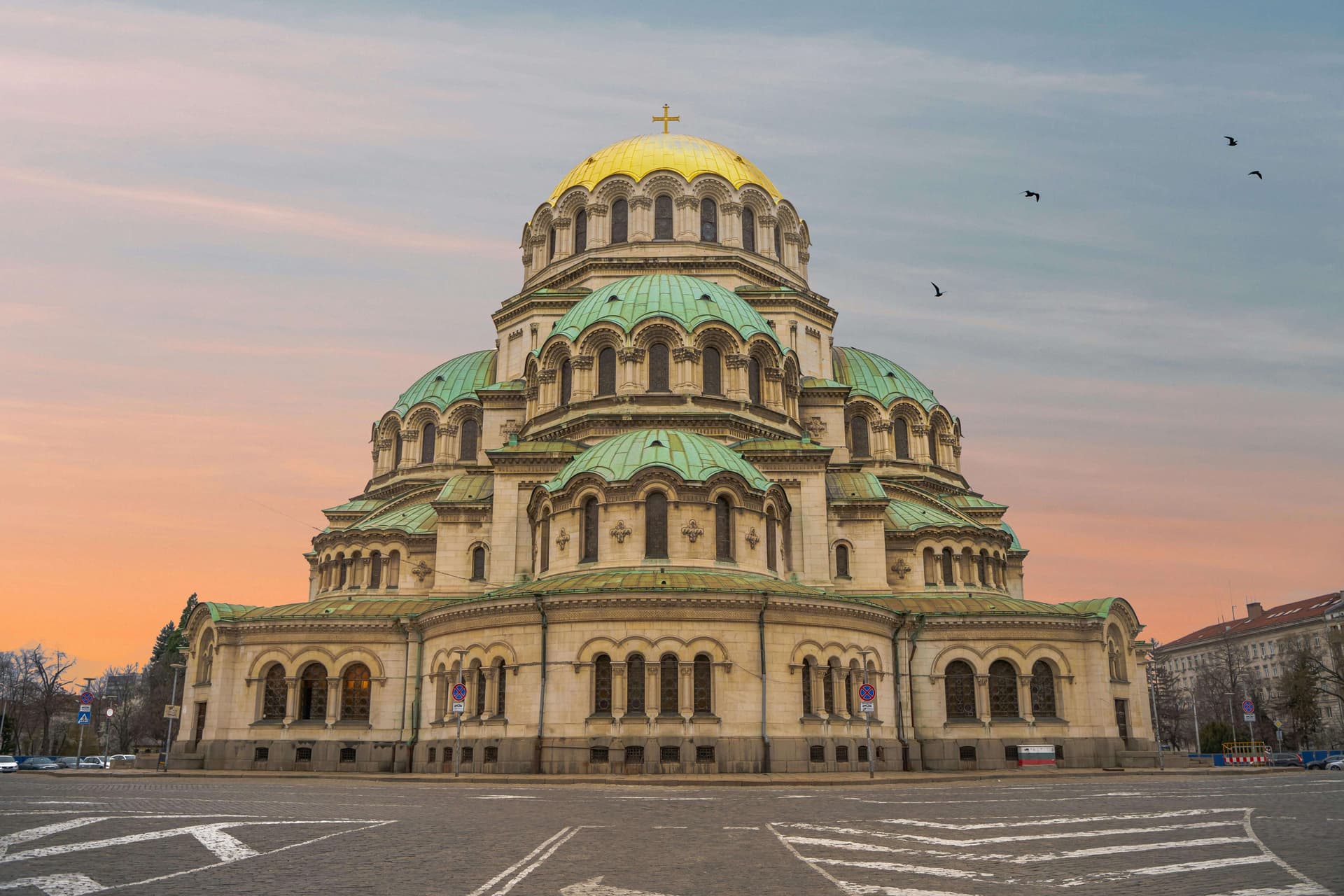
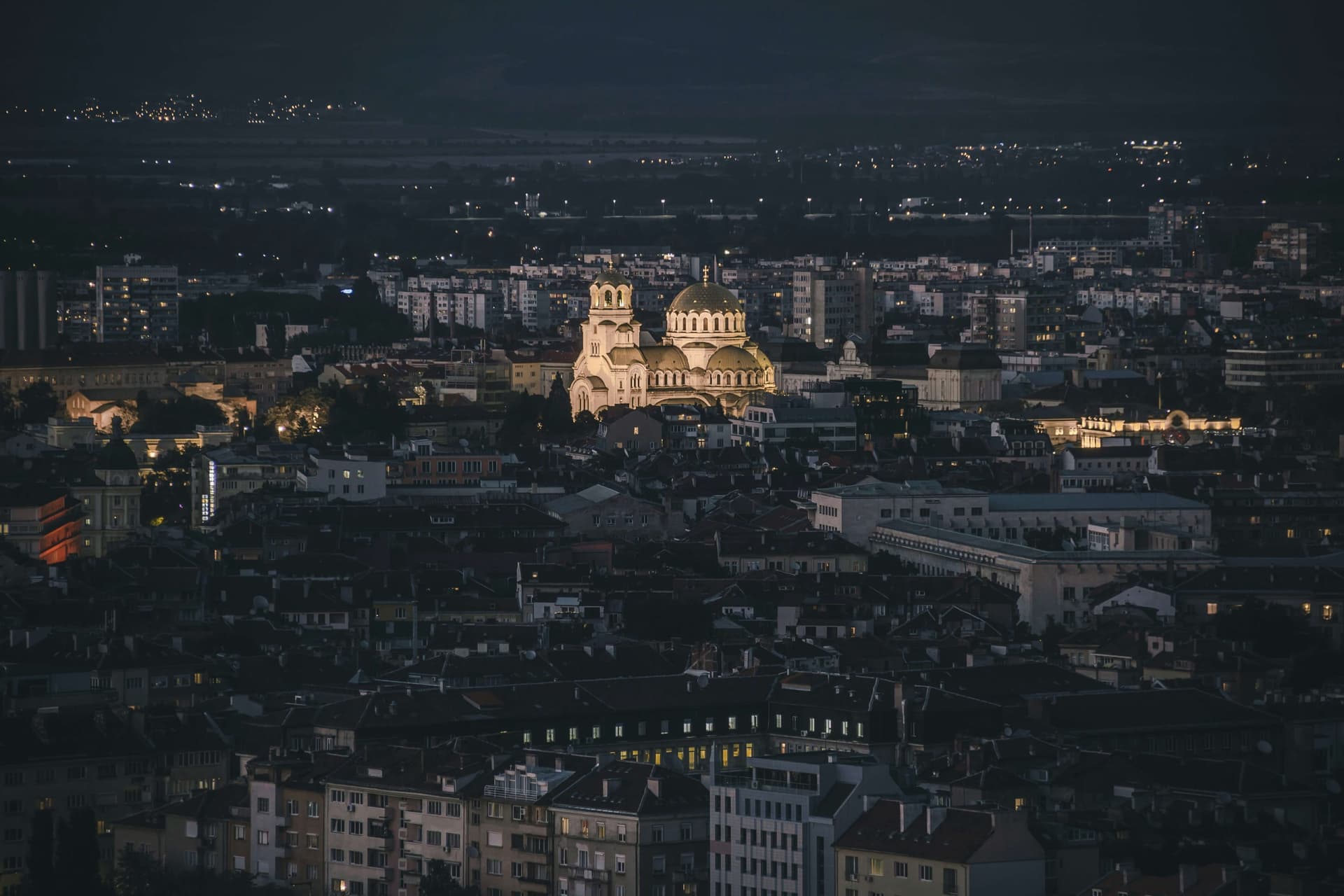
Alexander Nevsky Cathedral
The Saint Alexander Nevsky Cathedral is a majestic Orthodox monument located on the central square of the same name in the city of Sofia. The cathedral serves as the official patriarchal cathedral of the Bulgarian Patriarch and stands as one of the most prominent landmarks of Bulgaria. Designed and constructed between 1882 and 1912, it was formally declared a cultural monument of national significance in 1955. The complex is featured in the prestigious 100 National Tourist Sites of Bulgaria.
Historical Context, Public Donations, and the Foundation Stone
The historic decision to build a grand monument for the holy deed of Liberation, in which the blood of the liberators merged with the blood of the liberated, was made in 1879 during the Constitutional Assembly in Veliko Tarnovo, following an initial proposal by statesman Petko Karavelov. Although Tarnovo was originally chosen as the site, after Sofia was designated the capital city of the Principality, the First Ordinary National Assembly decided that the cathedral should be erected in the new administrative center.
Prince Alexander First Battenberg addressed a passionate proclamation to the entire nation, resulting in the cathedral being constructed entirely via public donations. The voluntary contributions from citizens amounted to a massive total sum of 1 900 000 leva. The foundation stone was laid with state ceremony on March 3, 1882 (February 19 old style), marking the fourth anniversary of the signing of the Treaty of San Stefano. Inside the foundations, a specialized metal box was embedded, containing the inscribed names of all members of the Bulgarian government of that era.
Architectural Design, Construction, and Consecration
The cathedral was erected at the highest and most dominant location in Sofia at that time, standing at 552 meters above sea level. The initial blueprint (created between 1884 and 1885) was designed by Academician Architect Ivan Bogomolov. Following his passing, the leadership was assumed by the prominent Russian architect Professor Alexander Pomerantsev, a graduate of the Italian academy. He completely redesigned the initial structural layout, aided by his primary assistants, Russian architects Alexander Smirnov and Alexander Yakovlev.
The final architectural design was completed in 1898. The actual construction phase started in 1904 and concluded in 1912, with the total implementation cost reaching 5.5 million leva. In May 1912, the Chairman of the National Assembly, Stoyan Danev, visited Saint Petersburg and invited Russian Emperor Nicholas Second to the upcoming consecration, but the Emperor declined due to state schedules. The official celebrations for the consecration of the cathedral lasted for three consecutive days - from September 12 to September 14, 1924.
Damage Suffered During World War II
During the Anglo-American air raids over Sofia in World War II, shockwaves and heavy shrapnel caused severe structural damage to the cathedral. The northwestern section of the building suffered the most intensive impact. The copper roof cladding was pierced in dozens of places, the valuable mosaic icons beneath the tympanums were completely destroyed, and the protective glass panels of the iconostasis icons were shattered. The original interior paintings in the northwestern gallery, along with several panoramic frescoes across the vaulted passages, sustained notable damage.
Ownership and National Status
By a decree issued on October 1, 2014, by the caretaker cabinet of Professor Georgi Bliznashki, the official ownership of the cathedral building was permanently granted to the Holy Synod of the Bulgarian Orthodox Church. Boasting a total built-up area of 3170 square meters, the cathedral stood as the largest fully completed and active Orthodox cathedral across the entire Balkan Peninsula at the time of its completion. The temple was proclaimed a Patriarchal Cathedral in 1953. The Bulgarian Orthodox Church solemnly commemorates the translation of the relics of Saint Alexander Nevsky from Vladimir to Saint Petersburg as one of its primary annual feast days.
Interior Layout, Marble Carvings, and Decorative Masterpieces
The interior of the cathedral is striking in its immense luxury and complex ornamentation. The structural details were crafted using semi-precious onyx, pure alabaster, and multi-colored marbles sourced from Brazil, Morocco, Italy, India, and Germany (including the famous varieties Giallo di Siena, Verde di mare, Onyx Brasiliano, and Indian alabaster). All elements of the marble plastic art were masterfully sculpted and precisely assembled under the direct guidance of Architect Yakovlev.
Interior and Artistic Components:
- Floors and Walls: The floor of the cathedral is entirely laid with multi-colored Italian marbles, arranged in intricate mosaic patterns. Architect Yakovlev designed the ornamental mosaic decorations along the walls, while the unique ornamental marble carvings were executed under the supervision of Professor Vasily Perminov. The fine interior painting works were entrusted to the Austrian master Lester.
- Doors and Mosaics: The metal reliefs decorating the massive entrance doors were cast in specialized foundries in Munich, while the vibrant color mosaics were delivered directly from master art studios in Venice.
- Lighting Fixtures: Created in a refined Neo-Empire style, the central monumental chandelier weighs an impressive 2500 kilograms. It hangs at a height of 27 meters and is adorned with glass teardrop pendants made of premium Jena glass.
- Altar Baldachin: Inside the central altar rises a majestic baldachin supported by four massive columns, featuring arches, 32 dome columns, and capitals crafted entirely from red and green Brazilian onyx and alabaster, while its internal dome is covered in rich mosaic patterns. The Bishop's throne, the Royal throne, and the high pulpit are also crafted from premium marbles featuring fine inlay work.
- Central Iconostasis: Sculpted from diverse colored marbles, it blends with the two front onyx columns supporting the altar baldachin. Its lower section, rising 4 meters, is made from white-yellow Giallo di Siena marble, featuring 9 slots for iconostasis icons set upon columns of green Italian Verde di mare marble. The upper section, rising 2 meters, is crafted from light red Cipollino di Siena marble and contains 10 smaller slots for icons. The iconostasis is heavily decorated with cornices and reliefs. The two side iconostases represent identical architectural replicas of the central iconostasis, rendered on a smaller scale.
- Icons and Frescoes: The interior walls are adorned with wall paintings and icons. Among them are 82 oil paintings on canvas - some are mounted onto sturdy wooden frames, while others are fixed directly onto the masonry walls. They are arranged across the three altars, along the lower tier of the narthex, and within the three large shrines (kiwots). The exterior decoration of the cathedral also features mosaic portraits, including a depiction of Saint Theodosius of Tarnovo.
7-day forecast
Weather data from MET NorwayNearby Places


More to explore

Read more in our travel guides
Sofia Airport to the City Center & Central Station: Every Option (2026)
Metro to the center in 20 minutes for €0.80, or to the Central Bus and Railway Station with one change. Buses 84/184, night bus N4, taxi fares, Terminal 1 vs 2.
One Week in Bulgaria: The Ultimate 7-Day Travel Itinerary
The complete 7-day Bulgaria travel itinerary: explore Sofia, Rila Monastery, Plovdiv, Veliko Tarnovo, and the Black Sea coast with distances and travel times.
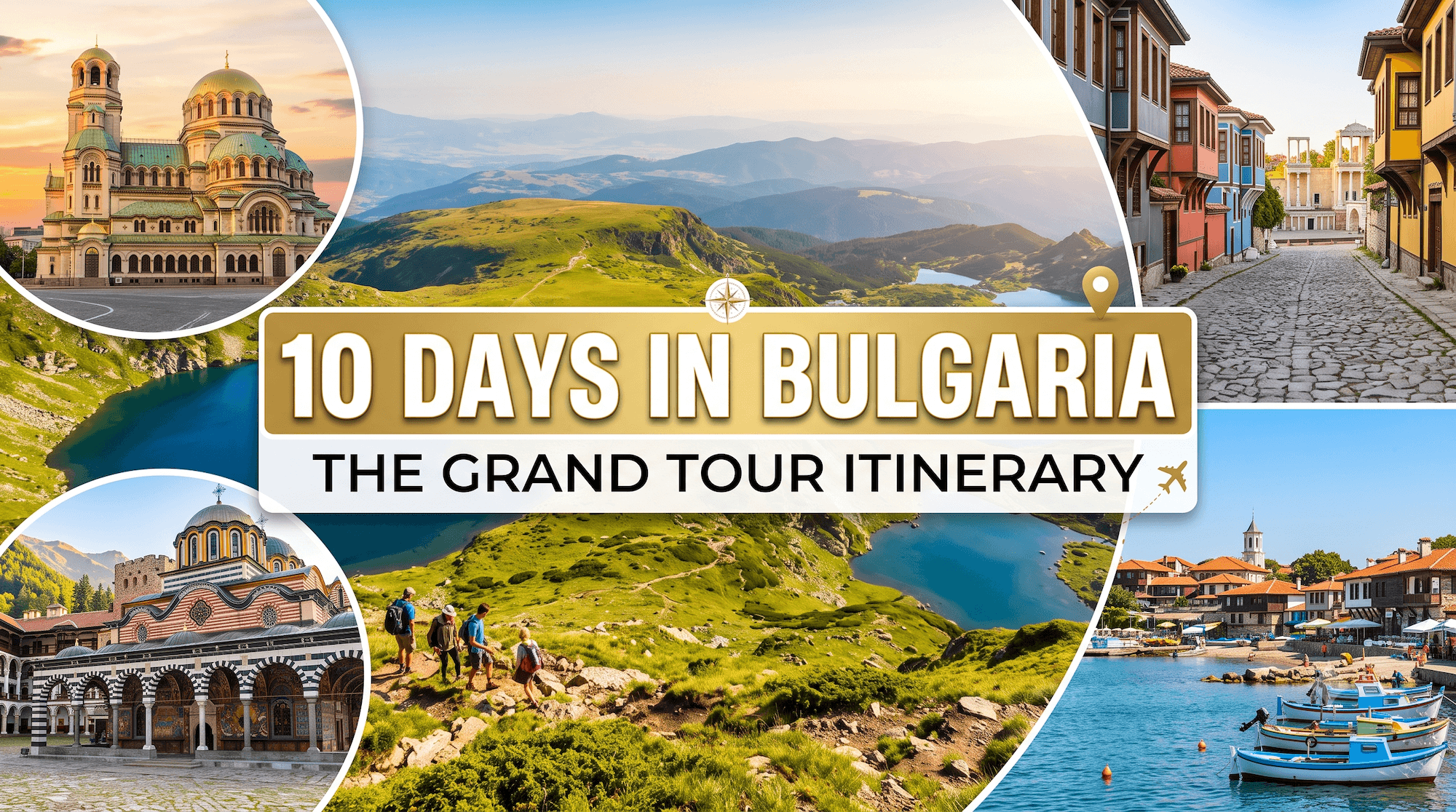
10 Days in Bulgaria: The Ultimate Grand Tour Itinerary
A complete 10-day Bulgaria itinerary: explore Sofia, Rila Monastery, Plovdiv, the Rose Valley, Veliko Tarnovo, and the Black Sea coast.
Frequently asked questions
Where is Alexander Nevsky Cathedral located?
Alexander Nevsky Cathedral is located in Sofia City, Bulgaria.
How do I get to Alexander Nevsky Cathedral?
Alexander Nevsky Cathedral is most easily reached by car. Use the coordinates above to navigate, or open the location in OpenStreetMap or your preferred maps app for turn-by-turn directions. Public transport options vary by region — for remote destinations a rental car gives the most flexibility.
What is the best time to visit Alexander Nevsky Cathedral?
Alexander Nevsky Cathedral can be visited year-round. Spring and autumn offer the most pleasant conditions for exploring, with mild temperatures and fewer crowds. Summer is ideal for photography and longer day trips; winter visits are possible but weather can limit access at some sites.
What should I know before visiting Alexander Nevsky Cathedral?
Most natural landmarks in Bulgaria are freely accessible and open year-round, though some sites have entrance fees or require a guide. Wear sturdy footwear and bring water, as the terrain can be uneven. Respect any protective barriers and stay on marked paths to preserve the site.