

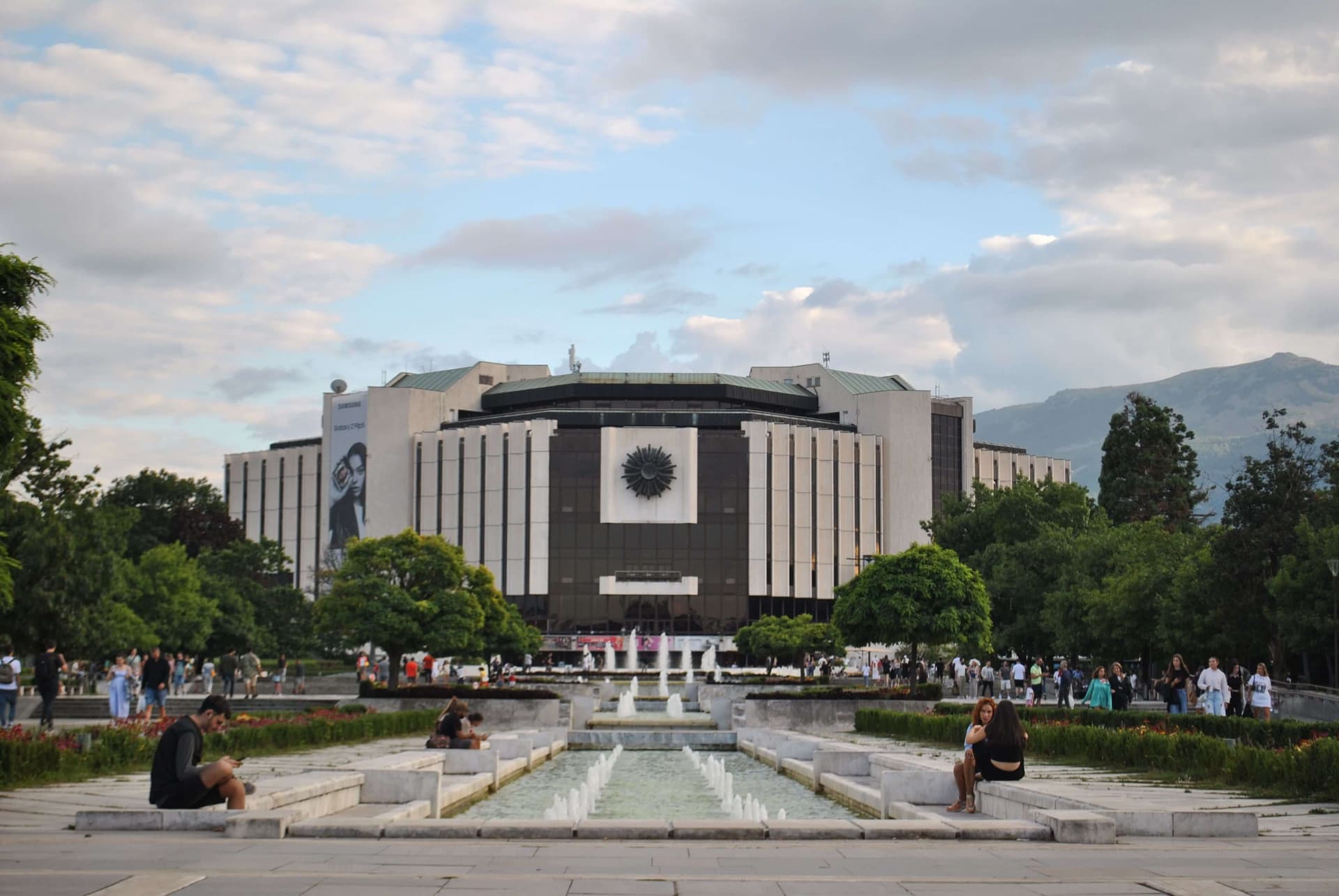
National Palace of Culture
The National Palace of Culture, widely recognized across the country by its abbreviation NDK, is an iconic national cultural and public hub situated in the absolute heart of Sofia. Until 1990, the complex officially carried the name National Palace of Culture Lyudmila Zhivkova. Today, the facility holds the prestigious status of being the largest multifunctional congress center in all of Southeastern Europe, specializing in hosting international conferences, large-scale exhibitions, political forums, and premium public events.
Scale, Architecture, and Global Recognition
The architectural structure features monumental construction parameters and spatial metrics:
- Built-up Area: The complex extends across a vast built-up floor area of 123 000 square meters.
- Layout: It is vertically developed across 8 above-ground floors and 3 extensive underground service levels.
Volume and Footprint: The main building is erected over a land plot spanning 18 300 square meters, commanding a total structural volume of 576 800 cubic meters.
The primary functional purpose of the Palace, which features 13 specialized halls, is targeted at hosting cultural, artistic, and convention initiatives. The largest and most prestigious auditorium (Hall 1) boasts a fixed seating capacity of 3380 seats. Due to its premium venue features, in July 2005, the International Association of Convention Centres (AIPC) granted NDK the annual award for Best Convention Centre in the World.
A Rich Seasonal Event Calendar
The National Palace of Culture acts as the main host for more than 300 landmark events every year. Its halls routinely accommodate:
- International congresses and global summits.
- Regional and world political forums.
- Corporate business conferences and commercial exhibitions.
- Scientific symposia and academic lectures.
- Premier music, theater, and cinema festivals.
- Live concerts, dance performances, and classical opera shows.
Monumental Art and Interior Heritage Collections
NDK is not merely an engineering achievement, but functions as a museum guarding fine Bulgarian art. The building is home to more than 80 unique monumental works of art, incorporating master paintings, sculptures, vibrant mosaics, expansive wall frescoes, woodcarvings, and metal reliefs. All these installations were custom-crafted specifically for the distinct interior spaces of the Palace by leading Bulgarian artists active during the second half of the 20th century.
The main halls preserve invaluable permanent masterpieces by some of the most celebrated Bulgarian fine art masters, including Dechko Uzunov, Marin Varbanov, Svetlin Rusev, Pavel Koychev, Teofan Sokerov, Anton Donchev, Dimitar Kirov, Yoan Leviev, Ivan Kirkov, Hristo Stefanov, and Galin Malakchiev.
Logistics, Transport, and Public Access
The National Palace of Culture enjoys excellent transport connectivity via the Sofia Metro network, with two key underground transit stations functioning directly beneath Bulgaria Square:
- Line 2: On August 31, 2012, the NDK metro station was opened, serving the second metropolitan line of the subway system.
- Line 3: On August 26, 2020, the NDK 2 metro station went into operation, serving the third metropolitan line of the city subway.
The monument is featured in the official list of the 100 National Tourist Sites of Bulgaria. Visitors and hikers can collect their tourist stamp at the main NDK information desk from Monday to Friday, while during weekends on Saturday and Sunday, the official stamp is available at the central Ticket Center.
7-day forecast
Weather data from MET NorwayNearby Places

More to explore

Read more in our travel guides
Frequently asked questions
Where is National Palace of Culture located?
National Palace of Culture is located in Sofia City, Bulgaria.
How do I get to National Palace of Culture?
National Palace of Culture is most easily reached by car. Use the coordinates above to navigate, or open the location in OpenStreetMap or your preferred maps app for turn-by-turn directions. Public transport options vary by region — for remote destinations a rental car gives the most flexibility.
What is the best time to visit National Palace of Culture?
National Palace of Culture can be visited year-round. Spring and autumn offer the most pleasant conditions for exploring, with mild temperatures and fewer crowds. Summer is ideal for photography and longer day trips; winter visits are possible but weather can limit access at some sites.
What should I know before visiting National Palace of Culture?
Most natural landmarks in Bulgaria are freely accessible and open year-round, though some sites have entrance fees or require a guide. Wear sturdy footwear and bring water, as the terrain can be uneven. Respect any protective barriers and stay on marked paths to preserve the site.