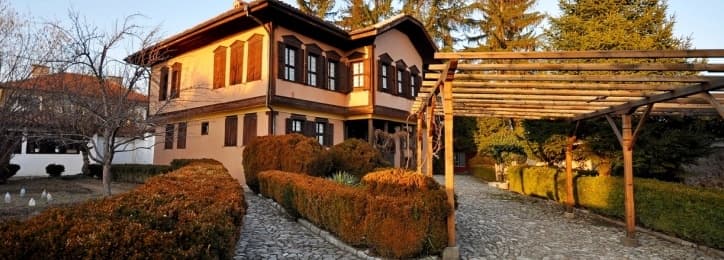
The Historical Museum in the town of Panagyurishte constitutes an extensive, high-tech, and richly organized museum complex. Its diverse exhibitions are arranged across both a contemporary central facility and an entire architectural ensemble composed of authentic, perfectly restored National Revival residential structures that once belonged to prominent and wealthy families of Panagyurishte. The museum executes the vital objective to research, preserve, and popularize the centuries-old cultural and historical heritage defining the Sredna Gora region, formatting its position as one of the most visited cultural destinations across the country and a prominent component of the 100 National Tourist Sites.
The initial intent regarding the establishment of a museum institution inside Panagyurishte originated at the absolute opening of the 20th century under the conceptual model of a memorial museum dedicated to the national-revolutionary movement. This planning was profoundly linked to a major civil project aimed at erecting a majestic monument to celebrate the April Uprising of 1876.
The chronology tracking institutional development transitions through several vital phases:
The architectural model of the Panagyurishte marketplace inside the main hall showcases in a highly interactive format the primary handicrafts that drove the economic capitalization of the district during the National Revival epoch. Illustrated via authentic tools and layout reconstructions are the trades of tailoring, goldsmithing, mutafchiystvo weave-craft, furrier operations, coppersmithing, and carpet weaving.
In 1986, the museum underwent an extensive structural reorganization, creating a unified architectural museum ensemble surrounding the central facility through the integration of several iconic historic assets:
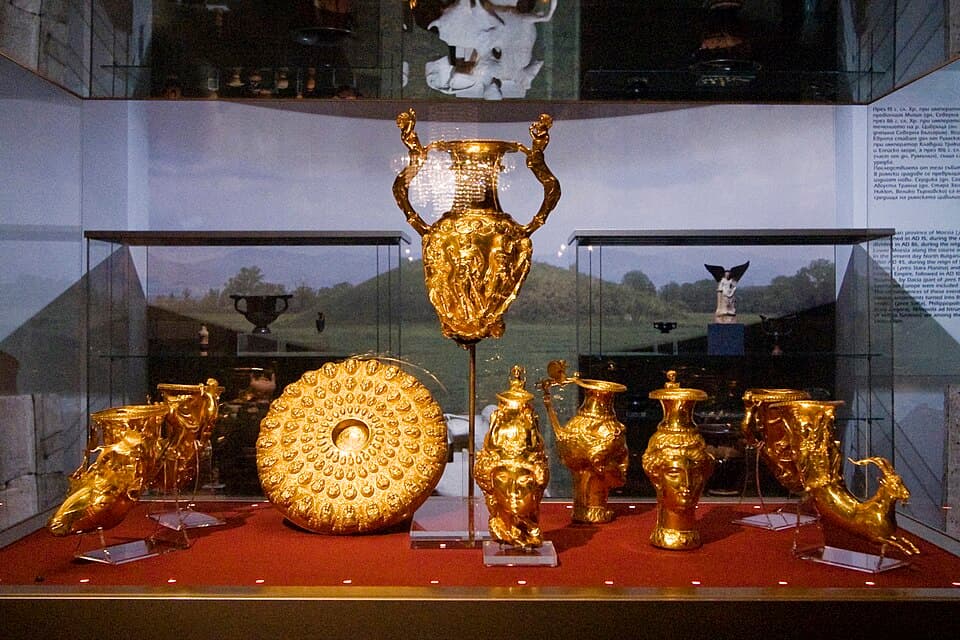
A genuine engineering, technological, and cultural triumph for the complex structures as the independent exhibition hall dedicated exclusively to the Panagyurishte Gold Treasure. Because the original ancient set comprising nine gold masterworks is permanently secured within the National History Museum in the capital city of Sofia, the asset is displayed inside Panagyurishte utilizing an exceptionally precise and detailed golden replica set.
To service this presentation, a specialized, highly expensive, fireproof, and strictly secured Treasury Vault was engineered within the museum perimeter, opening officially on April 16, 2012. The ceremonial replicas of the separate ritual vessels were manufactured utilizing innovative technology in Germany. According to the unique concept compiled by the German designer, each gold vessel positions independently inside its own custom armored glass showcase equipped with specialized internal lighting systems. This technical layout enables antiquity enthusiasts and travelers to inspect the exhibits from all angles, capturing the finest friezes and mythological iconographic details.
Around 2005, following an official proposal backed by the financial underwriting of the Tsotsorkov Lineage Foundation, a project dedicated to displaying memorial tablets was realized across the extensive green courtyard of the Historical Museum. These stone tablets are dedicated to celebrating the most prominent and meritorious citizens of Panagyurishte who left a profound impact shaping the advancement of Bulgarian fine arts, historical science, museum management, alongside the library and cultural center networks of the nation. The comprehensive architectural arrangement and spatial design tracking this memorial sector were executed based on an concept framed by an initiative committee under the artistic direction of Academician Bogoya Sapundzhiev.
A complete 4-day Bulgarian National Revival road trip: Koprivshtitsa, Panagyurishte, Karlovo, and Kalofer — drive times, house-museums, and practical tips.
Discover the best sights in Panagyurishte. A practical travel guide featuring the famous Thracian Gold Treasure, museums, parking tips, and family activities.
Historical Museum Panagyurishte is located in Pazardzhik, Bulgaria.
Historical Museum Panagyurishte is most easily reached by car. Use the coordinates above to navigate, or open the location in OpenStreetMap or your preferred maps app for turn-by-turn directions. Public transport options vary by region — for remote destinations a rental car gives the most flexibility.
Historical Museum Panagyurishte can be visited year-round. Verify current opening hours directly with the museum before your visit, as schedules change seasonally and on public holidays.
Opening hours and admission fees vary, and most Bulgarian museums close one day per week (commonly Monday). Verify current schedules and prices directly with the museum or the local tourist information office before visiting Historical Museum Panagyurishte, especially on public holidays.