


Arbanasi
Arbanasi is a world-renowned, beautiful, and historically rich village situated in the central territory of Northern Bulgaria, within the boundaries of the Tran Municipality and Veliko Tarnovo Province. The settlement holds the official status of an architectural and museum reserve and is featured in the prestigious 100 National Tourist Sites compiled by the Bulgarian Tourist Union.
Geographical Location and Logistics Overview
Arbanasi occupies a highly scenic and strategic geographical position. It is situated upon the expansive and high Arbanasi Plateau, a natural ridge dividing the two largest urban centers within the province:
- To the historic capital Veliko Tarnovo: Located 5 km to the northeast.
- To the town of Gorna Oryahovitsa: Situated in immediate proximity, where Gorna Oryahovitsa operates as a critical railway junction holding central transport significance for all of Bulgaria.
Historical Origins and Demographic Evolution
Due to the scarcity of fully verified written documentation from earlier epochs, various hypotheses within historical science outline the origin of Arbanasi's name and demographic profile. The prominent scholar Konstantin Jirecek maintained that the late-medieval inhabitants of the village were settlers predominantly from the Epirus region, as evidenced by preserved local stone inscriptions and Greek manuscripts. The researcher Machiel Kiel suggests that during the late 15th century, Albanian settlers were permanently integrated here following a major military campaign led by Ottoman Sultan Bayezid II in Albania in 1492, during which numerous prisoners were taken.
Regarding Orthodox heritage, some authors demonstrate that one of the local churches was initially erected as early as the 14th century during the Second Bulgarian Kingdom, while other researchers date the oldest surviving churches and frescoes to the 16th century. In an official Ottoman registry naming inhabitants from the period of 1540 and 1541, Albanian personal names such as Gjon and Leka appear concurrently with classic Bulgarian names, including Dimo son of Miroslav, Petko son of Dragan, Nikola son of Miladin, Stoyu son of Malko, Miho son of Boyo, and Gergi son of Ruso.
Around 1556, Grand Vizier Rustem Pasha fully purchased the village from its previous owners and transformed it into his personal property (mulk), subsequently registering it as a religious endowment (waqf), which brought significant tax exemptions to the population. Vital written records regarding the elite social status of Arbanasi are discovered in the journals of diplomat Pavel Djordjevic dated January 10, 1595, addressed to the Transylvanian Prince Sigismund Bathory. The village is also recorded by the Catholic Bishop of Sofia, Petar Bogdan Baksic, who visited neighboring Tarnovo in 1640. In his reports, he noted that up on the mountain stands a town from whose elevation all of Tarnovo is visible, boasting roughly 1000 stone houses.
The Bulgarian National Revival intellectual Georgi Rakovski recorded in his writings that the celebrated Bulgarian Tsar Ivan Asen II, following his marriage to the daughter of the captured Epirus despot Theodore Komnenos, resettled several noble Greek aristocratic families to Arbanasi for her sake. In 1859, the prominent Tarnovo teacher and educator Atanas Popgranitski translated the Tarnovo Guide, printed by Hamamdjiev in Constantinople. In this text, the Revival teacher, a native of the town of Kotel, provided a clear definition of the settlement, writing that half an hour east of Tarnovo lies the village of Arbanasi or Zagorie, where in ancient times the Bulgarian boyars and nobles resided.
The Golden Age, Specialized Crafts, and Economic Height
Authentic written marginal notes and chronicle records preserved on church manuscripts prove that Arbanasi achieved its highest economic and commercial peak during the second half of the 17th century, maintaining it until the very close of the 18th century. During this golden era, the village exceeded 1000 fortified stone houses, and the elite of local society comprised wealthy international merchant dynasties. According to Jirecek's research, during this peak phase, the Bishops of Tarnovo, Lovech, and Ruse, alongside traveling monks (taxidiotes) representing the famous Sinai Monastery, owned official summer residences in Arbanasi.
Primary Foundations of the Local Economy:
- Dzhelepstvo: Large-scale livestock breeding and extensive commerce trading sheep, goats, and cattle across the entire Ottoman Empire.
- Construction and Masonry: Master bricklaying, carpentry, and stone-carving, with Arbanasi building guilds erecting monumental structures across regional borders.
- Specialized Crafts: High development of coppersmithing, goldsmithing, and the artistic processing of precious metals.
- Sericulture and Silk Production: The village cultivated immense quantities of silk silkworms. Four advanced manual silk-winding wheels produced fine silk threads and textiles exported directly to meet the market demands of Constantinople and Italy.
- Viticulture and Winemaking: A traditional livelihood for the region, with the highest quality and most productive vineyards situated in the areas surrounding the Balykova Fountain, Orelcheto, Kamaka, and Chukata.
The Arbanasi livestock merchants (dzhelepi) were exceptionally popular, influential, and sought after across the vast territories of the empire. Many of the wealthiest leaders organized large commercial caravans that traded goods as far as Baghdad, Persia, and India. They exported cured meats, processed hides, and tallow, while importing raw silk, luxury velvet, exotic eastern spices, and medicinal herbs back into Bulgarian lands. These commodities were sold within large retail shops in Arbanasi itself and across the marketplaces of Tarnovo, Gorna Oryahovitsa, and Popovo. This vast economic prosperity is evidenced today by the fortified stone castle-houses and the five unique medieval museum churches.
Brigand Attacks, Epidemics, and Structural Decline
At the absolute close of the 18th century, resulting from destructive and violent attacks by brigand bands (kardzhalis) carried out sequentially in 1792, 1798, and 1810, the village was completely plundered, devastated, and burned down. Devastating epidemics of plague and cholera finalized what had been spared by the robber bands and fire. Fearing for their lives, the wealthiest and most influential merchant dynasties, including the prominent families of Brancoveanu, Kantakouzenos, and Filipescu, migrated permanently to Wallachia and the Russian Empire.
Following 1810, a process of resettlement on the plateau initiated, driven by proactive Bulgarian clans descending from the Elena and Tryavna regions of the Balkan Mountains, and according to Jirecek's records, from the Gerlovo region. However, the historic splendor and economic might were never recovered. A severe blow to the town's autonomy was dealt by the formal proclamation of the Edict of Gulhane in 1839. This document, aimed at modernizing the empire, revoked the long-standing special tax privileges of the settlement. The development of small-scale artisan crafts nearly ceased following the conclusion of the Crimean War, which took place from 1853 to 1856.
National Liberation Struggles and Spiritual Legacy
For several centuries, Arbanasi operated as a powerful cultural stronghold of Greek cultural alignment, driven by the heavy influence of the Tarnovo Greek Metropolitanate. The Greek language was official in administration, a famous Greek school functioned in the village, and church services were conducted entirely in Greek. However, this failed to alter the national Bulgarian consciousness of the local population.
The prominent patriotic Kerdzhiev family originated from Arbanasi:
Georgi Kardzhiev: A distinguished teacher, writer, and public figure.
Toma Kardzhiev: A glorious Bulgarian revolutionary and chief organizer of the historic Chervena Voda Detachment in 1875.
Arbanasi is also the birthplace of Ilarion Dragostinov, a prominent figure of the Bulgarian Revolutionary Central Committee and the chief apostle of the Second Sliven Revolutionary District during the April Uprising. He died heroically in an unequal battle on May 10, 1876, near the Vratnik Pass in the Sliven Balkan. During the subsequent Russo-Turkish Liberation War, 11 men from Arbanasi enlisted and participated actively as volunteers within the Bulgarian Volunteer Corps. At the outbreak of the Balkan War in 1912, two men from the village volunteered for the Macedonian-Adrianople Volunteer Corps.
In the local Arbanasi monastery, the great national enlightener Saint Sofroni of Vratsa was formally ordained as a monk in 1794, later becoming the bishop of the Vratsa Diocese. During his stay in Arbanasi, he composed his invaluable autobiographical work, recognized as the Life and Suffering of the Sinful Sofroni.
Today, the material heritage that fascinates travelers with its architecture, style, and craftsmanship includes 144 fully preserved Revival-era houses featuring rich interior decorations, 5 medieval museum churches, and 2 active convents.
Active Monastery Complexes in Arbanasi
Arbanasi Convent of the Dormition of the Mother of God
This is a fully active convent that was initially founded during the height of the Second Bulgarian Kingdom. In the initial decades following the fall of Bulgaria under Ottoman rule, the monastic cloister managed to survive, but subsequently sustained severe structural damage from regular raids by brigands. The monastery was fully restored in the 17th century, a period from which the valuable fresco painting of the monastic church survives. The convent preserves a unique icon of the Virgin Mary of the Three Hands (Troeruchitsa) type, which is venerated by Orthodox believers as miraculous. The official patronal feast day is celebrated on the Dormition of the Mother of God on August 15, which also serves as the official holiday of the village of Arbanasi.
Arbanasi Convent of Saint Nicholas
An active convent founded during the glorious reign of the royal Asen Dynasty. The monastic complex was completely ruined during the fall of the capital Tarnovgrad to Ottoman forces, but was erected anew at the absolute close of the 17th century. Today, the monastery welcomes and accommodates Orthodox pilgrims for overnight stays. The patronal feast day is commemorated on Saint Nicholas Day - December 6. The two monasteries are situated strategically at opposite ends of Arbanasi village.
Medieval Museum Churches Featuring Unique Frescoes
All five medieval churches in the village function as specialized museums and form an administrative component of the Regional History Museum in Veliko Tarnovo:
Saint Demetrius Museum Church
Constructed officially in 1621 by local donors. In 1580, the historic election of the vicar bishop of the Tarnovo Metropolitanate was conducted within its nave. An exceptional artistic achievement that stands as unique across the art of the entire Balkan Peninsula is the detailed fresco painting of the grand biblical composition The Tree of Jesse along the church walls.
Saint George Museum Church
Erected across two distinct construction phases: the first encompassing the 16th century, and the second realized at the absolute close of the 17th century and the early 18th century. In 1973, a complex conservation project initiated, during which the frescoes were removed from the masonry walls for restoration. Regrettably, improper storage over the subsequent 40 years resulted in the loss of a portion of the original artwork. In 2012, due to secured funding from European Union resources, the frescoes were returned and remounted inside the temple. This process is designated by experts as the most complex and precise artistic restoration project in the history of Bulgaria up to that date.
Church of the Nativity of Christ Museum
Constructed across several consecutive stages in the chronological period between the 16th and 17th centuries. The structure represents a massive, low stone building with thick walls. Attached to the primary church body is a dedicated chapel consecrated to Saint John the Baptist. Preserved upon the walls of the temple is a valuable inscription reading: The temple of the Birth in the flesh of our Lord, God and Savior Jesus Christ was painted in the year of the Incarnation 1638, with the assistance, labor, and expense of the most revered and noble leader Mr. Stati and his wife Theodora. The Church of the Nativity of Christ formed part of a grand residential complex from which the largest and most influential Orthodox diocese on the Balkans - the Metropolitanate of Tarnovo - was administered. The official stamp for the 100 National Tourist Sites is located here.
Museum Church of the Holy Archangels Michael and Gabriel
Erected at the absolute close of the 17th century. Its interior perfectly preserves unique medieval depictions of Christ Emmanuel, Christ Pantocrator, the Virgin Platytera, alongside images of Saint George and Saint Mercurius slaying the tyrant king, Saint Procopius, Saint Artemius, and Saint Panteleimon. Among the most valuable multi-figure biblical scenes on the walls are the Annunciation, the Baptism of Christ, the Betrayal of Judas, the Crucifixion of Christ, and the Judgment of Pilate. Built onto the architectural body of the church is an independent chapel dedicated to Saint Paraskeva.
Saint Athanasius Museum Church
Constructed during the 16th century, its complete fresco decoration was finalized in 1667, according to the preserved original donor inscription within the shrine. Painted across the vault of the church are grand, large-scale depictions of Christ Pantocrator, Christ Emmanuel, and the Holy Trinity. Fully preserved are the portraits of Eastern Orthodox saints Saint Modestus, Saint Spyridon, Saint Achillius, and Saint Antipas. An additional chapel dedicated to Saint Haralambos is integrated into the church architecture.
Regular Annual Events
- August 15 (Dormition of the Mother of God): The official patronal and municipal holiday of Arbanasi village, accompanied by large-scale cultural events, concerts, and a traditional crafts fair.
7-day forecast
Weather data from MET NorwayNearby Places

More to explore

Read more in our travel guides
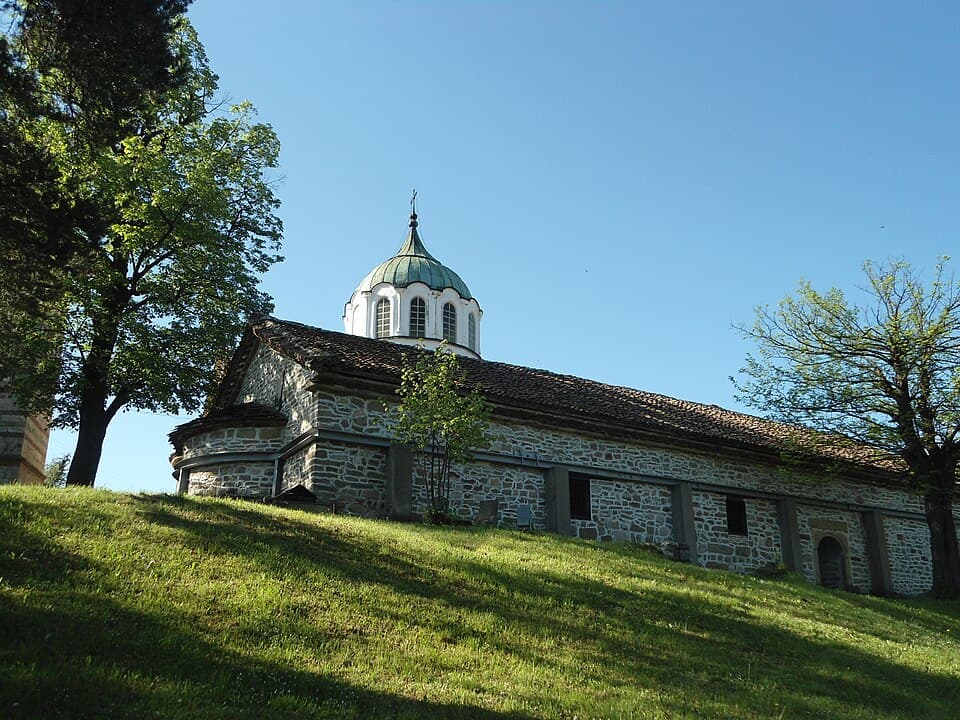
Elena, Bulgaria: A Guest-House Weekend, Elena Ham and the Elena Balkan
A weekend in Elena: the Daskalolivnitsa museum complex, Elena ham and its festival, the walk to Kapinovo Monastery, how to get there and when to go.
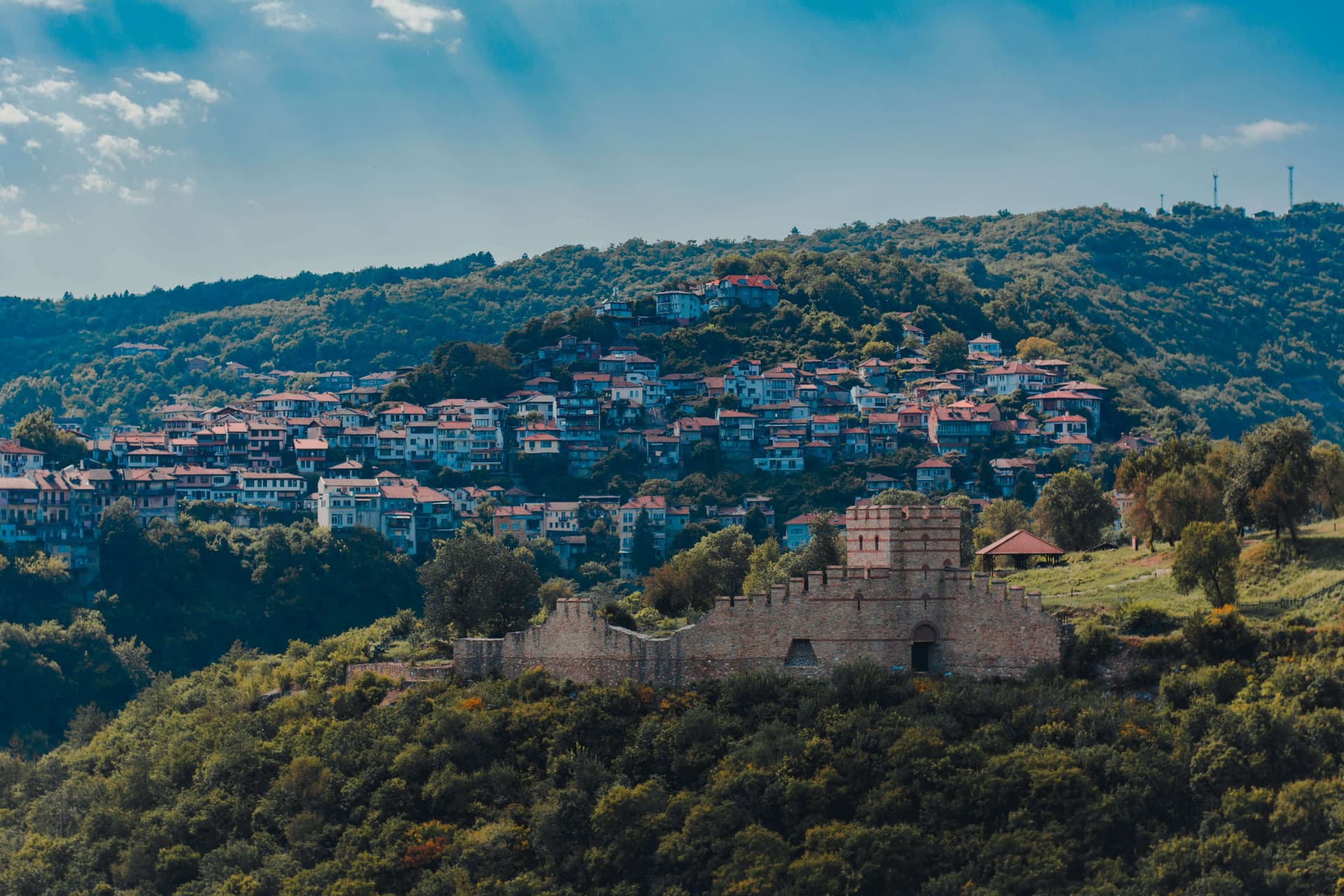
The Central Balkan Road Trip: Veliko Tarnovo to the Rose Valley
A complete 4-day driving itinerary across the Balkan Mountains: Veliko Tarnovo, Dryanovo, Tryavna, Bozhentsi, Etar, Gabrovo, Shipka Pass, and Kazanlak.
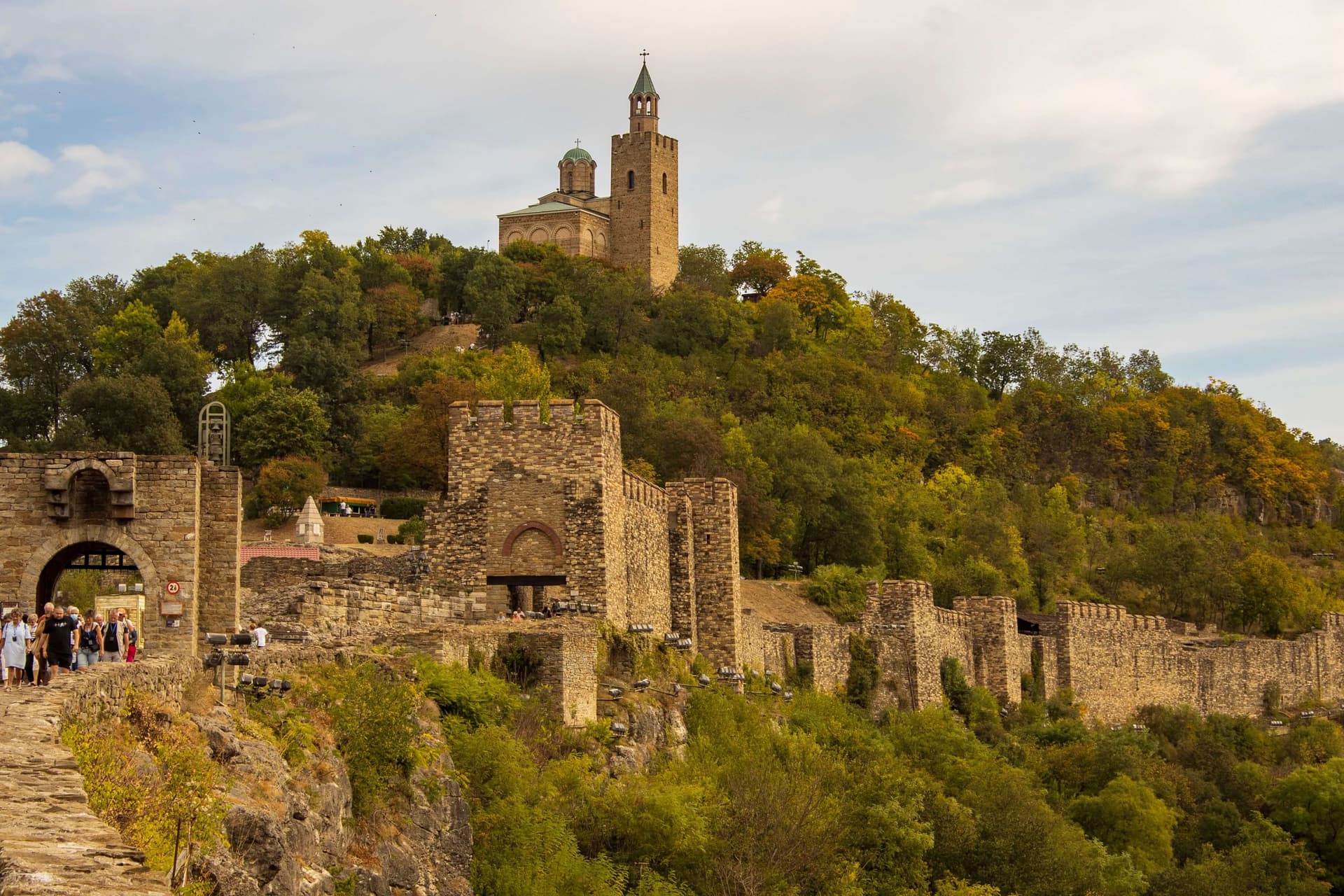
Things to Do in Veliko Tarnovo: 48-Hour Weekend Itinerary
Planning a weekend in Veliko Tarnovo? Discover top attractions: Tsarevets Fortress, panoramic view restaurants, Samovodska Charshiya, Arbanasi, and Mini Bulgaria Park.
Frequently asked questions
Where is Arbanasi located?
Arbanasi is located in Veliko Tarnovo, Bulgaria.
How do I get to Arbanasi?
Arbanasi is most easily reached by car. Use the coordinates above to navigate, or open the location in OpenStreetMap or your preferred maps app for turn-by-turn directions. Public transport options vary by region — for remote destinations a rental car gives the most flexibility.
What is the best time to visit Arbanasi?
Arbanasi can be visited year-round, but late spring (May–June) and early autumn (September–October) offer the most pleasant weather and fewer tourists. Summer is the busiest season; winter is the quietest, with shorter daylight and possible cold weather.
What is there to see and do in Arbanasi?
Bulgarian settlements typically reward unhurried walking — historic centres, churches and monasteries, local markets, and family-run restaurants serving regional dishes. Larger towns often have museums and seasonal cultural events. The local tourist information centre is a good first stop for current opening hours and what's on.