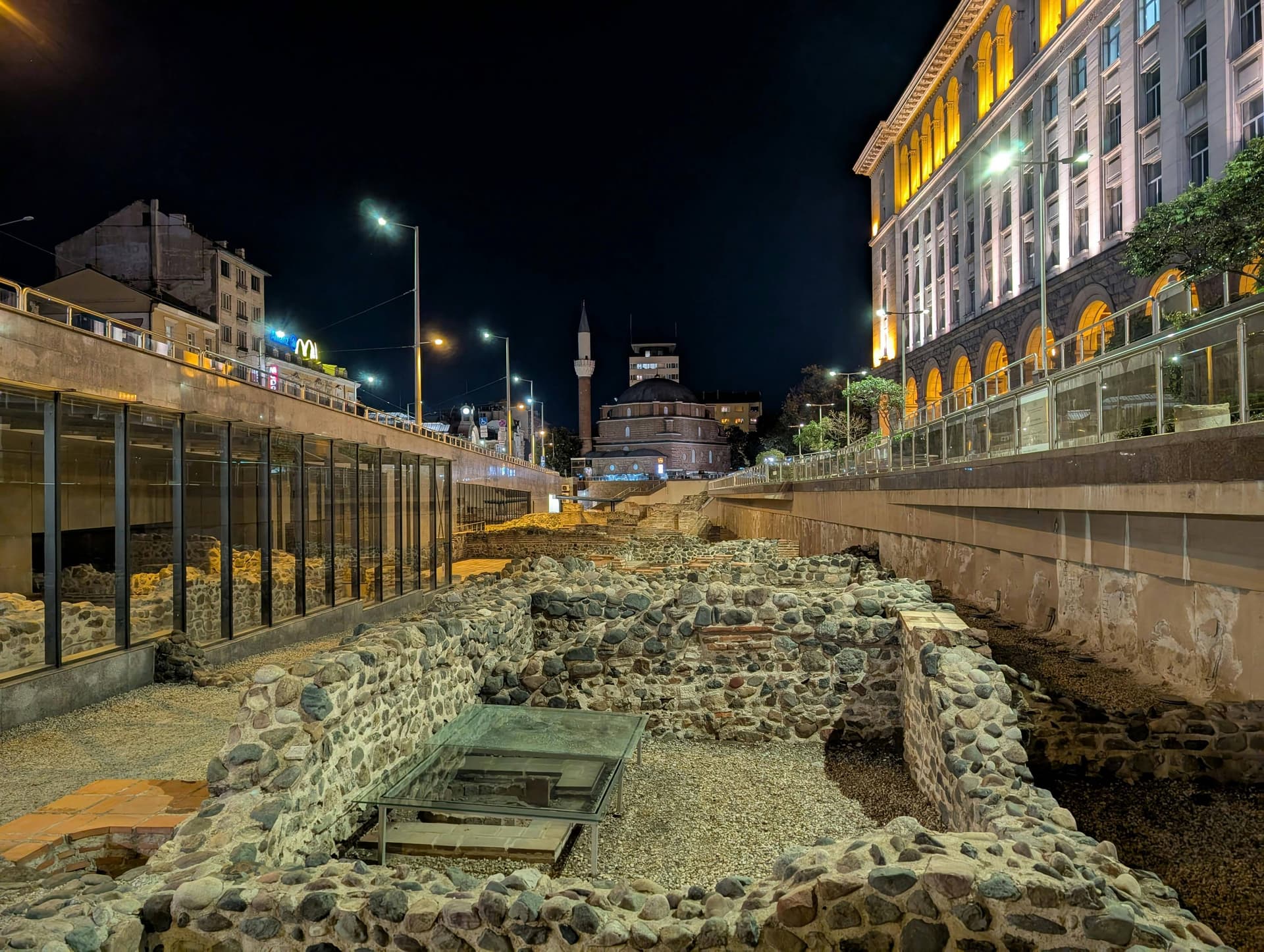
Beneath the stones of the modern-day Saint Sophia Basilica lies one of Bulgaria’s most significant archaeological treasures. This underground museum, preserved in situ, covers over 600 square meters and reveals the evolution of the Eastern Necropolis of ancient Serdica, alongside the remains of three earlier Christian churches.
The site has been a spiritual center for centuries, with four distinct churches built atop one another:
The museum showcases approximately 50 tombs, providing a window into the burial customs of Late Antiquity:
One of the most valuable artifacts is the altar mosaic from the earliest church. Created using the opus tessellatum technique, it depicts the Garden of Eden:
Archeological level of the St. Sophia Basilica is located in Sofia City, Bulgaria.
Archeological level of the St. Sophia Basilica is most easily reached by car. Use the coordinates above to navigate, or open the location in OpenStreetMap or your preferred maps app for turn-by-turn directions. Public transport options vary by region — for remote destinations a rental car gives the most flexibility.
Archeological level of the St. Sophia Basilica can be visited year-round. Verify current opening hours directly with the museum before your visit, as schedules change seasonally and on public holidays.
Opening hours and admission fees vary, and most Bulgarian museums close one day per week (commonly Monday). Verify current schedules and prices directly with the museum or the local tourist information office before visiting Archeological level of the St. Sophia Basilica, especially on public holidays.