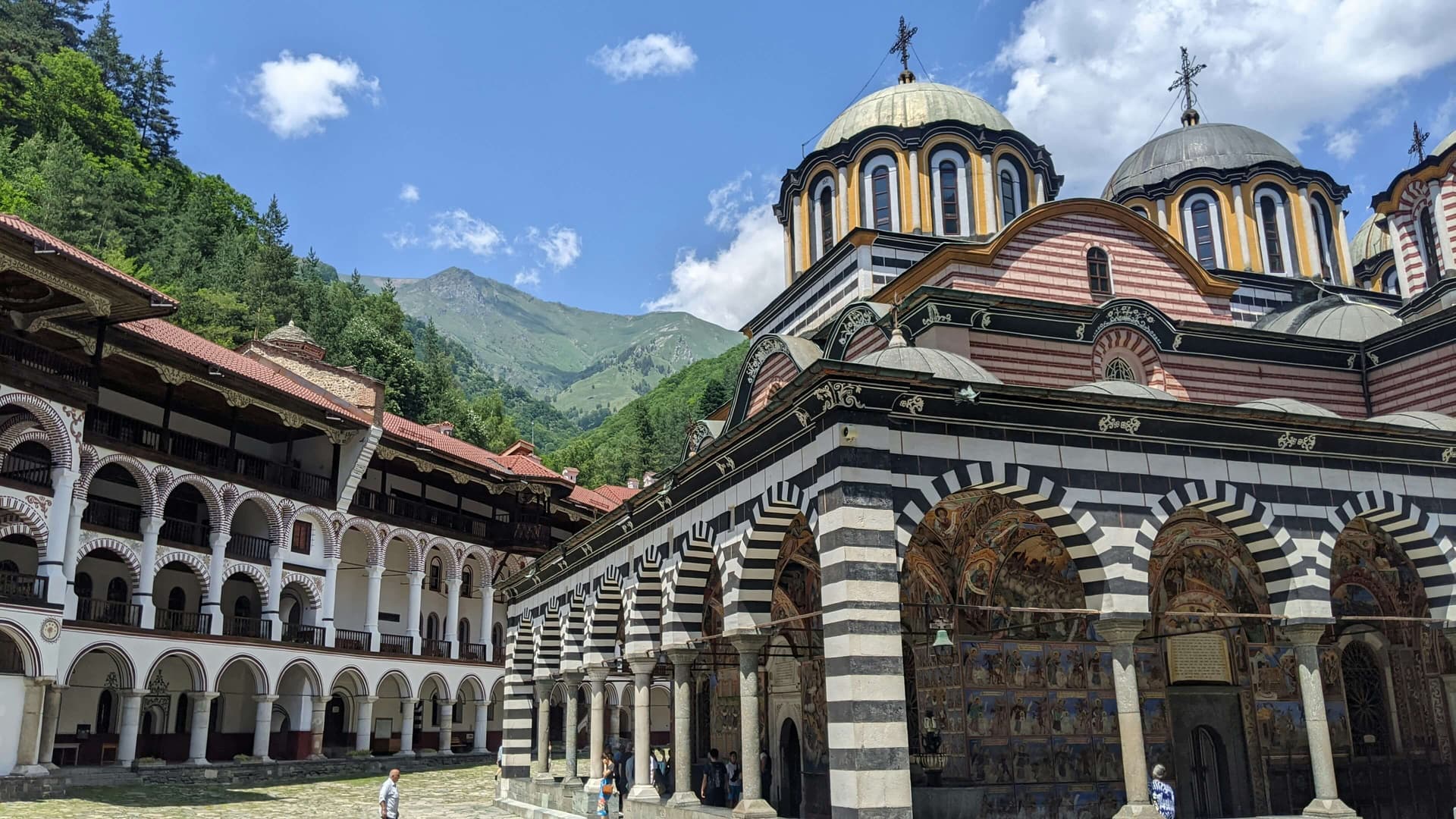
The Rila Monastery Nature Park is one of the largest and most significant protected areas in Bulgaria, spanning an impressive 25,253.2 hectares. Located within the Rila Municipality, it encompasses the scenic medium- and high-mountain zones of the western ridge of the Rila Mountains, with altitudes ranging from 750 to 2,713 meters above sea level. The highest point within the park boundaries is the majestic Rilets Peak. The area ranks as the second most visited nature park in the country, following only Vitosha Mountain. The park has a unique administrative history; it was originally established in 1992 as a protected territory within the newly founded Rila National Park. In the year 2000, it was separated from the national park to allow the historic Rila Monastery to reclaim institutional ownership over its ancestral lands, as terrains within national parks are exclusively state-owned. Today, the majority of the territory belongs to the monastery, which stands as the premier cultural landmark of the region, listed as a UNESCO World Heritage Site. The green heart of the park is its ancient woodland, covering over 16,000 hectares, with the earliest structured forestry plans dating back to 1890 and initial reforestation efforts beginning in the 1920s. The average age of these forests is 99 years. At the core of the park lies the strictly protected Rilomanastirska Gora Reserve, preserving 3,665 hectares of pristine ecosystems. The tree composition is highly diverse, dominated by European beech, dwarf mountain pine, Norway spruce, and Scots pine, alongside notable stands of silver fir, Macedonian pine, sessile oak, and silver birch. The botanical wealth is extraordinary, with 1,400 species of higher plants identified, representing nearly 39% of the higher flora of Bulgaria, and 80 of these species are listed in the country's Red Data Book. To accommodate nature lovers and eco-tourists, the territory features specialized botanical and educational eco-trails. The rich mosaic of forests, mountain meadows, and alpine crags provides an ideal habitat for thousands of wildlife species. The fauna within the nature park features approximately 2,600 species of invertebrates and 202 species of vertebrates. The avian population includes 122 bird species, showcasing rare and majestic raptors such as the griffon vulture, Eurasian black vulture, Eastern imperial eagle, and booted eagle. Mammals are represented by 52 species, with a notable mention of bats — the 15 registered species account for half of all bat species found in Bulgaria. A total of 32 vertebrate species living in the park are listed in the national Red Data Book, including the alpine newt, European tree frog, Aesculapian snake, European pine marten, and golden eagle, while 139 species enjoy strict legal protection under the Biological Diversity Act.
Kyustendil
2.3 km away

Kyustendil
5.2 km away
Kyustendil
5.4 km away
Rila Monastery Natural Park is located in Kyustendil, Bulgaria.
Rila Monastery Natural Park is most easily reached by car. Use the coordinates above to navigate, or open the location in OpenStreetMap or your preferred maps app for turn-by-turn directions. Public transport options vary by region — for remote destinations a rental car gives the most flexibility.
Rila Monastery Natural Park is best walked from May through October, when the trail is clear of snow and weather is generally stable. Summer middays can be hot at lower altitudes — start early. Winter walking requires proper gear and route knowledge.
Suitability depends on the specific route. Bulgarian trails range from paved family-friendly paths to multi-day high-mountain crossings. Check the length, elevation gain, and surface before setting off. Sturdy footwear, water, and a basic map (offline or paper) are essential even on short walks.